Home › Onsen towns › Yubara Onsen
Yubara Onsen 湯原温泉
Yubara's alkaline simple spring (pH 9.23) is famous for one thing above all: Sunayu, a great free open-air bath in the Asahi River itself, below the Yubara Dam, about 30 minutes by bus from Chugoku-Katsuyama Station. It is the best-known of the Mimasaka Three Springs in Okayama's northern mountains. Below are the bathhouses, spring sources and onsen facilities recorded in OpenStreetMap within about 2 km of the town centre.
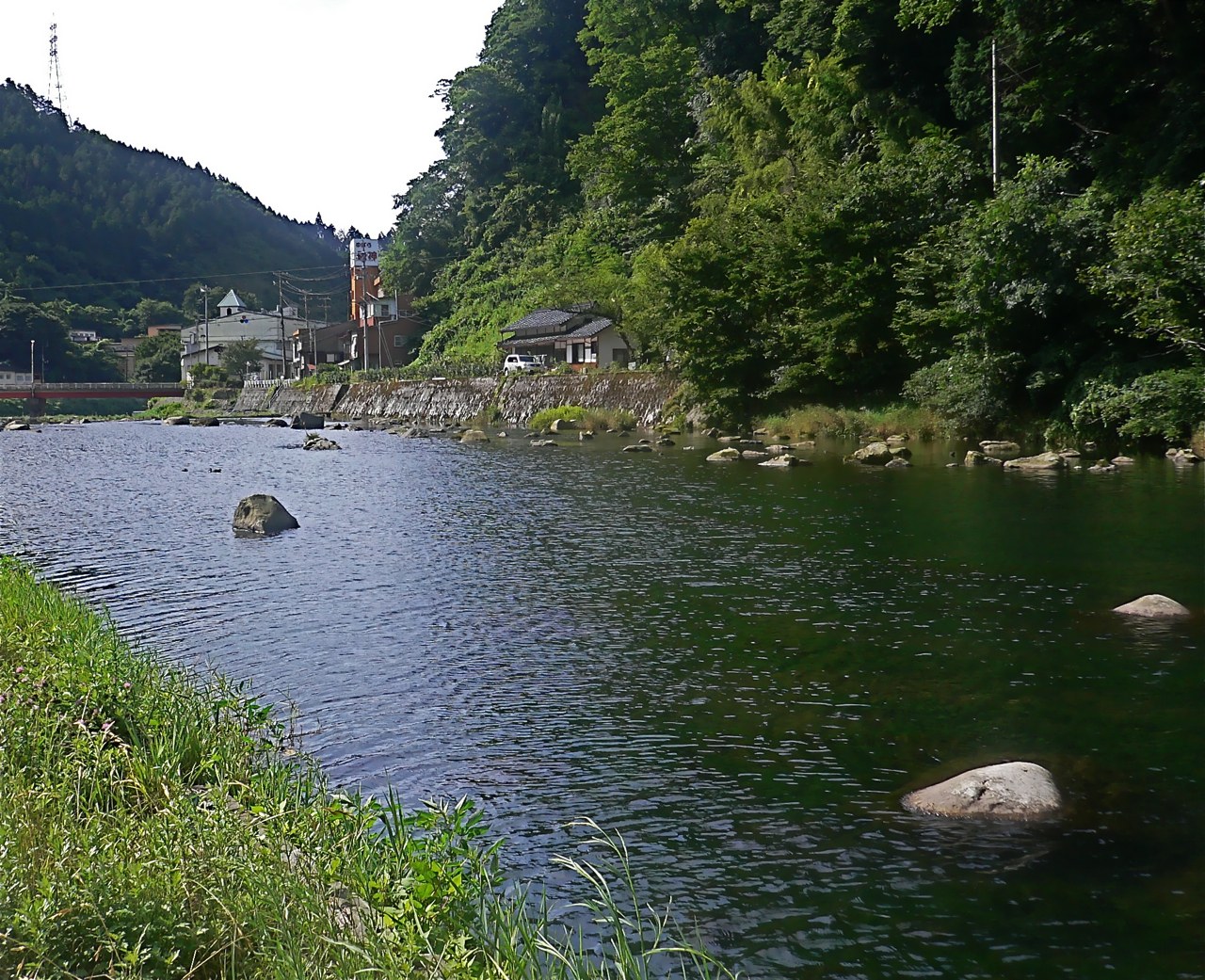
| Prefecture | Okayama |
|---|---|
| Region | Chugoku |
| Spring quality | Simple spring (alkaline, pH 9.23; low-salt hot spring water) |
| Source temperature | The Sunayu river bath blends naturally to bathing temperature; sources across town vary |
| Nearest station | Chūgoku-Katsuyama (JR Kishin Line), then about 30 minutes by bus |
| From Tokyo | Fly to Okayama (about 1 h 15 min) + bus, or about 6 hours by rail + bus |
| From Osaka | About 3 hours — highway bus or car via the Chūgoku Expressway |
| Best season | Year-round — Sunayu under autumn leaves and winter snow is the classic image |
| Places listed here | 2 |
| Public bathhouses | 2 |
| Hot spring sources | 0 |
Spring quality, source temperatures and access routes are drawn from the Japanese Wikipedia articles on each town (CC BY-SA 4.0) and the English articles credited below. Journey times are typical scheduled times for the routes named, rounded — always check current timetables before you travel.
About Yubara Onsen
Yubara Onsen (湯原温泉) is a hot-spring town in Maniwa, in the mountains of northern Okayama Prefecture. It is one of the Mimasaka Three Springs, alongside Yugo Onsen and Okutsu Onsen, and the wider name Yubara Onsenkyo covers five springs in all: Yubara itself and, to the south, Shimoyubara, Ashi, Manga and Goryoku. The town’s fame, though, rests on one celebrated bath — Sunayu, the open-air bath in the river below the dam.
The water is a simple spring, alkaline with a pH of 9.23 and lightly mineralised, with an estimated output of some 6,000 litres a minute. The nearest station is Chugoku-Katsuyama on the JR Kishin Line, about 30 minutes away by bus; from Osaka the town is about 3 hours by highway bus or car.
Sunayu: the bath in the river itself
Sunayu, literally ‘sand bath’, is Yubara’s signature: a large open-air bath set in the Asahi River below the Yubara Dam, where hot water rises up through the sand of the riverbed — a ‘sand-spouting’ spring. The river water and the spring blend naturally to bathing temperature, so the experience is of lying in a warm river, with the dam above.
Its reputation is formal as well as local: in the open-air bath rankings compiled by the travel writer Fuyuto Noguchi, Sunayu was placed as the yokozuna — the champion — of western Japan. That ranking made Yubara a name known to bath lovers across the country, and Sunayu remains the first place most visitors head on arrival.
The water: alkaline and soft, at pH 9.23
Yubara’s spring is classified as a simple spring — water whose mineral content is light — alkaline at pH 9.23, and classed as a low-salt, hypotonic alkaline hot spring: the kind of water that feels soft and smooth in the tub. Source conditions vary across town, while Sunayu blends naturally to bathing temperature.
The supply is generous: the estimated flow is around 6,000 litres a minute. With water this abundant, Yubara’s inns can offer generous baths, and the town has built its identity around open, public enjoyment of the spring — Sunayu below the dam is simply its most dramatic expression.
One of the Mimasaka Three Springs
Yubara’s standing in its region is long established: with Yugo Onsen and Okutsu Onsen it forms the Mimasaka Three Springs, the classic trio of old Mimasaka province in what is now northern Okayama. Travellers have long treated the three as a set, and Yubara — with Sunayu as its emblem — is the best known beyond the prefecture.
The town is a proper resort by mountain standards: the Japanese record lists 20 lodging facilities with a capacity of about 2,000 guests, and annual bathers of around 600,000. The four southern springs of the Onsenkyo — Shimoyubara, Ashi, Manga and Goryoku — offer quieter alternatives, from the busy main street to a small inn on a side valley.
Getting there, and a bath for every season
The railhead is Chugoku-Katsuyama on the JR Kishin Line, about 30 minutes by bus. From Osaka, highway buses and the drive via the Chugoku Expressway both take about 3 hours. From Tokyo, fly to Okayama in about 1 hour 15 minutes and take a bus north; the whole way by rail and bus takes about 6 hours.
The recorded best season is year-round, and Yubara earns that label through its images: Sunayu under autumn leaves, and Sunayu under winter snow, are the classic pictures of the town. In the cold months, bathing outdoors in the riverbed while snow sits on the dam is the experience the rankings were made for.
The sections above were written for this guide from the facts in the Japanese Wikipedia article 「湯原温泉」 and the spring and access data summarised on this page, under CC BY-SA 4.0.
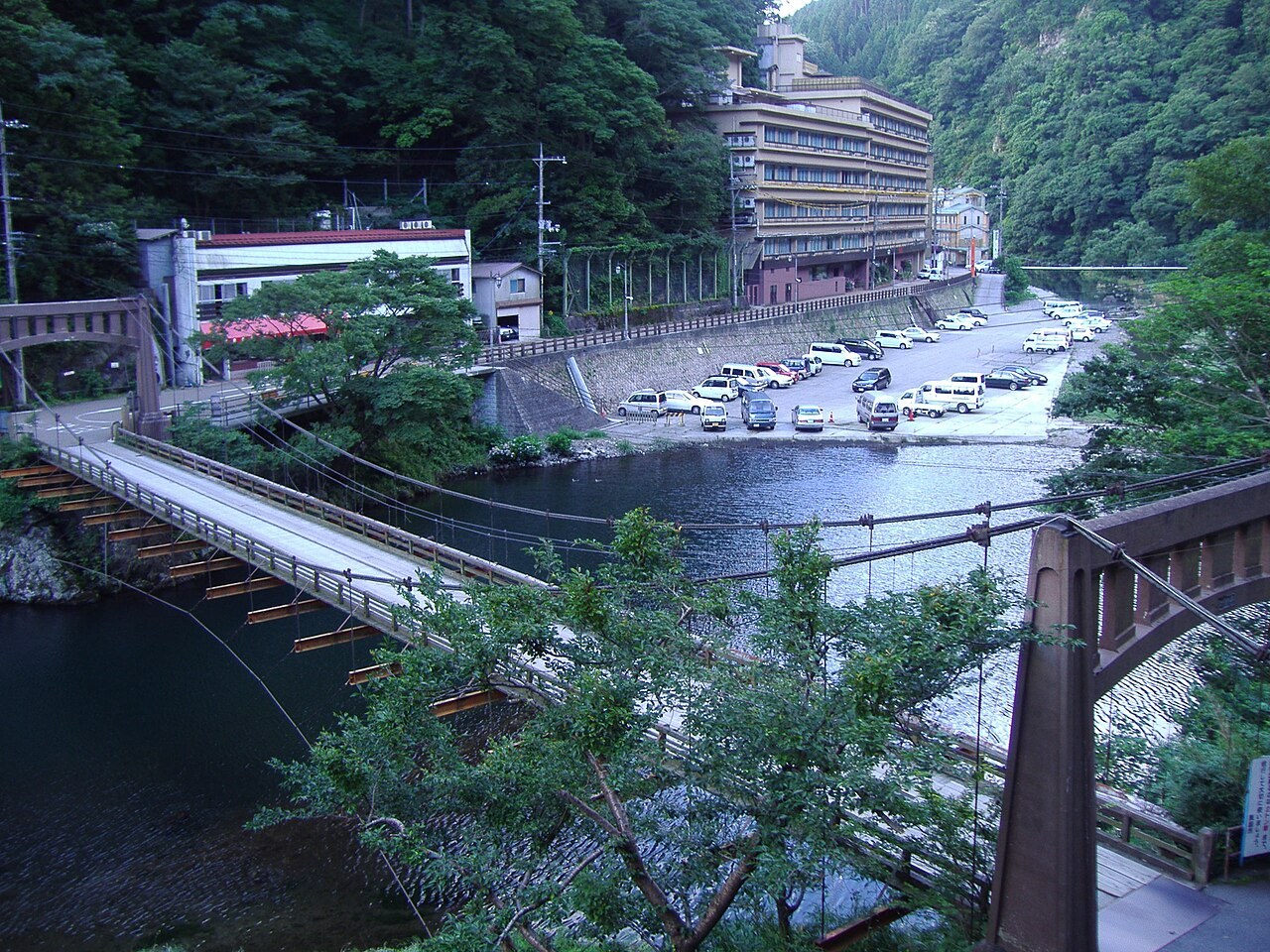
Public bathhouse (recorded as onsen in OpenStreetMap) (1)
- 湯本温泉館
Official website · OpenStreetMap
Public bathhouse (spring type not recorded in OpenStreetMap) (1)
- 湯原温泉 砂湯
Official website · OpenStreetMap
Gallery
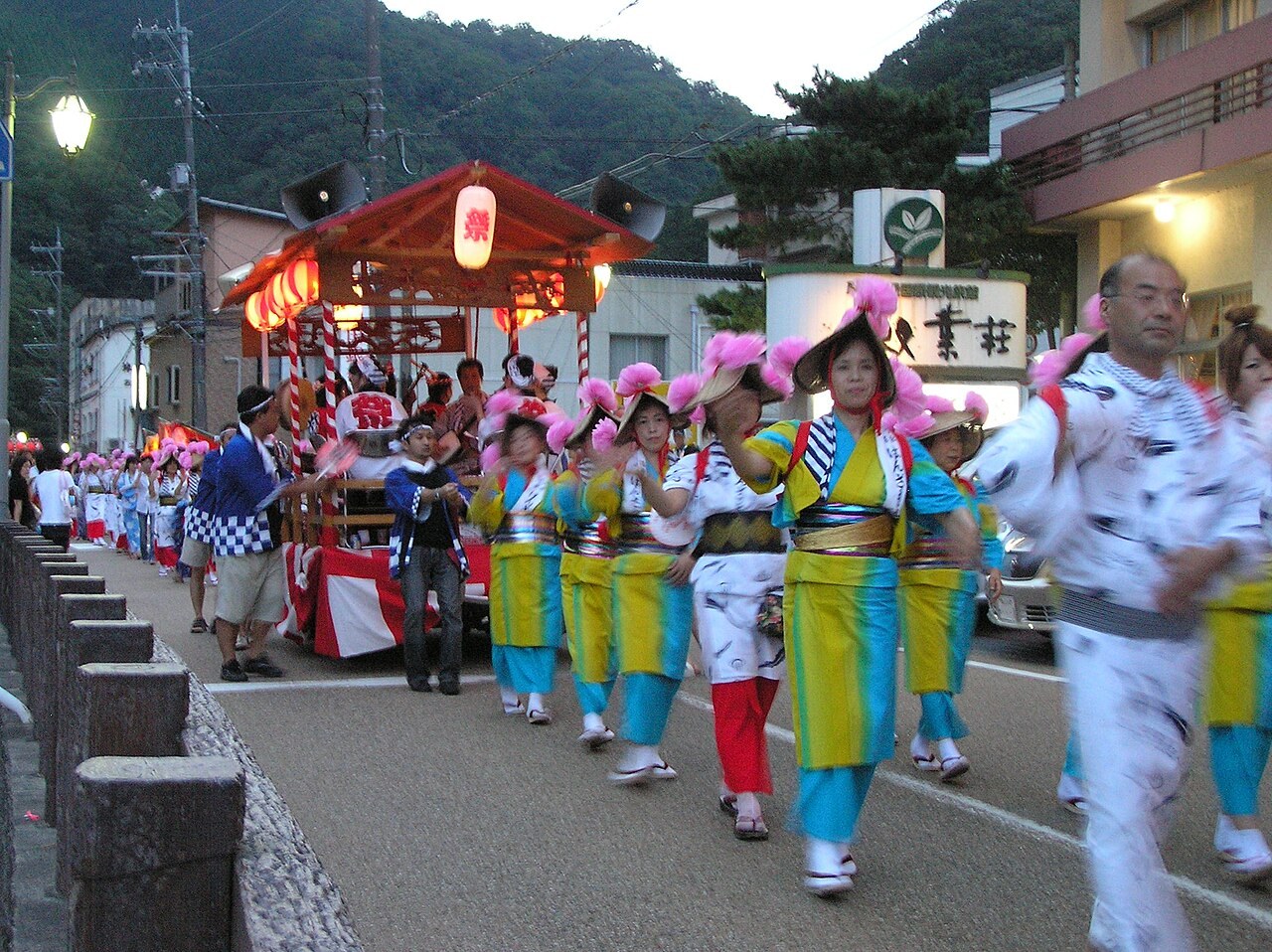

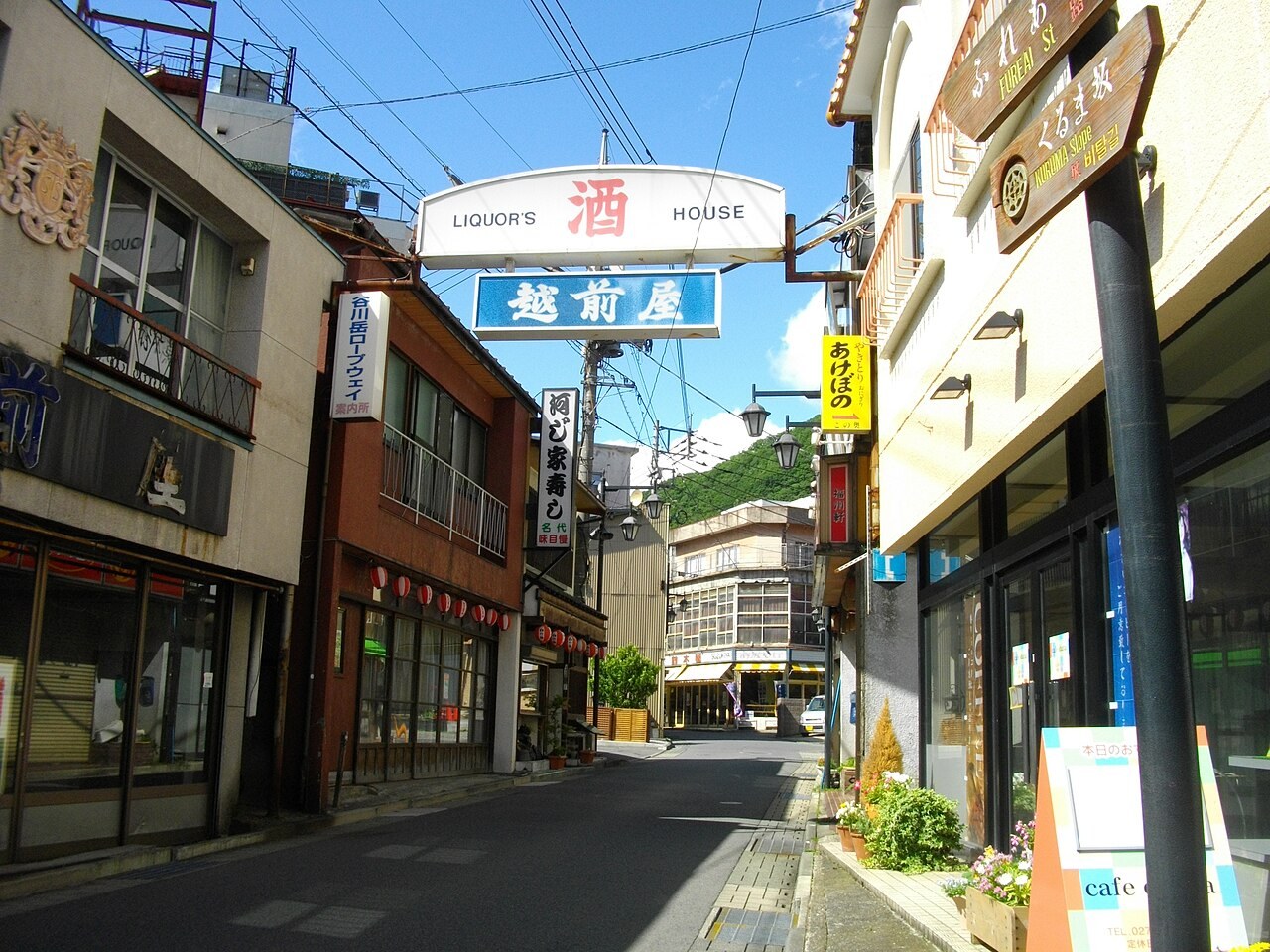

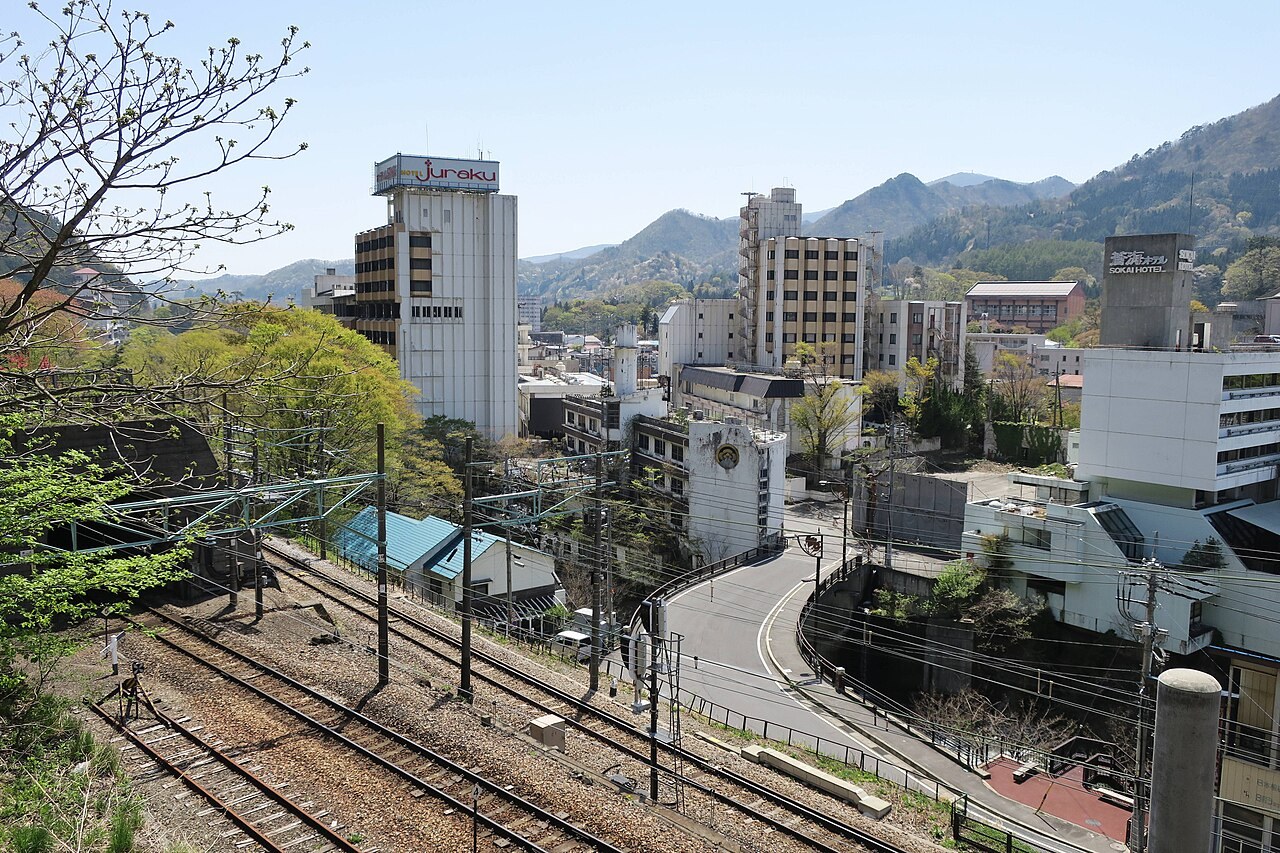

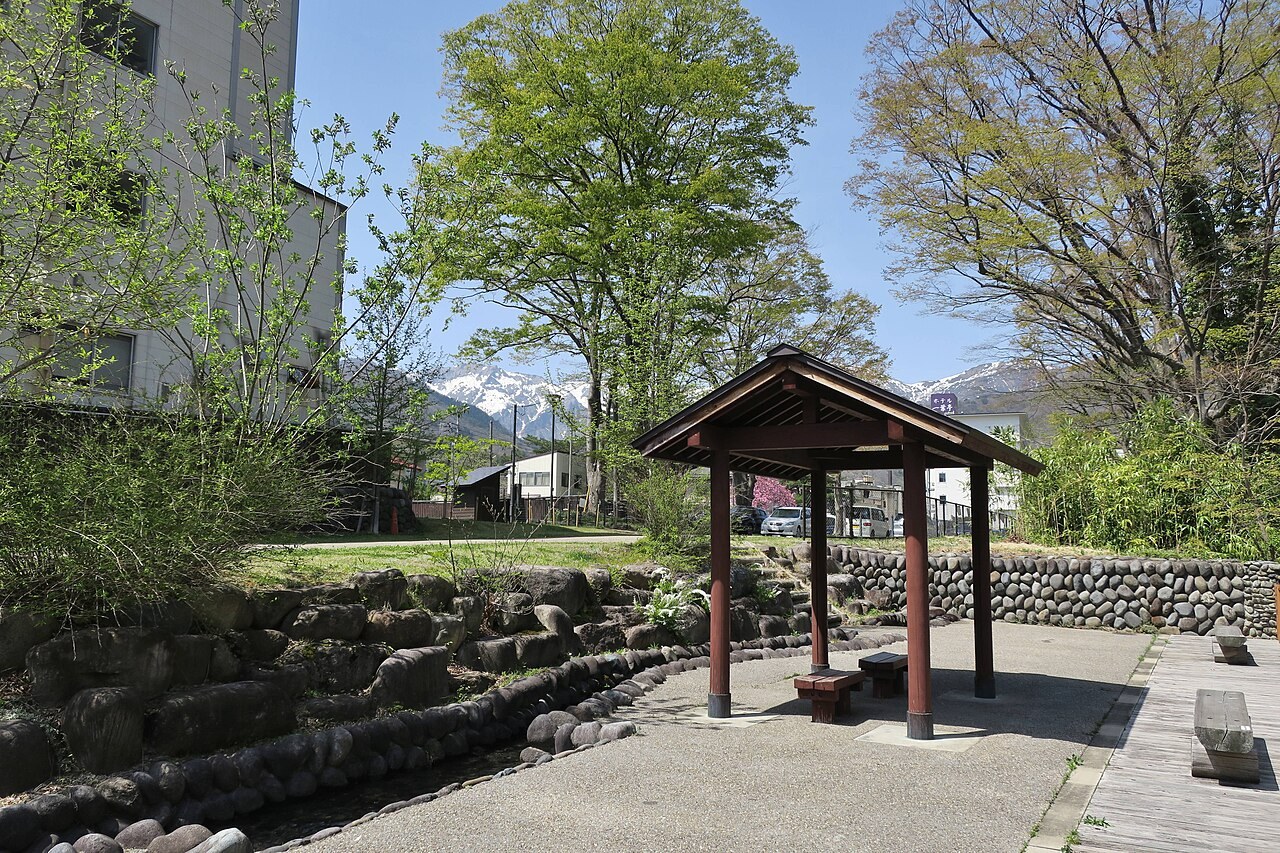

Names, types and websites are shown exactly as recorded in OpenStreetMap. A bathhouse whose spring type is not recorded is labelled as such — we do not guess. Before your first visit, read how to use an onsen.
More onsen towns
- Misasa Onsen 三朝温泉 — North into Tottori — the radon springs of the Mitoku River
- Tamatsukuri Onsen 玉造温泉 — West to Matsue's ancient beautifying water
- Yuda Onsen 湯田温泉 — Down to Yamaguchi's smooth city spring
- Gero Onsen 下呂温泉 — Another celebrated river-bathing town, in Gifu
Keep exploring
- All onsen towns in Chugoku — this town's region, town by town
- Browse by spring type — find towns by their water
- Browse by feature — day trips, snow-view baths, free communal baths and more