Home › Onsen towns › Tamatsukuri Onsen
Tamatsukuri Onsen 玉造温泉
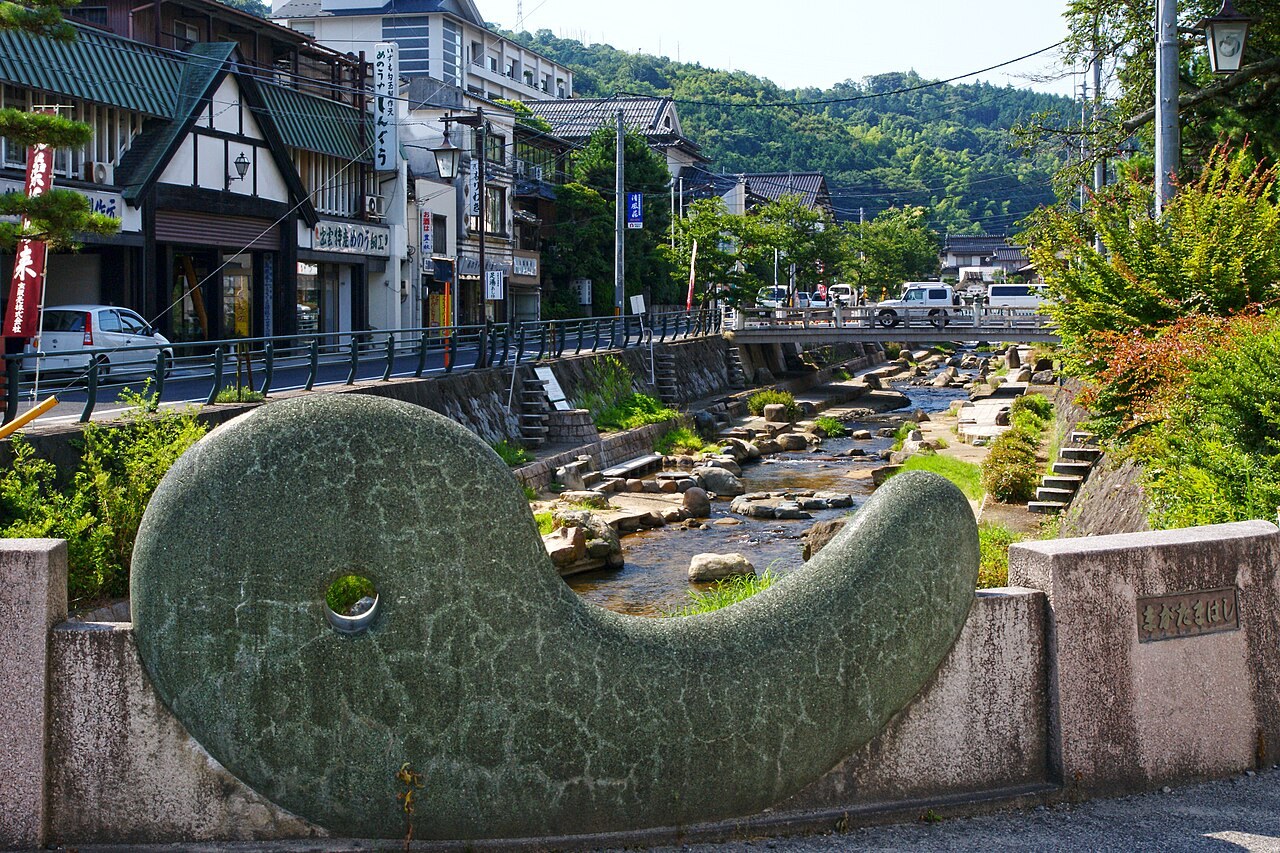
Tamatsukuri's sulphate spring (about 42 °C) flows through a riverside town in Matsue, right at Tamatsukuri Onsen Station on the San'in Line. Praised in the 11th-century Pillow Book and famed ever since as a beautifying water, it sits below the sacred Tamatsukuri-Yu shrine where the magatama jewels were made. Below are the bathhouses, spring sources and onsen facilities recorded in OpenStreetMap within about 2 km of the town centre.
| Prefecture | Shimane |
|---|---|
| Region | Chugoku |
| Spring quality | Sulphate spring (sodium-calcium sulphate-chloride water) |
| Source temperature | About 42 °C at source |
| Nearest station | Tamatsukuri Onsen (JR San'in Main Line) — the town begins at the station |
| From Tokyo | Fly to Izumo Airport (about 1 h 20 min) + bus, or about 6 hours 30 minutes by rail |
| From Osaka | About 4 hours — Shinkansen to Okayama + Yakumo limited express to Matsue, then local train |
| Best season | Year-round — cherry blossom lines the river in spring |
| Places listed here | 5 |
| Public bathhouses | 4 |
| Hot spring sources | 1 |
Spring quality, source temperatures and access routes are drawn from the Japanese Wikipedia articles on each town (CC BY-SA 4.0) and the English articles credited below. Journey times are typical scheduled times for the routes named, rounded — always check current timetables before you travel.
About Tamatsukuri Onsen
Tamatsukuri Onsen (玉造温泉) is a hot-spring town in the Tamatsukuri district of Tamayu Town, Matsue City, Shimane Prefecture, in what was once Izumo Province. Its water is a sodium-calcium sulphate-chloride spring, classed as a sulphate spring, emerging at about 42 °C. The town is one of the representative springs of the San’in region and is traditionally praised for beautiful skin.
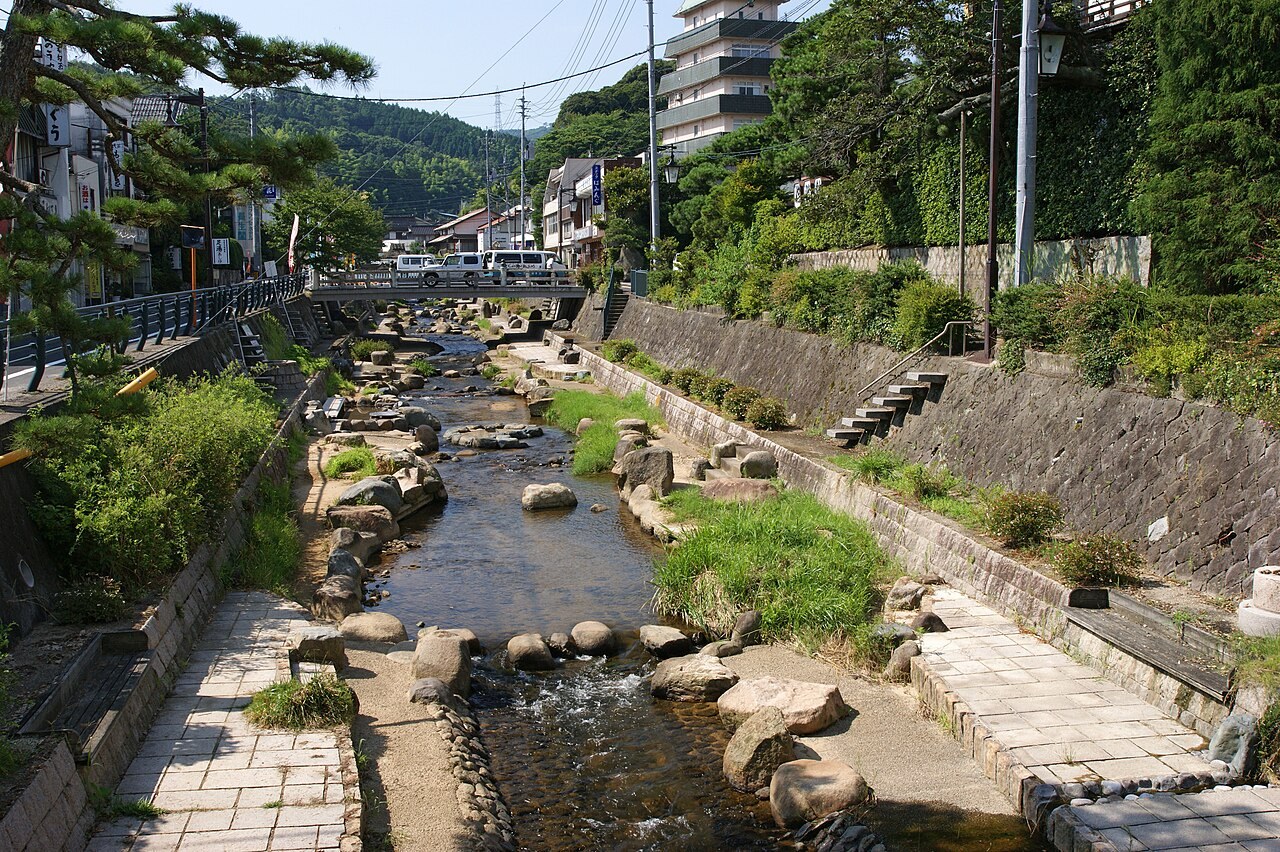
Unusually among Japanese spa towns, the resort begins at the station: Tamatsukuri Onsen Station on the JR San’in Main Line stands at its edge, and the inn street runs from there along the river.
The water: a sulphate spring at about 42 °C
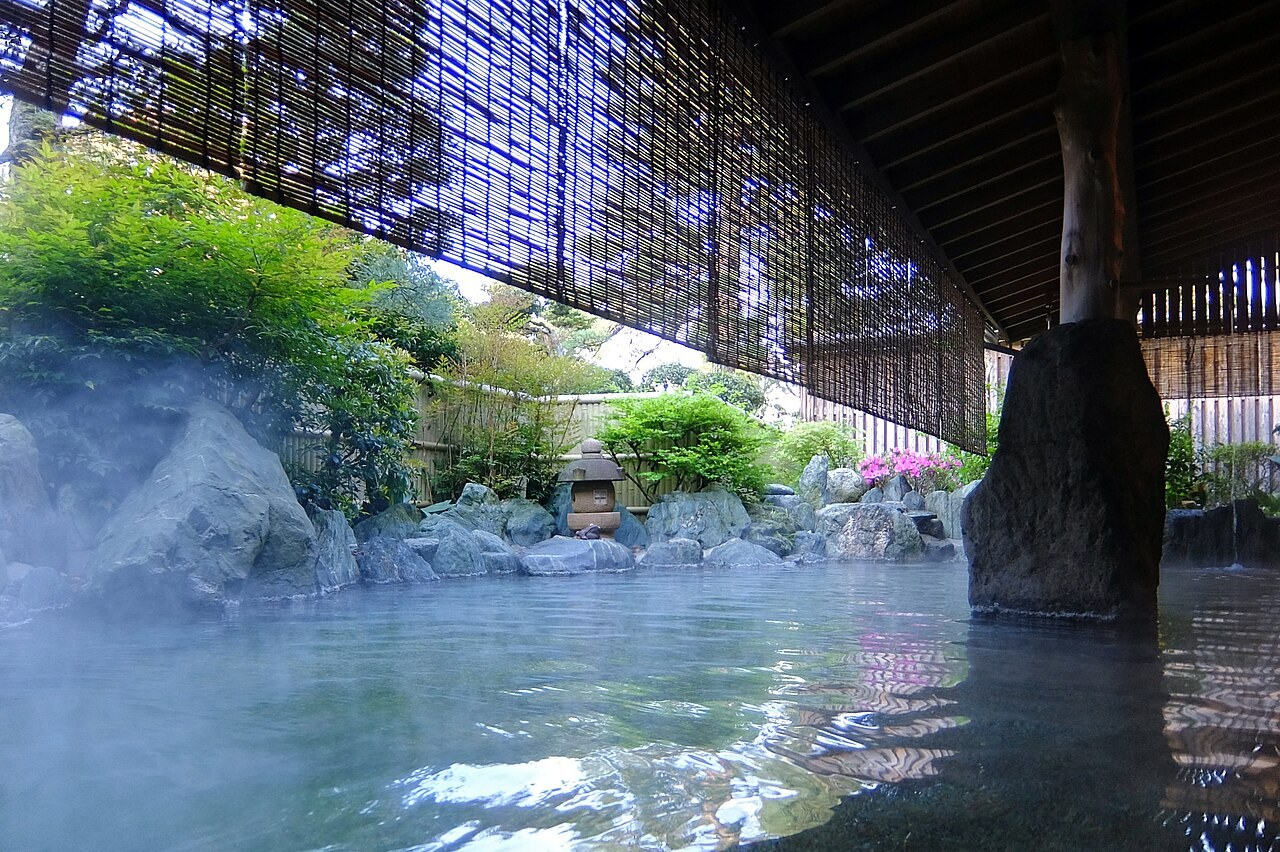
Tamatsukuri’s spring is a sulphate spring whose full description is sodium-calcium sulphate-chloride water — a mixed profile that combines sulphate and chloride components in one source. The source temperature is about 42 °C, close to natural bathing temperature, which suits the long, unhurried soaking that an inn town of this kind is built around.
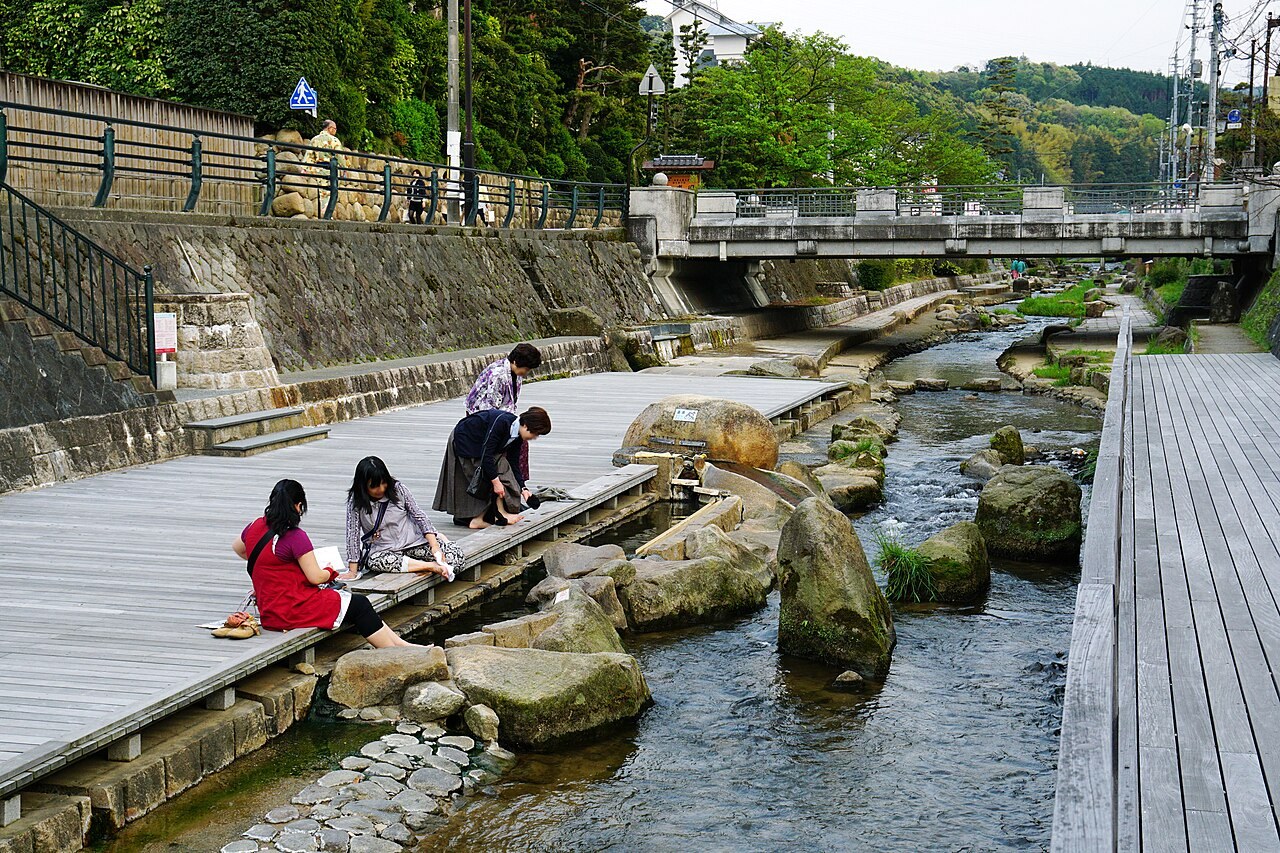
The town’s bathing is well spread for visitors: five places are listed here, with four public bathhouses and one hot-spring source recorded in the map data. That spread matters in a compact town — you can sample the water at more than one house without leaving the riverside street.
Named in the Pillow Book: one of the old three famous springs
Tamatsukuri’s fame is genuinely ancient. The Pillow Book, in the passage listing celebrated waters, names the Nanakuri spring, the spring of Tamatsukuri and the spring of Arima together — “the waters are Nanakuri, Tamatsukuri and Arima” — and on that basis Tamatsukuri is sometimes counted as one of Japan’s three famous springs. Few resorts can point to a written endorsement of that age.
The skin connection runs through the town’s presentation: the spring has been praised since the Pillow Book era in connection with beautiful skin, and it is traditionally said to leave the skin in fine condition. However a visitor judges the tradition, it explains the town’s modern identity as the San’in’s beautifying spring.
A representative spring of the San’in, from the station to the river
The Japanese record places Tamatsukuri alongside Kinosaki Onsen, Kaike Onsen and Misasa Onsen as one of the springs that represent the San’in region — the Sea of Japan side of western Honshu. Among that company it is the Matsue spring, the hot-spring quarter of Shimane’s capital-side city, with the town beginning where the train stops.
The listed best season is year-round, with one flourish: cherry blossom lines the river in spring. The river through the inn town is the organising feature of a stay, the line along which the baths, the blossom and the evening stroll all arrange themselves.
Getting there: the town begins at Tamatsukuri Onsen Station
From Osaka, take the shinkansen to Okayama, the Yakumo limited express to Matsue and then a local train: about four hours. From Tokyo the air route is a flight to Izumo Airport, about one hour and twenty minutes, plus a bus; the all-rail alternative takes about six hours and thirty minutes.
The arrival is the simplest of any town in this guide: the JR San’in Main Line station is named Tamatsukuri Onsen, and the article’s access note is just that — get off there. No bus leg, no taxi rank negotiation; the resort starts at the platform.
The sections above were written for this guide from the facts in the Japanese Wikipedia article 「玉造温泉」 and the spring and access data summarised on this page, under CC BY-SA 4.0.
Public bathhouse (spring type not recorded in OpenStreetMap) (4)
- 姫神広場
OpenStreetMap - 玉造温泉ゆ~ゆ
OpenStreetMap - 玉造温泉足湯
OpenStreetMap - 美肌たらい湯
OpenStreetMap
Hot spring source (1)
- おもじろ釜
OpenStreetMap
Gallery


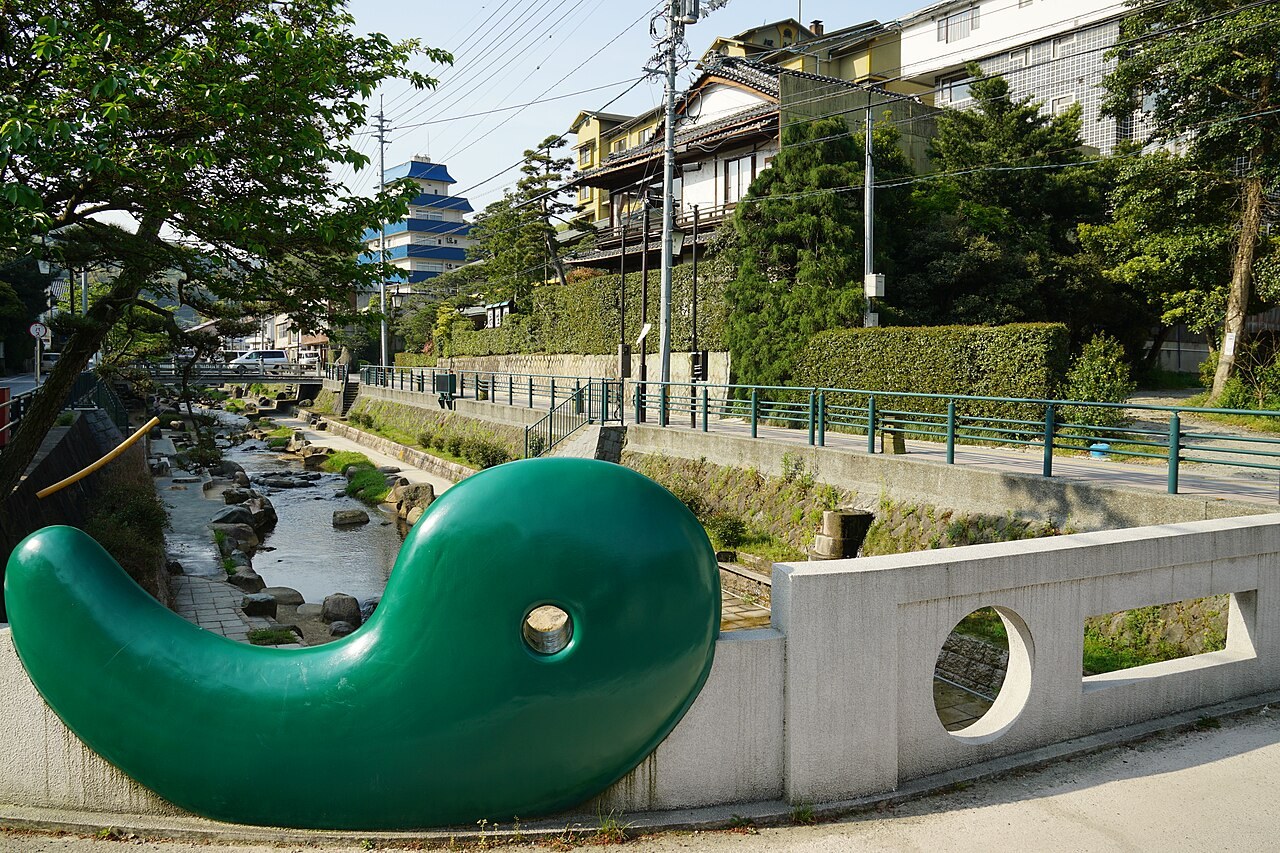

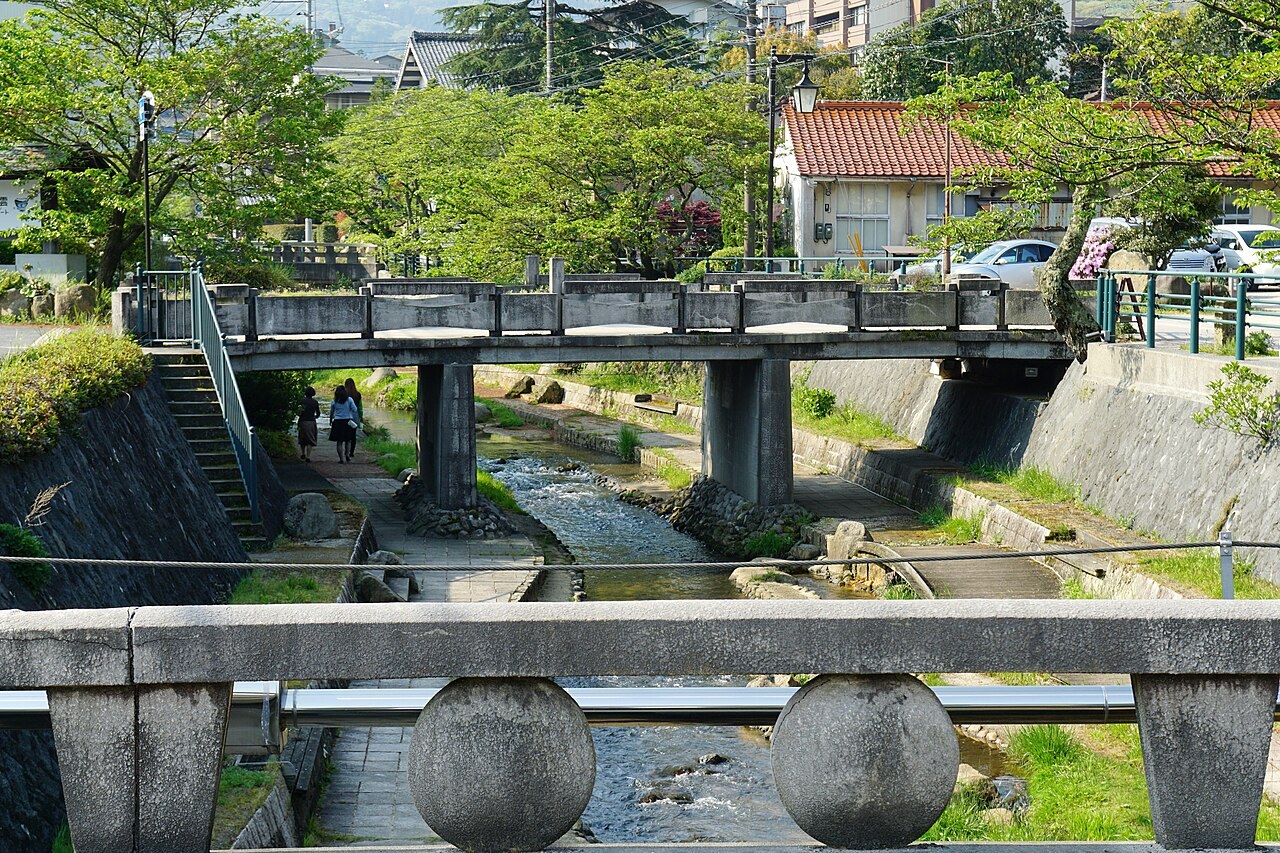

Names, types and websites are shown exactly as recorded in OpenStreetMap. A bathhouse whose spring type is not recorded is labelled as such — we do not guess. Before your first visit, read how to use an onsen.
More onsen towns
- Misasa Onsen 三朝温泉 — West along the San'in — the radon springs of the Mitoku River
- Yubara Onsen 湯原温泉 — South into the Okayama mountains — the river open-air bath
- Kinosaki Onsen 城崎温泉 — The same coast's great seven-bath town
- Yuda Onsen 湯田温泉 — On to Yamaguchi's smooth alkaline city spring
Keep exploring
- All onsen towns in Chugoku — this town's region, town by town
- Browse by spring type — find towns by their water
- Browse by feature — day trips, snow-view baths, free communal baths and more