Home › Onsen towns › Yamanaka Onsen
Yamanaka Onsen 山中温泉
Yamanaka's sulphate spring (48.3 °C, mildly alkaline) warms a gorge town in Kaga, Ishikawa, about 25 minutes by bus from Kagaonsen Station. Matsuo Bashō praised it as one of his three favourite springs, and its main street still runs between lacquerware workshops and the Kakusenkei gorge walk. Below are the bathhouses, spring sources and onsen facilities recorded in OpenStreetMap within about 2 km of the town centre.
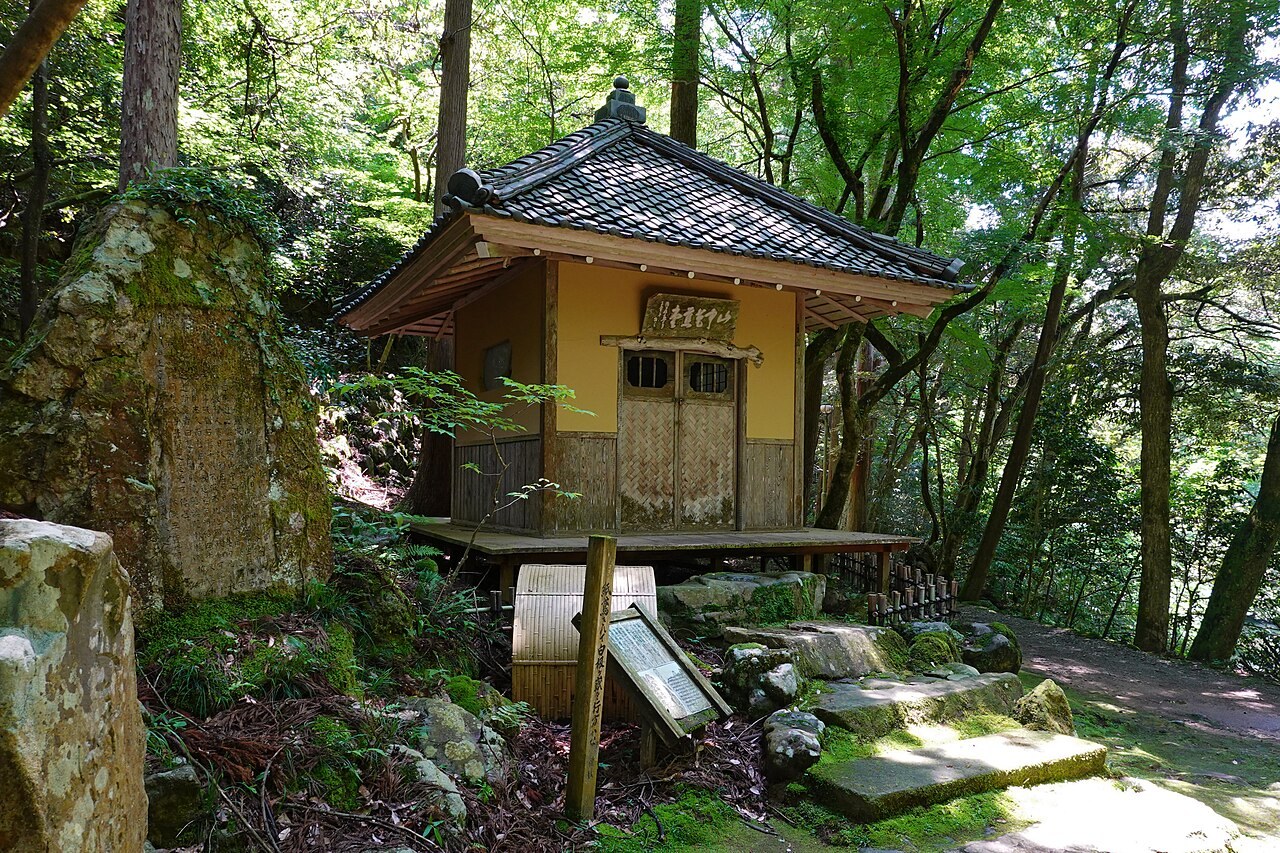
| Prefecture | Ishikawa |
|---|---|
| Region | Chubu |
| Spring quality | Sulphate spring (sodium-calcium sulphate; mildly alkaline, pH 8.57) |
| Source temperature | 48.3 °C at source |
| Nearest station | Kagaonsen (Hokuriku Shinkansen), then about 25 minutes by bus |
| From Tokyo | About 2 hours 45 minutes — Hokuriku Shinkansen to Kagaonsen + bus |
| From Osaka | About 2 hours 30 minutes — Hokuriku Shinkansen / limited express to Kagaonsen + bus |
| Best season | Autumn in the Kakusenkei gorge; spring for the Yamanaka-za theatre season |
| Places listed here | 3 |
| Public bathhouses | 3 |
| Hot spring sources | 0 |
Spring quality, source temperatures and access routes are drawn from the Japanese Wikipedia articles on each town (CC BY-SA 4.0) and the English articles credited below. Journey times are typical scheduled times for the routes named, rounded — always check current timetables before you travel.
About Yamanaka Onsen
Yamanaka Onsen (山中温泉) is a hot-spring town in Kaga City, Ishikawa Prefecture, set in the mountains along the Daishoji River. Its water is a sodium-calcium sulphate spring, mildly alkaline at pH 8.57, emerging at 48.3 °C. The town forms one corner of the Kaga hot-spring area and is famous above all for its gorge, Kakusenkei, and for the praise of the haiku poet Matsuo Basho.
Yamanaka is reached from Kagaonsen Station on the Hokuriku Shinkansen, then about twenty-five minutes by bus into the hills. True to its name, which means “in the mountains”, the inn town is surrounded by wooded slopes, with the river valley running through it.
The water: a mildly alkaline sulphate spring at 48.3 °C
Yamanaka’s spring is classed as a sulphate spring, of sodium-calcium sulphate type. The recorded figures are precise: 48.3 °C at source, a flow of 773 litres per minute, pH 8.57 and a mildly alkaline, hypotonic character. It is a single, well-defined source profile for the whole town, quite different from multi-well resorts where every inn differs.
Three public bathhouses are listed here, and the town also has day-trip bathing facilities, so the water is easy to try without an overnight stay. A soak in the valley, with the Daishoji River nearby and the gorge scenery around you, is the basic Yamanaka experience in any season.
Kakusenkei gorge: the Koorogi and Ayatori bridges
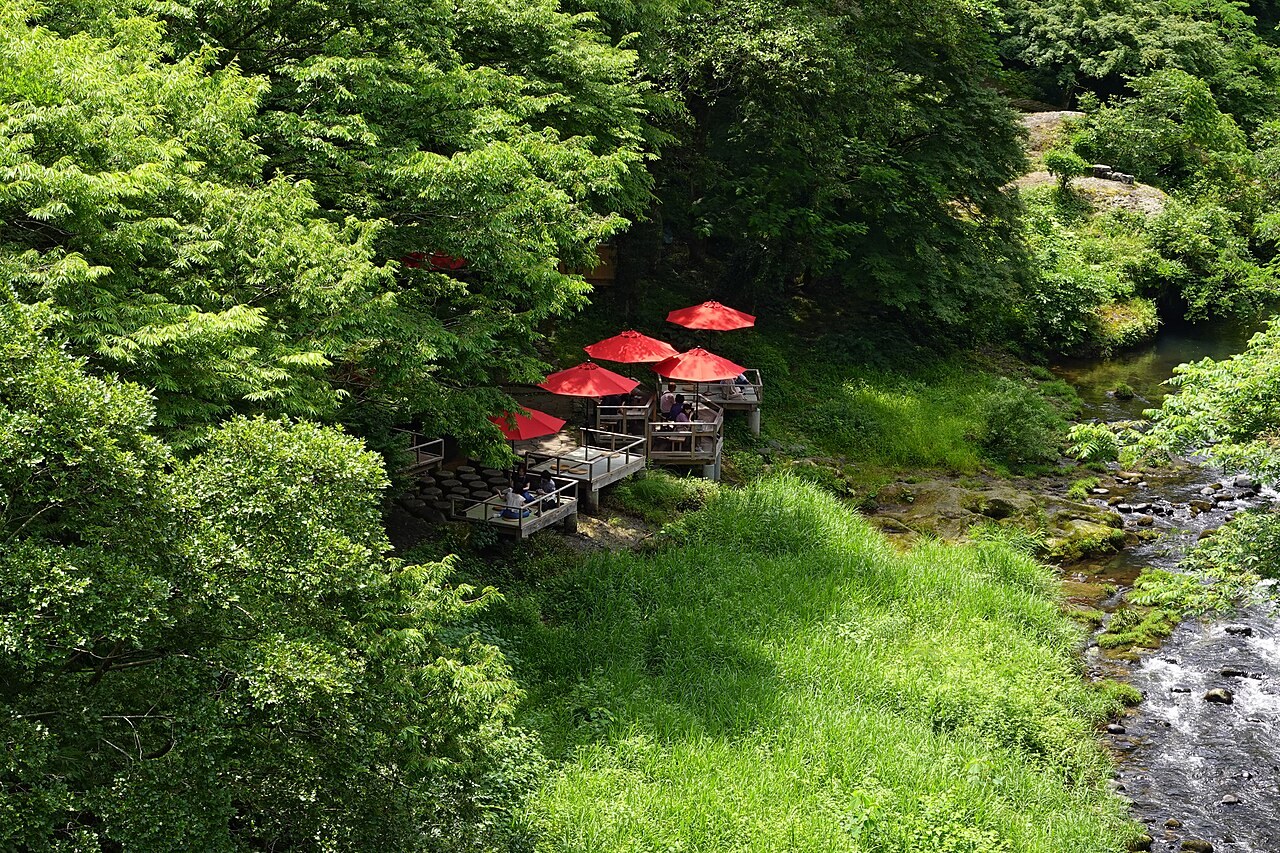
The inn town stands along the valley of the Daishoji River, in the scenic area known as Kakusenkei, and the Japanese record stresses how much rural mountain scenery — peaks, valleys and the river itself — lies within a short walk of the inns. The town is literally in the mountains, and the gorge is its front garden.
Two bridges are the symbols of the place. The Koorogi Bridge is the best known, and the Ayatori Bridge has a unique shape designed by the head of the Sogetsu school of flower arrangement. Crossing between them, along the river, is the standard stroll, and it is at its most celebrated in autumn, when the gorge colours.
Basho’s praise, lacquerware and the Yamanaka-bushi song
Matsuo Basho counted Yamanaka among his three great springs of Japan, naming Arima Onsen, Kusatsu Onsen and Yamanaka Onsen together — a grouping in which Yamanaka takes the place that other lists give to Gero. That early endorsement still anchors the town’s identity, and it is why the title of this page calls it Basho’s favourite spring.
Yamanaka is also a production centre for Yamanaka lacquerware, and souvenir shops are numerous in the town. Its folk song, the Yamanaka-bushi, is said to have been sung since the Genroku era of the Edo period. In spring, the season of the Yamanaka-za theatre adds a further reason to time a visit then.
Getting there: Kagaonsen Station, then twenty-five minutes by bus
From Tokyo, take the Hokuriku Shinkansen to Kagaonsen and then the bus: about two hours and forty-five minutes in total. From Osaka the same route, by shinkansen or limited express to Kagaonsen plus the bus, takes about two hours and thirty minutes. Komatsu Airport is the air gateway listed for the town, and drivers use the Kaga interchange on the Hokuriku Expressway.
Plan the last leg rather than assuming a walk: Kagaonsen Station serves the whole Kaga spring area, and Yamanaka is the inland, mountain member of the group, reached by that twenty-five-minute bus ride up into the valley.
The sections above were written for this guide from the facts in the Japanese Wikipedia article 「山中温泉」 and the spring and access data summarised on this page, under CC BY-SA 4.0.
Public bathhouse (spring type not recorded in OpenStreetMap) (3)
- 総湯 菊の湯 (女湯)
Official website · OpenStreetMap - 総湯 菊の湯 (男湯)
Official website · OpenStreetMap - 芦湯(足湯) 笠の露
OpenStreetMap
Gallery
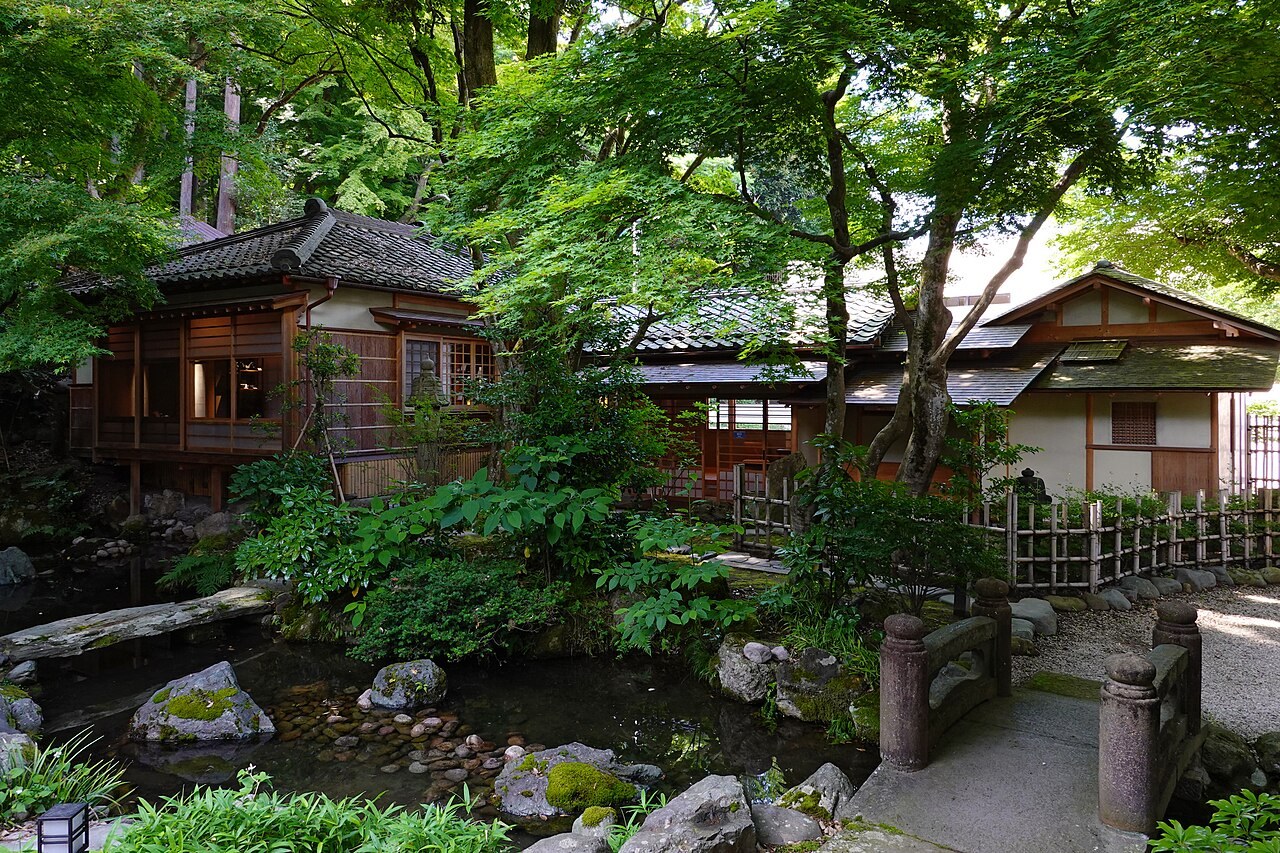

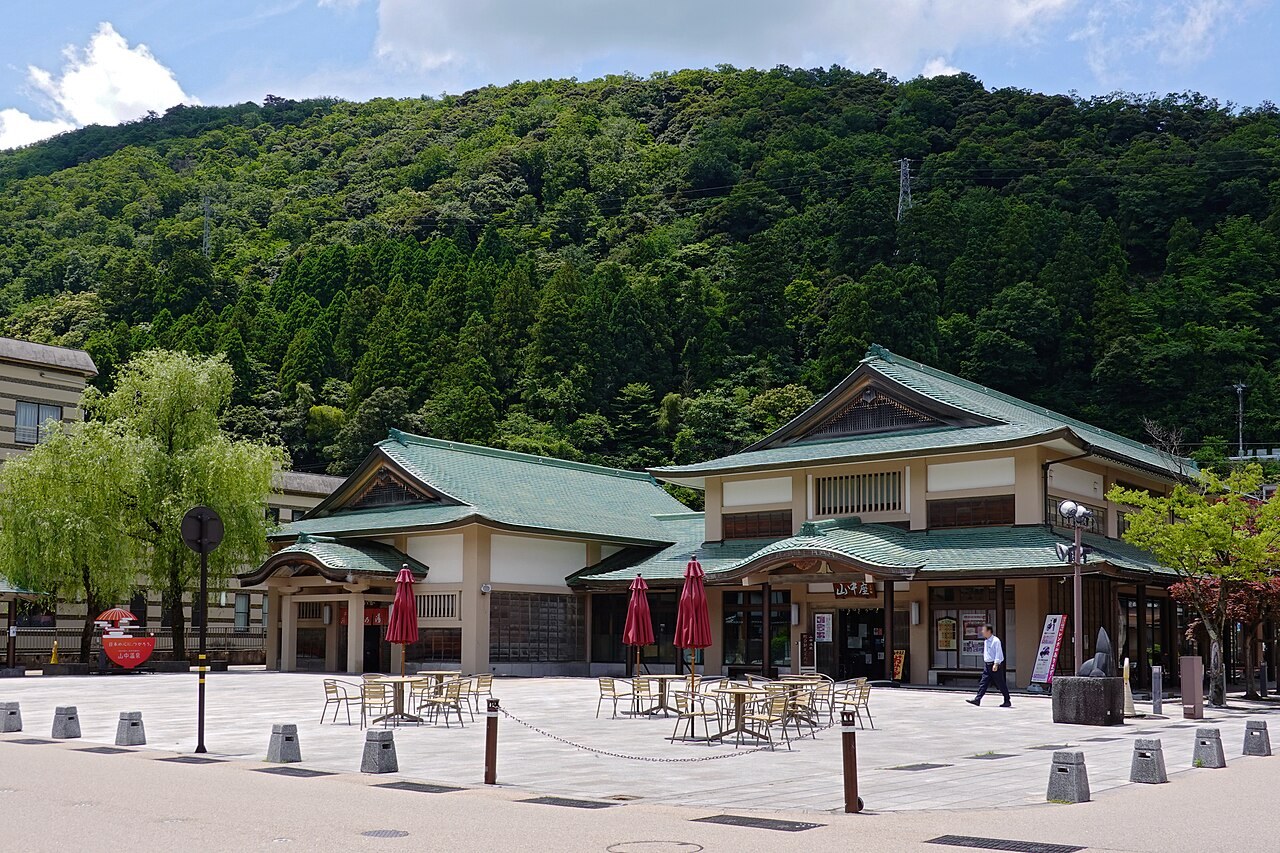

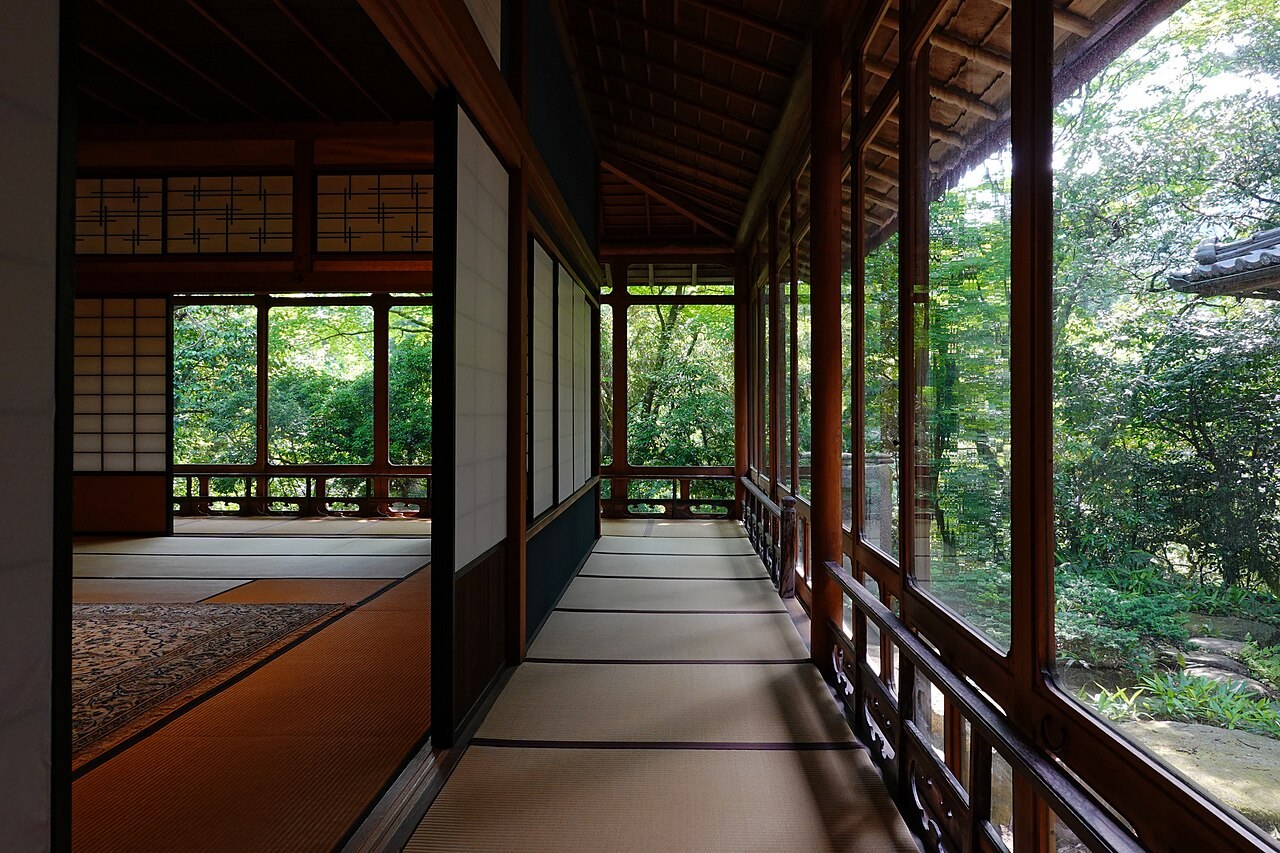

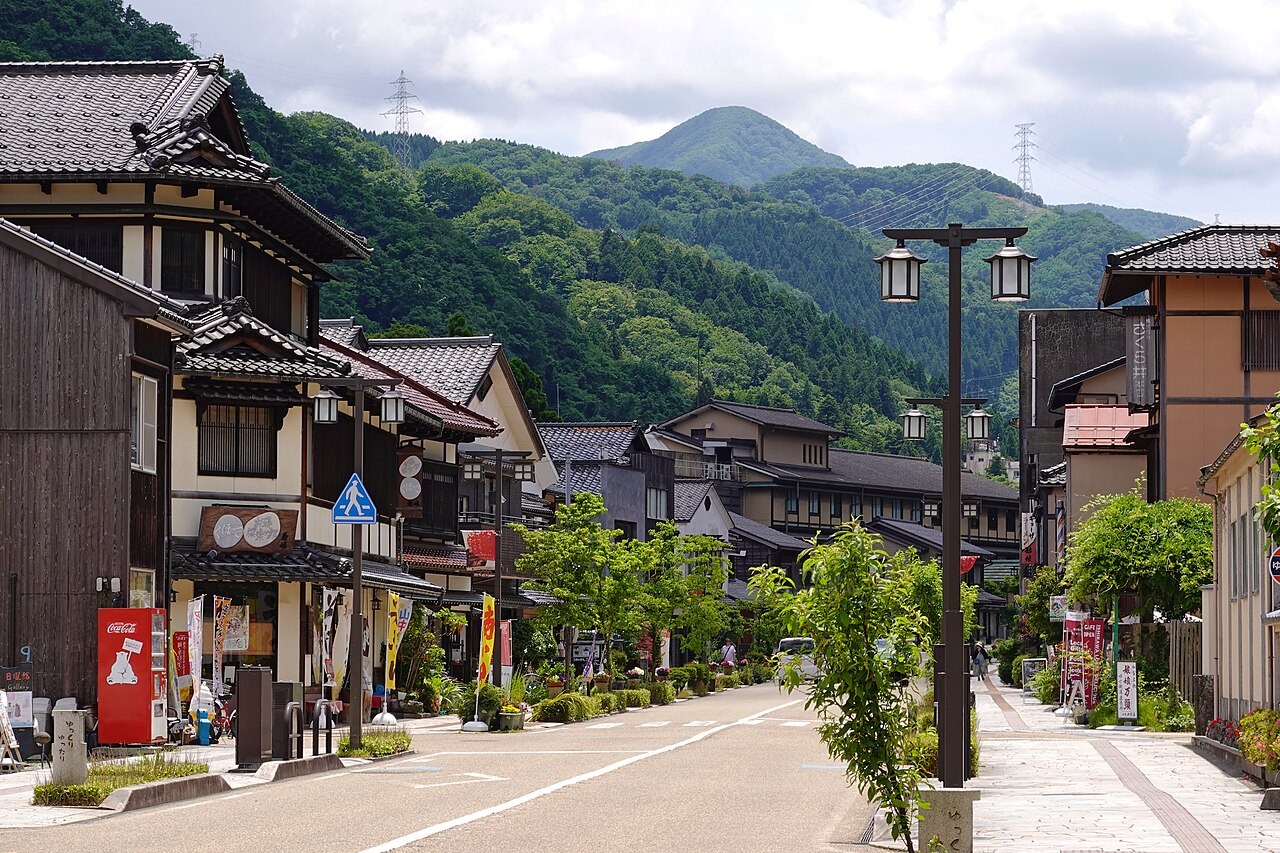

Names, types and websites are shown exactly as recorded in OpenStreetMap. A bathhouse whose spring type is not recorded is labelled as such — we do not guess. Before your first visit, read how to use an onsen.
More onsen towns
- Awara Onsen あわら温泉 — The neighbouring Hokuriku inn town, each house with its own well
- Unazuki Onsen 宇奈月温泉 — Up the coast — the gorge-mouth spring on the Kurobe River
- Ogoto Onsen おごと温泉 — South to the Lake Biwa shore springs
- Gero Onsen 下呂温泉 — Another river town counted among Japan's great springs
Keep exploring
- All onsen towns in Chubu — this town's region, town by town
- Browse by spring type — find towns by their water
- Browse by feature — day trips, snow-view baths, free communal baths and more