Home › Onsen towns › Awara Onsen
Awara Onsen あわら温泉
Awara's inns each sink their own well into chloride springs that run from 33.5 to 77.5 °C, in a flat country town about 10 minutes by taxi from Awaraonsen Station. Opened in the 1880s and long called the back parlour of the Hokuriku, it is a working ryokan town of ashiyu footbaths and evening streets. Below are the bathhouses, spring sources and onsen facilities recorded in OpenStreetMap within about 2.5 km of the town centre.
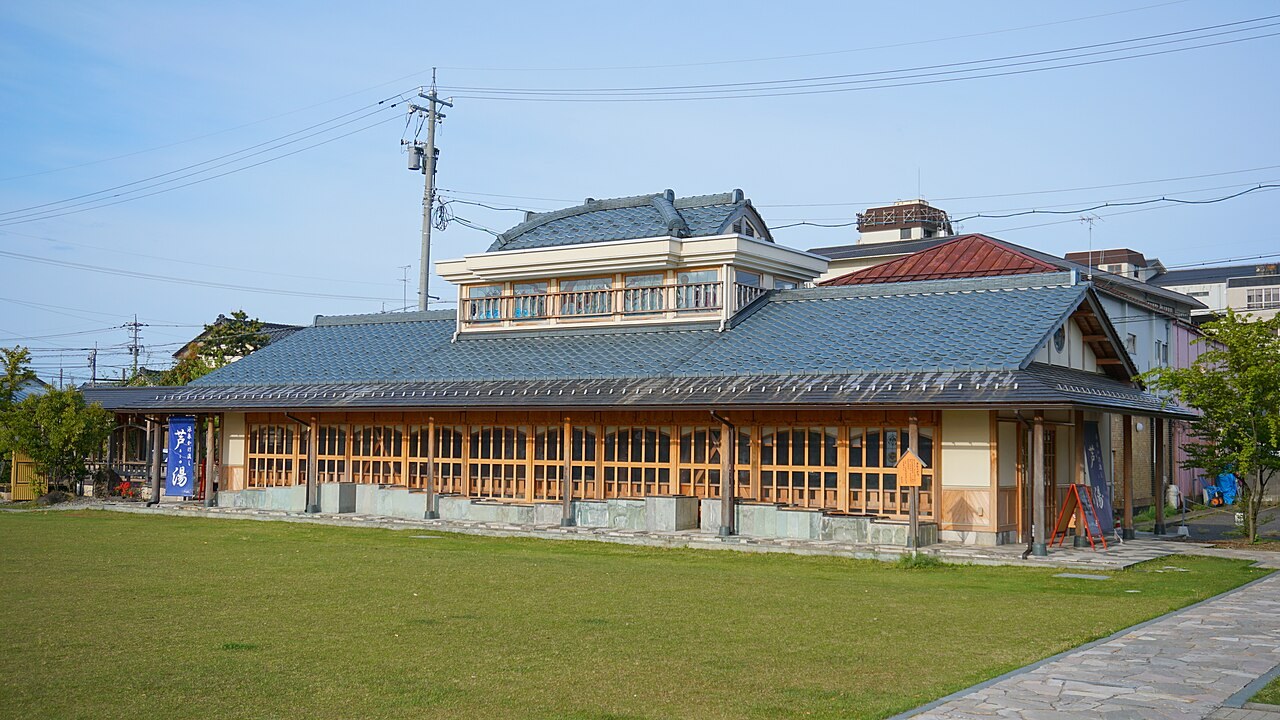
| Prefecture | Fukui |
|---|---|
| Region | Chubu |
| Spring quality | Chloride spring (sodium-chloride water; every inn has its own source) |
| Source temperature | 33.5–77.5 °C at source, by well |
| Nearest station | Awaraonsen (Hokuriku Shinkansen), then about 10 minutes by taxi; or Awara-Yunomachi (Echizen Railway) |
| From Tokyo | About 3 hours — Hokuriku Shinkansen to Awaraonsen |
| From Osaka | About 2 hours 30 minutes — Shinkansen / limited express via Tsuruga |
| Best season | Winter for Echizen crab; June for the iris fields of Kitagata lakeside park |
| Places listed here | 2 |
| Public bathhouses | 2 |
| Hot spring sources | 0 |
Spring quality, source temperatures and access routes are drawn from the Japanese Wikipedia articles on each town (CC BY-SA 4.0) and the English articles credited below. Journey times are typical scheduled times for the routes named, rounded — always check current timetables before you travel.
About Awara Onsen
Awara Onsen (あわら温泉) is a hot-spring town in Awara City, Fukui Prefecture, in the Chubu region. Its water is a sodium-chloride chloride spring, and its defining feature is that every inn has its own source well, so the bathing changes subtly from one house to the next. Source temperatures range widely, from 33.5 °C to 77.5 °C, depending on the well.
Long described as the back parlour of Kansai, Awara is one of Fukui Prefecture’s leading hot-spring towns, and it has been selected for a list of one hundred notable springs recommended by hot-spring therapy doctors. It is reached by Hokuriku Shinkansen to Awaraonsen Station and then a short taxi ride, or directly on the local Echizen Railway to Awara-Yunomachi Station.
The water: a different well at every inn, from 33.5 °C to 77.5 °C
In most Japanese spa towns a few communal sources feed the whole resort, but Awara grew up around wells sunk inn by inn. That is why the figures give such a broad range: 33.5–77.5 °C at source, by well. One inn’s bath may be comparatively gentle while another’s, a short walk away, comes up far hotter, and each house manages its own water for its own tubs.
The spring type is consistent across the town even where the temperature is not. Awara’s water is classed as a chloride spring with sodium-chloride water, a salt-bearing spring of the kind that holds its heat well after bathing. Two public bathhouses are listed here, so day visitors can also try the town’s water.
A back-parlour town in old Echizen, loved for a long time
The town stands in what was once Echizen Province, and the record describes it as Fukui Prefecture’s foremost hot-spring town, loved by many people over a long period and known as Kansai’s back parlour — a place to retreat to rather than a resort that shows off. The present hiragana spelling of the name came into use after the former towns of Ashihara and Kanazu merged to form Awara City.
That settled character is part of the appeal: a classic inn town where you bathe in your inn’s own water and eat well, while the town stays quiet around you. Its place on the doctors’ recommended list underlines that the reputation rests on the water as much as on the inns.
When to come: Echizen crab in winter, irises in June
The seasonal calendar for Awara is short and pointed. Winter is the season for Echizen crab, the celebrated local catch served at the inns — the town’s classic pairing with a hot chloride bath. In June the draw is floral instead: the iris fields of Kitagata lakeside park, by the lake of the same name near the town.
Between those peaks, a stay follows the town’s old pattern — your own inn’s well, a stroll, and a dinner built around the season on the Sea of Japan side.
Getting there: shinkansen to Awaraonsen, then ten minutes by taxi
From Tokyo the journey takes about three hours by Hokuriku Shinkansen to Awaraonsen Station. From Osaka it is about two hours and thirty minutes by shinkansen or limited express via Tsuruga. Awaraonsen is the shinkansen station, not the spa town itself, so allow about ten minutes by taxi to the inns.
The local alternative is the Echizen Railway to Awara-Yunomachi Station, which sets you down in the town itself. The record also lists about forty-five minutes by taxi from Komatsu Airport, and about twenty minutes from the Maruoka interchange or fifteen minutes from the Kanazu interchange on the Hokuriku Expressway.
The sections above were written for this guide from the facts in the Japanese Wikipedia article 「芦原温泉」 and the spring and access data summarised on this page, under CC BY-SA 4.0.
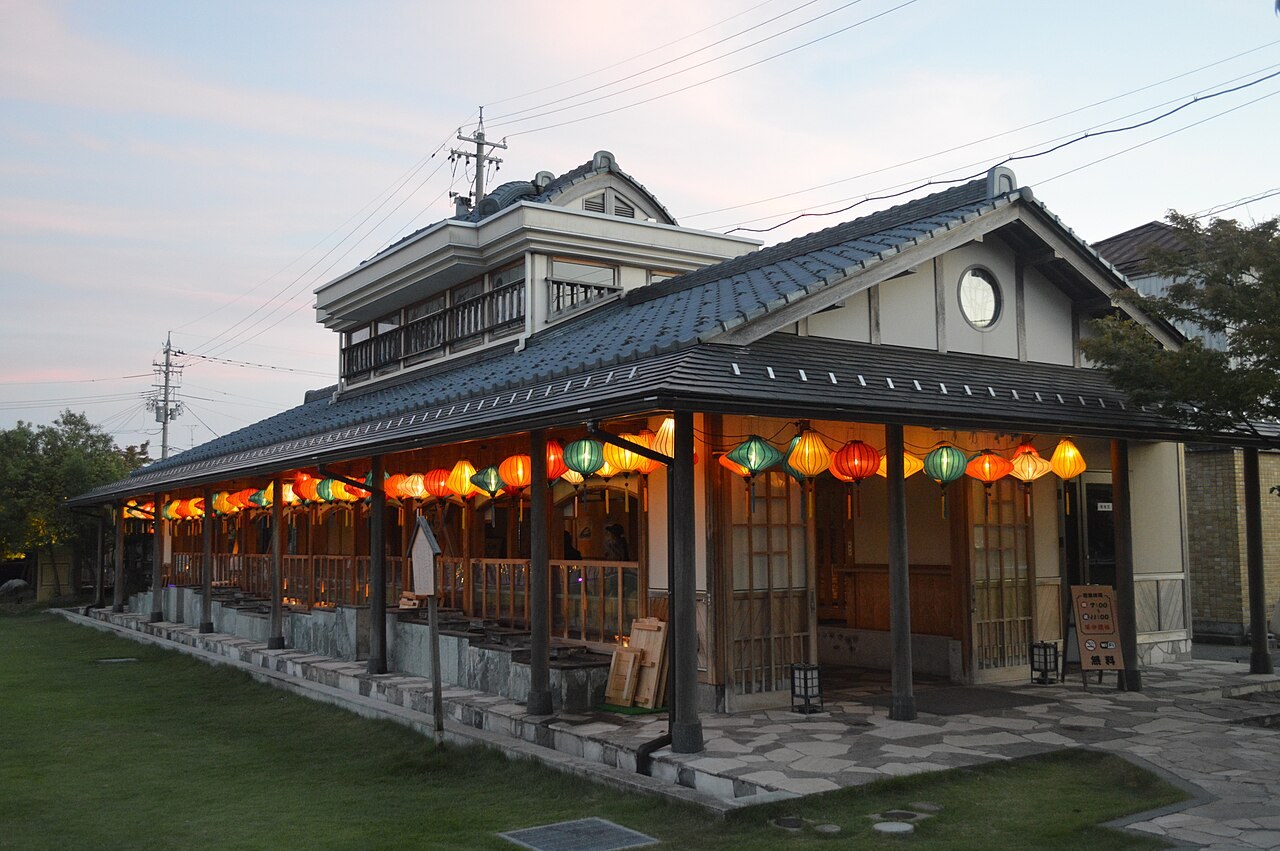
Public bathhouse (spring type not recorded in OpenStreetMap) (2)
- セントピアあわら
OpenStreetMap - 足湯コーナー
OpenStreetMap
Gallery
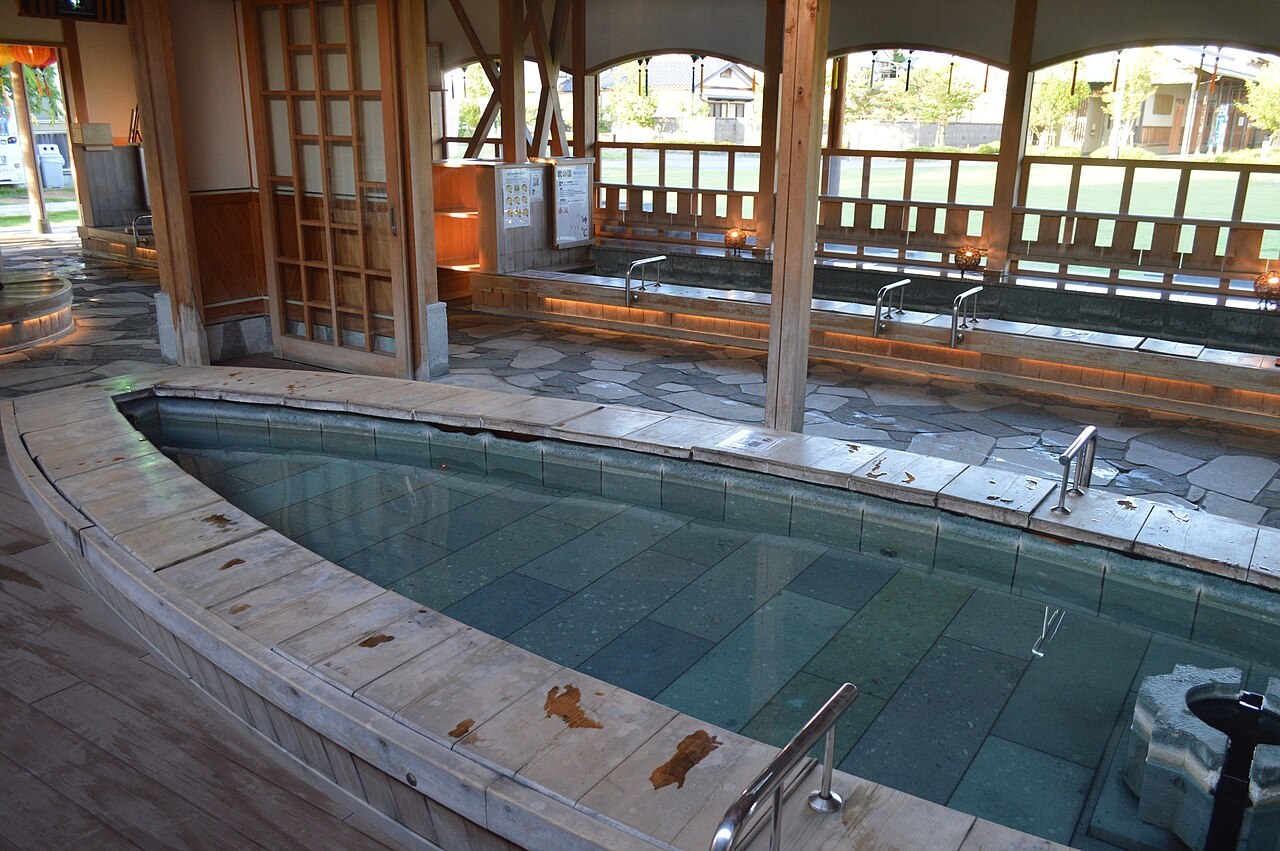

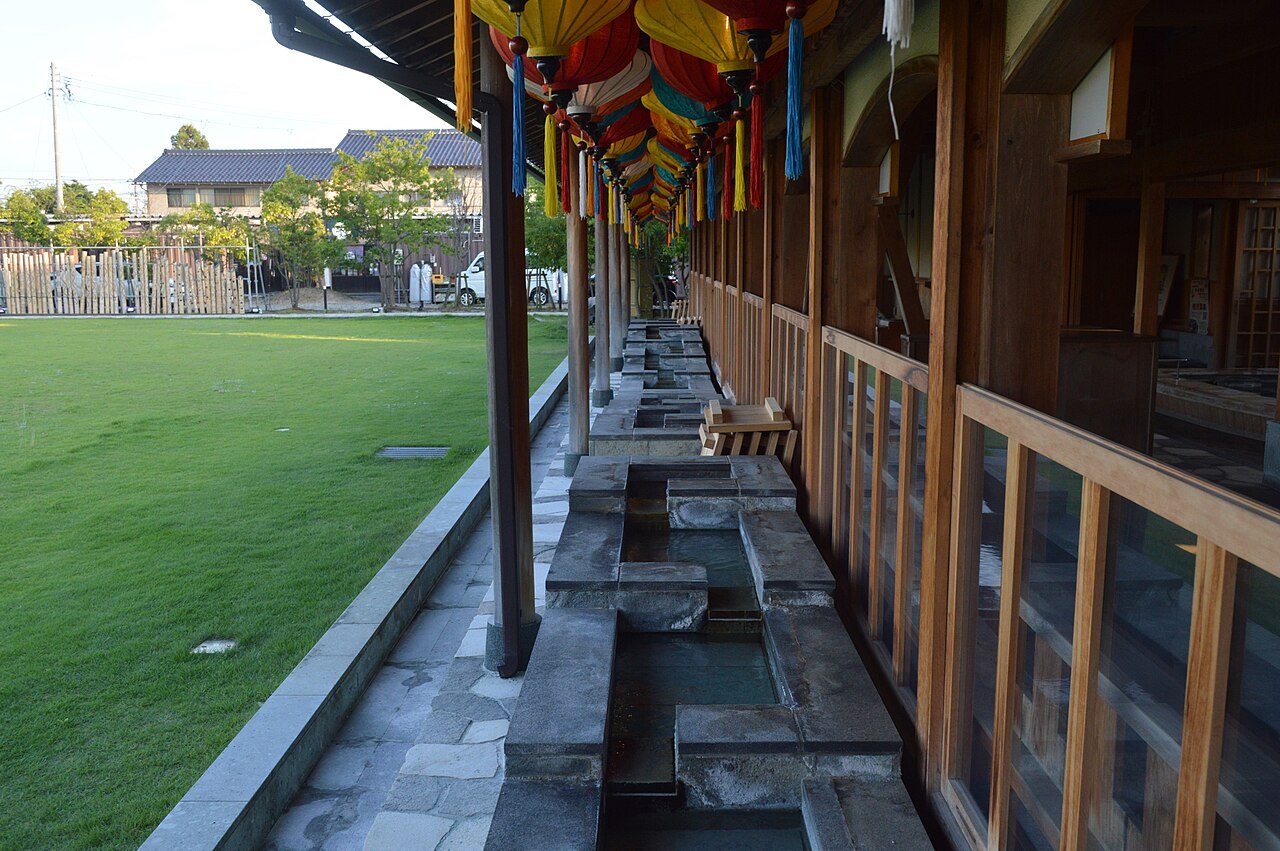

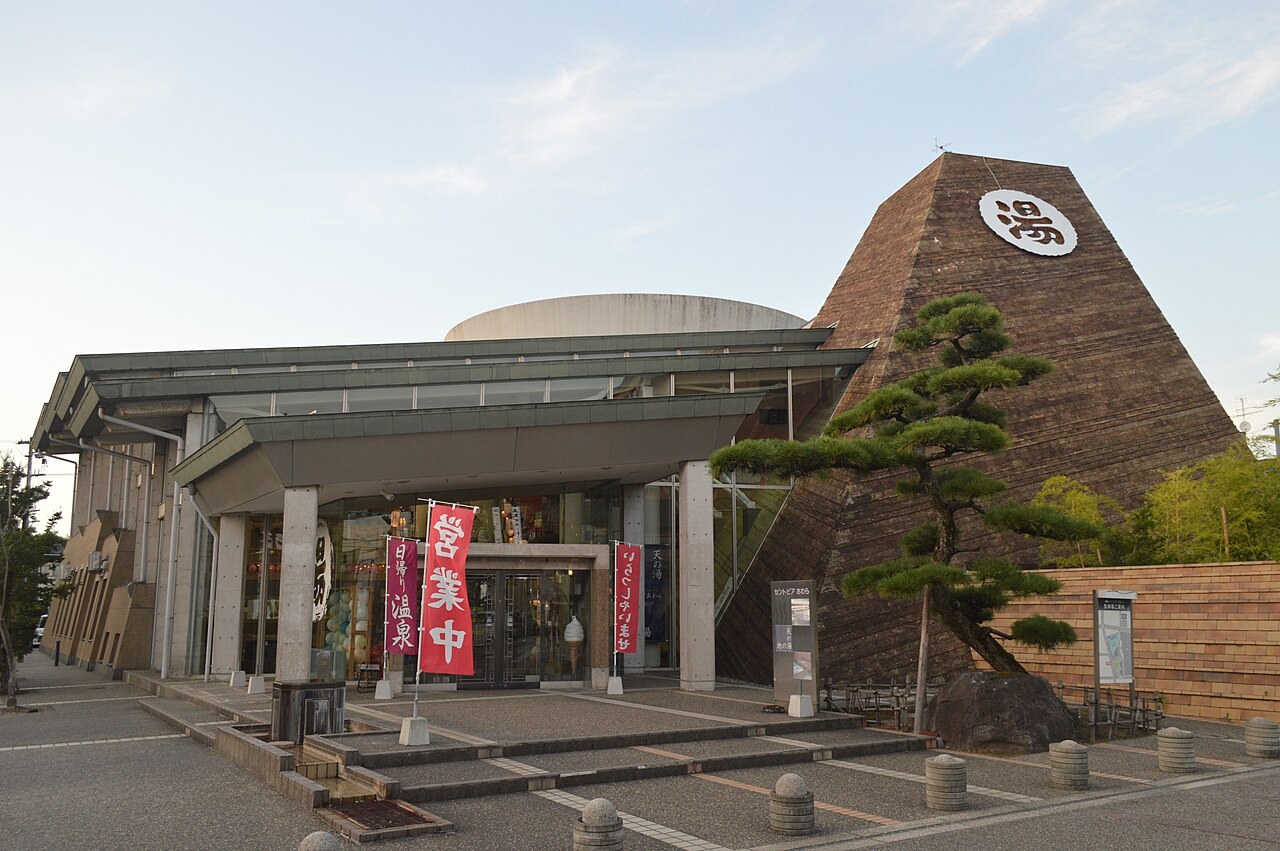

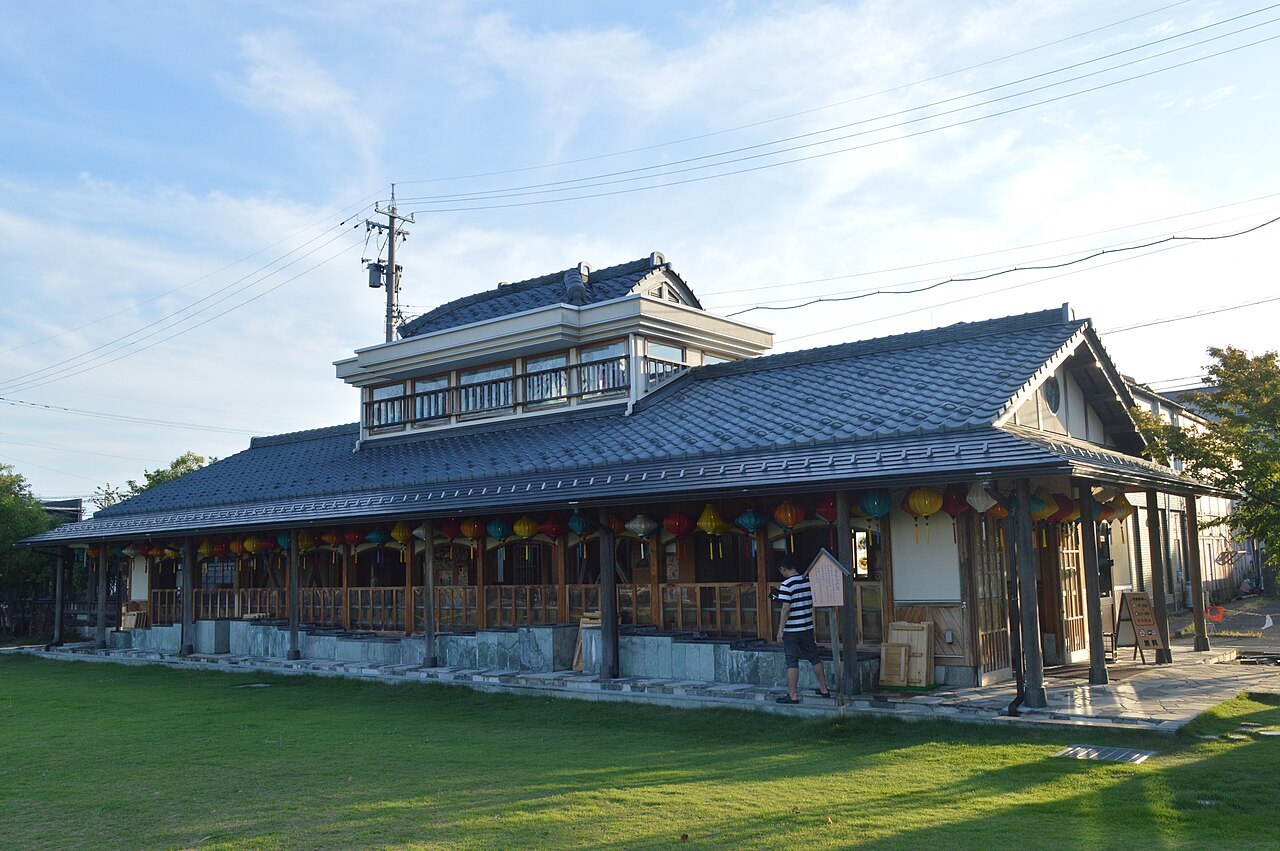

Names, types and websites are shown exactly as recorded in OpenStreetMap. A bathhouse whose spring type is not recorded is labelled as such — we do not guess. Before your first visit, read how to use an onsen.
More onsen towns
- Yamanaka Onsen 山中温泉 — The next Kaga spring south — a gorge town of the Kaga Onsenkyo
- Unazuki Onsen 宇奈月温泉 — North along the Hokuriku — the gorge-mouth spring on the Kurobe River
- Ogoto Onsen おごと温泉 — South to Lake Biwa's shore springs behind Kyoto
- Yunoyama Onsen 湯の山温泉 — Another inn town where each house guards its own source
Keep exploring
- All onsen towns in Chubu — this town's region, town by town
- Browse by spring type — find towns by their water
- Browse by feature — day trips, snow-view baths, free communal baths and more