Home › Onsen towns › Shuzenji Onsen
Shuzenji Onsen 修善寺温泉
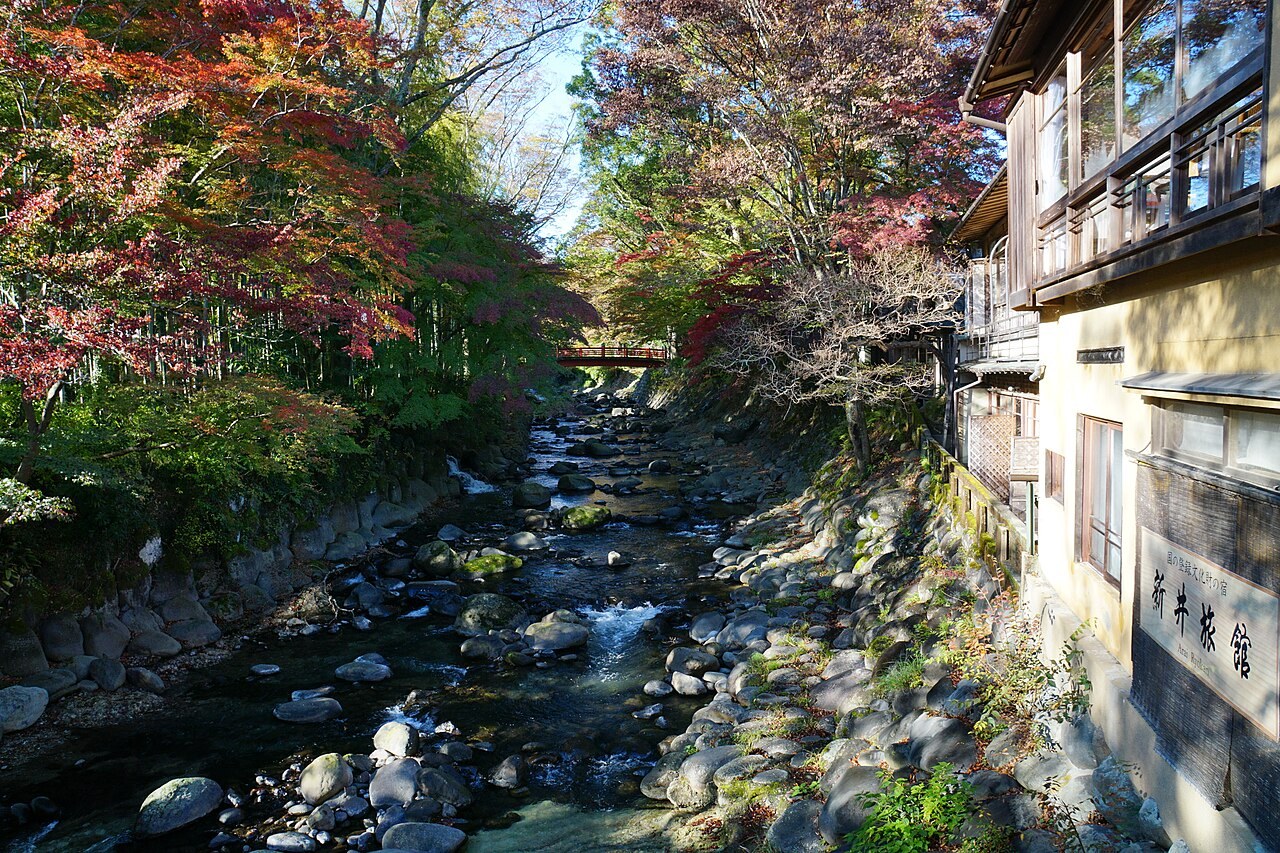
Shuzenji is the oldest hot spring in Izu — by legend struck from the river rock by Kukai himself in 807 — a compact temple town on the Katsura River in the middle of the Izu Peninsula, about two hours from Tokyo. Alkaline simple water, a bamboo promenade, five red bridges and the latest autumn maples in the lowlands make it the peninsula's quiet classic.
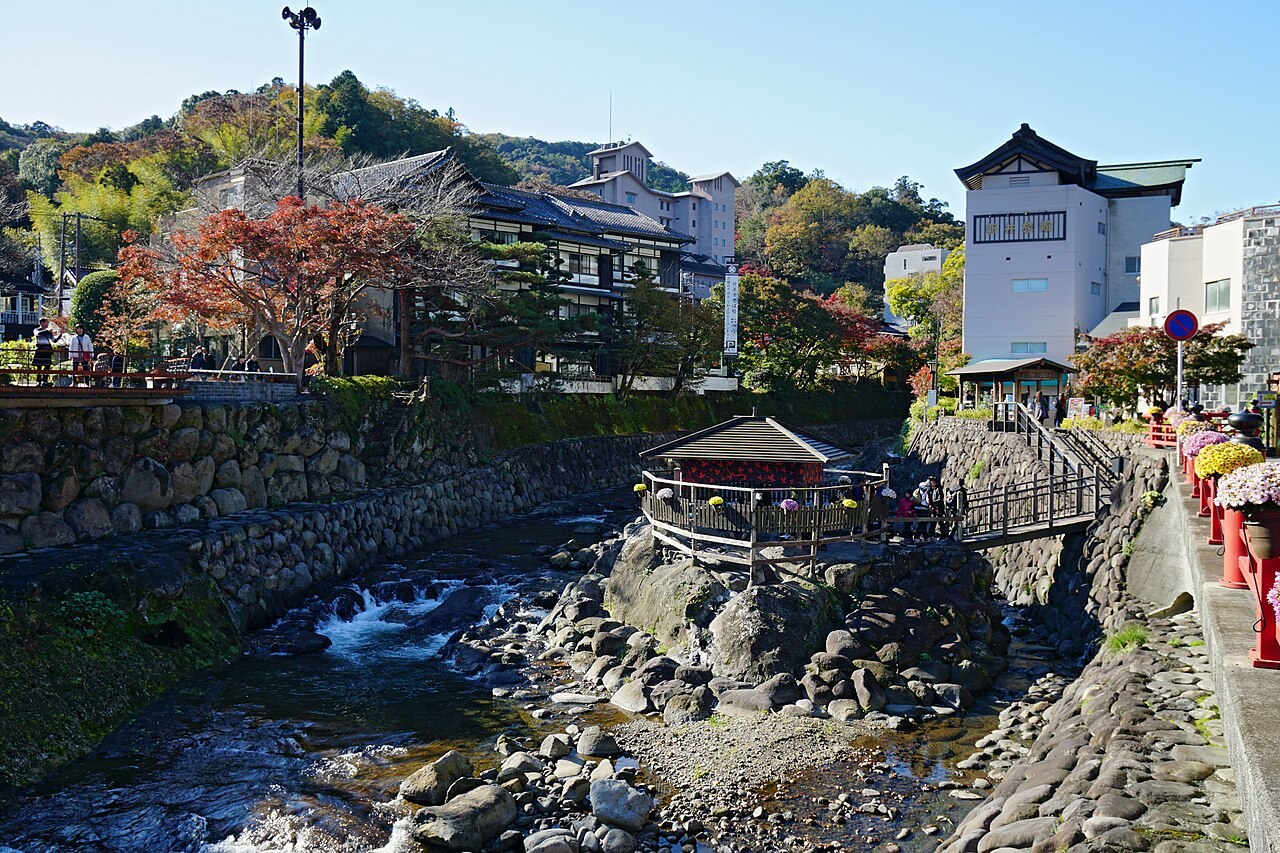
| Prefecture | Shizuoka |
|---|---|
| Region | Chubu |
| Spring quality | Alkaline simple spring (colourless and gentle; supplied town-wide from a centralised source system) |
| Source temperature | About 60–65 °C at source (central supply, in place since 1981) |
| Nearest station | Shuzenji (Izuhakone Railway Sunzu Line), then about 8 minutes by bus |
| From Tokyo | About 2 hours — Tokaido Shinkansen to Mishima + Sunzu Line, or the direct Odoriko limited express (about 2 h 10 min), then the short bus |
| From Osaka | About 2 hours 45 minutes to 3 hours — Tokaido Shinkansen to Mishima + Sunzu Line + bus |
| Best season | Late November to early December for the maples — the latest autumn colour in the area; February for plum blossom; early summer for fireflies and fresh green |
Spring quality, source temperatures and access routes are drawn from the Japanese Wikipedia articles on each town (CC BY-SA 4.0) and the English articles credited below. Journey times are typical scheduled times for the routes named, rounded — always check current timetables before you travel.
About Shuzenji Onsen
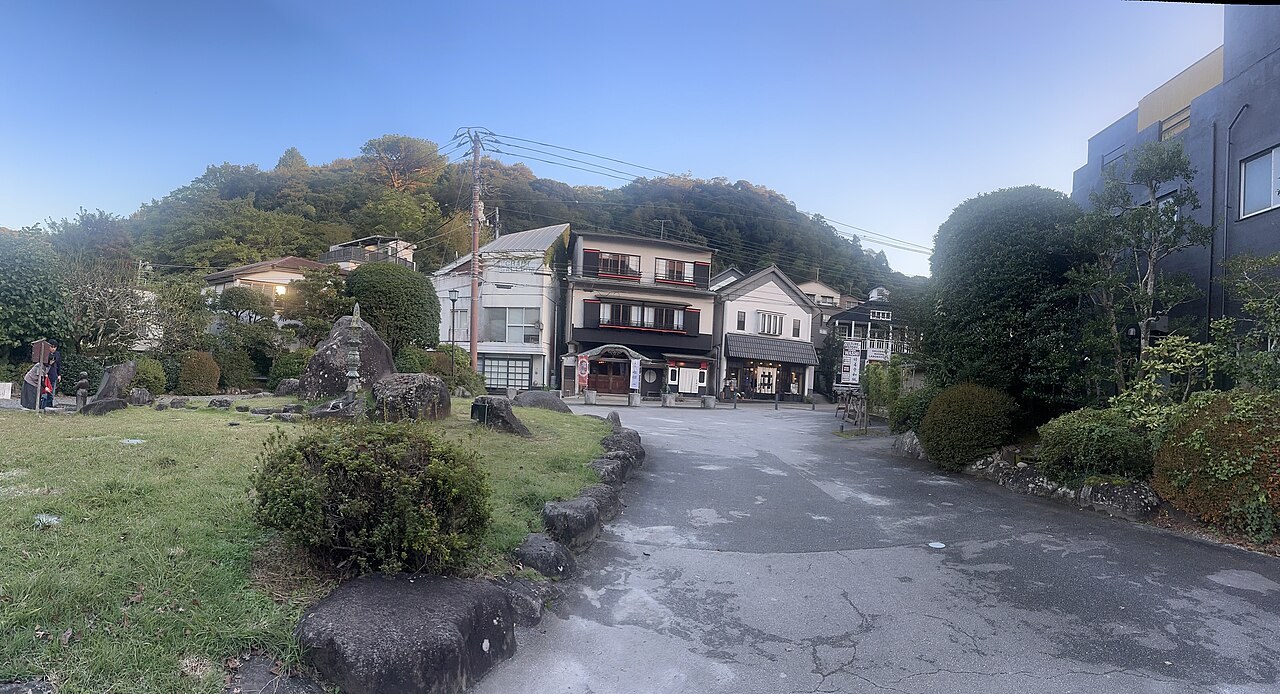
Shuzenji Onsen (修善寺温泉) is a hot spring town in Izu City, in the centre of Shizuoka's Izu Peninsula, and is counted among Japan's hundred famous springs. Its founding legend is Izu's most famous: in 807 the monk Kukai, moved by a boy washing his sick father in the cold Katsura River, struck the river rock with his tokko, his single-pronged vajra, and hot water gushed out. Kukai is also credited with founding the temple — its name, Shuzen-ji, is written with different characters from the town's, but read the same way.
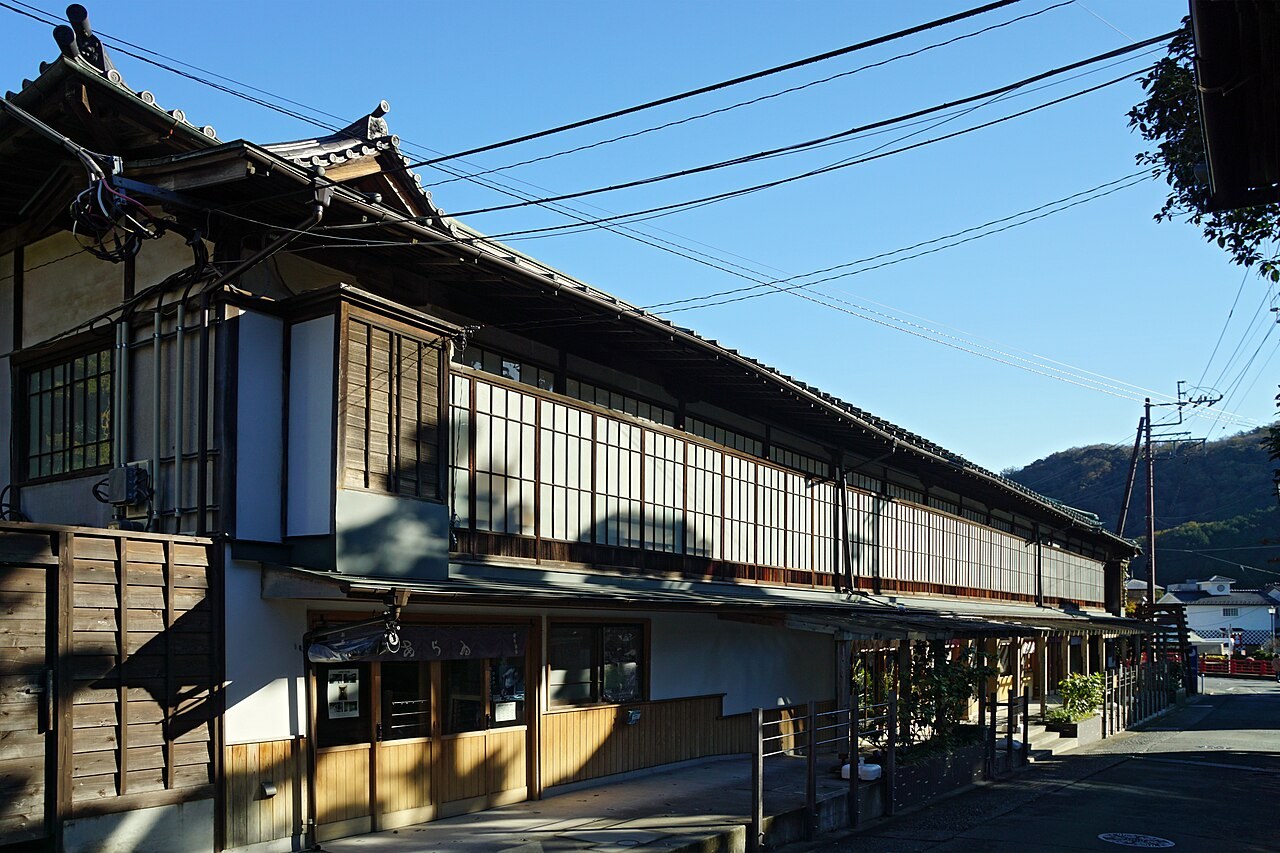
The town that grew around the spring is small and walkable: ryokan-lined riverbanks, the temple, shrines and graves from the Kamakura age, and a literary guest list that runs from Natsume Soseki — who nearly died here in his famous Shuzenji illness of 1910 — to Kawabata Yasunari. Tourism calls it the Little Kyoto of Izu.
The water and the central supply
Shuzenji's water is an alkaline simple spring: colourless, gentle and easy on every skin, drawn at about 60 to 65 °C. What is unusual is how the town manages it. Uncontrolled pumping in the post-war decades lowered the water level and let seawater creep in, so since June 1981 Shuzenji has run a centralised source-management and distribution system, supplying the town's inns from shared sources — an early and much-studied piece of onsen conservation.
The source itself, Tokko-no-yu, still stands in the middle of the river under its small roof — but as a historic monument, not a bath: bathing there is prohibited today. The Tokko-no-yu Park beside it offers the River Terrace Sugi-no-Yu footbath instead, and older English guides that describe bathing in Tokko-no-yu itself are out of date.
Walking the old town: Hakoyu, the bamboo path and five bridges
The one communal bath visitors can use is Hakoyu, opened at the turn of the 2000s to revive the town's communal-bathing tradition — historically Shuzenji kept seven residents-only soto-yu. It is a cedar-lined public bath, with the three-storey Gyokuro tower beside it for views over the town roofs.
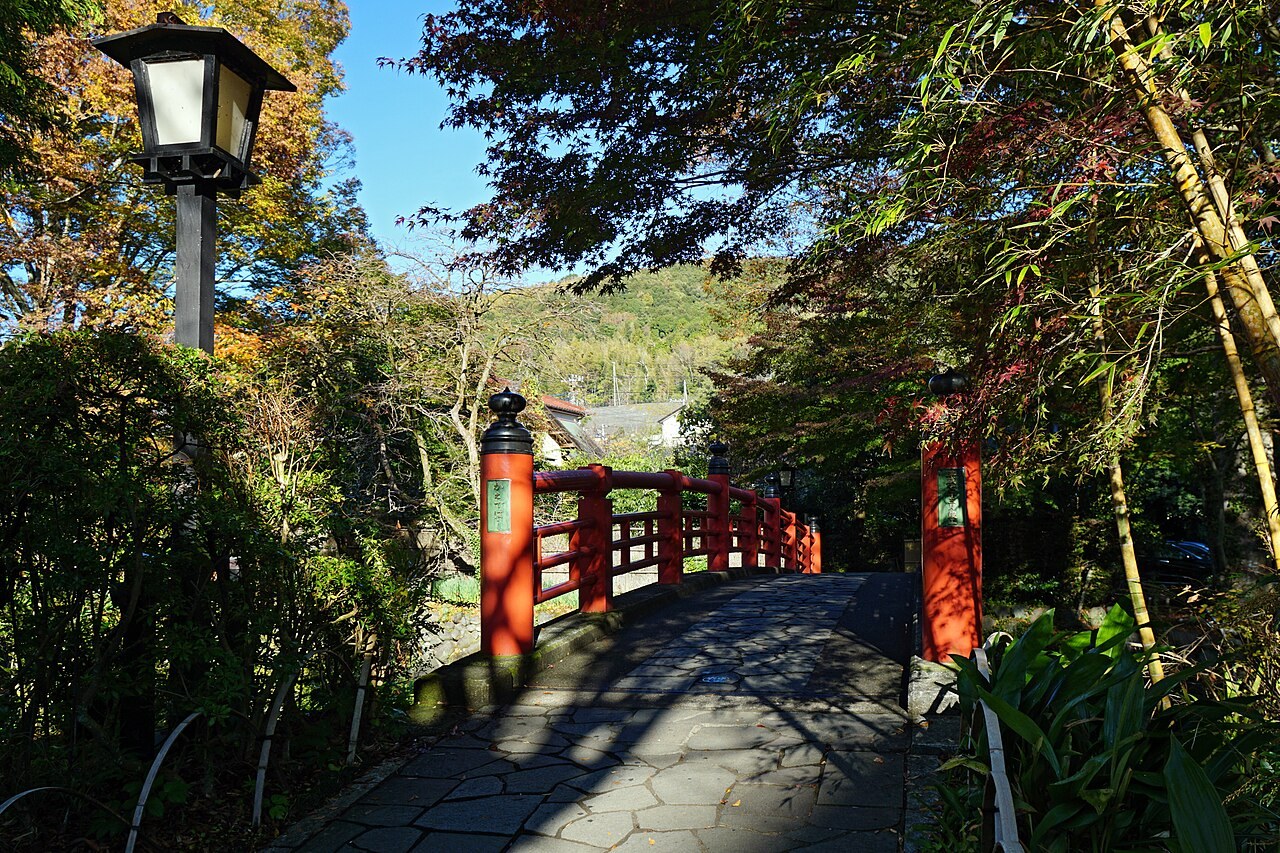
From Tokko-no-yu, the Chikurin-no-Komichi bamboo path follows the Katsura River upstream for about 300 metres to Takishita Bridge, lit at night, with a circular bamboo bench at its heart. Five red bridges — the Koi no Hashi, the bridges of love — cross the river in the centre; crossing all five while making a wish is the town's romance tradition, tied to Okamoto Kido's play Shuzenji Monogatari.
Shoguns, graves and writers
Shuzenji's quiet streets hold a dark Kamakura chapter. The second shogun, Minamoto no Yoriie, was confined here and assassinated while bathing in 1204 — the story Okamoto Kido later dramatised. His grave, the Shigetsuden hall built by his mother Hojo Masako and described as the oldest wooden building in Izu, and the graves of his brother Noriyori and of Yoriie's thirteen retainers are all walkable sights around the temple and Genji Park.
In the modern era the town became a writers' retreat: Soseki convalesced here, and Akutagawa Ryunosuke, Ozaki Koyo, Izumi Kyoka, Shimazaki Toson, Tayama Katai and Kawabata Yasunari all stayed and wrote. Hiroshige had already made the spring famous in 1853 as number 14 of his Famous Places in the Sixty-odd Provinces, The Hot Springs of Shuzen Temple.
Getting there and the seasons
Ride to Shuzenji Station, the terminus of the Izuhakone Railway Sunzu Line, then take the Tokai Bus about eight minutes to Shuzenji Onsen. From Tokyo, either change at Mishima (Shinkansen plus Sunzu Line) or take the direct Odoriko limited express, about two hours ten minutes in all; from Osaka, Mishima is on the Tokaido Shinkansen, making Shuzenji the easiest of Izu's classic towns at under three hours.
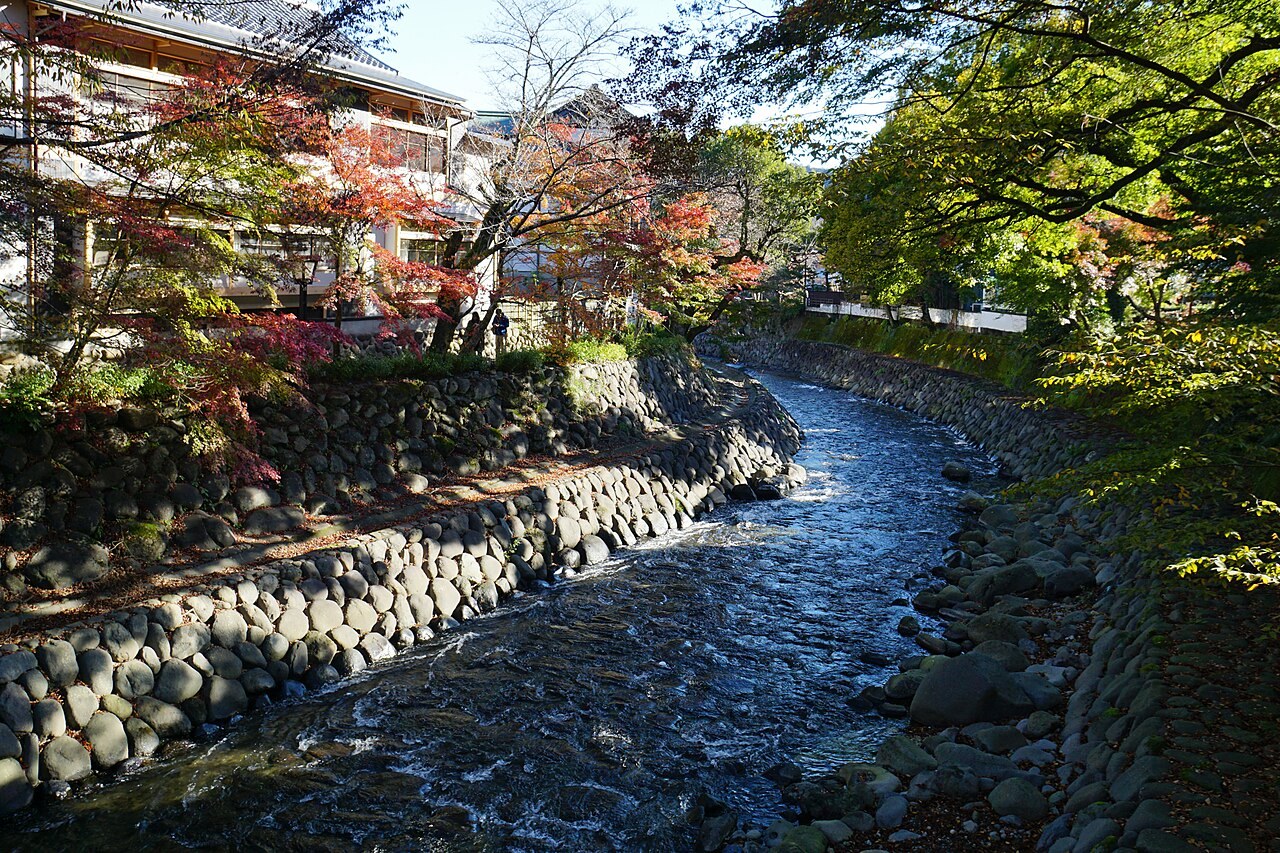
Come in late November or early December if you can: the maple forest and the Shuzenji Nature Park give the town the latest autumn colour in the lowlands of the region. February brings the plum grove, spring brings cherry blossom along the river, and early summer brings fireflies and fresh green to the bamboo path.
The sections above were written for this guide from the facts in the Wikipedia articles Shuzenji Onsen and 「修善寺温泉」, available under CC BY-SA 4.0, and official tourism sources.
Gallery




The springs and baths named on this page are described from the Wikipedia articles credited above and official tourism sources. Before your first visit, read how to use an onsen.
More onsen towns
- Atami Onsen 熱海温泉 — Shizuoka's other classic — the great coastal resort on Atami Bay
- Hakone Onsen 箱根温泉 — Across the mountains — the caldera resort above Odawara
- Gero Onsen 下呂温泉 — Another silky alkaline simple spring, counted among Japan's three great springs
- Isawa Onsen 石和温泉 — Yamanashi's big-volume simple springs, on the way to Mount Fuji country
Keep exploring
- All onsen towns in Chubu — this town's region, town by town
- Browse by spring type — find towns by their water
- Browse by feature — day trips, snow-view baths, free communal baths and more