Home › Onsen towns › Isawa Onsen
Isawa Onsen 石和温泉
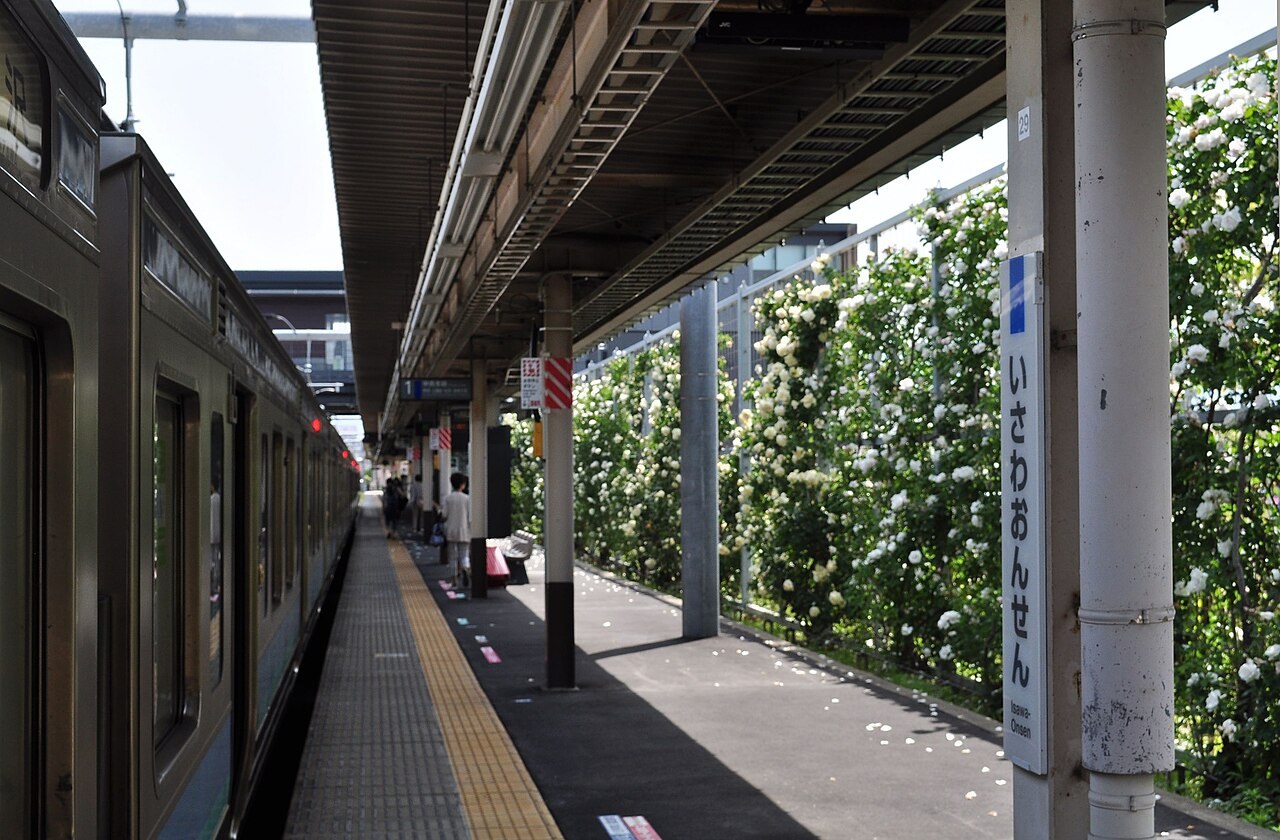
Isawa's alkaline simple springs famously burst out of a peach orchard in 1961 and built a whole spring town in Yamanashi's fruit country, about 90 minutes by train from Shinjuku to Isawa-onsen Station. The water pours out in huge volume — over 8,000 litres a minute across the town — among vineyards, peach blossom and winery tours. Below are the bathhouses, spring sources and onsen facilities recorded in OpenStreetMap within about 2.5 km of the town centre.
| Prefecture | Yamanashi |
|---|---|
| Region | Chubu |
| Spring quality | Simple spring (alkaline simple water, in very large volume) |
| Source temperature | Varies by source across the town's many wells |
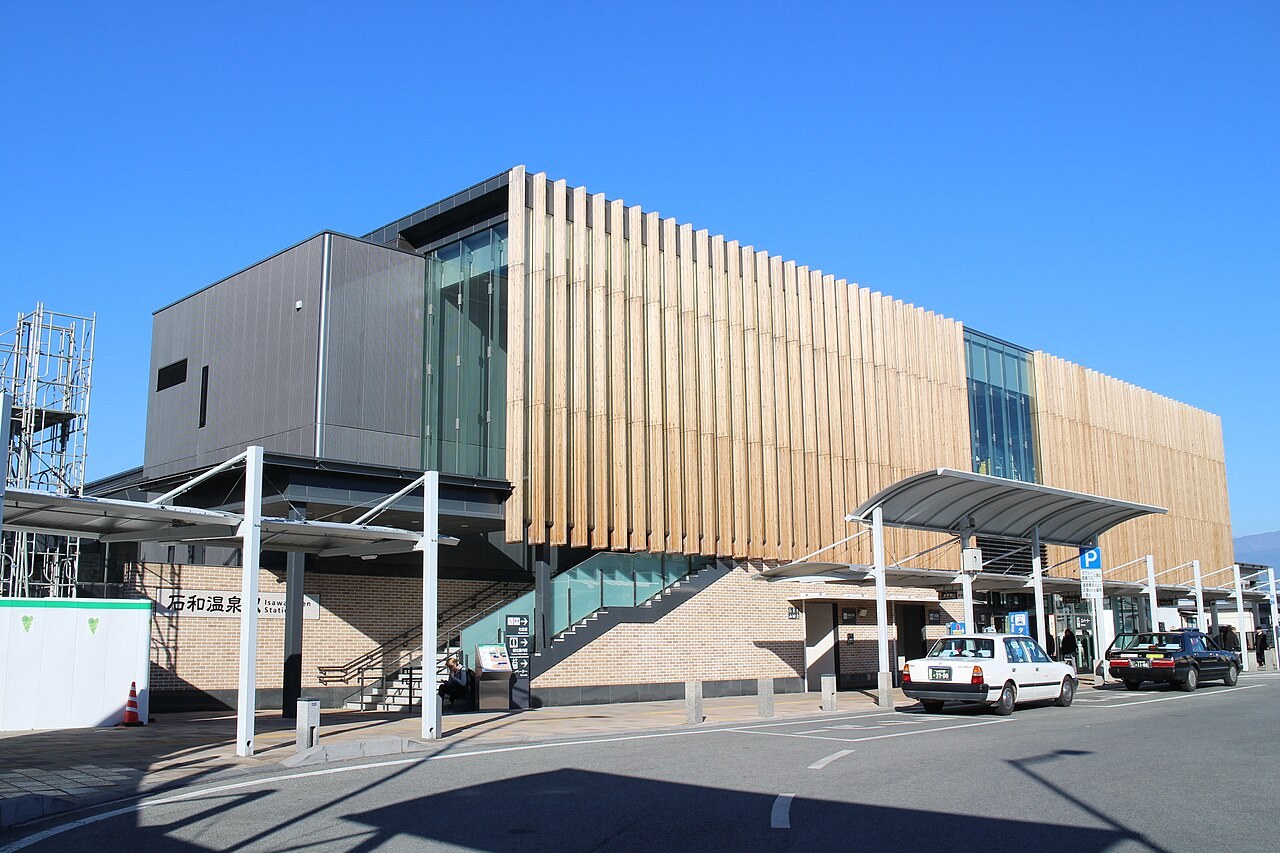
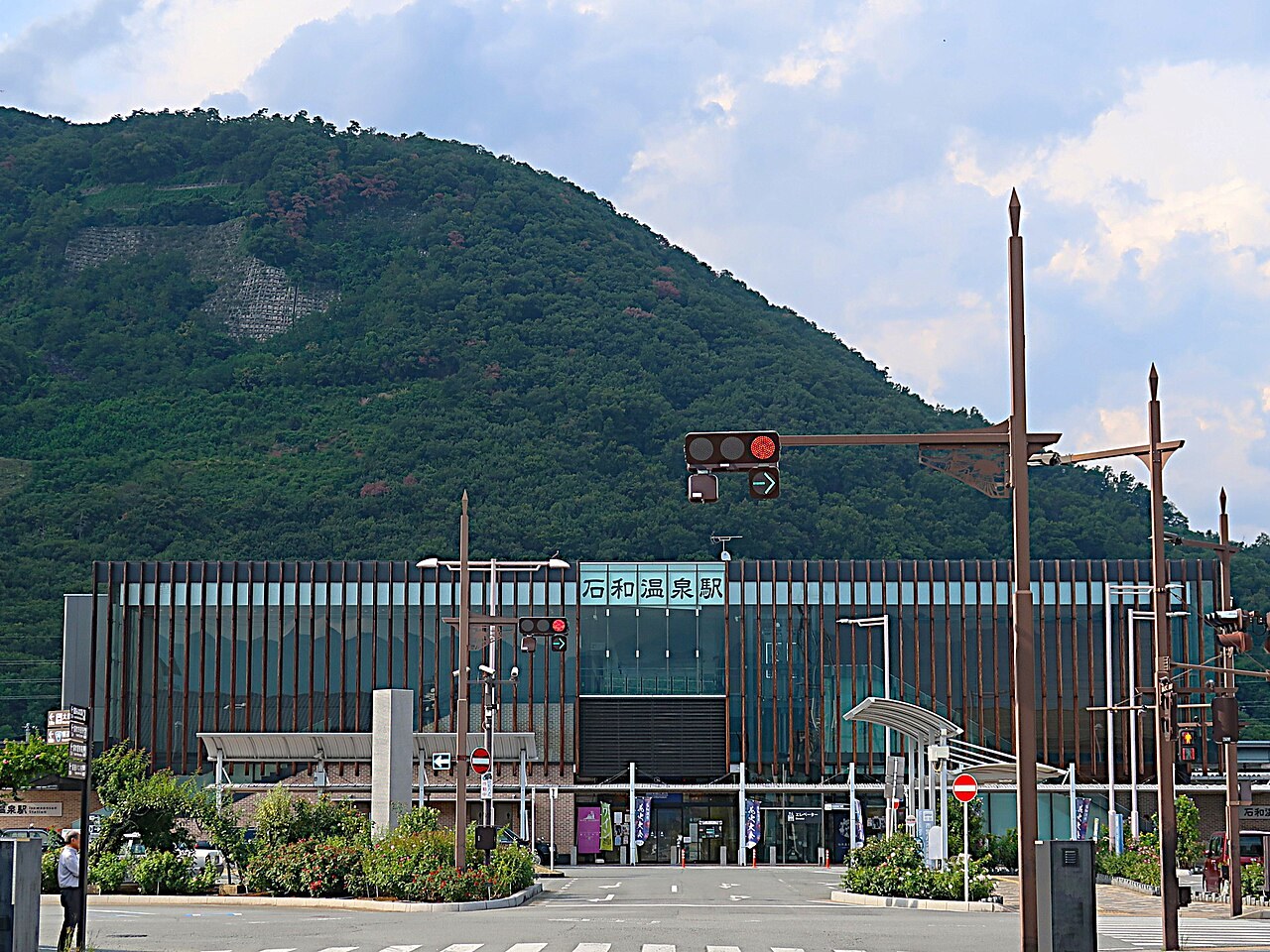
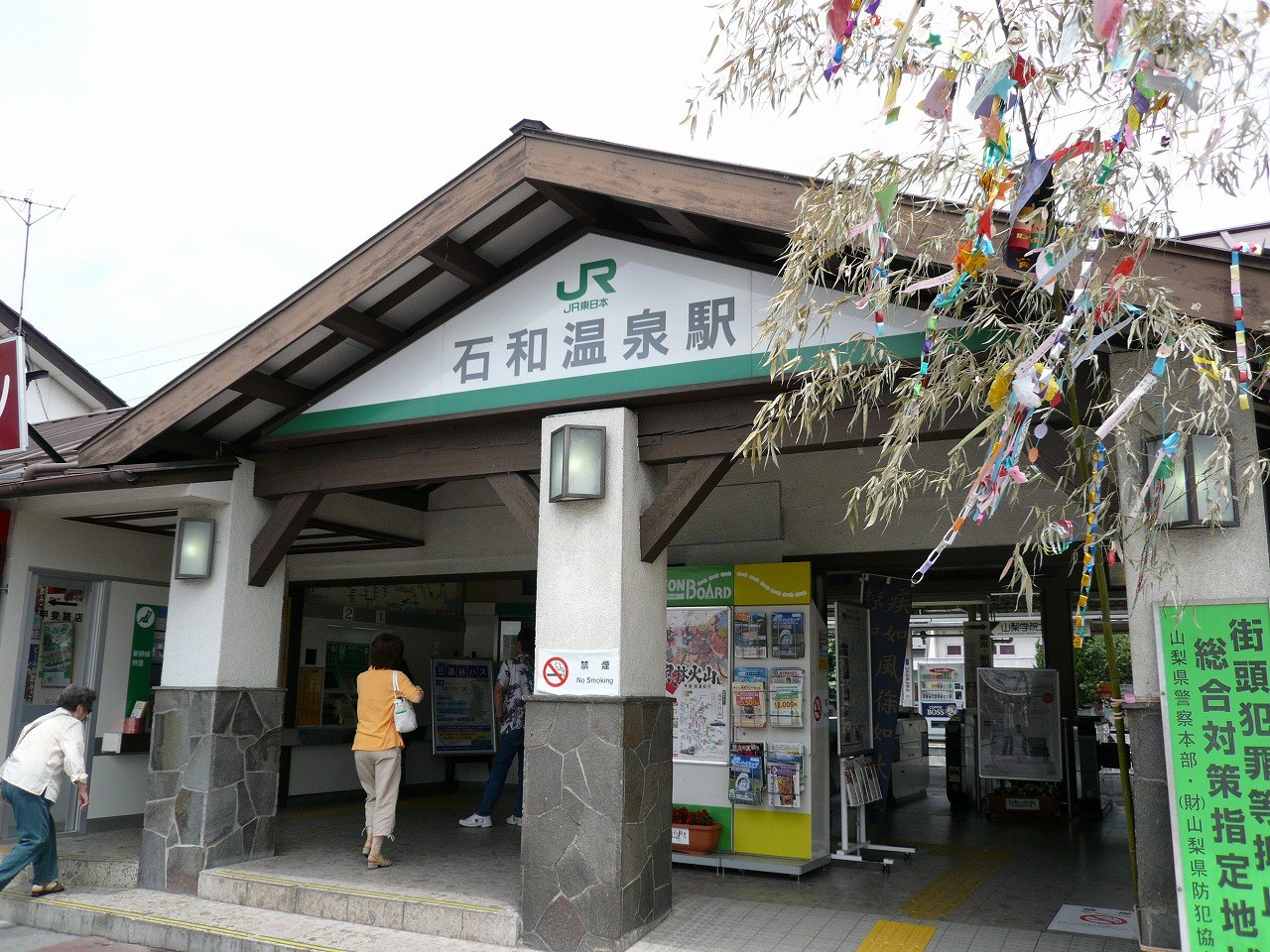
| Nearest station | Isawa-onsen (JR Chūō Main Line) |
| From Tokyo | About 1 hour 30 minutes — JR Chūō Line limited express from Shinjuku |
| From Osaka | About 4 hours via Shinjuku or Nagoya |
| Best season | Spring peach blossom; summer and autumn for grape and peach picking |
| Places listed here | 8 |
| Public bathhouses | 8 |
| Hot spring sources | 0 |
Spring quality, source temperatures and access routes are drawn from the Japanese Wikipedia articles on each town (CC BY-SA 4.0) and the English articles credited below. Journey times are typical scheduled times for the routes named, rounded — always check current timetables before you travel.
About Isawa Onsen
Isawa Onsen (石和温泉) is a large hot-spring resort in Fuefuki City, Yamanashi Prefecture, known for alkaline simple springs produced in very large volume. Its origin is unusually well dated for a Japanese spring: the hot water burst out of a peach orchard in 1961, in the middle of the fruit-growing Kōfu Basin, and the resort town grew up around that discovery.
The springs now officially include the neighbouring Kasugai Onsen, in the former Kasugai town area to the east of the city, which has in practice been unified with Isawa. The resort has its own station, Isawa-onsen on the JR Chūō Main Line, and limited expresses from Shinjuku cover the trip in about an hour and a half.
The water: alkaline simple springs at 8,080 litres a minute
Isawa’s spring quality is a simple spring — alkaline and hypotonic — and the defining figure is the volume: the recorded output is 8,080 litres per minute across the town’s wells. That abundance is what allowed a resort discovered only in 1961 to grow so quickly; water supply has never been the constraint here. Source temperatures vary by source across the many wells, as they do in any large drilled spring field.
The scale shows in the town’s statistics and listings alike: the spring record counts some 50 lodging facilities, and this page lists eight public bathhouses in and around the resort. For the bather, the practical meaning of all that volume is choice — big resort hotels, smaller inns and public baths all drawing on the same generous alkaline field.
From a peach orchard in 1961 to a resort town
Most famous Japanese springs trade on ancient legend; Isawa trades on a date. In 1961 the spring burst from the ground in a peach orchard — the story preserved in the resort’s own telling — and development followed the water. The resort that resulted is a modern bath town rather than an old cure village.
The peach orchard also locates Isawa in the Kōfu Basin’s fruit country, and the resort’s calendar still follows the orchards. The inclusion of neighbouring Kasugai Onsen under the Isawa name reflects the same growth: one continuous spring area serving one basin.
Peach blossom, grapes and the picking seasons
Spring is Isawa’s signature season, when the peach blossom comes out across the basin’s orchards — the same orchards the spring itself was discovered in. It is the natural moment for a first visit, with the blossom fields at their best before the fruit sets.
Summer and autumn belong to the fruit harvest: grape and peach picking in the surrounding farms is the standard daytime activity to pair with the baths. The pattern of an Isawa trip writes itself — orchards and picking by day, a long soak in the alkaline water in the evening, and the limited express back to Shinjuku in about ninety minutes whenever you choose to leave.
Getting there: the Chūō Line limited express to Isawa-onsen
Isawa is one of the most accessible large resorts in the Kantō–Chūbu region. Isawa-onsen Station sits on the JR Chūō Main Line, and limited expresses from Shinjuku take about an hour and a half. From Osaka the journey is about four hours, routed via Shinjuku or via Nagoya.
That access, combined with the spring field’s volume, explains Isawa’s role: Yamanashi’s big, easy resort — close enough to Tokyo for a single night, large enough for crowds that would swamp a smaller village, and set in fruit country that gives the trip a second reason beyond the bath.
The sections above were written for this guide from the facts in the Japanese Wikipedia article 「石和温泉」 and the spring and access data summarised on this page, under CC BY-SA 4.0.
Public bathhouse (recorded as onsen in OpenStreetMap) (2)
- 石和健康ランド
OpenStreetMap - 石笛の湯
OpenStreetMap
Public bathhouse (spring type not recorded in OpenStreetMap) (6)
- あし湯 いさわ湯
OpenStreetMap - いさわふれあいセンター
Official website · OpenStreetMap - みさかの湯
OpenStreetMap - クアハウス石和
OpenStreetMap - スパランド;ホテル内藤
OpenStreetMap - 笛吹市春日居福祉会館;やまゆりの湯
OpenStreetMap
Gallery


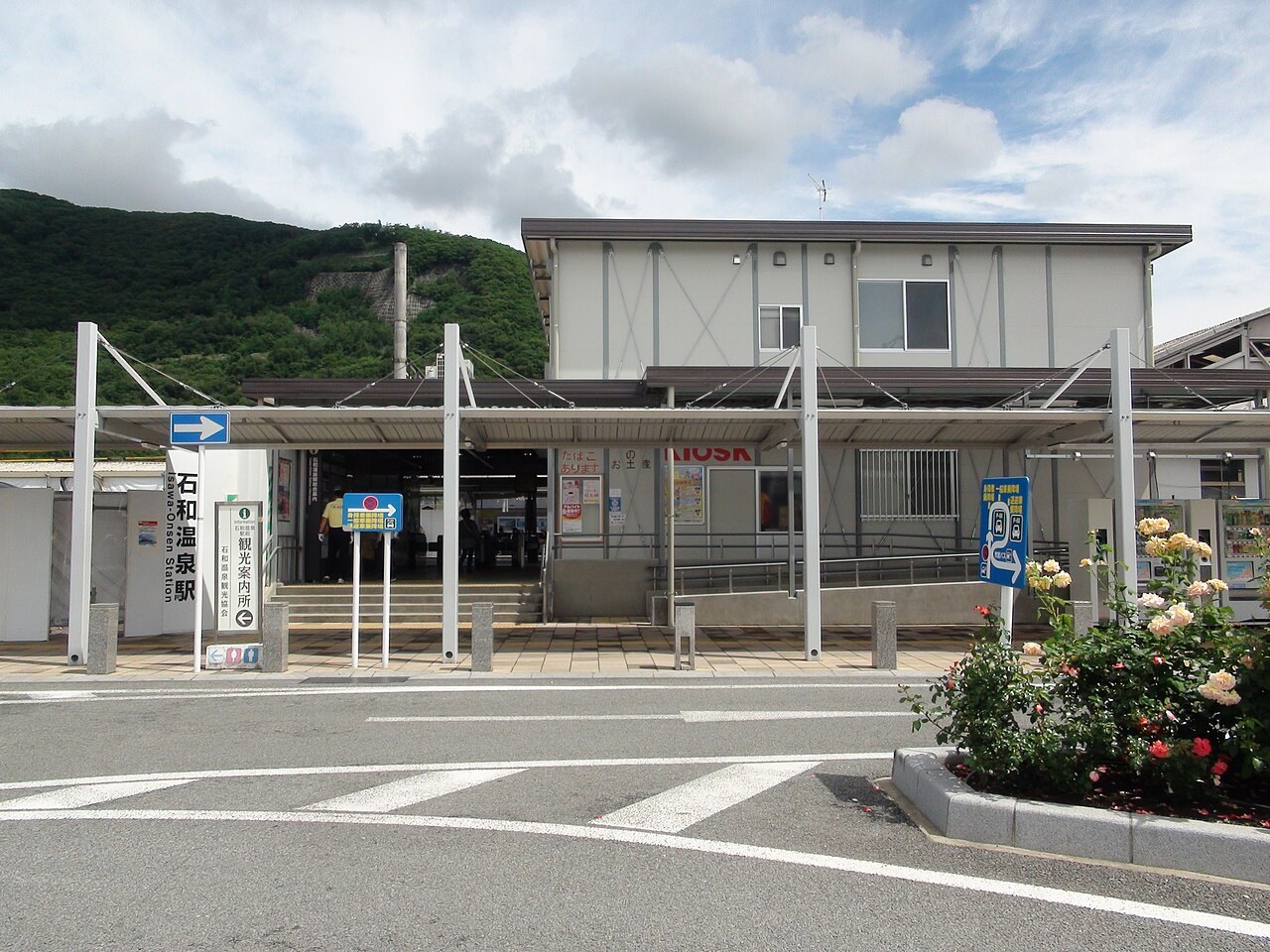

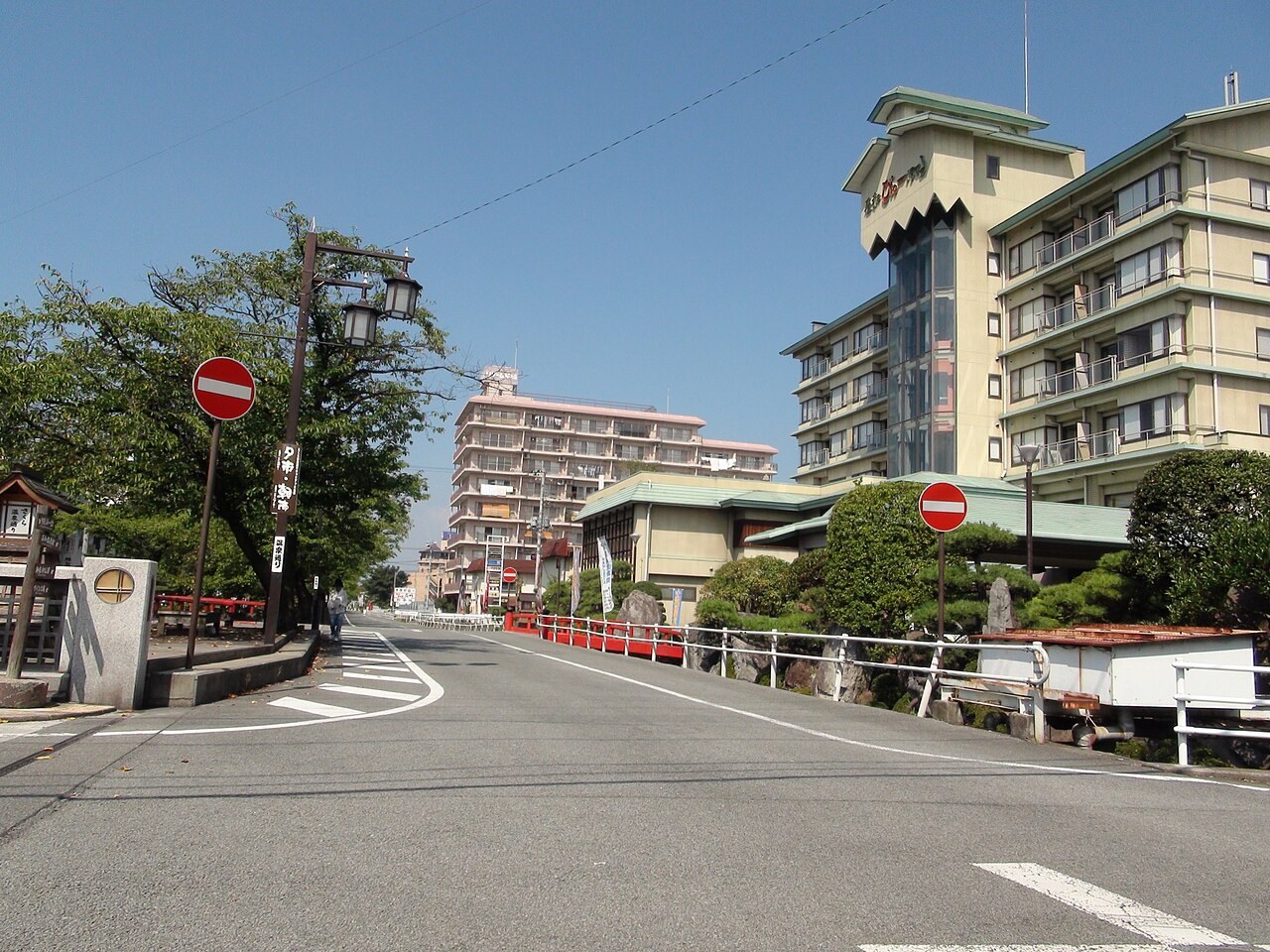

Names, types and websites are shown exactly as recorded in OpenStreetMap. A bathhouse whose spring type is not recorded is labelled as such — we do not guess. Before your first visit, read how to use an onsen.
More onsen towns
- Okutama Onsen 奥多摩温泉 — Back toward Tokyo — the capital's own mountain spring at the end of the Ome Line
- Hakone Onsen 箱根温泉 — The great caldera resort across the mountains
- Atami Onsen 熱海温泉 — Out to the coast — the classic resort on Sagami Bay
- Ikaho Onsen 伊香保温泉 — North into Gunma's stone-stepped spring town
Keep exploring
- All onsen towns in Chubu — this town's region, town by town
- Browse by spring type — find towns by their water
- Browse by feature — day trips, snow-view baths, free communal baths and more