Home › Onsen towns › Atami Onsen
Atami Onsen 熱海温泉
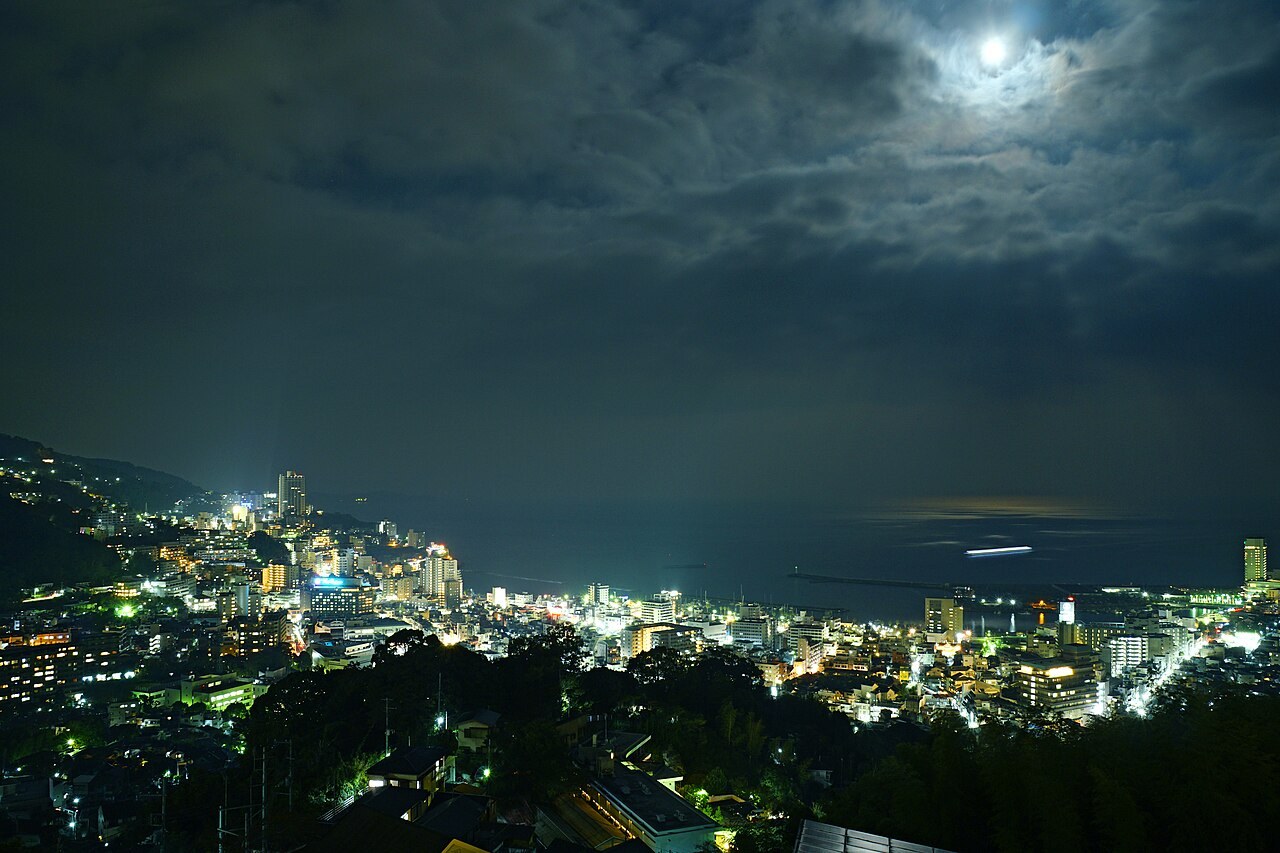
Atami's springs steam across a steep coastal city on Sagami Bay, about 45 minutes by Shinkansen from Tokyo to Atami Station. A great resort since the shogun Tokugawa Ieyasu bathed here, it draws mostly salt (chloride) water from hundreds of sources and now mixes beach, fireworks and onsen into one classic package. Below are the bathhouses, spring sources and onsen facilities recorded in OpenStreetMap within about 3 km of the town centre.
| Prefecture | Shizuoka |
|---|---|
| Region | Chubu |
| Spring quality | Mostly sodium-chloride springs, drawn from hundreds of sources across the city |
| Source temperature | Varies by source across the city's many wells |
| Nearest station | Atami (Tōkaidō Shinkansen / JR) — the resort spreads from the station to the shore |
| From Tokyo | About 45 minutes — Tōkaidō Shinkansen |
| From Osaka | About 2 hours 30 minutes — Tōkaidō Shinkansen direct |
| Best season | Year-round — monthly fireworks over the bay, February plum blossom, summer beach season |
| Places listed here | 23 |
| Public bathhouses | 14 |
| Hot spring sources | 9 |
Spring quality, source temperatures and access routes are drawn from the Japanese Wikipedia articles on each town (CC BY-SA 4.0) and the English articles credited below. Journey times are typical scheduled times for the routes named, rounded — always check current timetables before you travel.
About Atami Onsen
Atami Onsen (熱海温泉) is the hot spring at the heart of Atami City in Shizuoka Prefecture, a steep coastal resort that spreads from Atami Station down to the shore of Sagami Bay. Its waters are mostly sodium-chloride springs, drawn from hundreds of sources across the city, and the source temperature varies by source across the city's many wells rather than sitting at a single figure.
Atami is the classic seaside hot spring resort within easy reach of the capital: about 45 minutes from Tokyo by Tōkaidō Shinkansen. Together with Izu-Yugawara Onsen, Izusan Onsen and Minami-Atami Onsen, it forms one of the four major hot springs of Atami, and it is also counted among Japan's three great hot springs.
The water: sodium-chloride springs from hundreds of sources
Unlike a small spring village built around one well, Atami draws its water from hundreds of sources spread across the city. The spring quality is mostly sodium-chloride, the salty spring type typical of coastal hot springs, and because there are so many individual wells, the temperature at source varies from source to source. This guide lists 23 places for Atami, including 14 public bathhouses and 9 hot spring sources, reflecting how widely the water is distributed.
For visitors, that spread means bathing is not confined to a single bathhouse street. Hotels, inns and public baths across the city tap into the network of sources, from the area around the station to the shore. A stay in Atami can therefore combine the pleasures of a large resort — the sea, the station and the shopping streets — with hot spring bathing woven through the whole city rather than set apart from it.
A resort city that runs from the station to the shore
Atami's geography shapes the visit. The resort spreads from Atami Station to the shore, built on steep coastal ground, with the bay opening out below. The station is served by the Tōkaidō Shinkansen and JR lines, which puts the resort directly on Japan's main rail artery and makes arrival simple even for a short stay.
Because Atami is a city as well as a spring, it suits travellers who want more than bathing alone. The seaside setting, the bay and the resort streets give a stay a broader frame, while the hot springs remain the reason the city developed as a resort. A visitor can arrive by bullet train in the morning, bathe, walk by the sea, and still be back in Tokyo the same evening, or settle in for several nights.
One of the four major springs of Atami, counted among Japan's three great hot springs
Within its own city, Atami Onsen holds a defined place. The Japanese source describes it as one of the four major hot springs of Atami, alongside Izu-Yugawara Onsen, Izusan Onsen and Minami-Atami Onsen. That grouping is a reminder that the name Atami covers a wider hot spring area, and that the central Atami Onsen is the best known of them.
Beyond the city, Atami's standing is national. The same source notes that Atami is also said to be one of Japan's three great hot springs. Rankings of that kind are a long-standing part of how Japanese hot springs are talked about, and Atami's inclusion reflects both the scale of its sources and its long role as a resort for the capital region.
Fireworks over the bay, plum blossom, and a year-round season
Atami is listed as a year-round destination, and its calendar explains why. Fireworks are held over the bay on a monthly basis, giving every season a reason to visit. In February, plum blossom is the seasonal draw, and in summer the beach season takes over along the shore. A traveller can choose Atami for very different trips at different times of year and still find the hot springs at the centre of the stay.
Access is straightforward from both of Japan's largest city regions. From Tokyo, the Tōkaidō Shinkansen takes about 45 minutes. From Osaka, the same line runs direct in about 2 hours 30 minutes. That ease of arrival, paired with hundreds of sources and a seaside setting, keeps Atami in its role as the classic, close-at-hand hot spring resort.
The sections above were written for this guide from the facts in the Japanese Wikipedia article 「熱海温泉」 and the spring and access data summarised on this page, under CC BY-SA 4.0.
Public bathhouse (recorded as onsen in OpenStreetMap) (11)
- Atami Ekimae Onsen Yokujō Public Bath 熱海駅前温泉浴場
OpenStreetMap - Atami Taikanso Foot Spa 熱海大観荘足湯
OpenStreetMap - Atami Taikanso O-no-Yu 熱海大観荘山王の湯
OpenStreetMap - Atami Taikanso Reserved Air-Spa 熱海大観荘貸切露天風呂
OpenStreetMap - Atami Taikanso Hinoki-no-yu 熱海大観荘ひのきの湯
OpenStreetMap - Atami Taikanso Taki-no-Yu 熱海大観荘滝の湯
OpenStreetMap - Izusan Onsen Hasiriyu-Hama Spa 伊豆山温泉走り湯浜浴場
OpenStreetMap - Large Spa Facility 大湯
OpenStreetMap - Nikkotei Oyu (Onsen) 日航亭・大湯
Official website · OpenStreetMap - OCEAN SPA Fuua オーシャンスパ Fuua
OpenStreetMap - Shimizu Town Public Spa 清水町共同浴場
OpenStreetMap
Public bathhouse (spring type not recorded in OpenStreetMap) (3)
- Foot path
OpenStreetMap - Ieyasu 's Hot Spring 家康の湯
OpenStreetMap - Marine Spa Atami (No Parking Area) マリンスパあたみ(P無)
OpenStreetMap
Hot spring source (9)
- Aoyama Hot Spa 青山湯
OpenStreetMap - Enmei No Yu Hot Spring 延命乃湯
OpenStreetMap - Furo No Yu Hot Spring - Mizu No Yu Hot Spring 風呂の湯・水の湯
OpenStreetMap - Kawara Yu Hot Spring 河原湯
OpenStreetMap - Kosawa No Yu / Heizaemon No Yu Hot Steam 小沢の湯(平左衛門の湯)
OpenStreetMap - Nonaka No Yu Hot Steam 野中の湯
OpenStreetMap - Sajiro No Yu Hot Spring - Me No Yu Hot Spring 佐治郎の湯(目の湯)
OpenStreetMap - Seizaemon No Yu Hot Steam 清左衛門の湯
OpenStreetMap - Site of Sanno fountainhead No.1 第一山王源泉跡
OpenStreetMap
Gallery
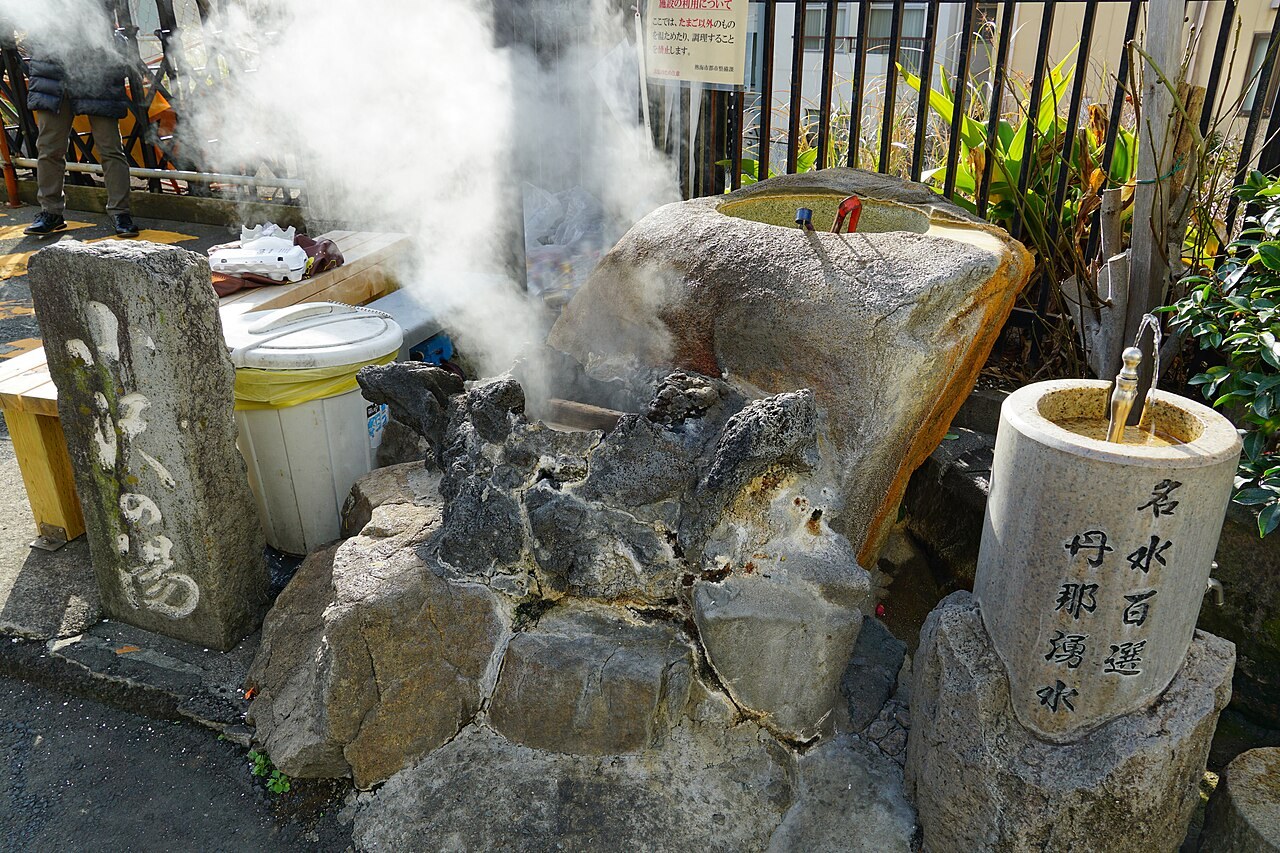

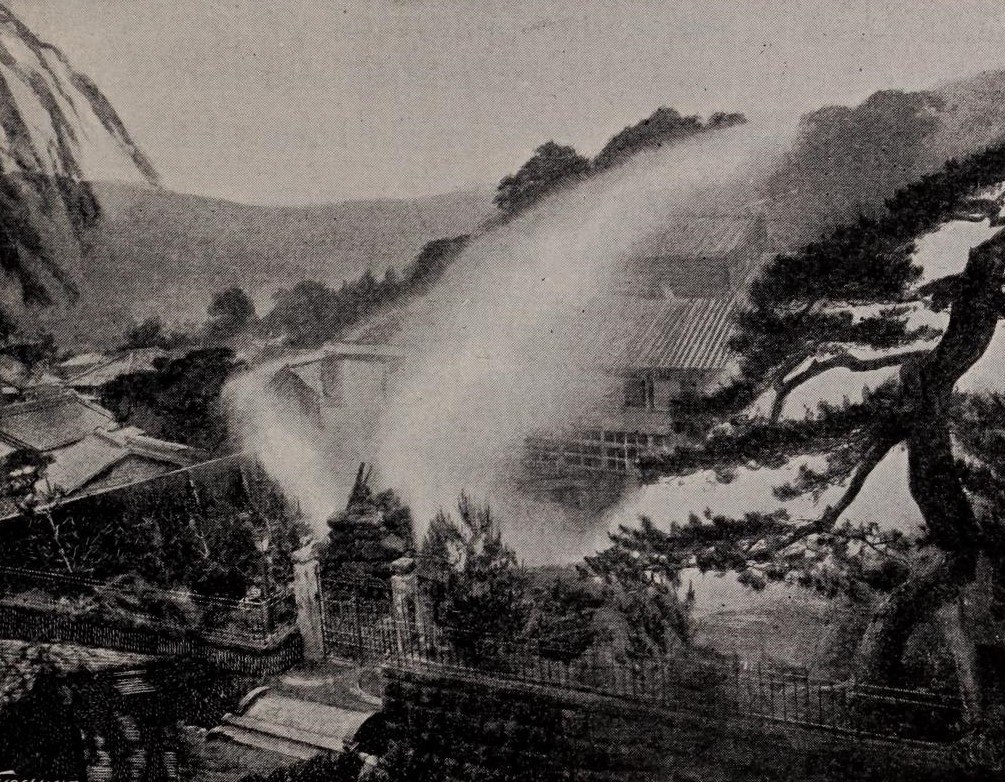

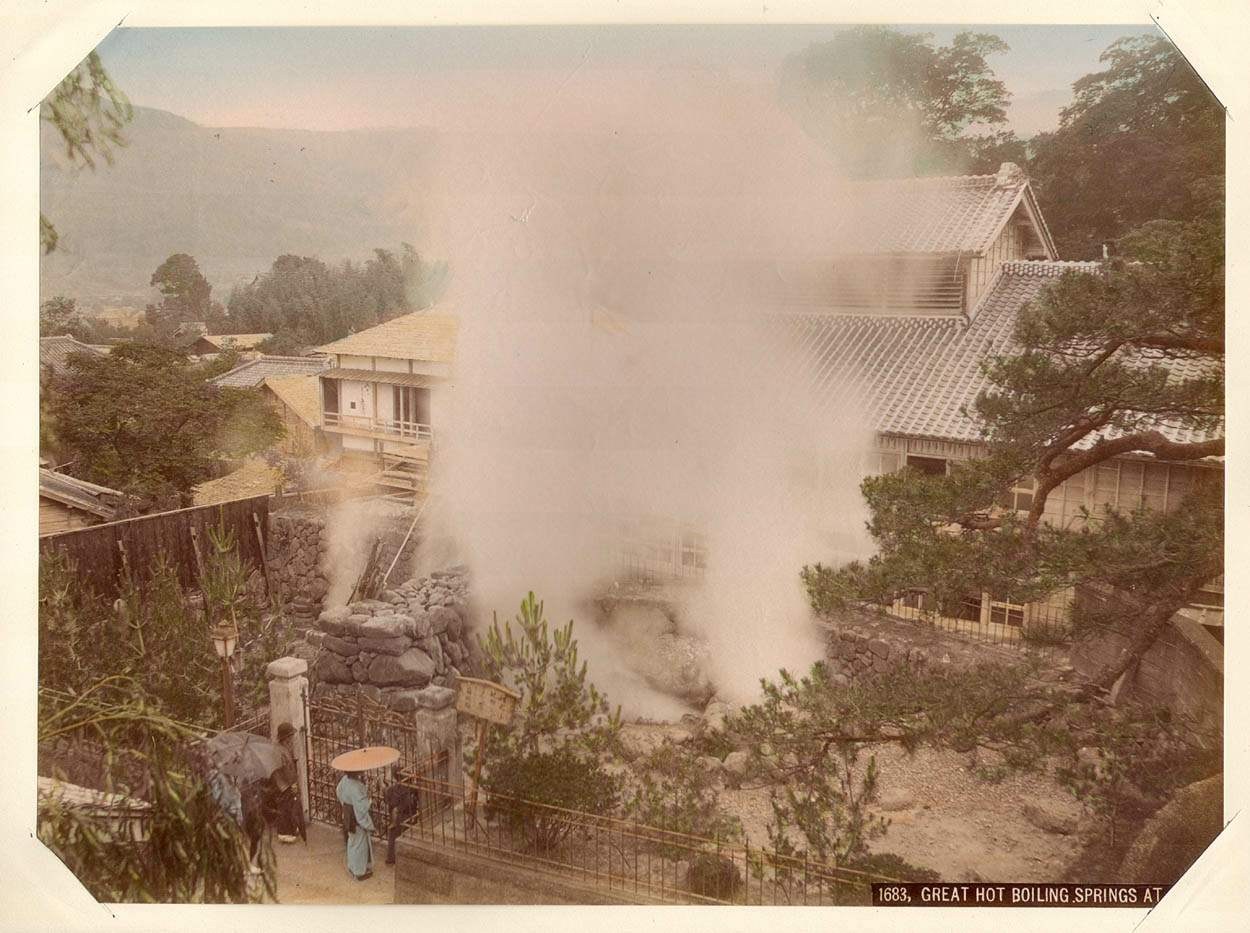

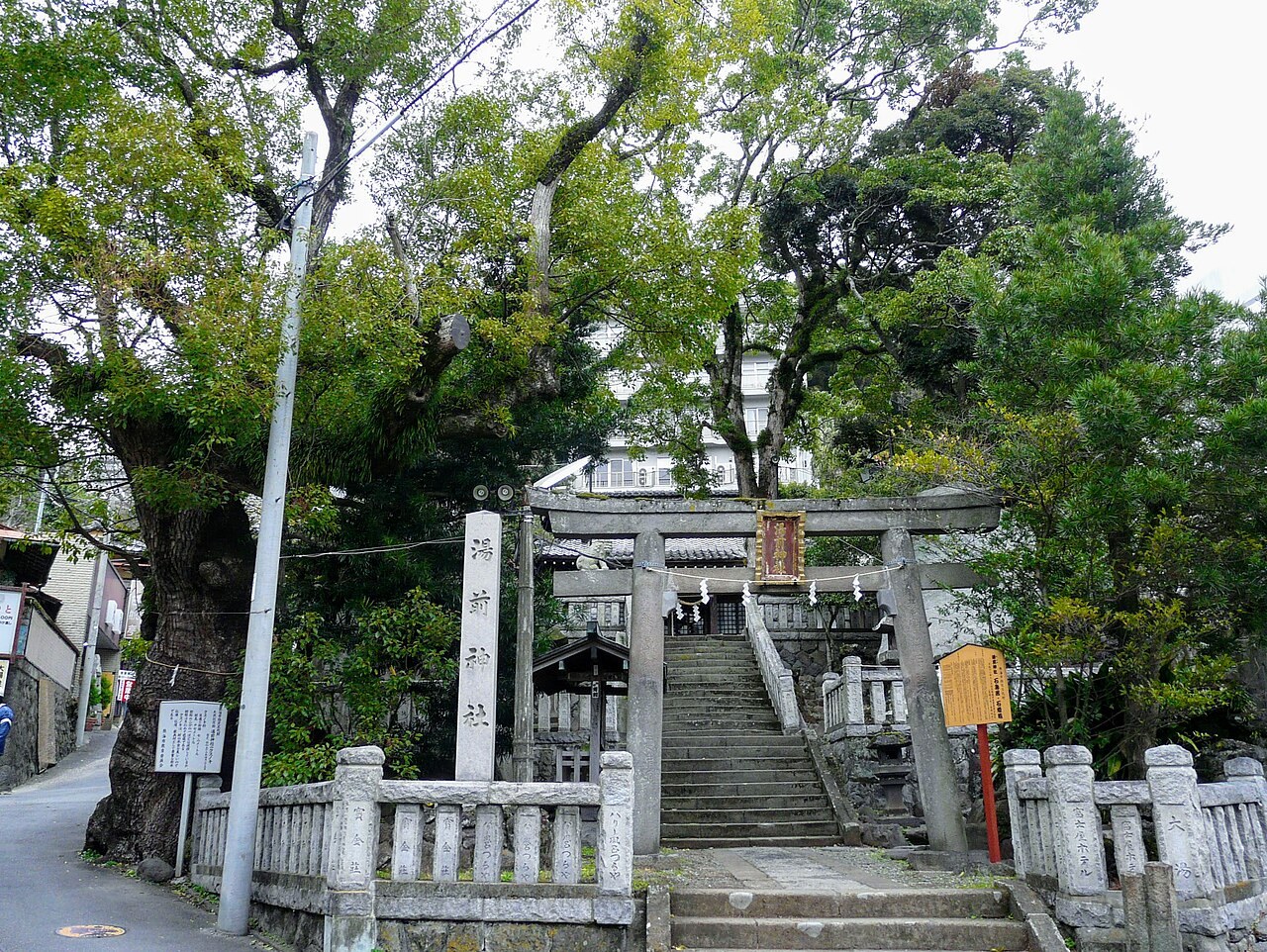

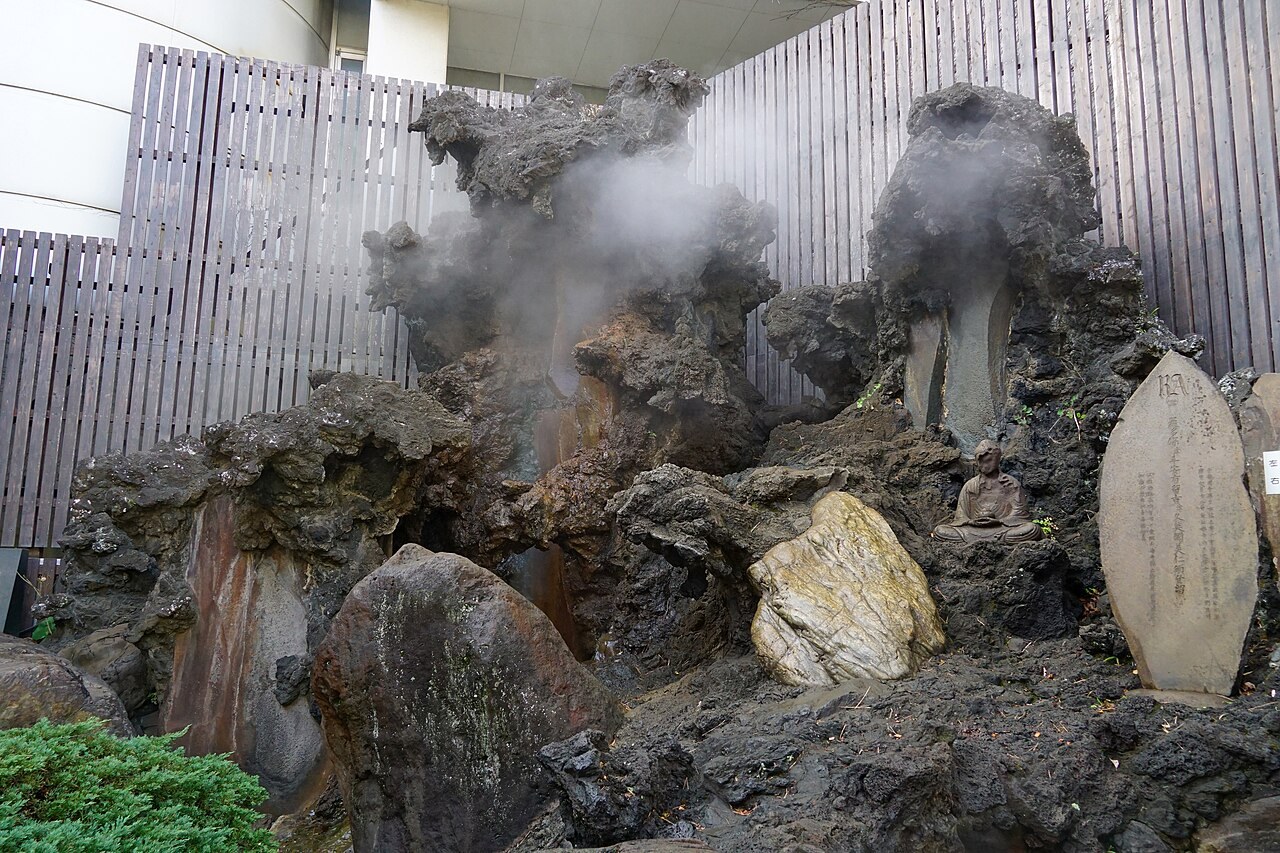
Names, types and websites are shown exactly as recorded in OpenStreetMap. A bathhouse whose spring type is not recorded is labelled as such — we do not guess. Before your first visit, read how to use an onsen.
More onsen towns
- Hakone Onsen 箱根温泉 — The neighbouring mountain half of the classic Tokyo escape — 17 spring areas
- Isawa Onsen 石和温泉 — Inland to Yamanashi's fruit-country spring town
- Shirahama Onsen 南紀白浜温泉 — The same classic coastal-resort pattern on the Kii Peninsula
- Ibusuki Onsen 指宿温泉 — Another famous warm coast — sand baths instead of fireworks
Keep exploring
- All onsen towns in Chubu — this town's region, town by town
- Browse by spring type — find towns by their water
- Browse by feature — day trips, snow-view baths, free communal baths and more