Home › Onsen towns › Shirahama Onsen
Shirahama Onsen 南紀白浜温泉
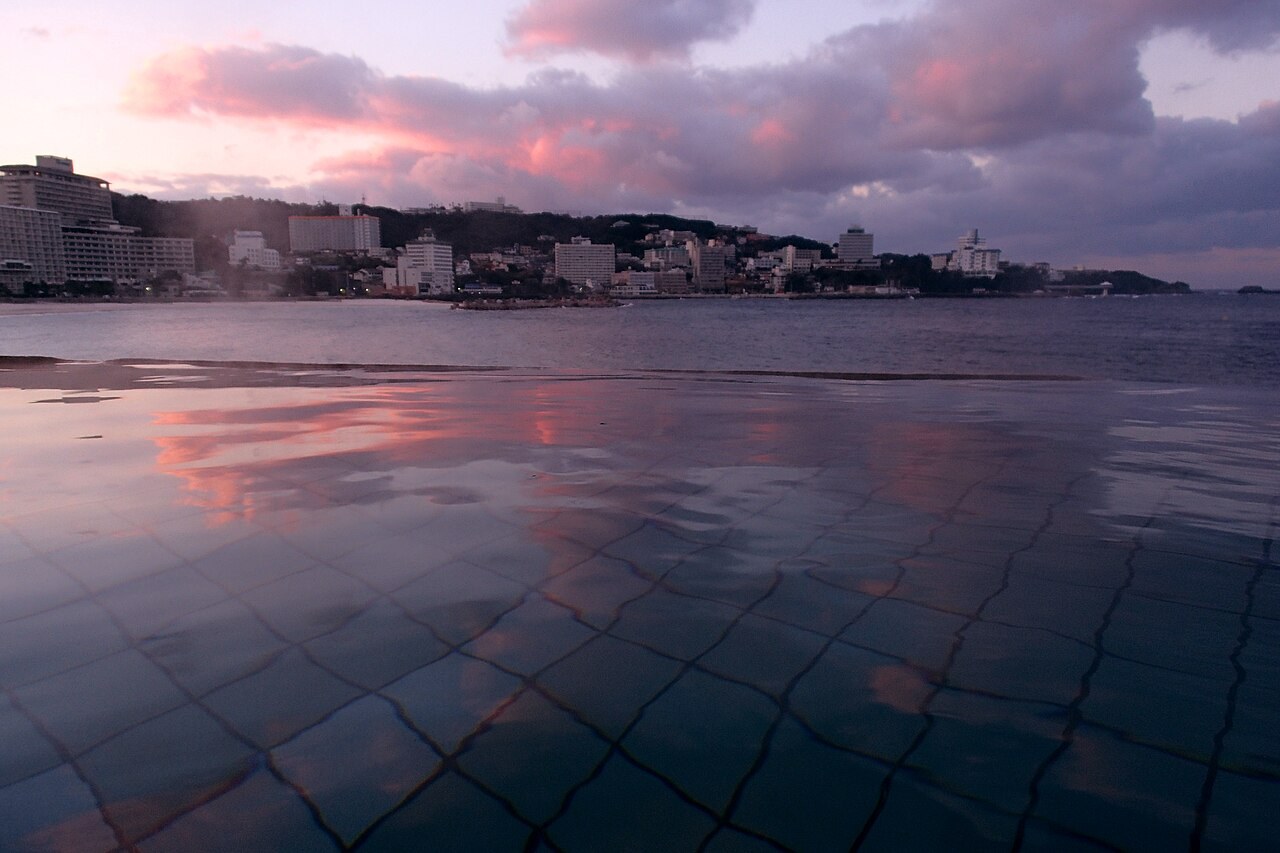
Shirahama's chloride and bicarbonate springs (32–85 °C) steam behind a perfect white-sand arc on the Kii Peninsula, about 10 minutes by bus from Shirahama Station. One of Japan's oldest-documented bathing coasts — emperors came in the 7th century — it mixes open-air cliff baths like Sakino-yu with a modern beach resort. Below are the bathhouses, spring sources and onsen facilities recorded in OpenStreetMap within about 3 km of the town centre.
| Prefecture | Wakayama |
|---|---|
| Region | Kansai |
| Spring quality | Chloride and bicarbonate springs (many sources across the cape) |
| Source temperature | 32–85 °C at source, by spring |
| Nearest station | Shirahama (JR Kinokuni Line / Kuroshio limited express), then about 10 minutes by bus; Nanki-Shirahama Airport is closer still |
| From Tokyo | Fly Haneda → Nanki-Shirahama (about 1 hour), then a short bus ride |
| From Osaka | About 2 hours 40 minutes — Kuroshio limited express to Shirahama + bus |
| Best season | Summer for the white beach; winter for open-air baths over a rough Pacific |
| Places listed here | 3 |
| Public bathhouses | 3 |
| Hot spring sources | 0 |
Spring quality, source temperatures and access routes are drawn from the Japanese Wikipedia articles on each town (CC BY-SA 4.0) and the English articles credited below. Journey times are typical scheduled times for the routes named, rounded — always check current timetables before you travel.
About Shirahama Onsen
Shirahama Onsen (南紀白浜温泉) is a great seaside hot-spring resort in Shirahama Town, Wakayama Prefecture, spread along the coast behind the white-sand arc of Shirarahama beach. It is one of Japan’s Three Ancient Springs, known in old writings as Muro no Yu, and it was once counted alongside Atami and Beppu among Japan’s three great hot springs. Its many sources, scattered across the cape, are chloride and bicarbonate springs ranging widely in temperature, from 32 to 85 °C.
For all its history, Shirahama is easy to reach: Shirahama Station, served by the Kuroshio limited express, is about 10 minutes by bus from the town, and Nanki-Shirahama Airport is closer still. From Osaka the train takes about 2 hours 40 minutes; from Tokyo, the flight from Haneda takes about an hour.
One of Japan’s three ancient springs
Few resorts in Japan can match Shirahama’s pedigree. It is counted among the country’s Three Ancient Springs, and in early literature the water here was known as Muro no Yu — the spring of the Muro coast. In more recent memory it was spoken of alongside Atami Onsen and Beppu Onsen as one of Japan’s three great hot springs.
Officially, in the town’s own plans, the resort is simply Shirahama Onsen; the fuller name Nanki Shirahama Onsen is a registered regional trademark of the Shirahama inn association. Either way, what is being protected is the same: an ancient spring that has received guests for well over a thousand years.
Seven spring areas around one white beach
‘Shirahama’ is really a small country of springs. In its wider sense the resort divides into seven distinct spring areas strung along this coast: Yuzaki, Oura, Kogaura, Tsunanashi and Shirahama itself, with Higashi-Shirahama and Shin-Shirahama added in recent times. Each has its own sources and cluster of inns, so a regular can stay in a different Shirahama on every trip.
At the centre of it all is Shirarahama, the white-sand beach whose arc gives the town its name — ‘white beach’ — and around which the hotels and onsen facilities gather along the coast. The geography explains the resort’s double life: beach in front, springs behind, the two within a few minutes’ walk of each other.
The water: chloride and bicarbonate springs, 32–85 °C
The recorded spring qualities are two: chloride springs — salt-bearing waters, natural companions to a seaside resort — and bicarbonate springs. Between them, the town’s sources cover an unusually wide range of temperatures, from a lukewarm 32 °C up to a genuinely hot 85 °C at the source.
In practice, that range is a strength. Different inns draw on different sources, so the temperature and character of the water change from bath to bath, and touring several is part of the traditional pleasure of a stay. At Shirahama, choosing where to bathe is choosing which of many springs you want to meet.
Getting there, and the two seasons of Shirahama
Rail travellers ride the JR Kinokuni Line to Shirahama Station, where the Kuroshio limited express stops, then take a Meiko bus for about 10 minutes into the resort. Nanki-Shirahama Airport sits even closer to the onsen town than the station. Direct express buses also run from Osaka Station, Namba, Kyoto Station and Wakayama City, and drivers use the Nanki-Shirahama Interchange on the Kisei Expressway.
The recorded best seasons pull in opposite directions. Summer belongs to the white beach, when the town is at its liveliest. Winter belongs to the baths: open-air tubs above a rough Pacific, steam rising into cold air, and an ancient spring town at its quietest. Many guests simply make both visits.
The sections above were written for this guide from the facts in the Japanese Wikipedia article 「南紀白浜温泉」 and the spring and access data summarised on this page, under CC BY-SA 4.0.
Public bathhouse (spring type not recorded in OpenStreetMap) (3)
- とれとれの湯
OpenStreetMap - とれとれ亭;カタタの湯
OpenStreetMap - 長生の湯
OpenStreetMap
Gallery
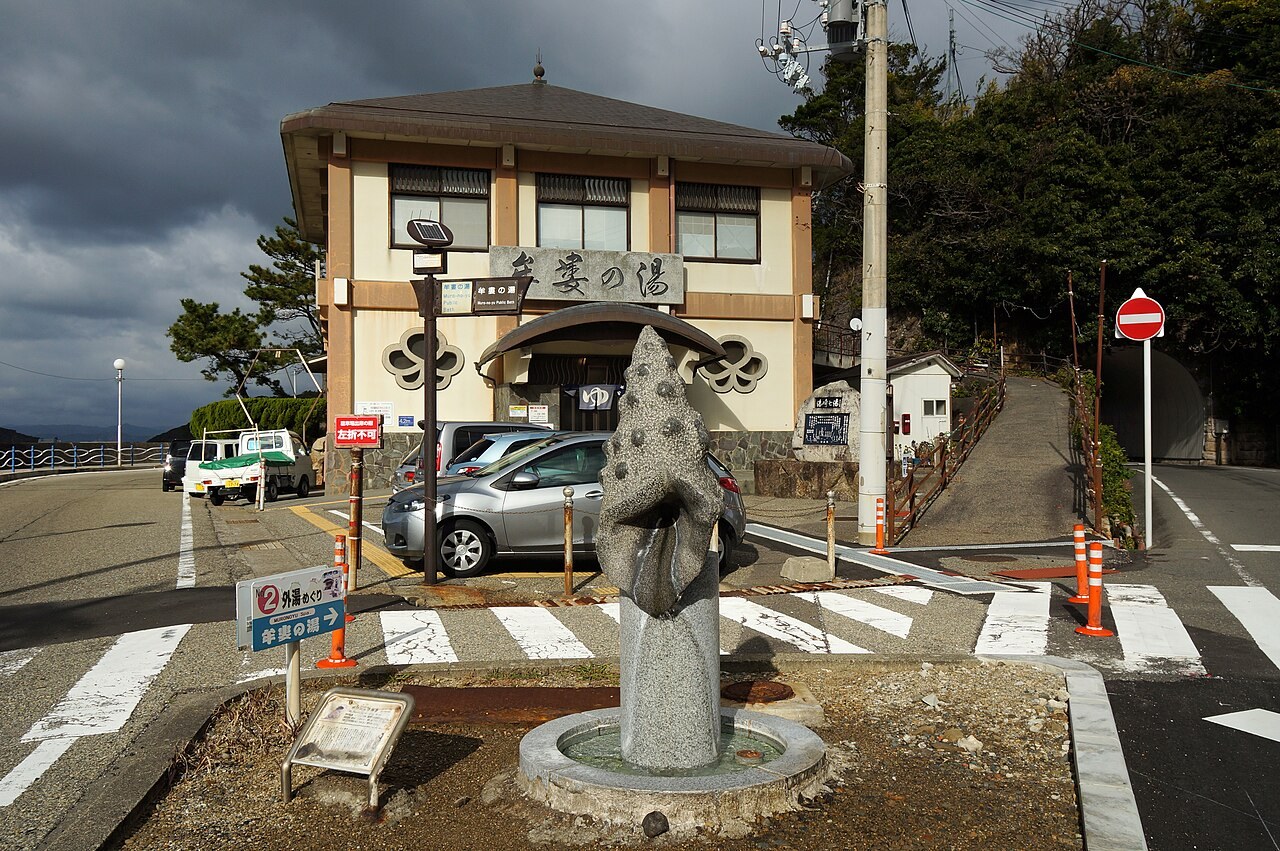

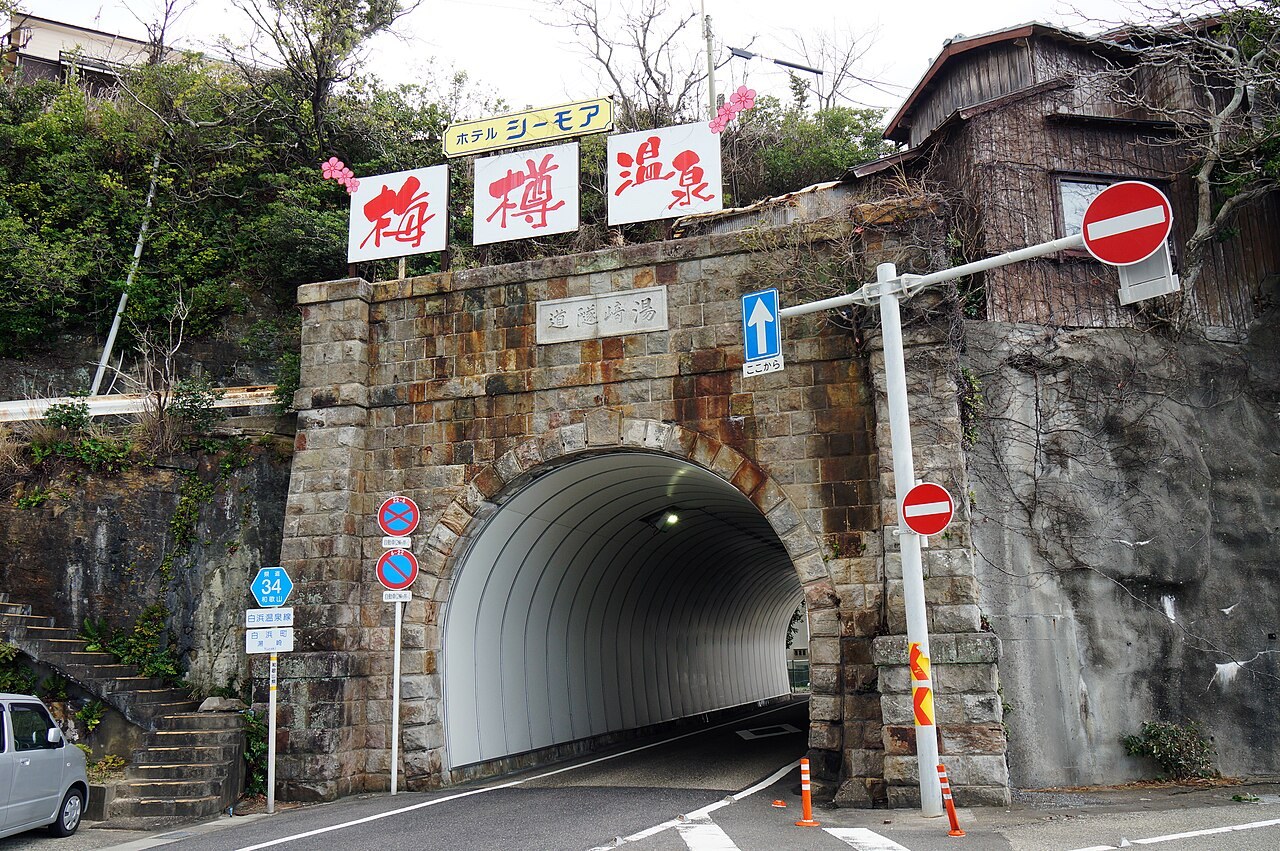

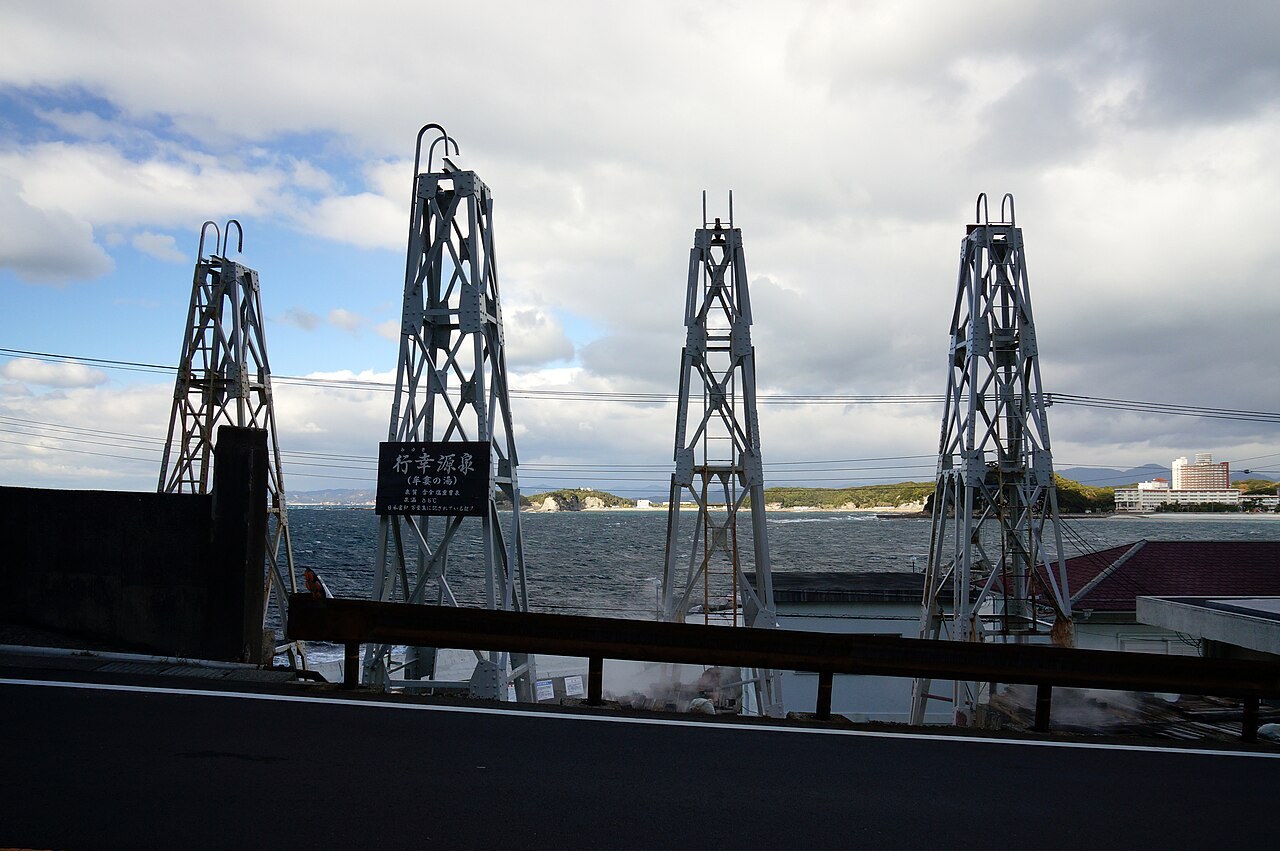

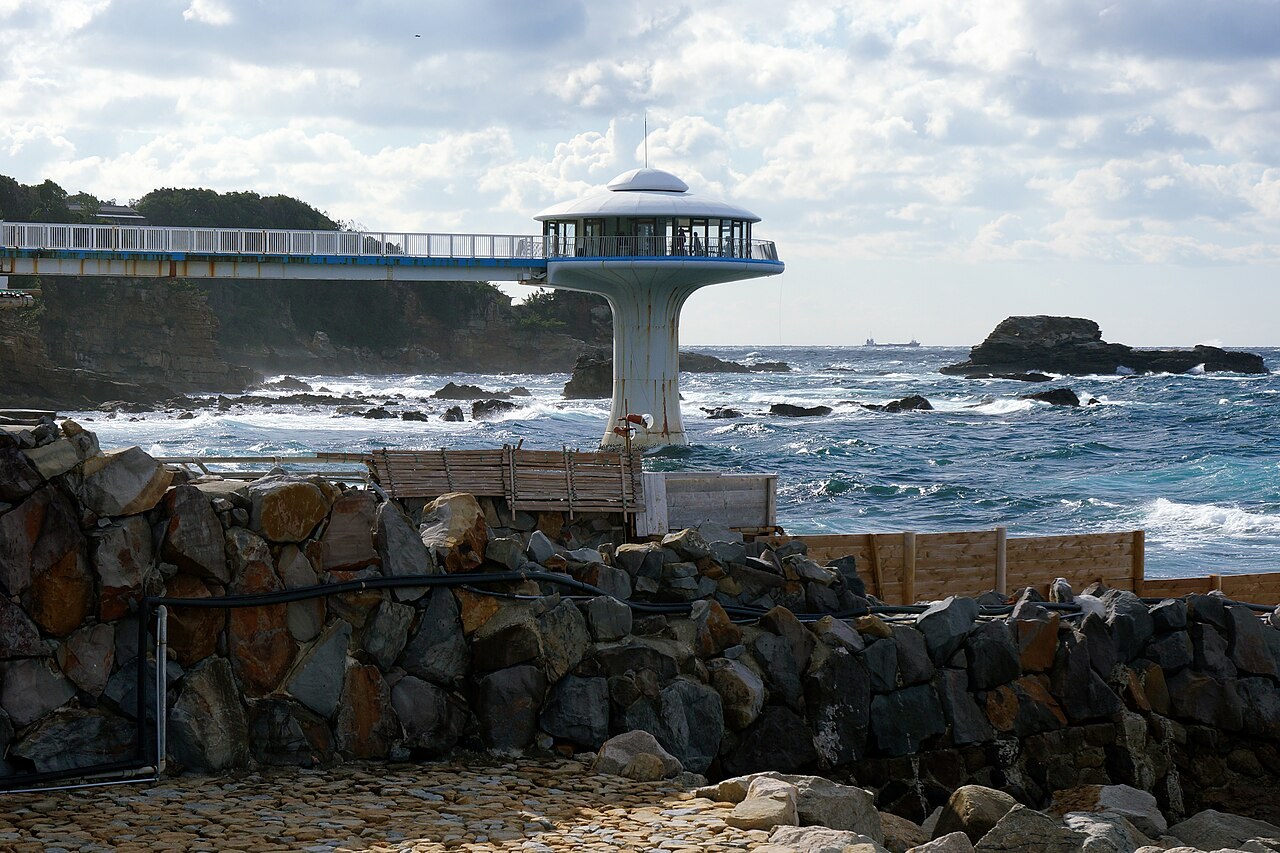

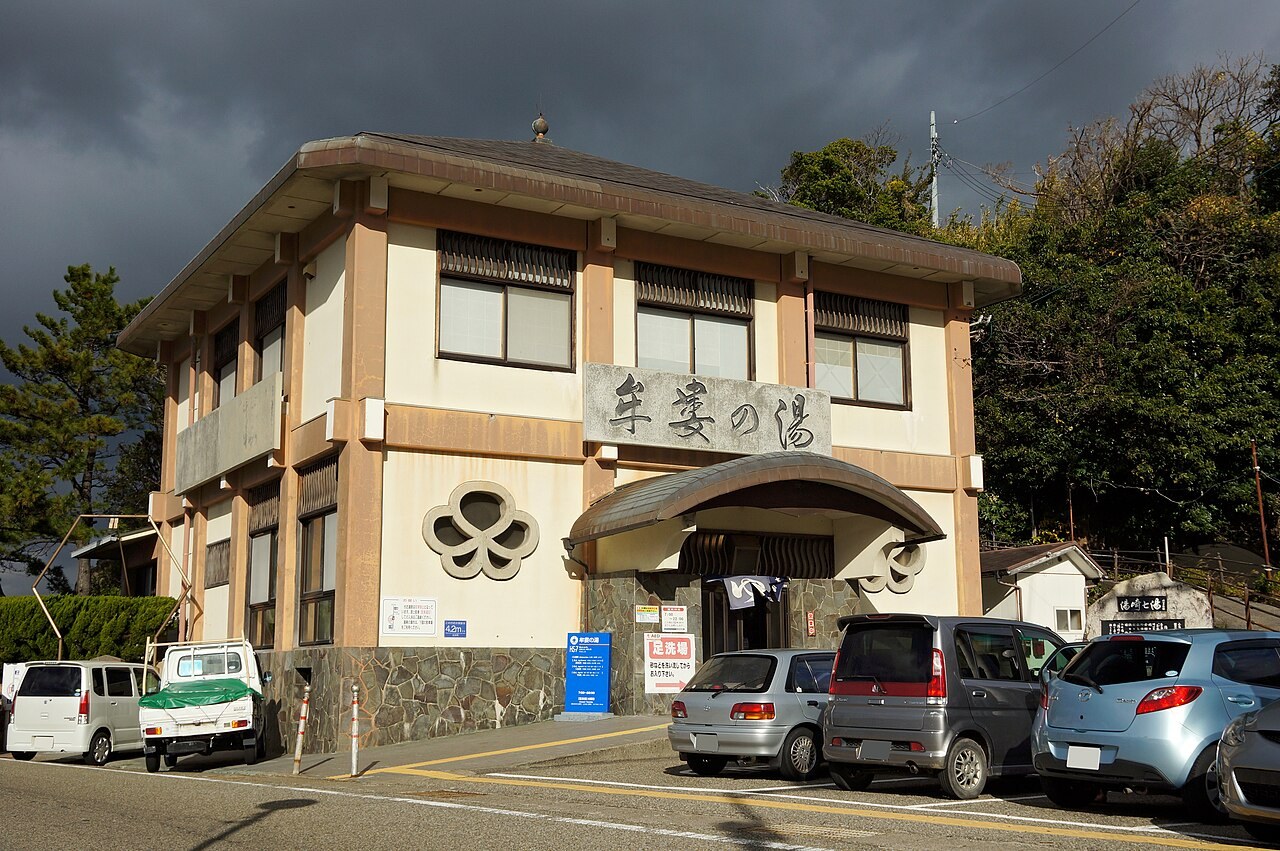
Names, types and websites are shown exactly as recorded in OpenStreetMap. A bathhouse whose spring type is not recorded is labelled as such — we do not guess. Before your first visit, read how to use an onsen.
More onsen towns
- Atami Onsen 熱海温泉 — The same classic seaside-resort pattern, on Sagami Bay
- Ibusuki Onsen 指宿温泉 — White sand of a different kind — buried in hot sand on the Kagoshima coast
- Dogo Onsen 道後温泉 — Another ancient spring with a famous wooden bathhouse
- Arima Onsen 有馬温泉 — Inland behind Kobe — the other Kansai ancient spring
Keep exploring
- All onsen towns in Kansai — this town's region, town by town
- Browse by spring type — find towns by their water
- Browse by feature — day trips, snow-view baths, free communal baths and more