Home › Onsen towns › Ikaho Onsen
Ikaho Onsen 伊香保温泉
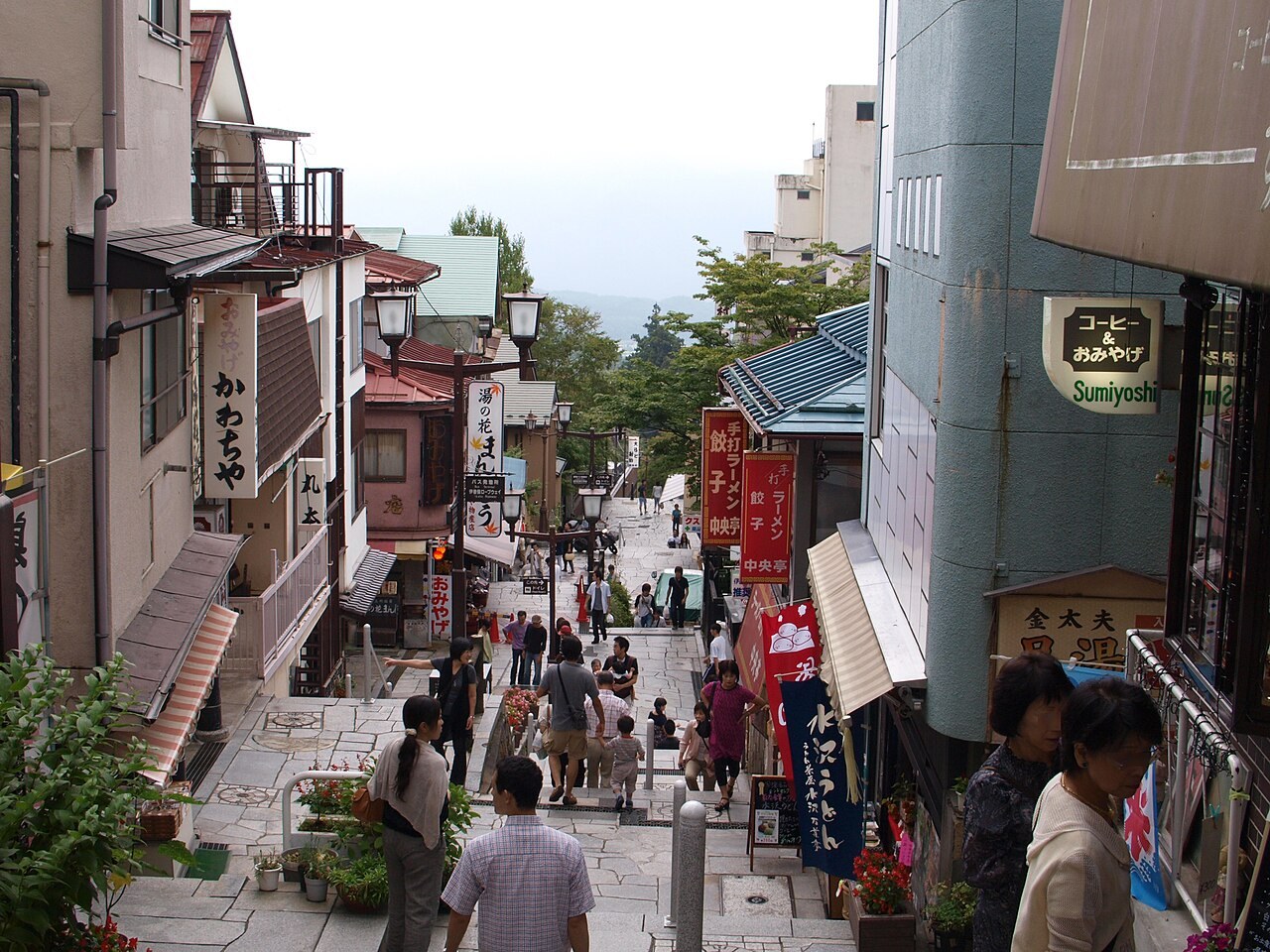
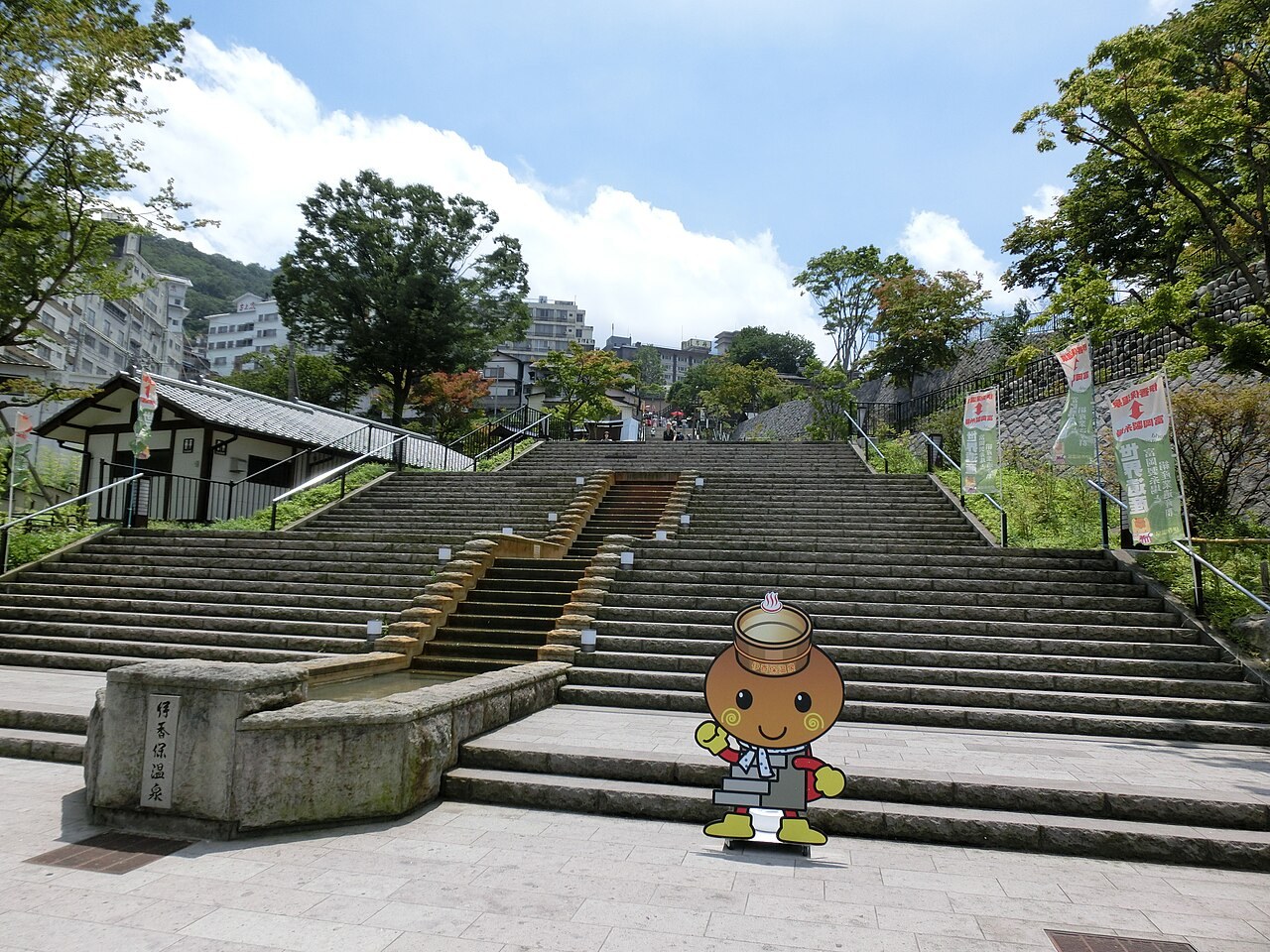
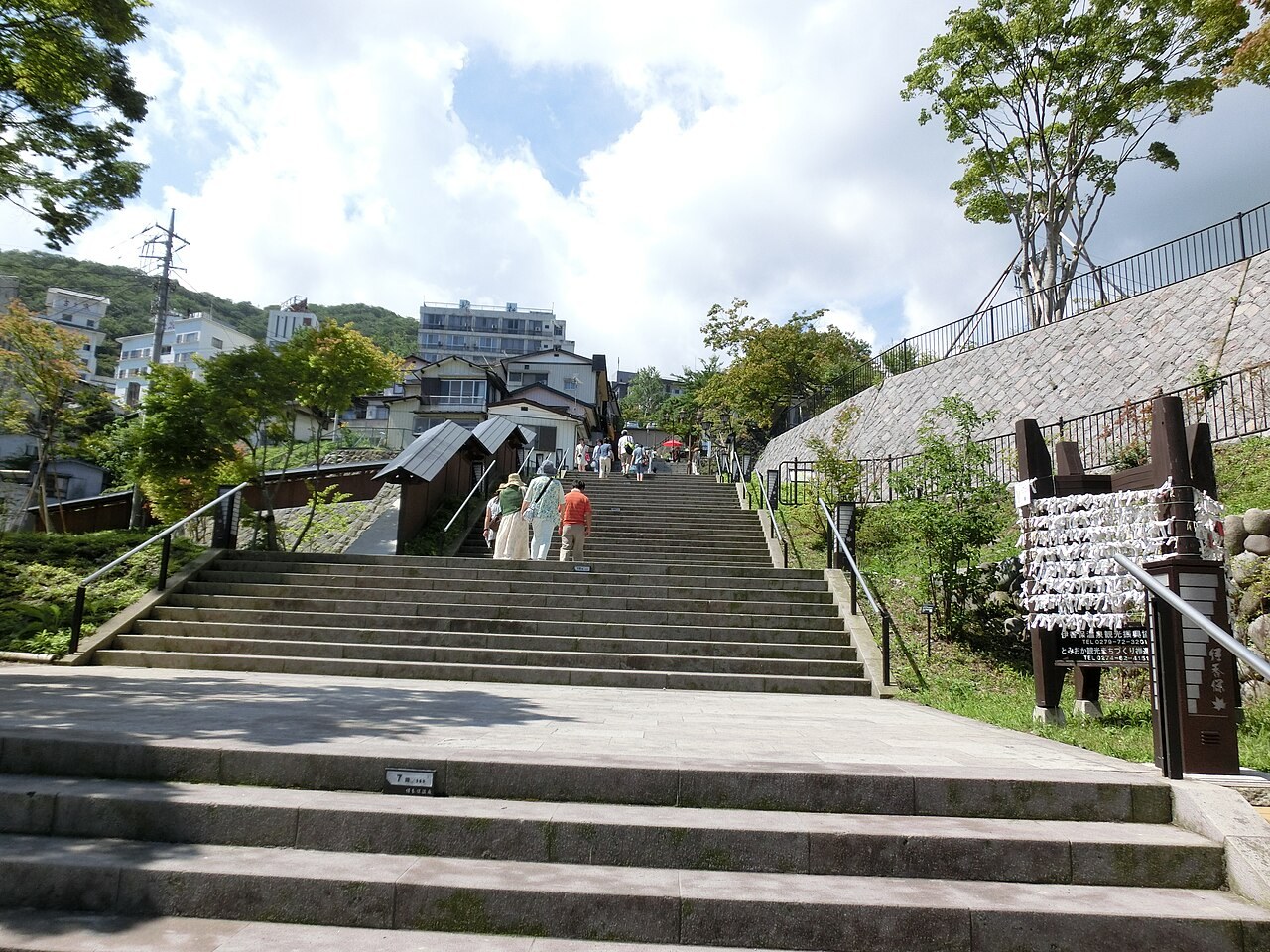
Ikaho climbs a mountainside in Gunma up a famous street of 365 stone steps, about 20 minutes by bus from Shibukawa Station. It has two waters: the rusty-brown 'Golden Water' (kogane-no-yu) that has flowed since ancient times, and the clear 'White Silver Water' (shirogane-no-yu) tapped in the modern era. Below are the bathhouses, spring sources and onsen facilities recorded in OpenStreetMap within about 2 km of the town centre.
| Prefecture | Gunma |
|---|---|
| Region | Kanto |
| Spring quality | Two waters: Golden Water — iron-rich sulphate spring (rusty brown); White Silver Water — clear metasilicate spring |
| Source temperature | Varies by source — the two waters rise at different points on the mountainside |
| Nearest station | Shibukawa (JR Jōetsu Line), then about 20 minutes by bus; highway buses run from Shinjuku |
| From Tokyo | About 2 hours — JR to Shibukawa + bus, or a direct highway bus from Shinjuku (about 2 h 30 min) |
| From Osaka | About 5 hours 30 minutes via Tokyo / Takasaki |
| Best season | Autumn for the steps and the Haruna hills; the September Ikaho Festival on the stone steps |
| Places listed here | 5 |
| Public bathhouses | 5 |
| Hot spring sources | 0 |
Spring quality, source temperatures and access routes are drawn from the Japanese Wikipedia articles on each town (CC BY-SA 4.0) and the English articles credited below. Journey times are typical scheduled times for the routes named, rounded — always check current timetables before you travel.
About Ikaho Onsen
Ikaho Onsen (伊香保温泉) is a hot spring town in Ikaho Town, Shibukawa City, Gunma Prefecture, built on a mountainside famous for its street of 365 stone steps. It is unusual in having two distinct waters: the iron-rich, rusty brown Golden Water, a sulphate spring, and the clear White Silver Water, a metasilicate spring, which rise at different points on the mountainside.
Alongside Kusatsu Onsen, Ikaho is one of the representative famous springs of Gunma, and it is sung in the local Jōmō karuta cards as a famous hot spring of Japan. The nearest station is Shibukawa on the JR Jōetsu Line, about 20 minutes away by bus.
Two waters: rusty Golden Water and clear White Silver Water
Most hot spring towns are defined by a single water, but Ikaho offers two. The Golden Water is an iron-rich sulphate spring whose colour gives it its name: it runs a rusty brown, a sign of the iron it carries. The White Silver Water is the contrast, a clear metasilicate spring. The two waters rise at different points on the mountainside, and the source temperature varies by source, so there is no single temperature figure for the town as a whole.
For a bather, the pairing means a visit can involve comparing two quite different baths in one small town. The recorded spring quality in the town's reference data is a sulphate spring recognised under Japan's hot spring law, which corresponds to the Golden Water side of the pair. This guide lists 5 places for Ikaho, all of them public bathhouses, giving visitors a manageable set of baths in which to try the town's waters.
The town: 365 stone steps at the centre of everything
Ikaho's layout is built around one feature: its famous street of 365 stone steps. The steps climb through the heart of the town, and the life of the resort is arranged along and around them, so that walking the steps is itself the main way of experiencing Ikaho. Inns, shops and bathhouses gather along this stepped street, and a visitor's day naturally follows its slope.
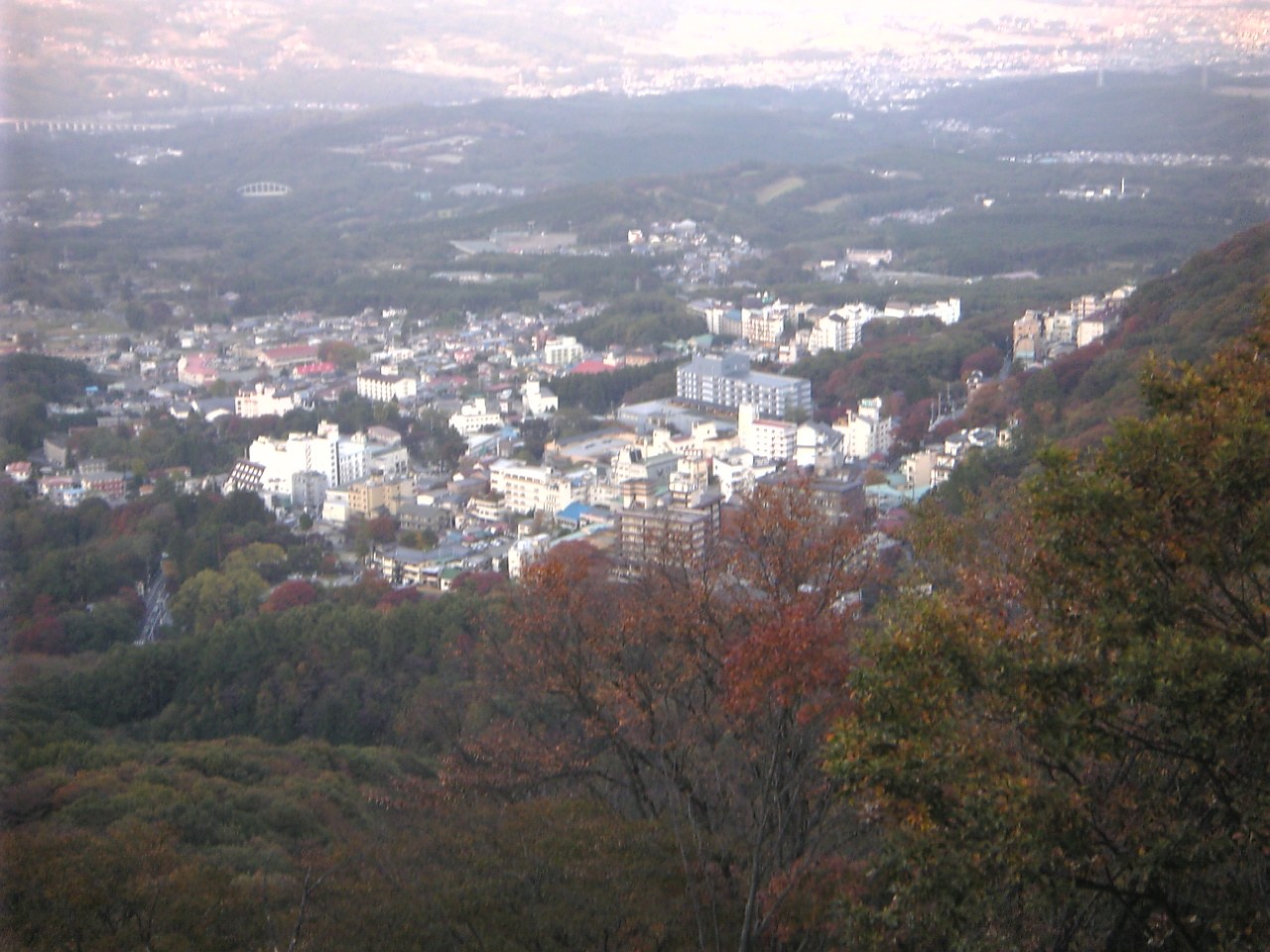
The setting is a mountainside one, with the Haruna hills around the town. That geography gives Ikaho a different feel from a valley-floor or seaside resort: the town looks out from its slope, and the climb of the steps is part of its character. The guide recommends autumn for the steps and the Haruna hills, when the surrounding slopes colour.
A Gunma name sung in the Jōmō karuta
Ikaho's place in Gunma's culture is unusually well documented for a hot spring town. Together with Kusatsu Onsen, it is described as a famous spring representing the prefecture, a pairing that puts this mountainside town alongside one of Japan's best-known hot springs. In the Jōmō karuta, the traditional card game of the region, Ikaho is sung with the phrase celebrating it as a famous hot spring of Japan, which shows how deeply the town is woven into local identity.
The name is also protected. Ikaho Onsen is registered as a regional collective trademark, so that the name functions as a shared brand for the town. These details are background rather than something seen on the street, but they explain the confidence of the place: Ikaho presents itself, and is treated locally, as one of the established names of Japanese bathing.
Visiting: the September festival, autumn hills, and the bus from Shibukawa
The highlight of Ikaho's calendar given in this guide is the Ikaho Festival in September, held on the stone steps themselves, making the town's central street the stage for its main celebration. Autumn is the recommended season overall, for the steps and the Haruna hills together.
Getting there is a two-stage journey from Tokyo. The standard route is JR to Shibukawa, then about 20 minutes by bus up to Ikaho, for a total of about 2 hours. A direct highway bus, the Jōshū Yumeguri service, runs from Shinjuku in about 2 hours 30 minutes. From Osaka the journey is longer, about 5 hours 30 minutes via Tokyo or Takasaki. By car, the town is about 20 minutes from the Shibukawa-Ikaho interchange.
The sections above were written for this guide from the facts in the Japanese Wikipedia article 「伊香保温泉」 and the spring and access data summarised on this page, under CC BY-SA 4.0.
Public bathhouse (spring type not recorded in OpenStreetMap) (5)
- Ishidan no Yu 石段の湯
OpenStreetMap - Kogane no Yu Kan 伊香保グランドホテル 黄金の湯館
OpenStreetMap - 伊香保グランドホテル
OpenStreetMap - 伊香保露天風呂
OpenStreetMap - 岸権 辰の湯
OpenStreetMap
Gallery
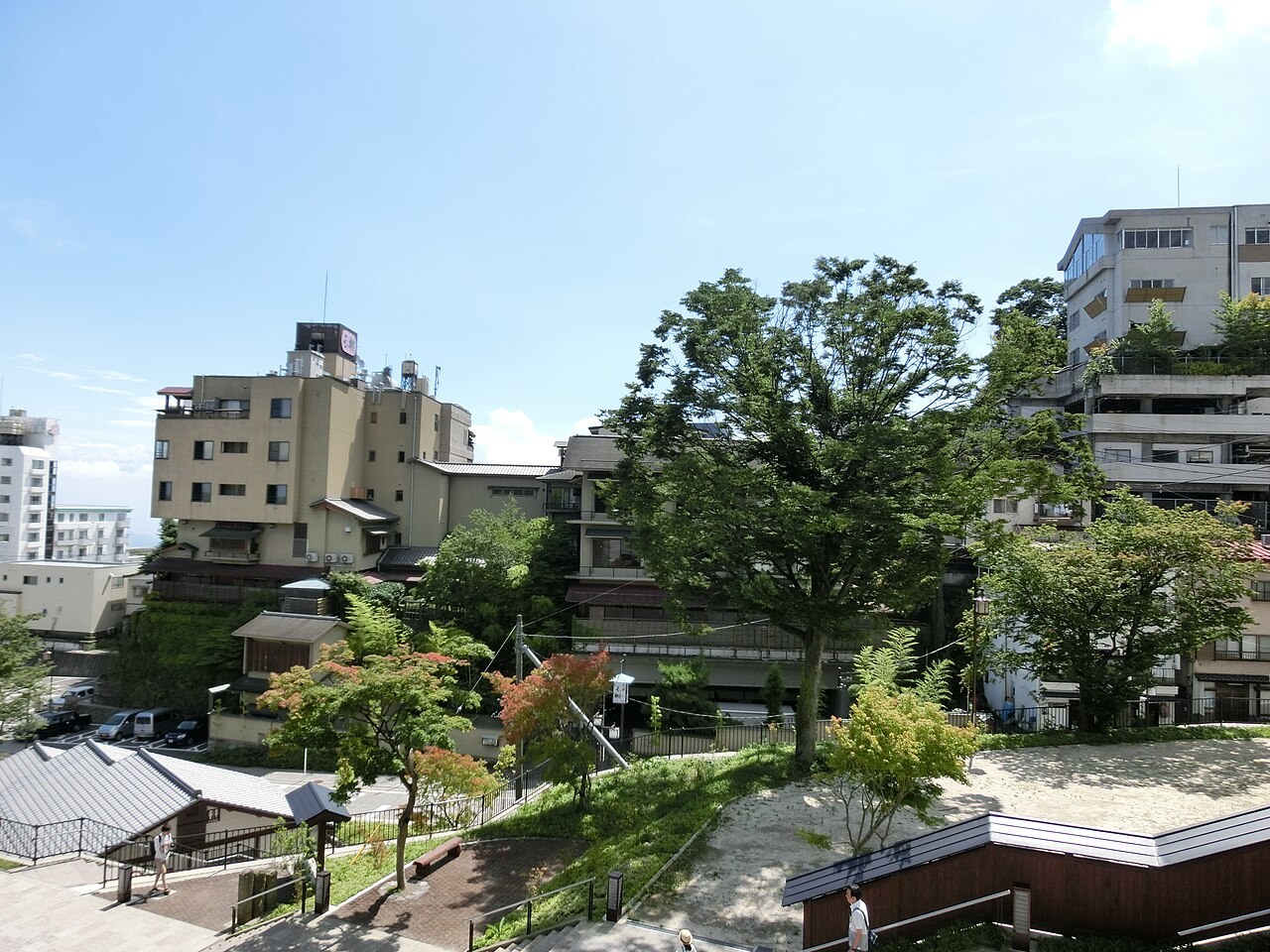

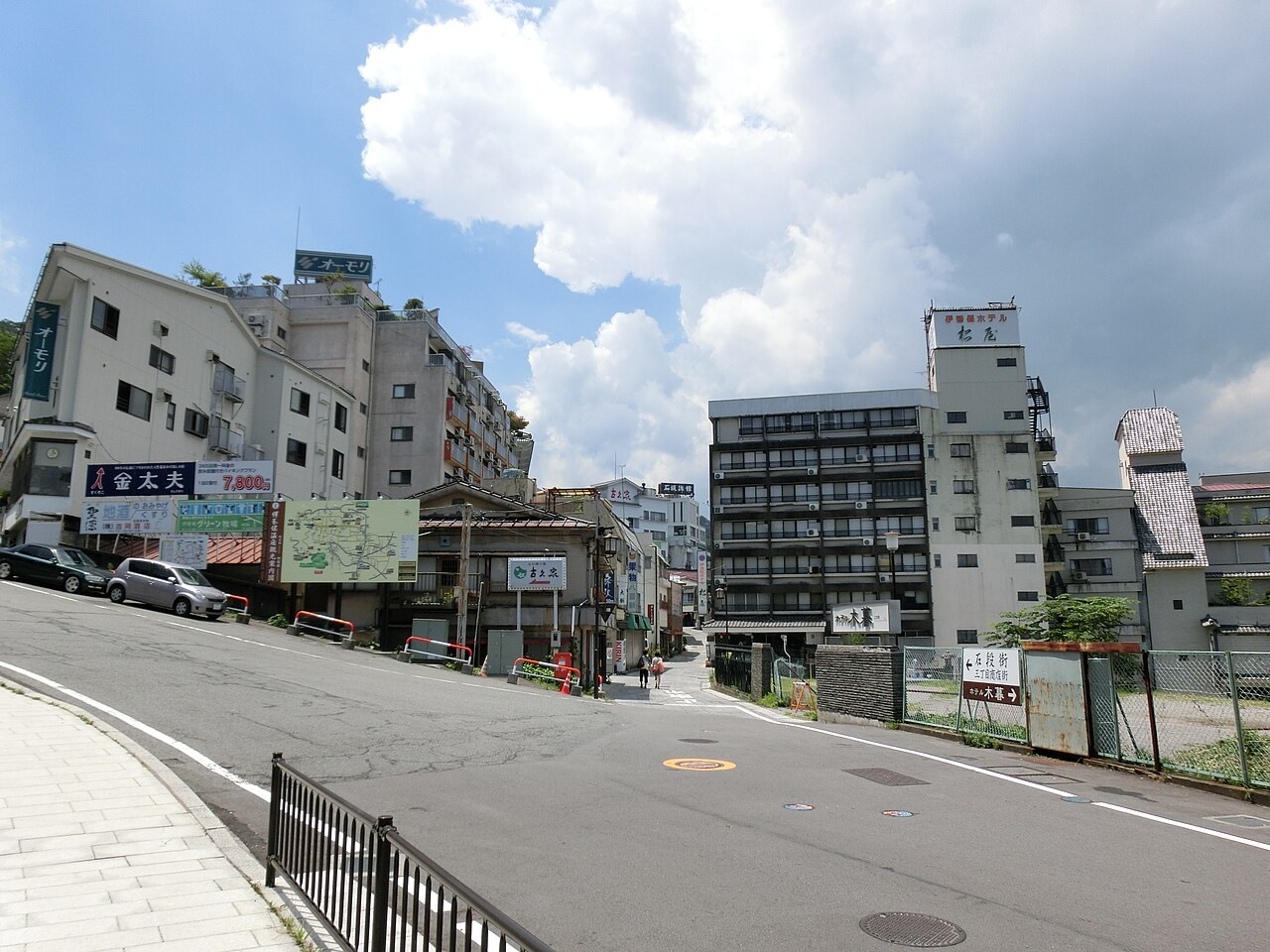



Names, types and websites are shown exactly as recorded in OpenStreetMap. A bathhouse whose spring type is not recorded is labelled as such — we do not guess. Before your first visit, read how to use an onsen.
More onsen towns
- Kusatsu Onsen 草津温泉 — Same prefecture — Gunma's other great spring, and the more acidic of the two
- Nasu Onsen 那須温泉郷 — Another Kanto highland spring area — eight villages under one peak
- Chichibu Onsen 秩父温泉 — South into Saitama's mountain basin of shrines and inn baths
- Hakone Onsen 箱根温泉 — The other classic Tokyo escape, in the caldera hills
Keep exploring
- All onsen towns in Kanto — this town's region, town by town
- Browse by spring type — find towns by their water
- Browse by feature — day trips, snow-view baths, free communal baths and more