Home › Onsen towns › Nasu Onsen
Nasu Onsen 那須温泉郷
Nasu is a family of eight spring villages scattered across the southern slopes of Mount Nasu in Tochigi, about 40 minutes by bus from Nasushiobara Station. The oldest, Nasu-Yumoto, steams with milky sulphur water beside the Sessho-seki 'killing stone'; others hide in forest and farmland up and down the mountain road. Below are the bathhouses, spring sources and onsen facilities recorded in OpenStreetMap within about 5 km of the area centre.
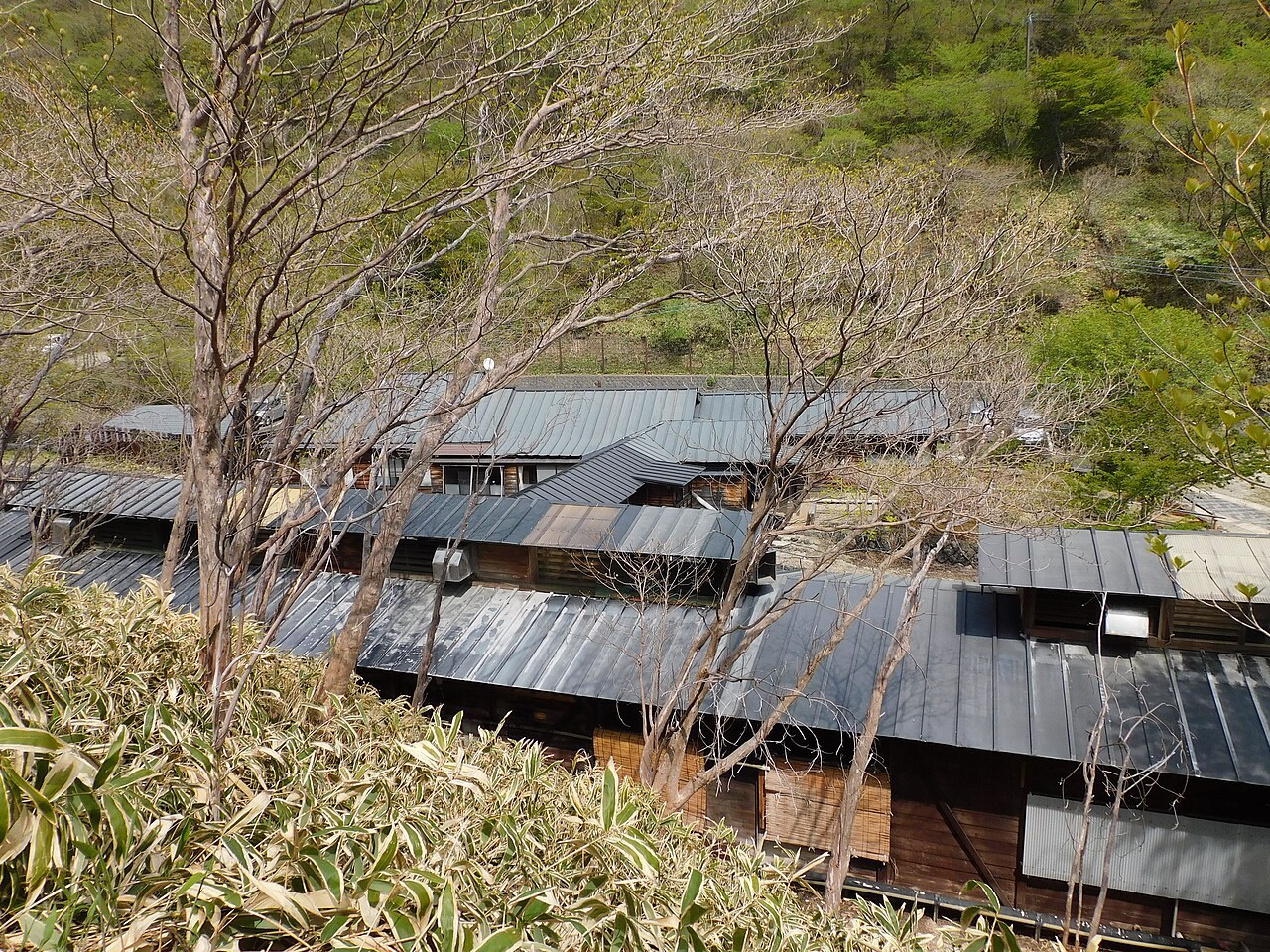
| Prefecture | Tochigi |
|---|---|
| Region | Kanto |
| Spring quality | Sulphur springs, simple springs, bicarbonate springs and more — each village differs |
| Source temperature | Varies by village and source on the mountain slopes |
| Nearest station | Nasushiobara (Tōhoku Shinkansen) or Kuroiso (JR), then 30–45 minutes by bus |
| From Tokyo | About 2 hours 30 minutes — Shinkansen to Nasushiobara (about 1 h 15 min) + bus |
| From Osaka | About 5 hours via Tokyo |
| Best season | Spring azaleas and autumn leaves on Mount Nasu; winter skiing on the same slopes |
| Places listed here | 6 |
| Public bathhouses | 6 |
| Hot spring sources | 0 |
Spring quality, source temperatures and access routes are drawn from the Japanese Wikipedia articles on each town (CC BY-SA 4.0) and the English articles credited below. Journey times are typical scheduled times for the routes named, rounded — always check current timetables before you travel.
About Nasu Onsen
Nasu Onsen (那須温泉郷) is not a single town but a group of eight hot spring villages scattered across the southern slopes of Mount Nasu, in Nasu Town, Tochigi Prefecture, inside Nikko National Park. Because the villages are separate, so are the waters: sulphur springs, simple springs, bicarbonate springs and more, with each village differing from the next and temperatures varying by village and source.
The same southern slopes hold the Nasu Imperial Villa, used by the Imperial Family for rest and recuperation. The gateway stations are Nasushiobara, on the Tōhoku Shinkansen, and Kuroiso, each followed by a bus ride of 30–45 minutes up into the spring villages.
Eight villages, each with its own water
The defining fact about Nasu is its structure. Eight separate hot spring settlements are dotted across the southern foot of Mount Nasu, the peak also known as Chausu-dake, and together they are called Nasu Onsen. The recorded spring qualities, sulphur springs, simple springs, bicarbonate springs and others, belong to different villages, so a traveller choosing where to stay in Nasu is also choosing which water to bathe in.
This guide lists 6 places for Nasu, all public bathhouses, a small sample of a large area: the reference statistics for the spring group, from 2003, record 349 lodging facilities with a total capacity of 21,943 people and about 4.9 million bathers a year. Those figures are dated, but they show the scale of Nasu as one of the major hot spring areas of the northern Kanto region rather than a single village resort.
On the slopes of Mount Nasu, inside Nikko National Park
Nasu's setting is a mountain one. The villages lie on the southern slopes of Mount Nasu within Nikko National Park, so a stay combines hot spring bathing with the scenery and walking of a national park highland. The guide's recommended seasons follow the mountain calendar: spring azaleas and autumn leaves on Mount Nasu, and winter skiing on the same slopes, which makes Nasu a year-round mountain resort as well as a spring destination.
The presence of the Nasu Imperial Villa on the same southern slopes underlines the character of the area. The Imperial Family's use of Nasu as a place of rest reflects the qualities that draw ordinary visitors too: altitude, green slopes, and a choice of hot spring villages spread across them rather than one crowded centre.
Choosing a village: from Nasu-Yumoto's sulphur water outward
Because the eight villages differ, planning a Nasu trip means picking a base. Nasu-Yumoto, the historic heart of the area near the mountain, is associated in this guide with milky sulphur water, while other villages offer their own simple or bicarbonate springs. Travellers who enjoy comparing waters can treat the group as a small tour in itself, moving between villages on the slopes; those who prefer to settle can choose one village and use it as a base for the mountain.
Either way, it helps to think of Nasu as an area rather than a point on the map. Distances between villages, and between the stations in the plain and the springs on the slopes, are part of the geography. Allowing time for the bus journey up from Nasushiobara or Kuroiso, and for moving around the highland, will make a visit feel unhurried.
Getting there: Shinkansen to Nasushiobara, then the bus up the mountain
From Tokyo, the journey takes about 2 hours 30 minutes in total. The Tōhoku Shinkansen reaches Nasushiobara in about 1 hour 15 minutes, and from there, or from Kuroiso on the JR line, buses climb to the spring villages in 30–45 minutes. By car, the villages are about 30–45 minutes from the Nasu interchange, according to the area's reference information. From Osaka, the journey is about 5 hours via Tokyo.
That combination, a fast Shinkansen leg and a mountain bus leg, defines Nasu's accessibility. It is close enough to Tokyo for a short break, yet the final climb separates the springs clearly from the plain below, so arriving in a village on the wooded slopes of Mount Nasu feels like arriving somewhere distinct.
The sections above were written for this guide from the facts in the Japanese Wikipedia article 「那須温泉郷」 and the spring and access data summarised on this page, under CC BY-SA 4.0.
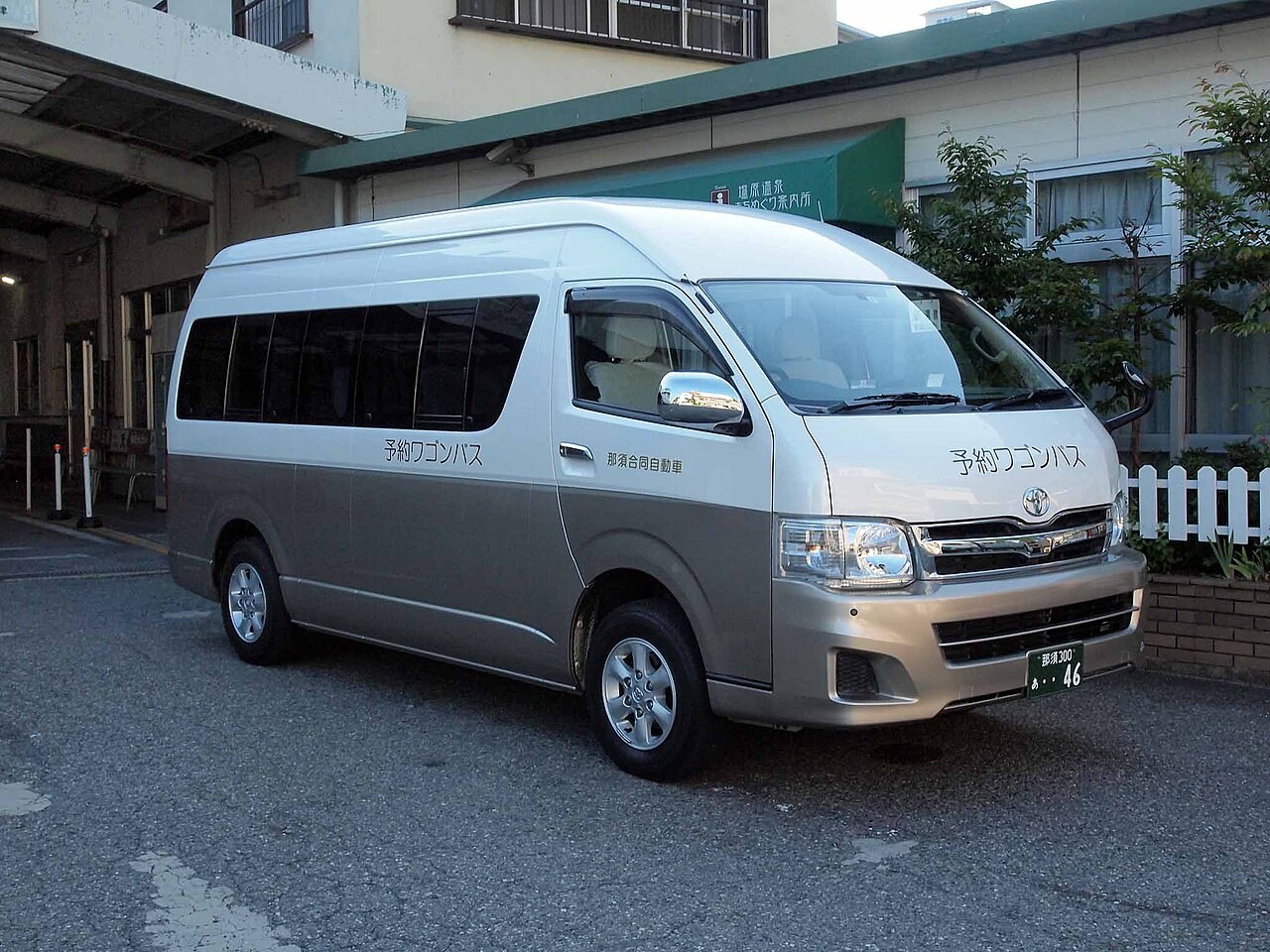
Public bathhouse (recorded as onsen in OpenStreetMap) (1)
Public bathhouse (spring type not recorded in OpenStreetMap) (5)
- Konbairo no Yu Foot Bath 足湯こんばいろの湯
OpenStreetMap - アクアヴィーナス
OpenStreetMap - 滝乃湯
OpenStreetMap - 那須どうぶつ王国;カピバラの湯
OpenStreetMap - 那須大丸ガーデン
OpenStreetMap
Gallery
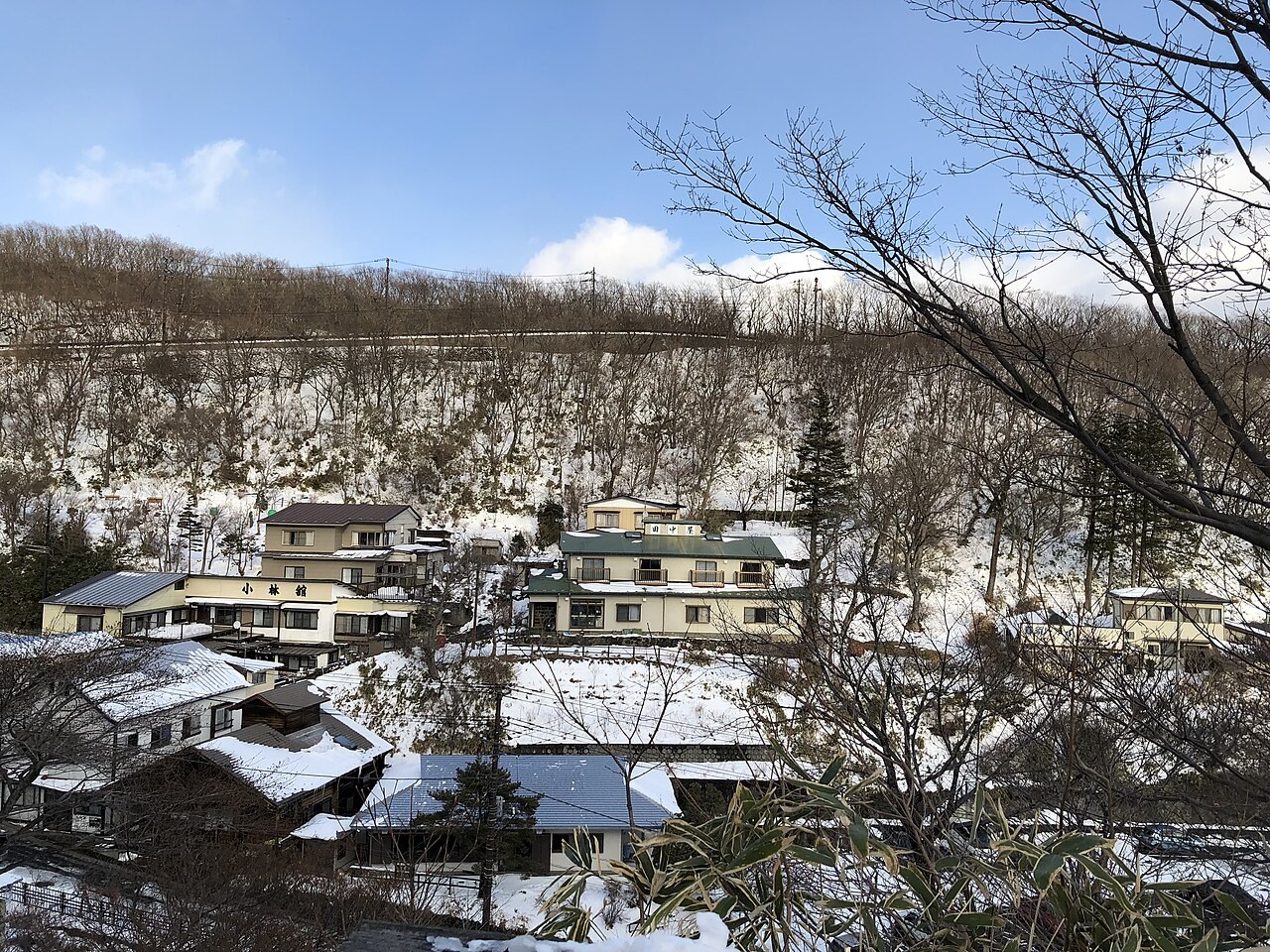

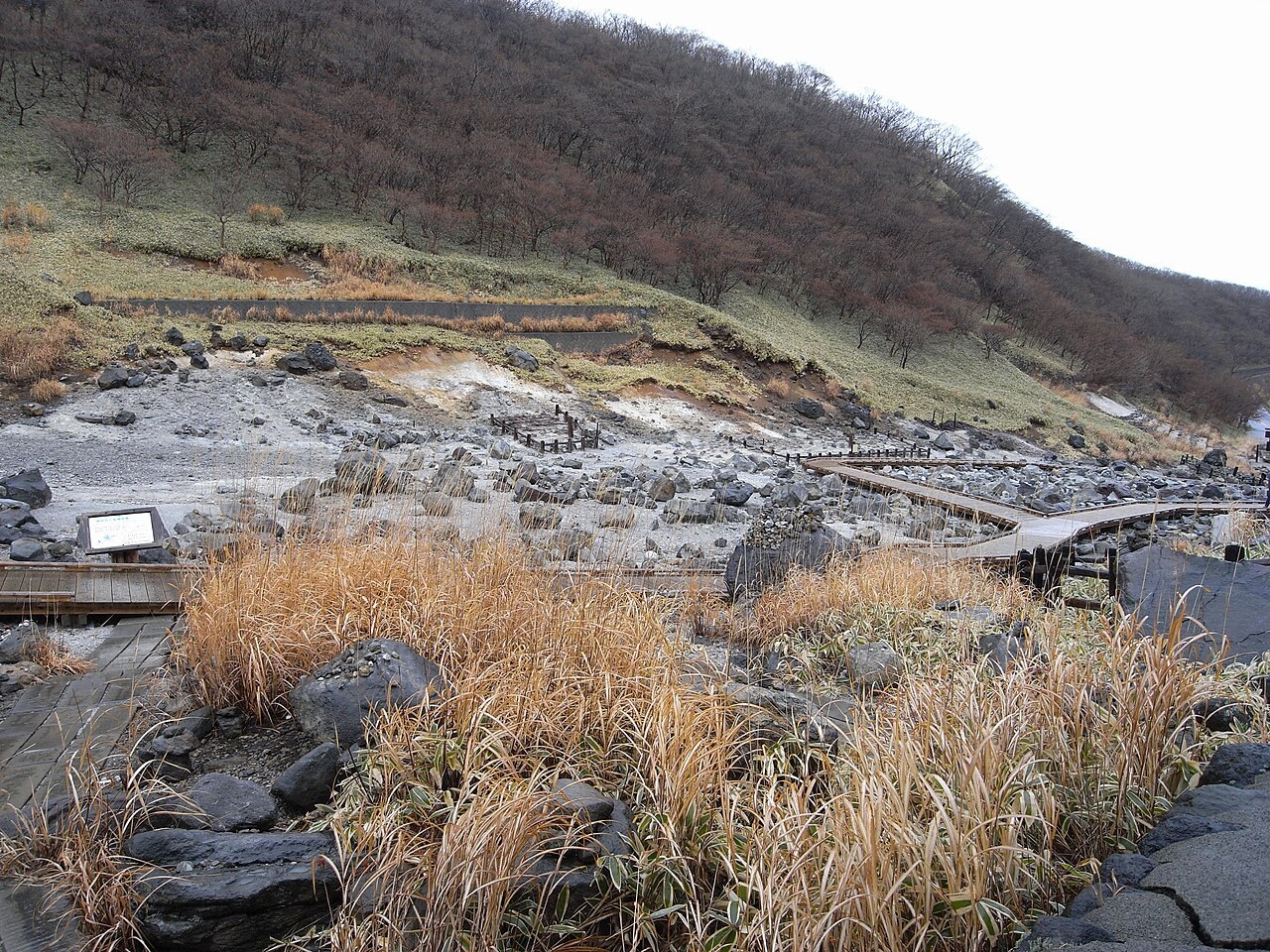

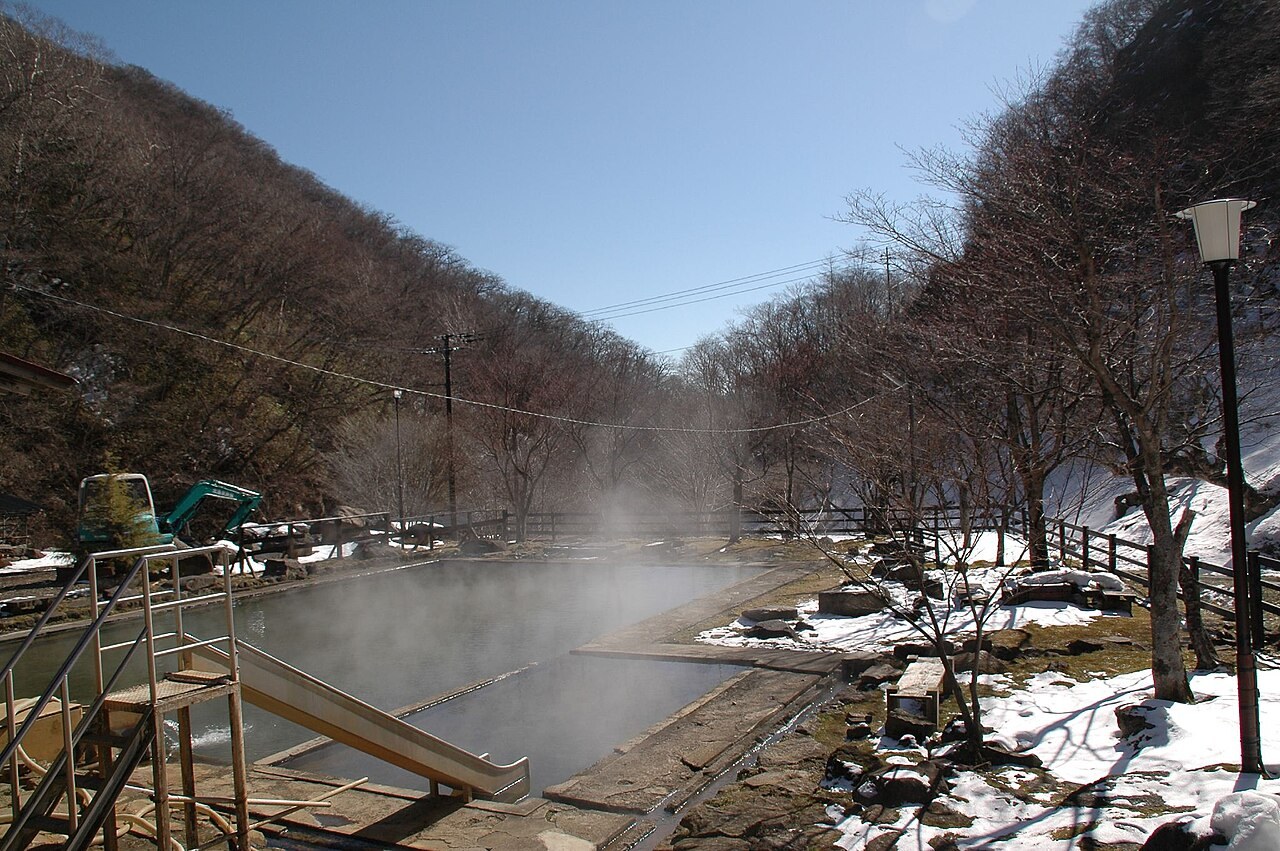

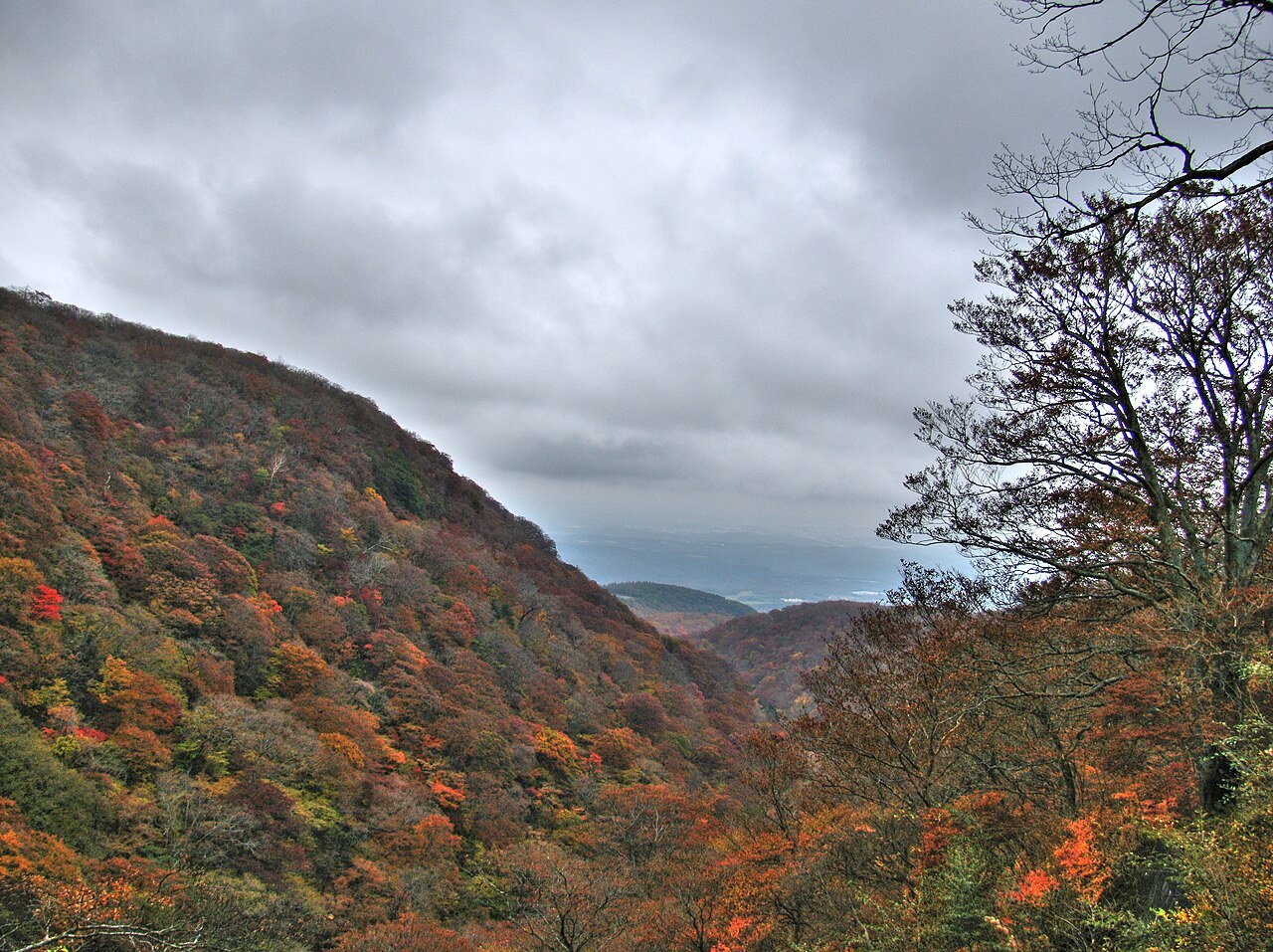

Names, types and websites are shown exactly as recorded in OpenStreetMap. A bathhouse whose spring type is not recorded is labelled as such — we do not guess. Before your first visit, read how to use an onsen.
More onsen towns
- Ikaho Onsen 伊香保温泉 — Another Kanto mountain spring town, famous for its stone steps
- Kusatsu Onsen 草津温泉 — Kanto's other great volcanic spring — far more acidic water
- Fukuroda Onsen 袋田温泉 — East to Ibaraki's waterfall town in the Okukuji mountains
- Iizaka Onsen 飯坂温泉 — North into Fukushima's historic cure town
Keep exploring
- All onsen towns in Kanto — this town's region, town by town
- Browse by spring type — find towns by their water
- Browse by feature — day trips, snow-view baths, free communal baths and more