Home › Onsen towns › Shiobara Onsen
Shiobara Onsen 塩原温泉郷
Eleven springs, one gorge, every kind of water: Shiobara's eleven named onsen line the Hoki River valley in northern Tochigi, pouring more than 10,000 litres a minute at pH values from 2.6 to 9.2 — sulphur, acid, salt, bicarbonate and simple waters within a single bus ride. Riverside communal baths, ten famous waterfalls and a 320-metre suspension bridge complete Tochigi's great gorge resort.
| Prefecture | Tochigi (Nasushiobara) |
|---|---|
| Region | Kanto |
| Spring quality | Eleven springs of many types — sulphur, acidic, sulphate, chloride, bicarbonate and simple springs in one valley |
| Source temperature | Varies by spring (pH 2.6–9.2 across the valley; output over 10,000 litres a minute in total) |
| Nearest station | Nishinasuno (JR Utsunomiya Line) or Nasushiobara (Tohoku Shinkansen), then about 40 minutes by JR bus |
| From Tokyo | About 2 hours — Tohoku Shinkansen to Nasushiobara (about 1 h 10 min) + bus |
| From Osaka | About 4 hours 30 minutes via Tokyo and Nasushiobara |
| Best season | Autumn colour in the gorge (late October–November); spring fresh green; winter snow-view at the upper springs |
Spring quality, source temperatures and access routes are drawn from the Japanese Wikipedia articles on each town (CC BY-SA 4.0) and the English articles credited below. Journey times are typical scheduled times for the routes named, rounded — always check current timetables before you travel.
About Shiobara Onsen
Shiobara Onsen (塩原温泉郷) is the collective name for eleven hot springs scattered along the Hoki River gorge in Nasushiobara, northern Tochigi, between the active volcano of Takahara and the Osabi mountains. They have been called the Shiobara Eleven Springs for centuries; tradition dates the first, Motoyu, to the Daido era (806–810), giving the valley more than 1,200 years of bathing.
Each of the eleven — Oami, Fukuwatari, Shiogama, Shionoyu, Hatada, Monzen, Furumachi, Nakashiobara, Kamishiobara, Arayu and Motoyu — has its own water, its own hamlet and its own inns, strung along Route 400 up the gorge. From the Meiji era the valley was a favourite of writers; Ozaki Koyo wrote part of Konjiki Yasha at a Hatada inn whose 'Koyo Room' is still preserved.
The water: a whole catalogue in one valley
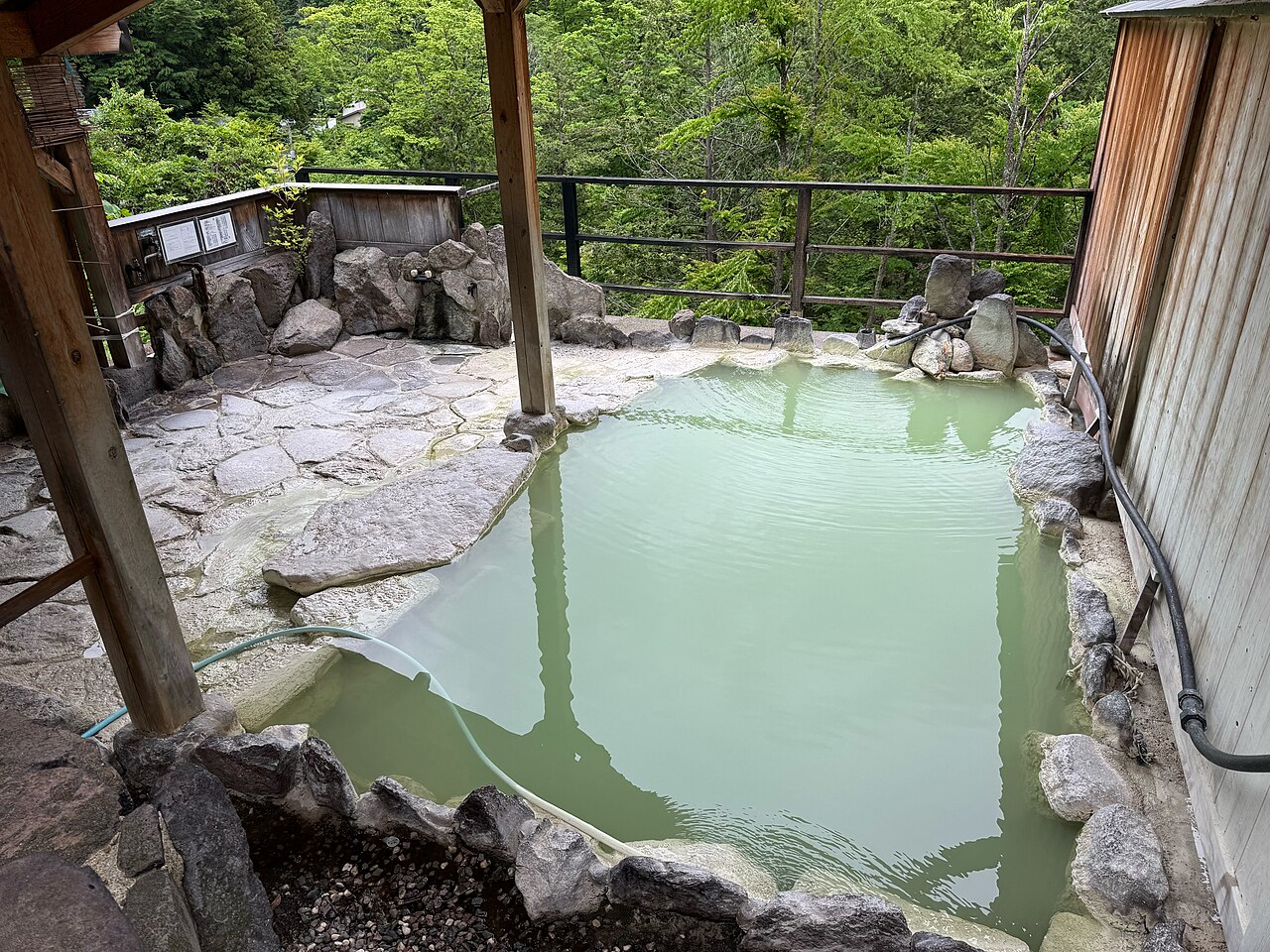
Shiobara is the place to learn Japanese spring types by bathing them. The lower and middle springs are mostly chloride (salt) waters, some paired with bicarbonate; Oami is a weakly alkaline sulphate spring; and the two upper springs, Arayu and Motoyu — the 'inner Shiobara' — are cloudy sulphur waters, Motoyu adding a genuinely acidic spring (the valley's pH range runs 2.6 to 9.2).
Total output exceeds 10,000 litres a minute. A yumeguri tegata pass lets visitors sample several inns' baths, and the honest way to plan Shiobara is as a tasting course: clear salt water low in the gorge, milky sulphur water at the top.
Communal baths and the gorge walk
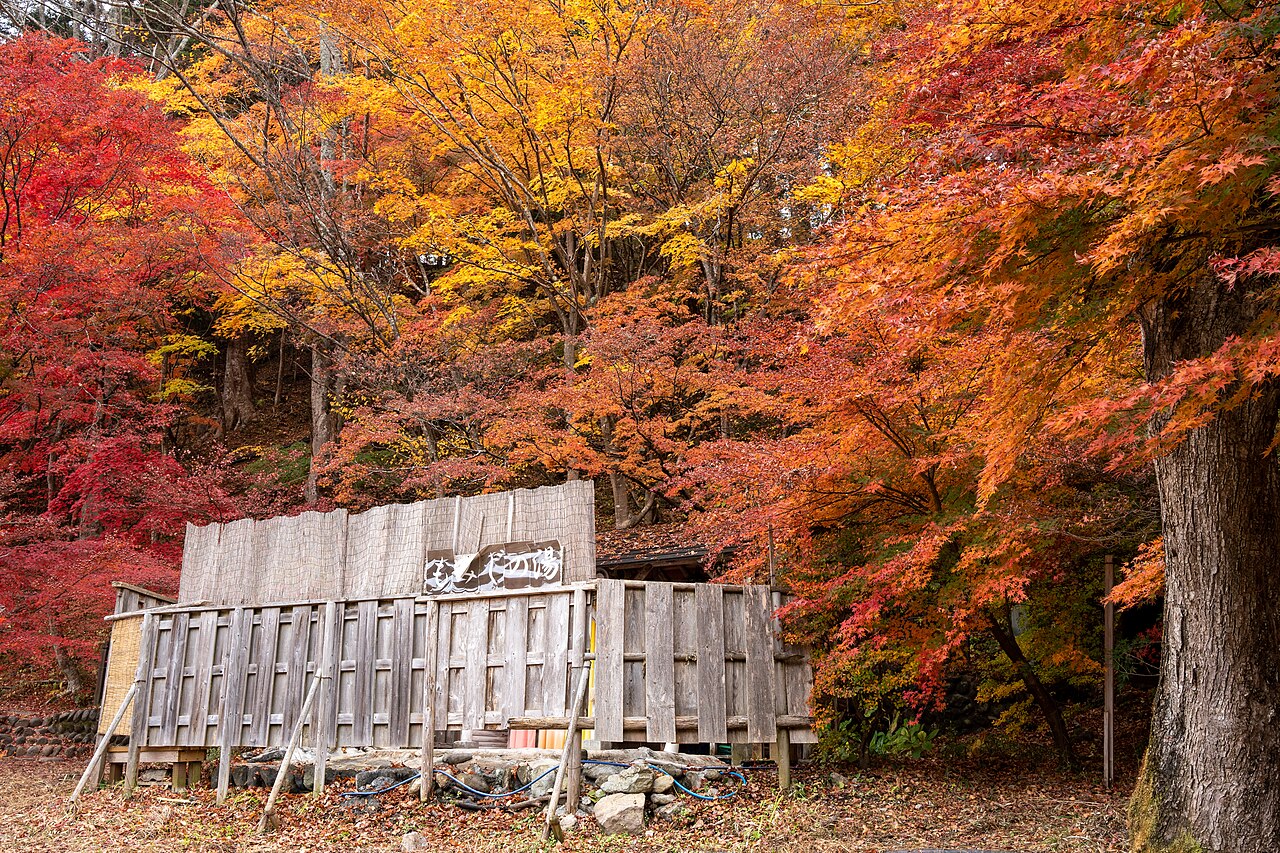
Old communal baths survive throughout the valley, including the open riverside pools of Fukuwatari — Iwa no Yu across the bridge and Fudo no Yu five minutes up a side path, unsegregated riverside baths run on a contribution-box basis with seasonal opening rules posted locally (check before you go; Fudo no Yu has operated limited days in recent years).
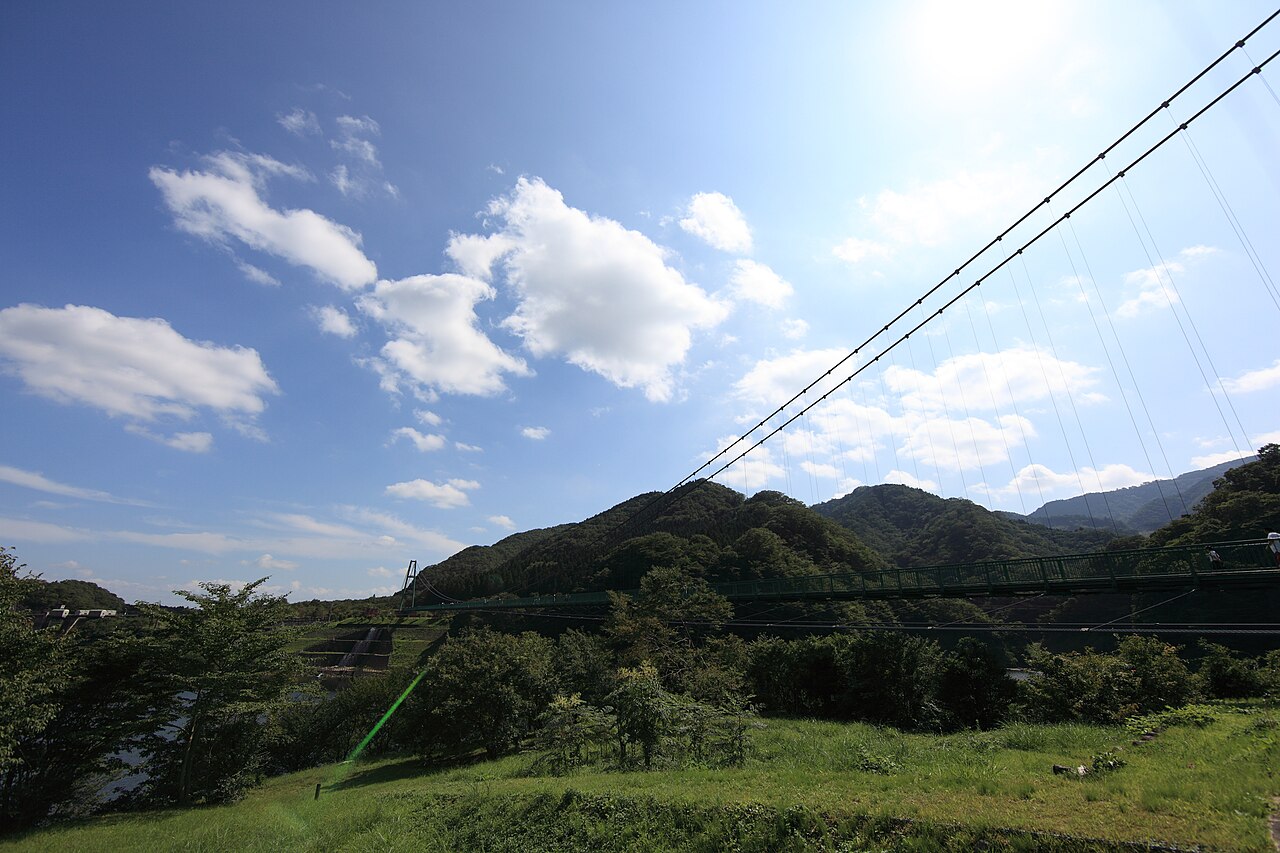
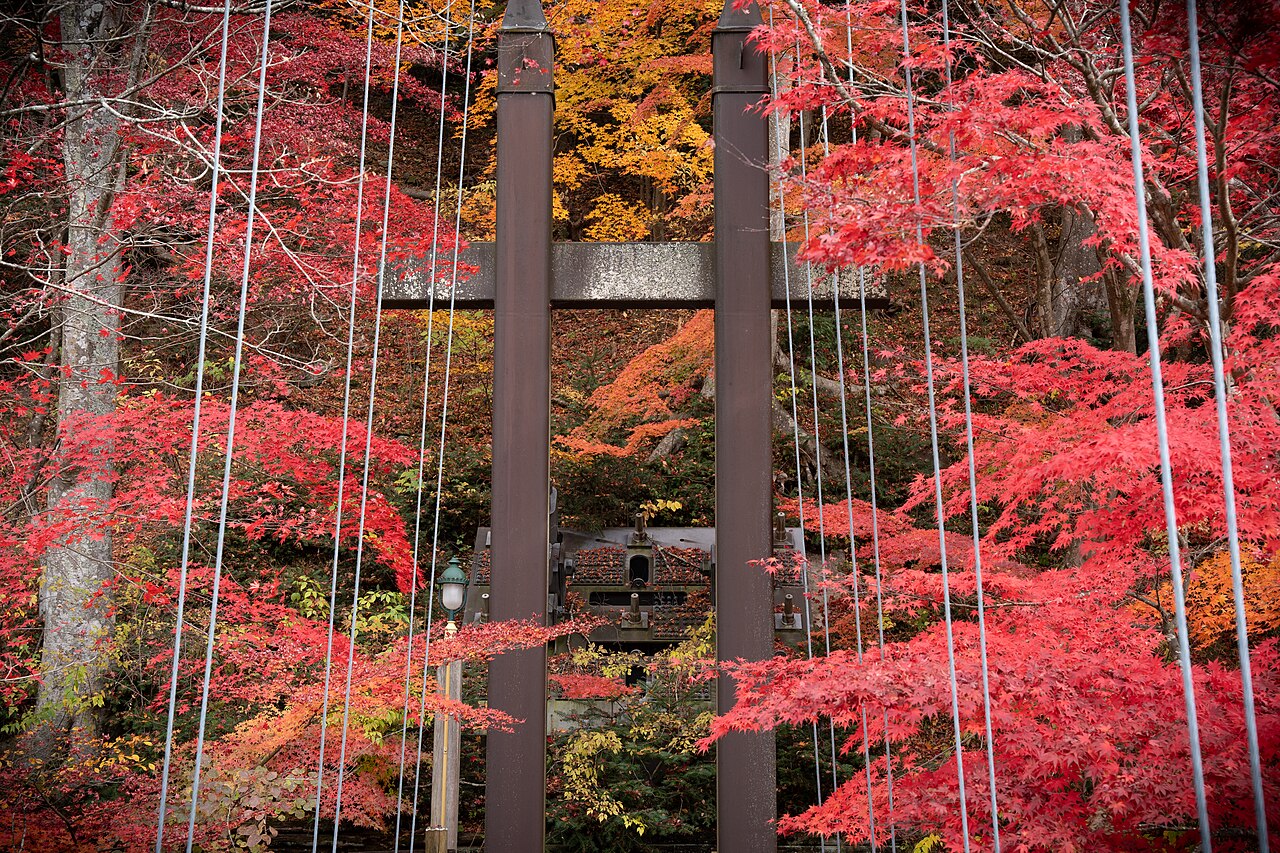
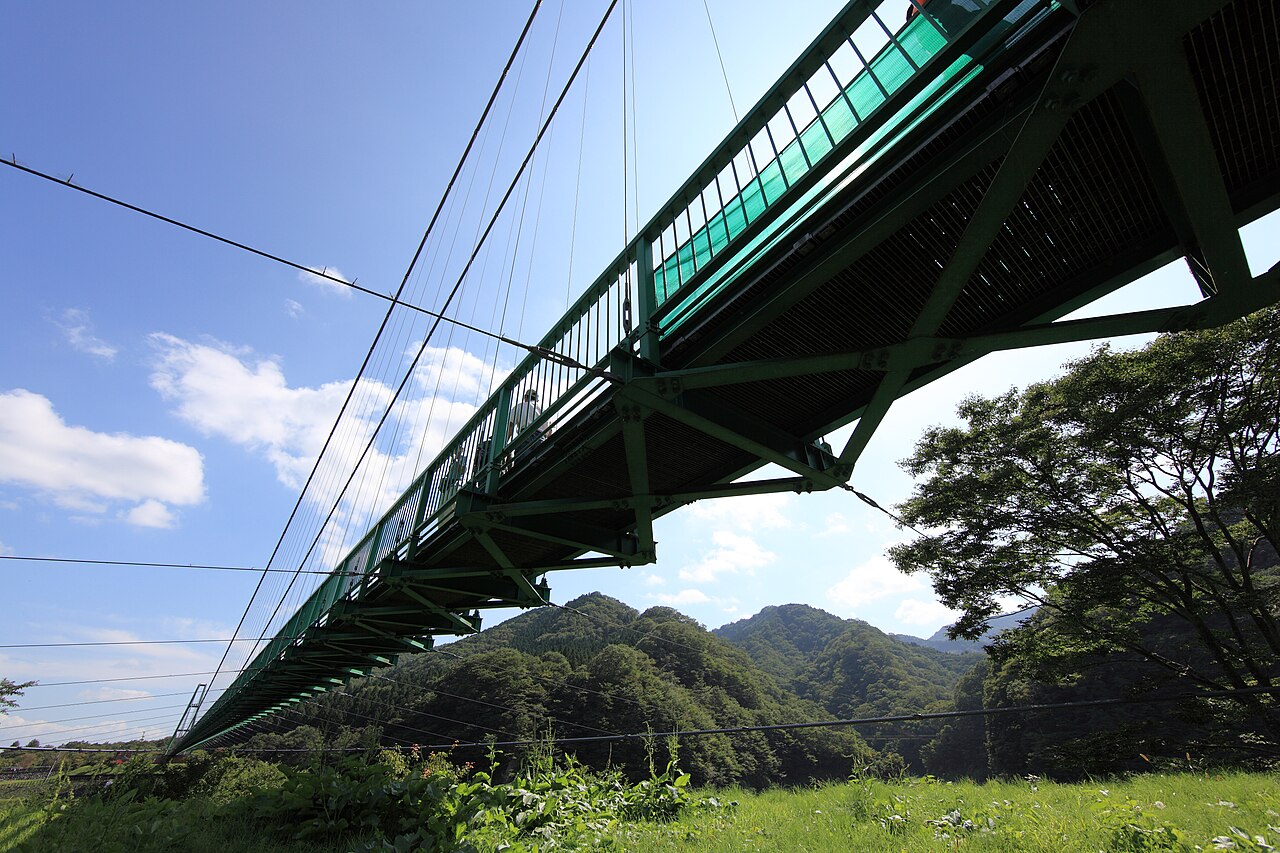
The gorge itself is the sight: the 320-metre Momijidani suspension bridge, among Japan's longest pedestrian bridges, crosses the Shiobara dam lake at the valley mouth, and hiking paths link it to the Mikaeri bridge and the gorge's celebrated waterfalls — Ryuka, Mikaeri and Nuno among the 'ten famous falls of Shiobara'. In autumn the whole valley turns at once.
Writers, emperors and soup yakisoba
Shiobara was an imperial retreat site too: the former Shiobara Imperial Villa's throne room is preserved in the Tennono-ma Memorial Park in the town centre. The horse-drawn 'tote-basha' sightseeing carts run the streets from April to November, their trumpet horns giving the town its comedy souvenir, the tote-yaki crepe.
And the valley eats its own invention — soup-iri yakisoba, fried noodles served in broth, dished up at several local shops. Few onsen towns can offer eleven waters, ten waterfalls and a noodle dish found nowhere else.
Getting there
The gorge centre (Furumachi/Hatada) is about 40 minutes by JR Bus from Nishinasuno Station (Utsunomiya Line) or Nasushiobara Station (Tohoku Shinkansen). Kamitokoro side is served from Kamimiyori-Shiobara-Onsenguchi Station on the Yagan Railway (about 20 minutes by bus). A valley free pass on the JR bus (2 days) suits spring-hopping.
The sections above were written for this guide from the facts in the Wikipedia articles 「塩原温泉郷」, available under CC BY-SA 4.0, and official tourism sources.
Gallery




The springs and baths named on this page are described from the Wikipedia articles credited above and official tourism sources. Before your first visit, read how to use an onsen.
More onsen towns
- Nasu Onsen 那須温泉郷 — The Nasu highland springs just across the plateau
- Kinugawa Onsen 鬼怒川温泉 — Tochigi's big river resort, the lively neighbour
- Kusatsu Onsen 草津温泉 — Gunma's acid giant — compare Motoyu's acid water with the real extreme
- Minakami Onsen 水上温泉郷 — Gunma's eighteen-spring valley, the other great Kanto collection
Keep exploring
- All onsen towns in Kanto — this town's region, town by town
- Browse by spring type — find towns by their water
- Browse by feature — day trips, snow-view baths, free communal baths and more