Home › Onsen towns › Minakami Onsen
Minakami Onsen 水上温泉郷
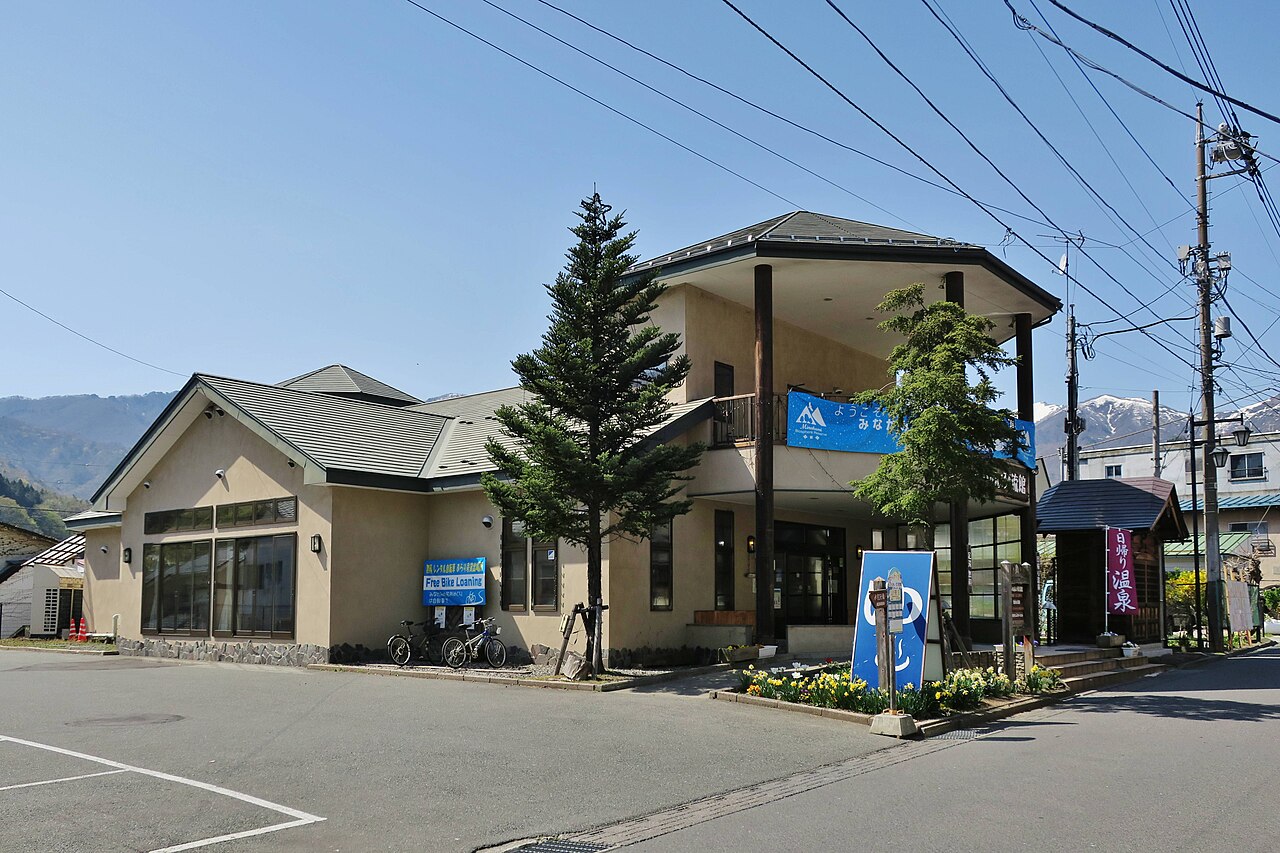
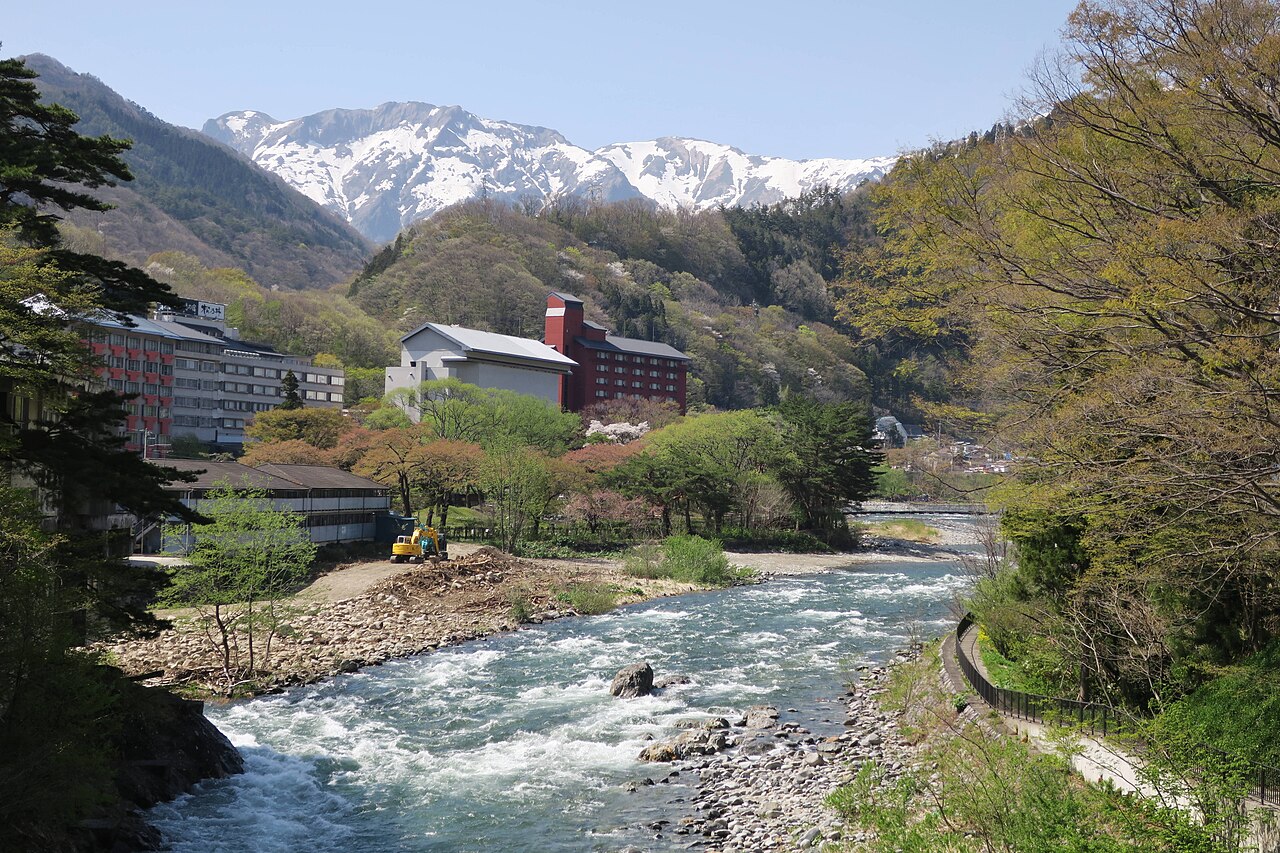
Eighteen springs share one young river at Minakami: the towns of the upper Tone — Minakami, Tanigawa, Yubiso, Takaragawa and a dozen more — pour simple and alkaline-simple waters into a gorge under Mount Tanigawa, about 90 minutes from Tokyo. It is Gunma's adventure resort: rafting and canyoning in summer, skiing in winter, and some of Japan's largest riverside open-air baths at Takaragawa.
| Prefecture | Gunma |
|---|---|
| Region | Kanto |
| Spring quality | Simple and alkaline simple springs, with sulphate springs at Minakami town (varies by spring among the eighteen) |
| Source temperature | Varies by spring (Takaragawa's four sources run 40–68 °C with about 1,800 litres a minute) |
| Nearest station | Minakami (JR Joetsu Line); Jomo-Kogen (Joetsu Shinkansen) + bus for the town centre |
| From Tokyo | About 1 hour 30 minutes to 2 hours — Joetsu Shinkansen to Jomo-Kogen + bus, or Joetsu Line direct to Minakami |
| From Osaka | About 4 hours 30 minutes via Tokyo and the Joetsu Shinkansen |
| Best season | Summer for rafting and the green gorge; winter for ski resorts and snow-view baths; autumn colour in October |
Spring quality, source temperatures and access routes are drawn from the Japanese Wikipedia articles on each town (CC BY-SA 4.0) and the English articles credited below. Journey times are typical scheduled times for the routes named, rounded — always check current timetables before you travel.
About Minakami Onsen
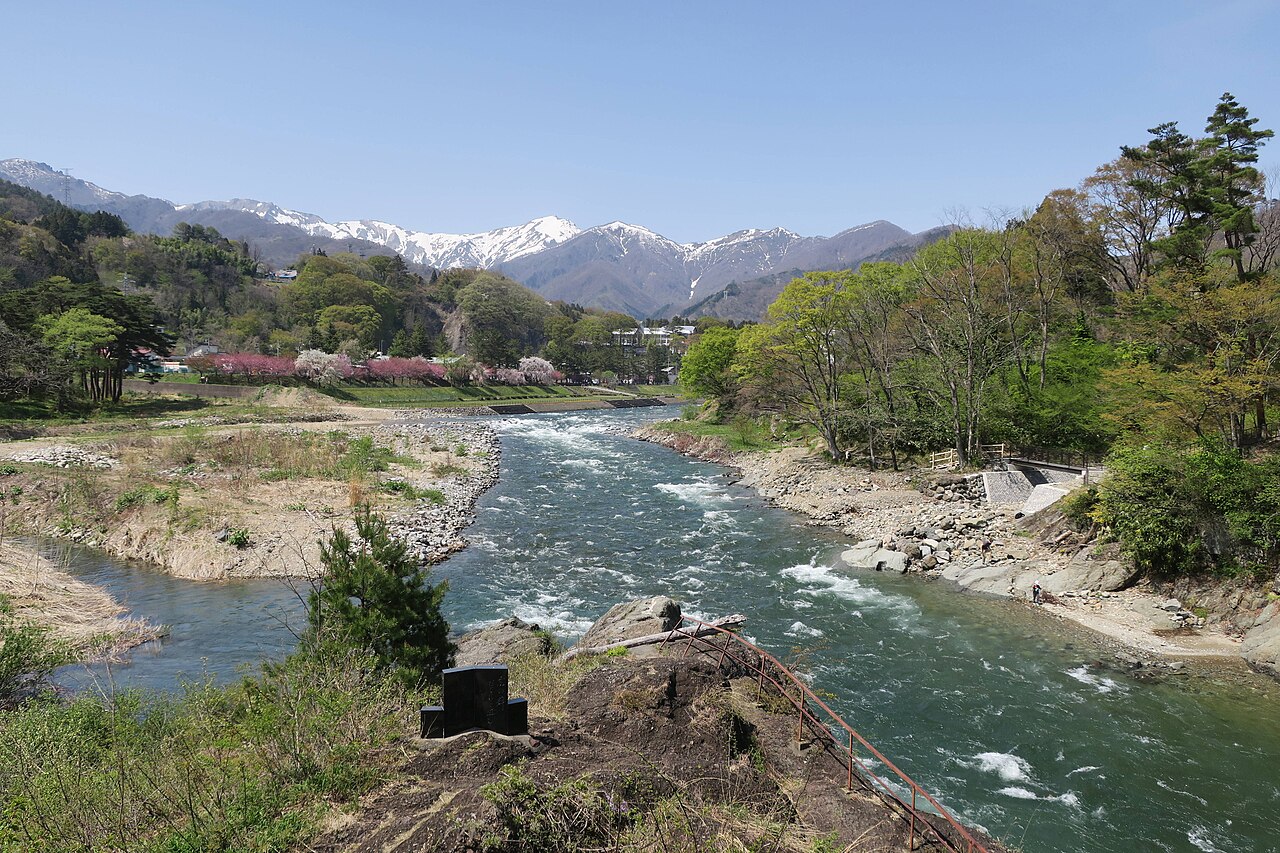
Minakami Onsen (水上温泉郷), also called the Okutone springs, is the collective name for the hot springs of Minakami Town in northern Gunma, near the headwaters of the Tone River between the Tanigawa range and Mount Hotaka. Since the town's creation in 2005 the group has been promoted as the Minakami Eighteen Springs — the old eight of the Minakami valley plus ten more across the merged town, six of them designated a National Hot Spring Resort area.
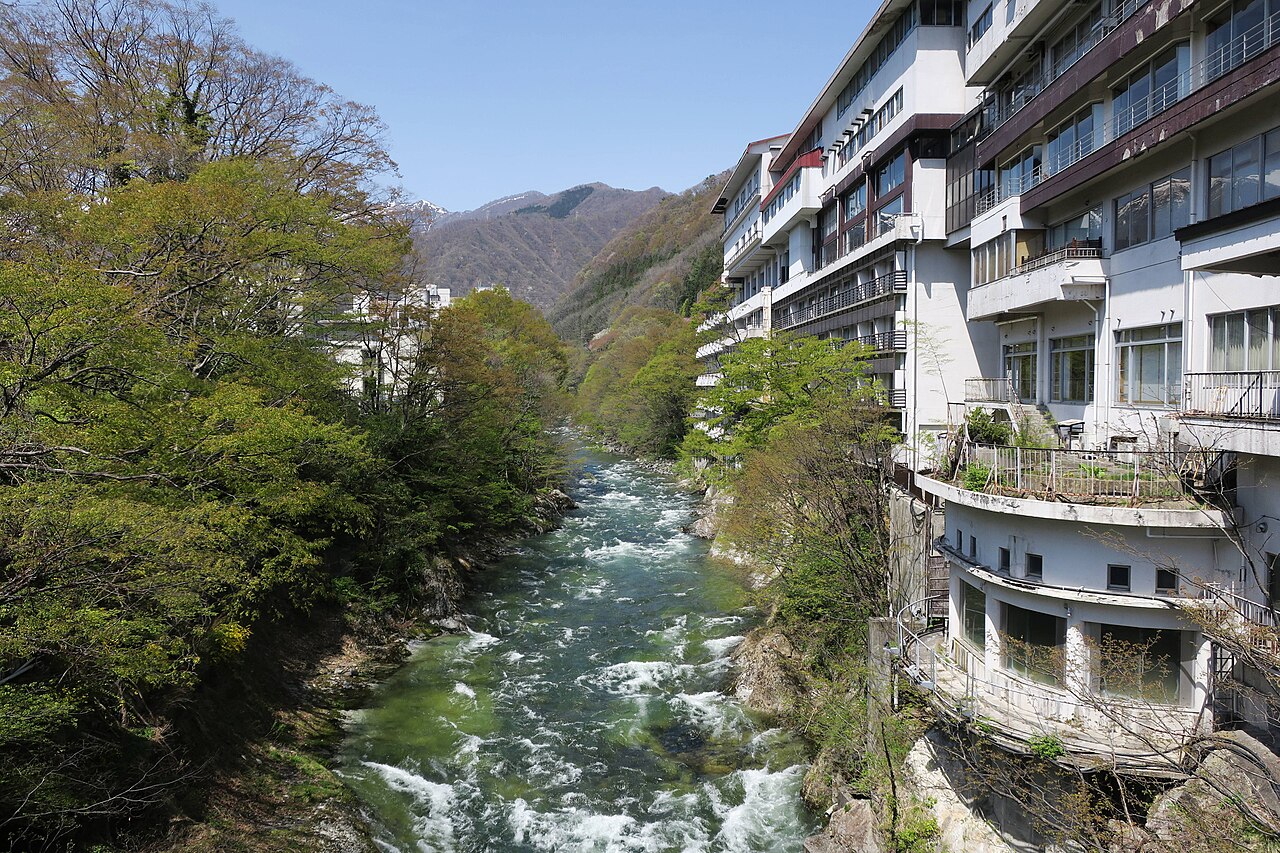
Every spring looks at the same scenery — gorge, river terraces and high peaks — but each keeps its own character: the station town of Minakami itself, quiet Tanigawa under the great mountain, Yubiso by its station in the gorge, and far up the Takara River the single great inn of Takaragawa with its riverside pools.
The water: gentle springs, one giant bathhouse
The valley's waters are mostly simple and alkaline simple springs — clear, soft, easy waters that suit long soaking after mountain days — with sulphate springs recorded at Minakami town itself. Individually they are modest; collectively the system is large.
The exception that proves the scale is Takaragawa Onsen: four sources giving about 1,800 litres a minute at 40 to 68 °C, feeding four vast open-air pools along the stream totalling some 470 tatami mats — the largest over 200 tatami for 200 bathers. Its mixed bathing, managed with bathing garments provided by the inn, was chosen among the world's top spa experiences by Reuters in 2013, and its pools starred in the film Thermae Romae II.
Writers in the valley: Dazai and Bokusui
Tanigawa Onsen, the hamlet below Mount Tanigawa, holds the valley's literary shrine: the inn Ryokan Tanigawa, formerly Kawakuboya, where Dazai Osamu stayed for nearly a month in 1936 on Kawabata Yasunari's advice, writing Genesis and setting his story Ubasute among these hills — a monument to the story stands by the road.
A generation earlier the poet Wakayama Bokusui walked the valley in autumn 1918 and wrote it into Minakami Kiko, one of the classic travel records of Japanese poetry. His stone stands by the Fuji Sengen shrine above Tanigawa. The pattern is the same as at Yugawara: gentle water, deep valley, writers stay.
The adventure capital
The Joetsu Line's full opening in 1931 made Minakami Tokyo's back-parlour mountain resort; the 21st century remade it as Japan's river-adventure base. The upper Tone's spring snowmelt rapids are the country's classic rafting run, with canyoning in the side gorges, and a ring of ski areas — Houdaigi, Tanigawadake Tenjindaira and others — fills the winter.
Stay in the station town for the full resort choice, at Takaragawa for the great baths, or at Hoshi Onsen and the upper springs (several of them National Hot Spring Resort designees, including Sarugakyo and Yujuku) for the old cure-town quiet. The UNESCO Biosphere Reserve designation of the Minakami area (2017) recognises the headwater forests that feed the whole system.
Getting there
Minakami Station on the JR Joetsu Line serves the town centre; Joetsu Shinkansen travellers use Jomo-Kogen Station with connecting buses (about 20–25 minutes to the town). The Kanetsu Expressway's Minakami interchange is the driver's gateway. Individual springs are spread over many kilometres — local buses and inn shuttles connect them.
The sections above were written for this guide from the facts in the Wikipedia articles 「水上温泉郷」, available under CC BY-SA 4.0, and official tourism sources.
Gallery




The springs and baths named on this page are described from the Wikipedia articles credited above and official tourism sources. Before your first visit, read how to use an onsen.
More onsen towns
- Kusatsu Onsen 草津温泉 — Gunma's other pole — the acid, high-volume classic
- Ikaho Onsen 伊香保温泉 — Gunma's stone-stepped town, the prefecture's third face
- Shiobara Onsen 塩原温泉郷 — Tochigi's eleven-spring gorge — the neighbouring collection
- Nozawa Onsen 野沢温泉 — Nagano's ski-and-springs village for the winter comparison
Keep exploring
- All onsen towns in Kanto — this town's region, town by town
- Browse by spring type — find towns by their water
- Browse by feature — day trips, snow-view baths, free communal baths and more