Home › Onsen towns › Nozawa Onsen
Nozawa Onsen 野沢温泉
Thirteen bathhouses, all free, all run by the village itself: Nozawa's sulphur water at 42 to 90 °C pours into a hillside village of steep lanes in northern Nagano, where residents' 'yunakama' groups maintain the communal sotoyu that visitors may also use for a contribution. Above the baths spreads one of Japan's oldest and snowiest ski resorts — the bath-and-powder combination at its purest.
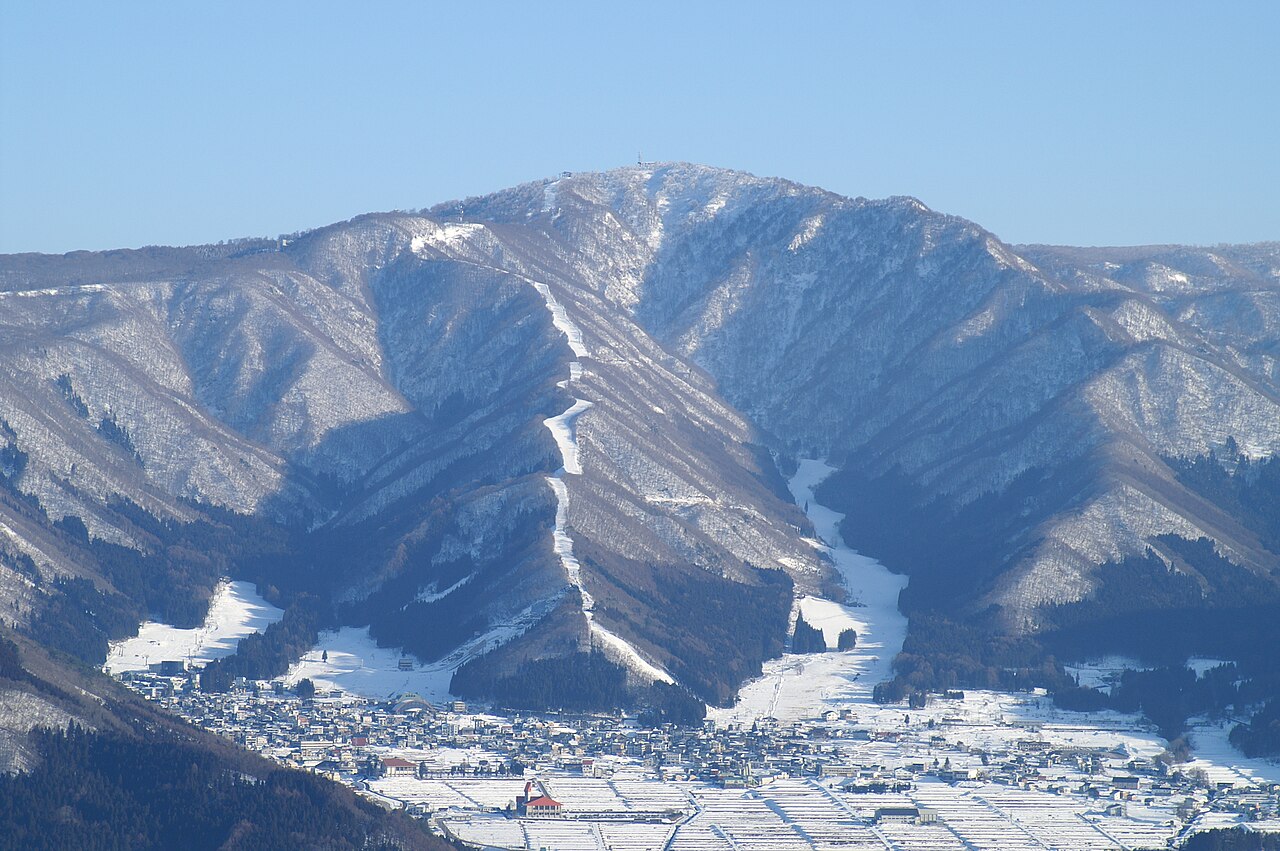
| Prefecture | Nagano |
|---|---|
| Region | Chubu |
| Spring quality | Sulphur spring |
| Source temperature | 42–90 °C, varying by source (most sources run hot) |
| Nearest station | Iiyama (JR Hokuriku Shinkansen / Iiyama Line), then about 25 minutes by bus |
| From Tokyo | About 2 hours 15 minutes — Hokuriku Shinkansen to Iiyama (about 1 h 50 min) + bus |
| From Osaka | About 4 hours 30 minutes via Tokyo or Kanazawa and Iiyama |
| Best season | Winter for skiing and snow-view communal baths (Dosojin Fire Festival in mid-January); summer for the green highland village |
Spring quality, source temperatures and access routes are drawn from the Japanese Wikipedia articles on each town (CC BY-SA 4.0) and the English articles credited below. Journey times are typical scheduled times for the routes named, rounded — always check current timetables before you travel.
About Nozawa Onsen
Nozawa Onsen (野沢温泉) is a hot spring village on the flank of Mount Kenashi in north-eastern Nagano, an hour from Nagano City. Legend credits the 8th-century priest Gyoki with the discovery; by the Kamakura period the spring was recorded among the court's favoured 'three imperial baths'. The village below the spring — its very name was Toyosato, then Zuiho, before taking the onsen's name in 1955 — grew as a cure village of inns around its communal baths.
Today the village of about 3,600 people hosts one of Japan's largest ski areas on the slopes above, is twinned with St Anton am Arlberg in Austria, hosted the biathlon of the 1998 Nagano Olympics, and still runs its baths the old way.
The thirteen sotoyu: baths owned by the bathers
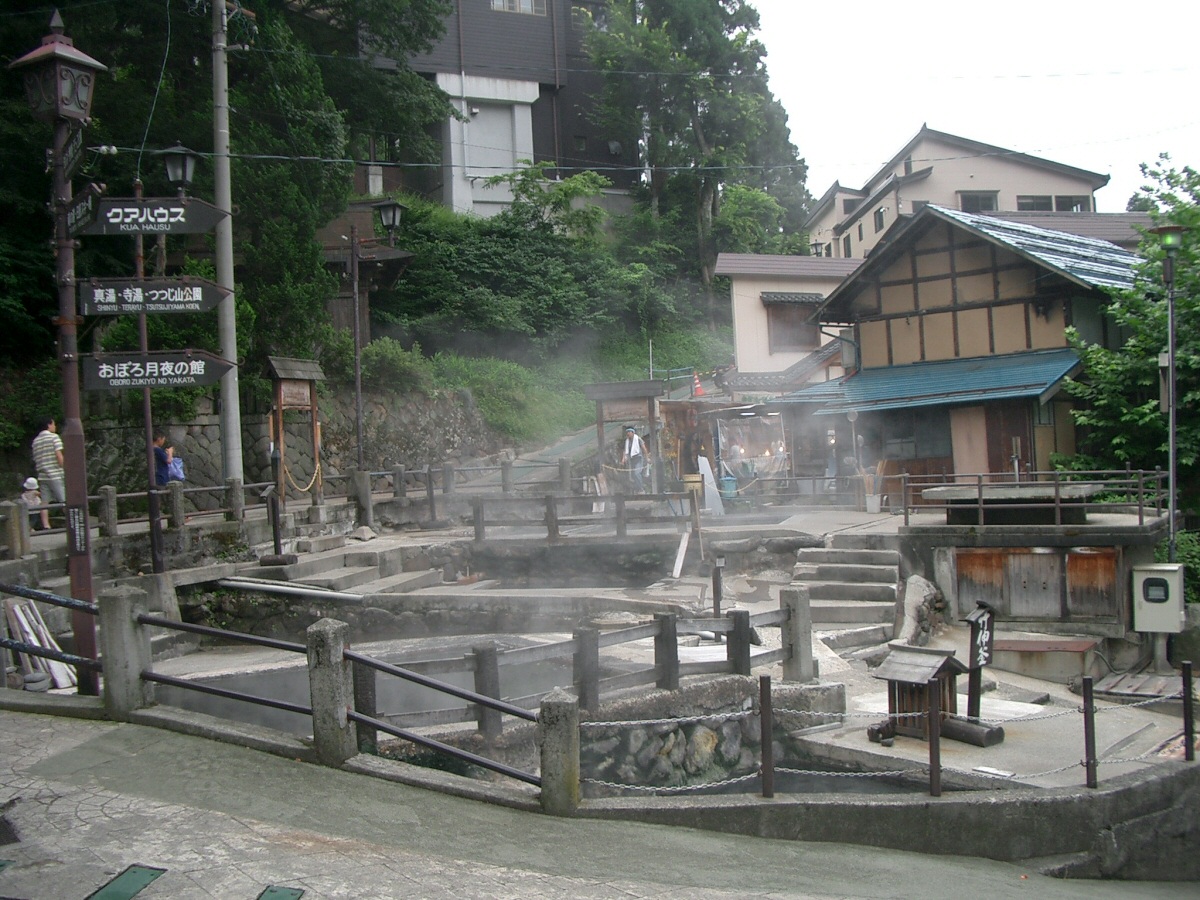
Nozawa's signature is its 13 communal bathhouses (sotoyu), each maintained by a yunakama — a cooperative group of local households — and open to visitors for a contribution in the box by the door. They are plain, hot and intensely local: the great tiled Oyu in the village centre, and a dozen small wooden bathhouses up and down the lanes, each with its own source character.
Etiquette matters more here than in a hotel bath: these are the residents' daily baths first. Rinse, keep the water clean, leave your contribution, and you are welcome. Footbaths stand by the Oyu and near the Ogama, and several inns add their own doorstep footbaths.
Ogama: the village kitchen spring
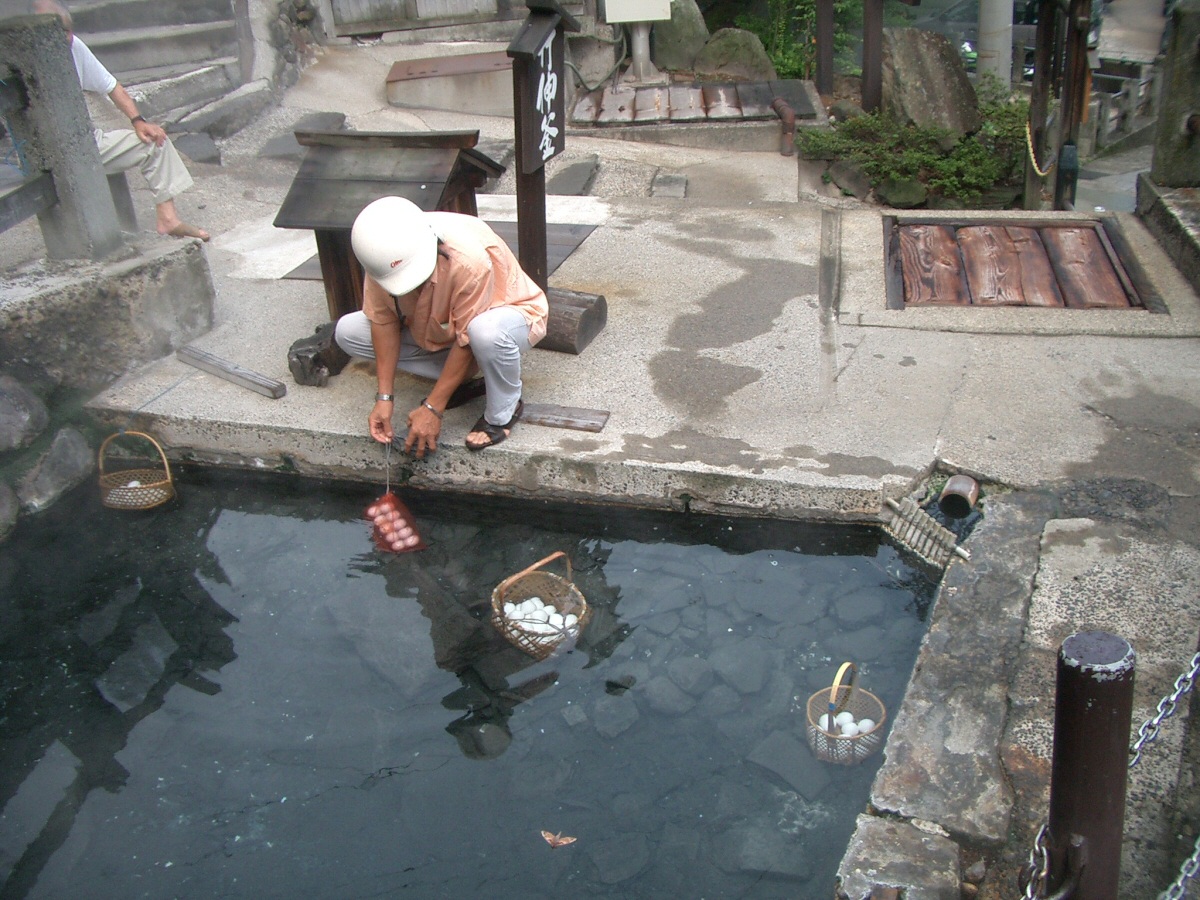
Above the village, the Ogama is a field of near-boiling springs — water close to 100 °C once used to strip hemp fibre (the 'o' of Ogama is that hemp) and now used, by residents, to cook vegetables and eggs. Visitors look from the fence: the ground is genuinely dangerous.
The Ogama explains Nozawa's other fame. Nozawana, the pickled greens sold all over Japan, are washed in the warm washing-baths beside the communal bathhouses during the harvest, each household taking its turn — a food culture built directly on the spring system. The village's oyaki dumplings are steamed over onsen heat as well.
Ski village, fire festival
The Nozawa Onsen Snow Resort spreads across the slope east of the village, one of the country's oldest ski grounds (1920s) and still among its snowiest, in an inland heavy-snow district famous for powder. The ski-in village layout — pensions in the southern lanes, inns around the Oyu — means the evening move from slope to sotoyu is a five-minute walk in ski boots.
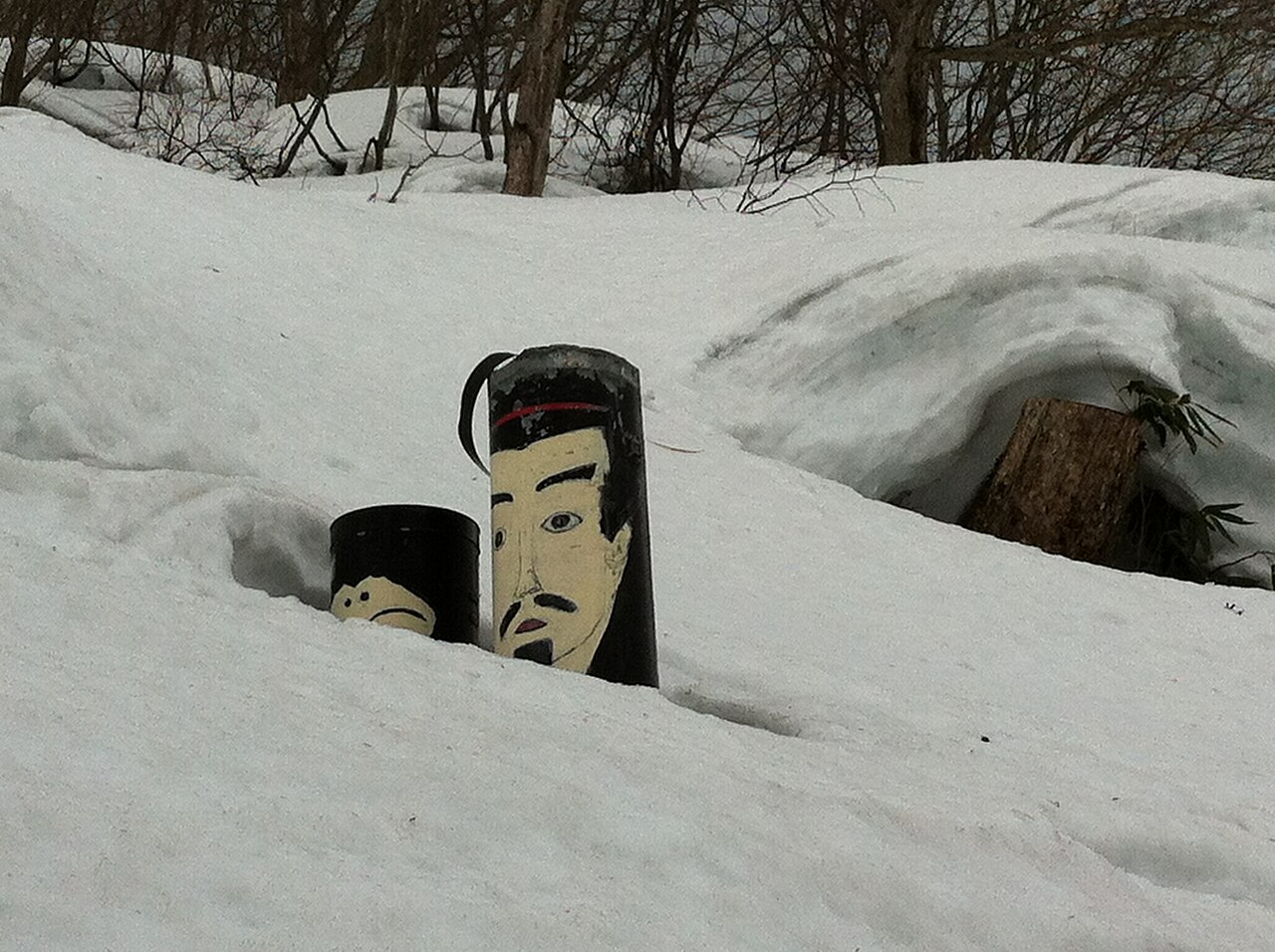
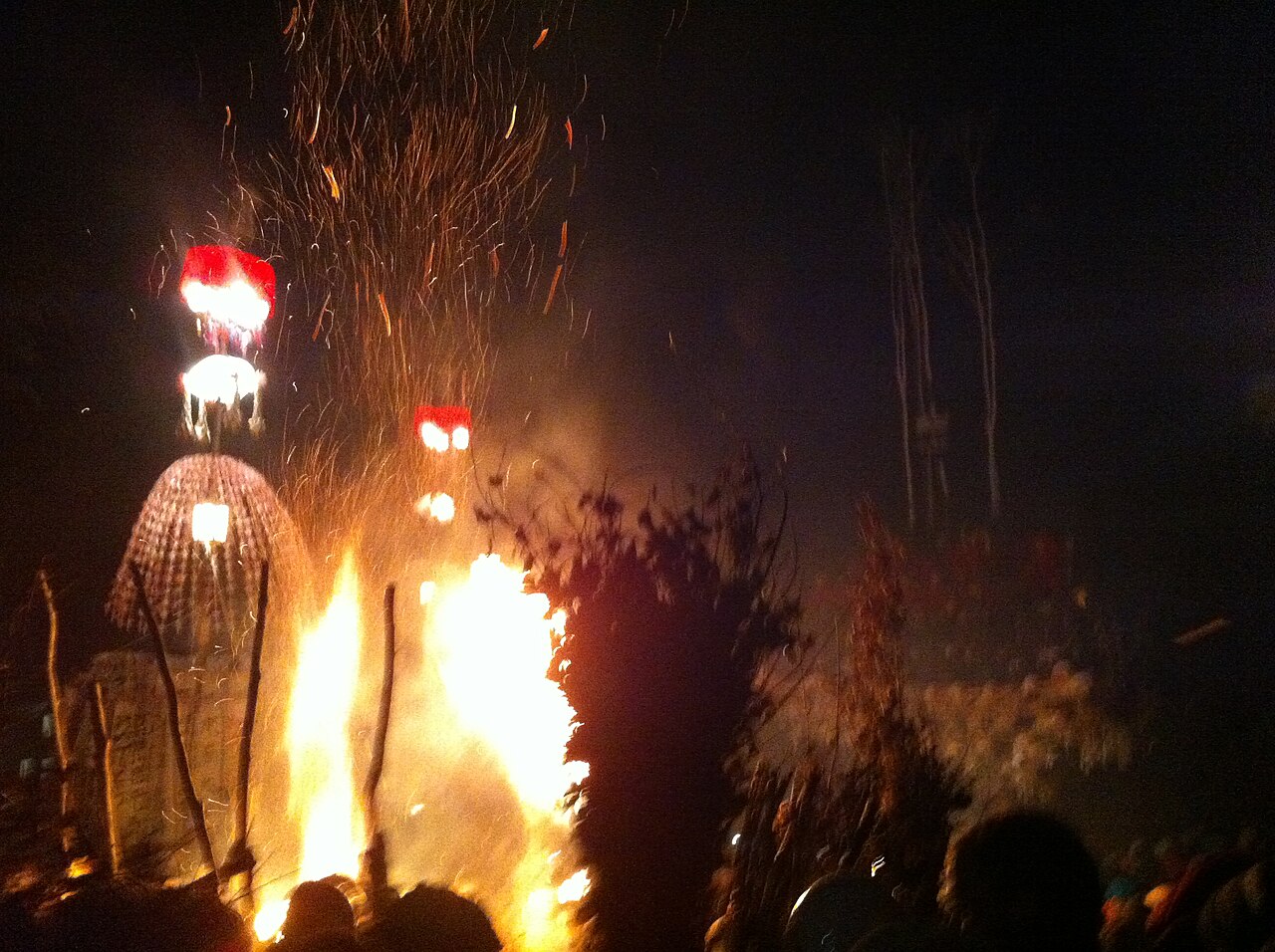
On 15 January the Dosojin Fire Festival, a national Important Intangible Folk Cultural Property, fills the village square with a battle of fire around a great wooden shrine — book the baths-and-fire combination a year ahead if you can.
Getting there
Nozawa has no station in the village. From Iiyama Station (Hokuriku Shinkansen), the Nozawa Onsen Liner bus takes about 25 minutes; local buses take about 40. Drivers use the Toyoda-Iiyama interchange of the Joshinetsu Expressway (about 20 km).
The sections above were written for this guide from the facts in the Wikipedia articles Nozawaonsen, 「野沢温泉」, available under CC BY-SA 4.0, and official tourism sources.
Gallery




The springs and baths named on this page are described from the Wikipedia articles credited above and official tourism sources. Before your first visit, read how to use an onsen.
More onsen towns
- Shibu Onsen 渋温泉 — Nagano's other bath-crawl town — nine public baths down one lane
- Kusatsu Onsen 草津温泉 — The sulphur comparison at full power across in Gunma
- Minakami Onsen 水上温泉郷 — Gunma's adventure valley — the ski-and-bath pairing there
- Bessho Onsen 別所温泉 — Nagano's temple town springs, the quiet southern counterpoint
Keep exploring
- All onsen towns in Chubu — this town's region, town by town
- Browse by spring type — find towns by their water
- Browse by feature — day trips, snow-view baths, free communal baths and more