Home › Onsen towns › Iya Onsen
Iya Onsen 祖谷温泉
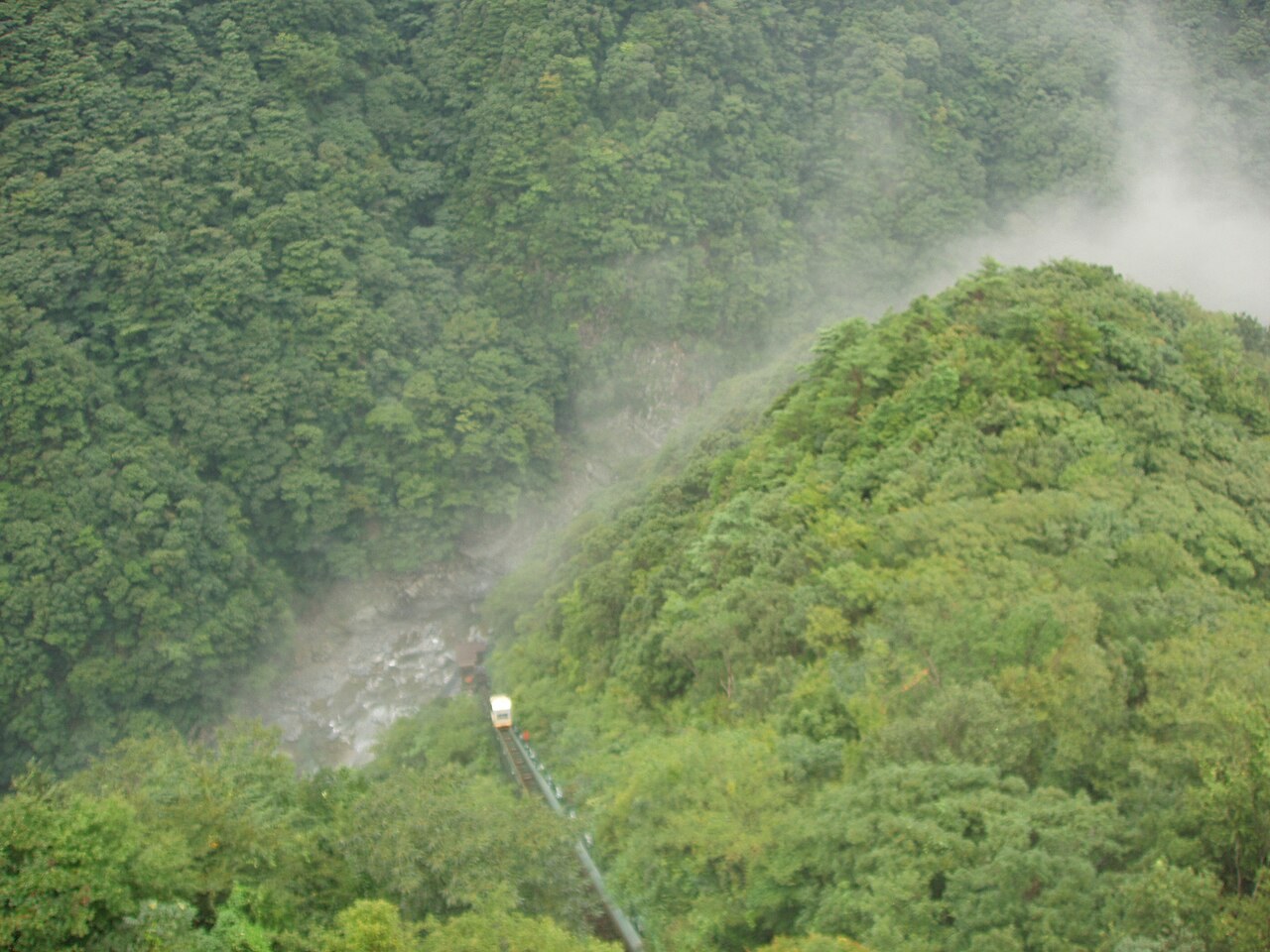
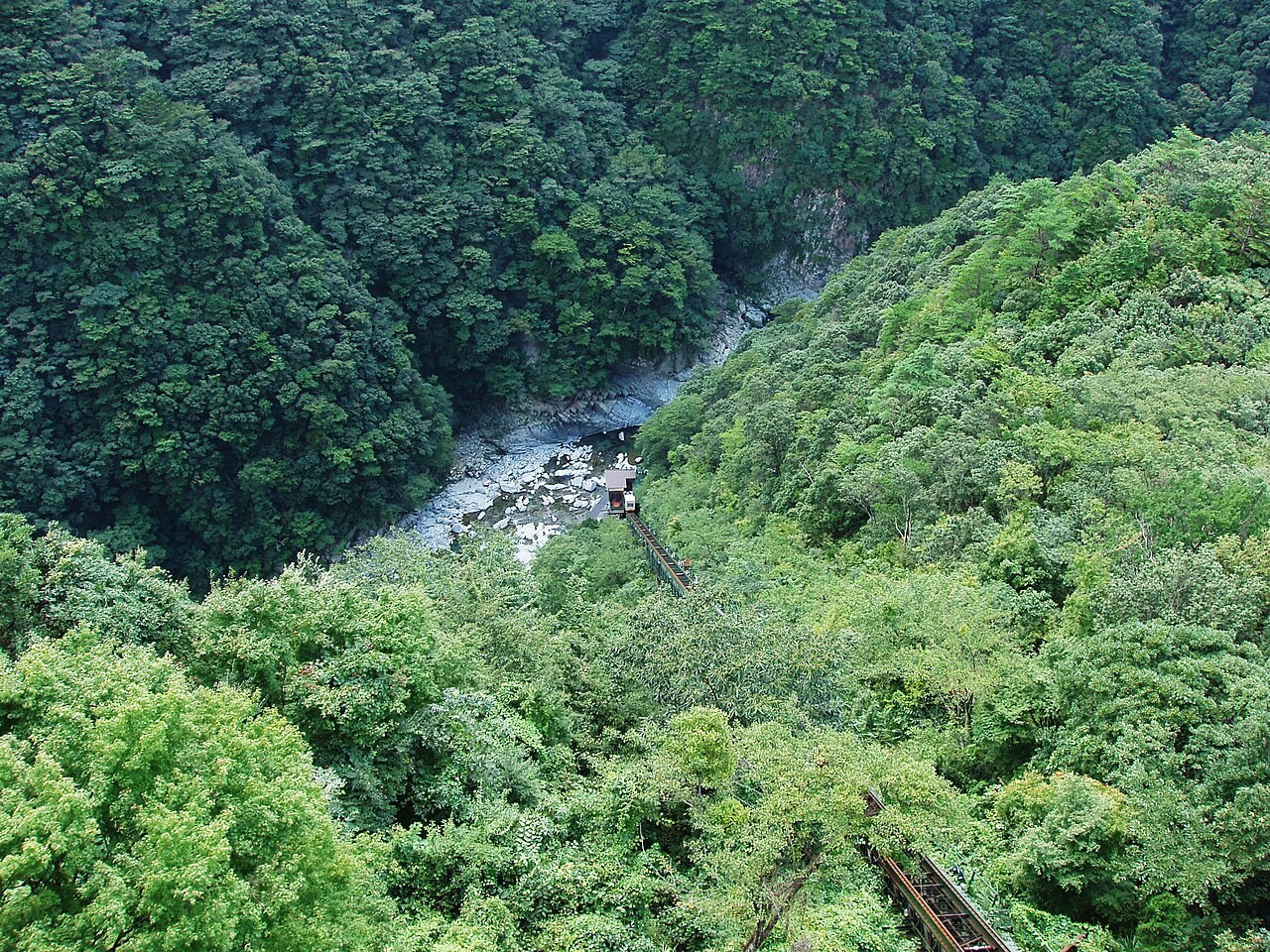
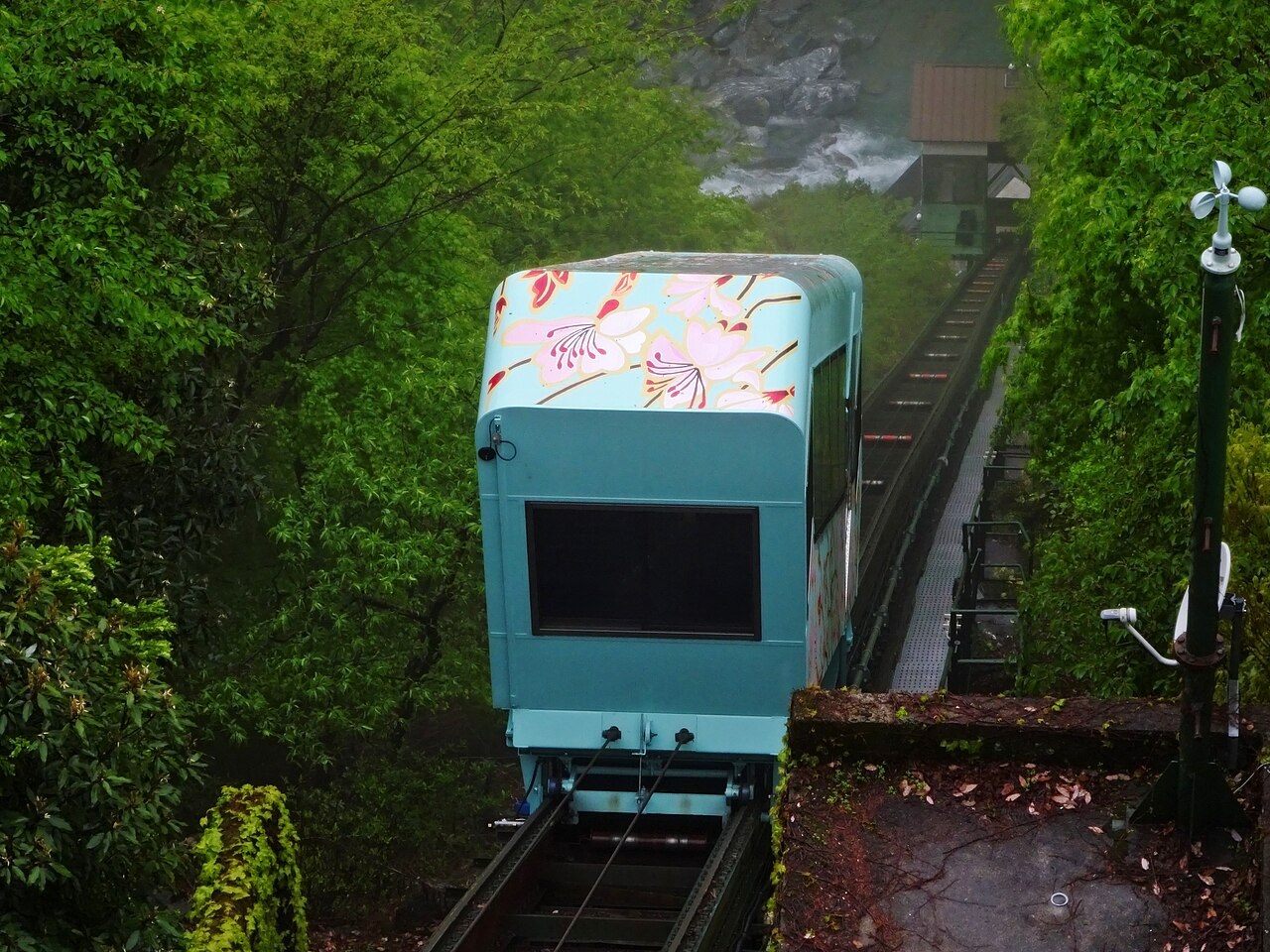
Iya's simple sulphur spring (38 °C) waits at the bottom of a cliff in the Iya Valley, Tokushima — guests ride a steep cable car from the rim inn down to the open-air bath on the river. Counted among Japan's three great hidden springs, the valley of vine bridges and gorges is Shikoku's deepest mountain country. Below are the bathhouses, spring sources and onsen facilities recorded in OpenStreetMap within about 3 km of the town centre.
| Prefecture | Tokushima |
|---|---|
| Region | Shikoku |
| Spring quality | Simple sulphur spring (hydrogen-sulphide water, pH 9.1) |
| Source temperature | About 38 °C at source |
| Nearest station | Awa-Ikeda (JR Dosan Line), then about 50 minutes by bus |
| From Tokyo | Fly to Takamatsu or Tokushima (about 1 h 15 min), then train + bus (about 2 hours more) |
| From Osaka | About 3 hours 30 minutes — highway bus toward Ikeda + local bus, or rail via Awa-Ikeda |
| Best season | Autumn — the Iya gorge maples are among Shikoku's best; spring for fresh green |
| Places listed here | 1 |
| Public bathhouses | 1 |
| Hot spring sources | 0 |
Spring quality, source temperatures and access routes are drawn from the Japanese Wikipedia articles on each town (CC BY-SA 4.0) and the English articles credited below. Journey times are typical scheduled times for the routes named, rounded — always check current timetables before you travel.
About Iya Onsen
Iya Onsen (祖谷温泉) is a hot spring on the Iya River in Miyoshi, Tokushima Prefecture, deep in the steep Iya Valley in Shikoku’s mountain interior. Its water is a simple sulphur spring — hydrogen-sulphide water with a pH of 9.1 — that emerges at about 38 °C, barely warmer than the body. The spring is counted among Japan’s three great hidden springs, and its setting, at the bottom of one of the country’s most dramatic gorges, explains why.
Access keeps the valley quiet: the nearest station is Awa-Ikeda on the JR Dosan Line, and from there a bus takes about 50 minutes into the gorge. That single road in is the only approach, and it sets the pace of a visit — Iya is not a place you pass through, but one you descend into and stay a while.
The water: alkaline sulphur at body temperature
Iya’s spring is classed as a simple sulphur spring of the hydrogen-sulphide type, and its recorded figures are distinctive: a source temperature of about 38 °C and a pH of 9.1, which makes the water distinctly alkaline. Because the source is only just above body temperature, bathing here is a long, gentle soak rather than a bracing one, and the water arrives with the faint sulphur character its classification promises.
Facilities are as limited as the valley suggests. The Japanese record lists a single lodging facility for the spring, so Iya has none of the bathhouse-hopping of a large onsen town. What it offers instead is one celebrated bath in one extraordinary place — a concentration that suits a valley where everything, from the roads to the river, runs narrow and deep.
Maples and fresh green: visiting the Iya Valley
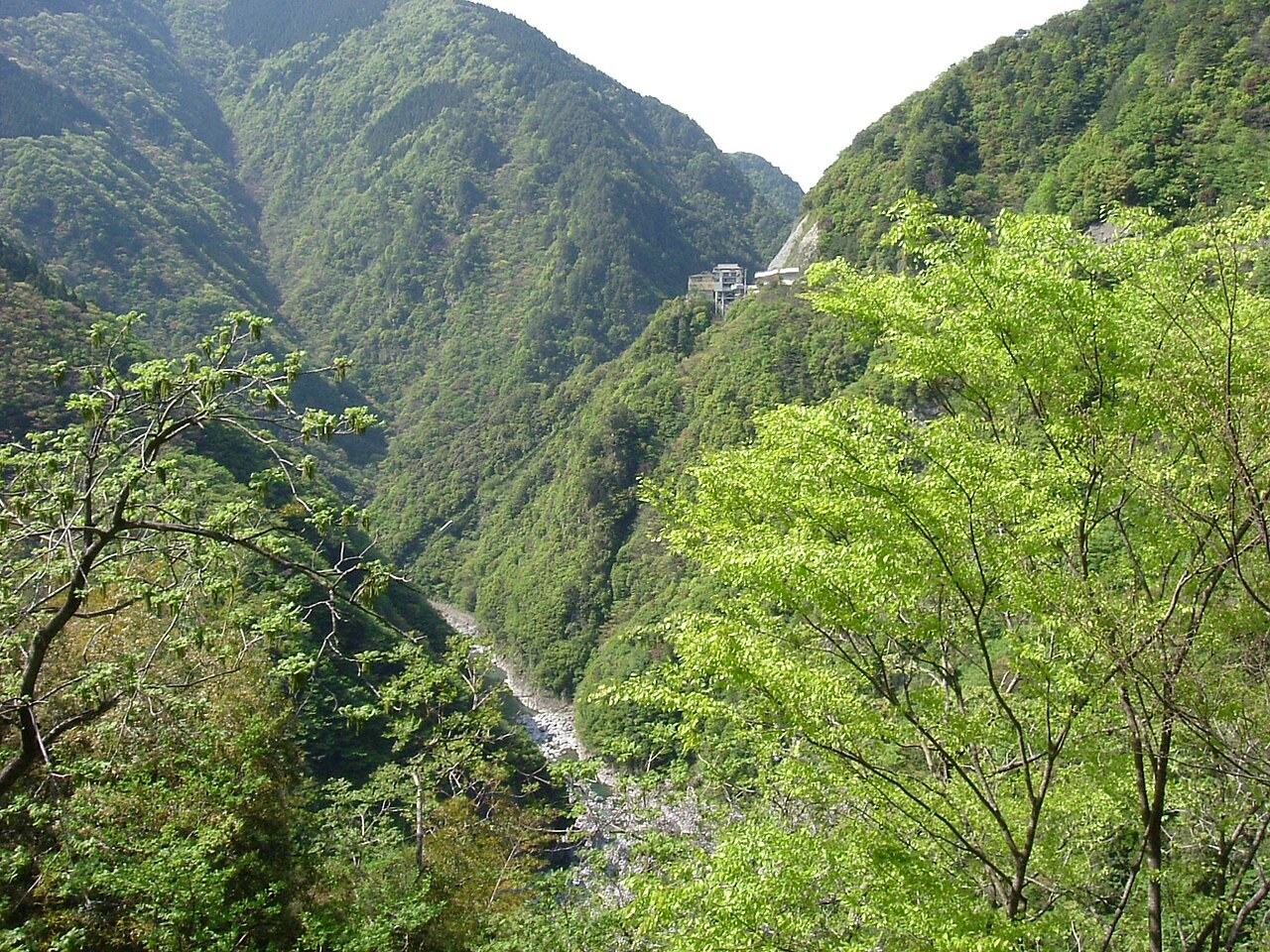
Autumn is the valley’s great season: the maples of the Iya gorge are counted among the best in Shikoku, and the cliffs above the river turn colour while the water runs below. Spring is the alternative, when fresh green covers the gorge walls. In either season the journey in — along the river, under the steep slopes — is half the pleasure, and an overnight stay lets you see the gorge in the quiet hours at both ends of the day.
From Tokyo, fly to Takamatsu or Tokushima in about 1 hour 15 minutes, then continue by train and bus for roughly 2 hours more. From Osaka the trip takes about 3 hours 30 minutes, by highway bus toward Ikeda with a local bus for the last stretch, or by rail via Awa-Ikeda. Whichever route you choose, the last 50 minutes from Awa-Ikeda by bus are unavoidable — and unforgettable.
The sections above were written for this guide from the facts in the Japanese Wikipedia article 「祖谷温泉」 and the spring and access data summarised on this page, under CC BY-SA 4.0.
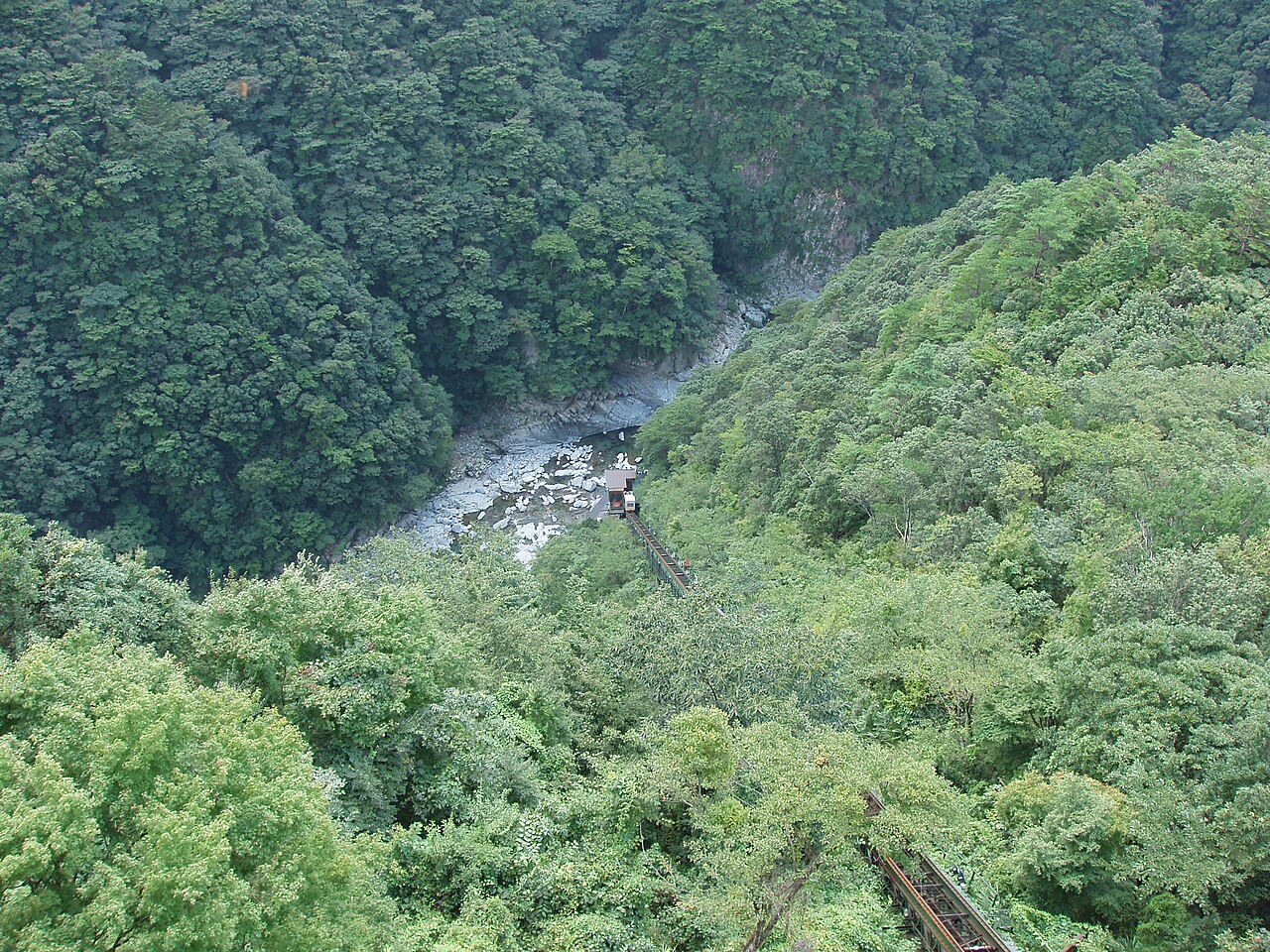
Down the cliff to the water
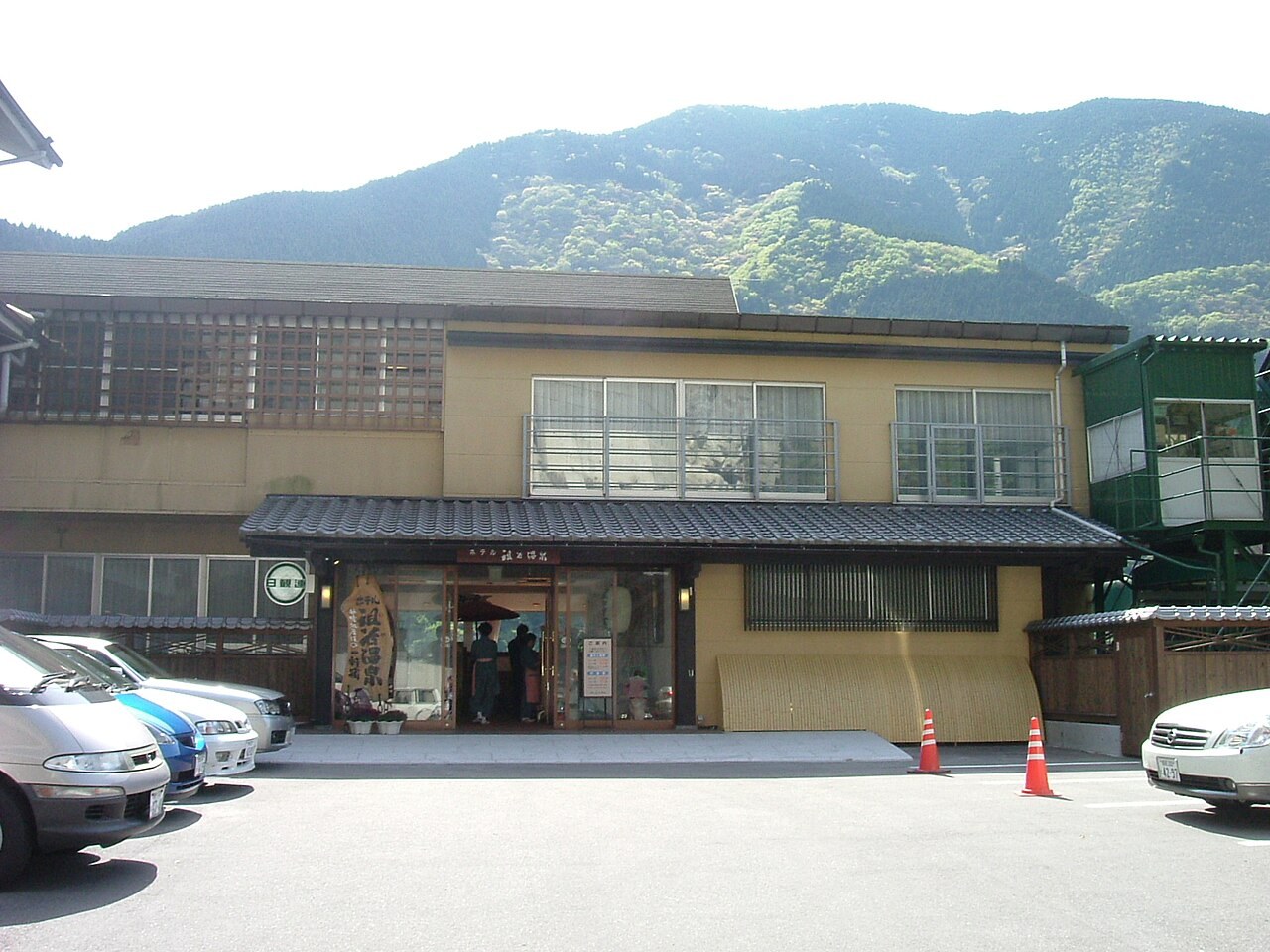
The bath that made Iya famous belongs to the Hotel Iya Onsen on the gorge rim: from the hotel, a cable car built at a 42-degree grade carries bathers about 170 metres down the cliff to an open-air bath on the Iya River itself, where the simple sulphur water (about 38 °C) arrives barely warmer than the body and the gorge walls close overhead. It is routinely counted among Japan's three great hidden springs, together with Niseko Yakushi Onsen in Hokkaido and Yachi Onsen in Aomori.
The valley around it is the country of the kazurabashi — suspension bridges woven from mountain vines, once the only crossings of the gorge and still maintained at Iya and Okuiya — and of the Heike refugee legends that hid in these mountains after the Genpei War. Roads are narrow and buses few; most visitors come by car or on a tour, and the remoteness is the point.
Additional sections above were translated and summarised from the Japanese Wikipedia article 「祖谷温泉」, available under CC BY-SA 4.0.
Public bathhouse (recorded as onsen in OpenStreetMap) (1)
- Hotel Iya Onsen ホテル祖谷温泉
Official website · OpenStreetMap
Gallery




Names, types and websites are shown exactly as recorded in OpenStreetMap. A bathhouse whose spring type is not recorded is labelled as such — we do not guess. Before your first visit, read how to use an onsen.
More onsen towns
- Dorogawa Onsen 洞川温泉 — Another mountain spring of pilgrims, across the Kii ranges
- Dogo Onsen 道後温泉 — Down to Shikoku's famous city spring in Matsuyama
- Shionoe Onsen 塩江温泉 — The gentler Shikoku valley — Takamatsu's back parlour
- Ashizuri Onsen 足摺温泉 — South to the cape springs at Shikoku's tip
Keep exploring
- All onsen towns in Shikoku — this town's region, town by town
- Browse by spring type — find towns by their water
- Browse by feature — day trips, snow-view baths, free communal baths and more