Home › Onsen towns › Higashiyama Onsen
Higashiyama Onsen 東山温泉
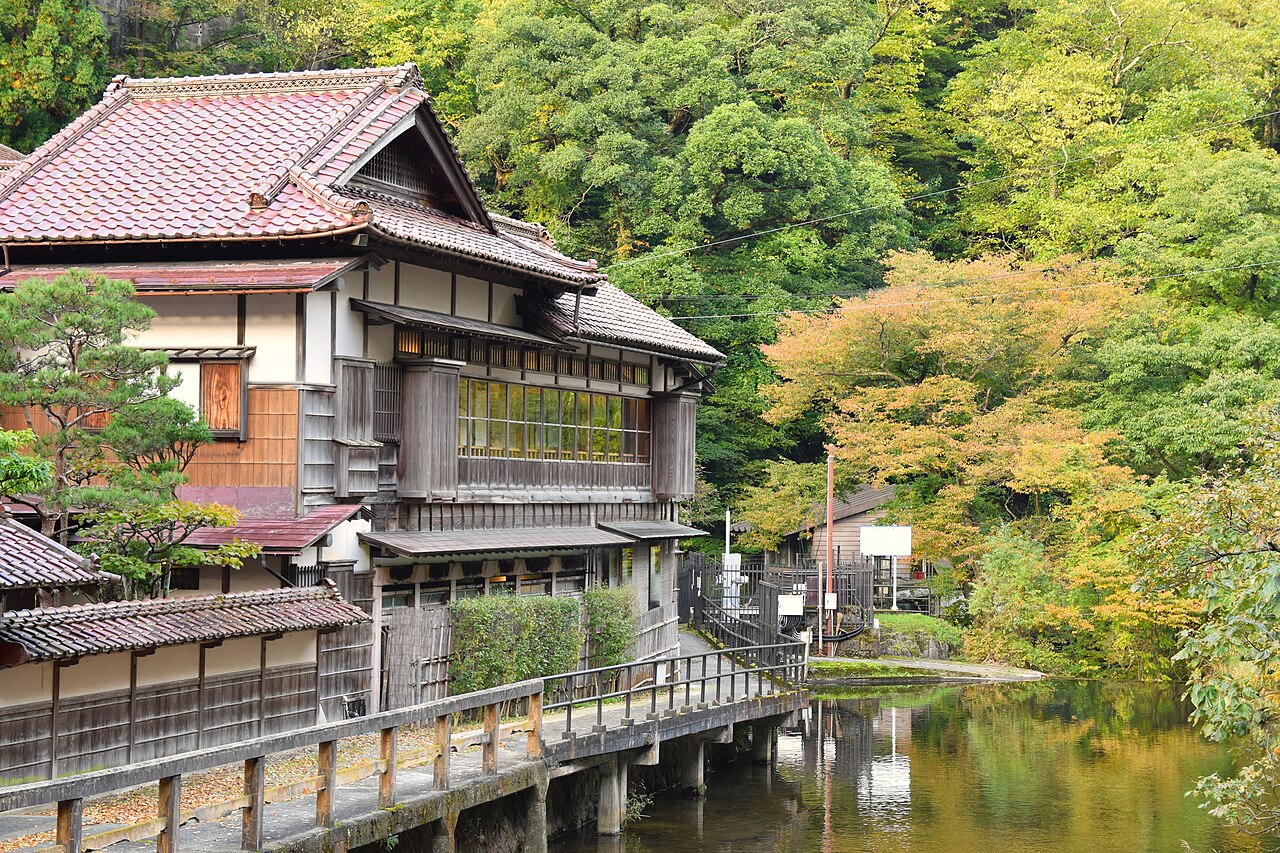
For thirteen centuries the lords of Aizu have soaked at Higashiyama: sulphate water at 45 to 58 °C pours at 1,500 litres a minute into a gorge of inns just 3 km from Tsuruga Castle in Aizuwakamatsu. Waterfall-named ryokan, working geigi entertainers and a Bon dance in the street keep this the most storied town retreat in Fukushima.
| Prefecture | Fukushima (Aizuwakamatsu) |
|---|---|
| Region | Tohoku |
| Spring quality | Sulphate spring (calcium–sodium sulphate–chloride) |
| Source temperature | 45–58 °C at source; about 1,500 litres a minute |
| Nearest station | Aizuwakamatsu (JR Banetsu West Line), then about 15 minutes by bus |
| From Tokyo | About 3 hours 30 minutes — Tohoku Shinkansen to Koriyama + Banetsu West Line + bus |
| From Osaka | About 6 hours via Tokyo and Koriyama |
| Best season | Autumn in the Yukawa gorge; mid-August for the Higashiyama Bon dance week |
Spring quality, source temperatures and access routes are drawn from the Japanese Wikipedia articles on each town (CC BY-SA 4.0) and the English articles credited below. Journey times are typical scheduled times for the routes named, rounded — always check current timetables before you travel.
About Higashiyama Onsen
Higashiyama Onsen (東山温泉) is the hot spring quarter of Aizuwakamatsu, Fukushima, strung along the Yukawa River gorge south-east of the castle. Tradition gives it an 8th-century founding — the priest Gyoki, it is said, was led to the spring by a three-legged crow — and through the Edo period it flourished as the Aizu domain's official cure resort, the 'back parlour' of the castle town.
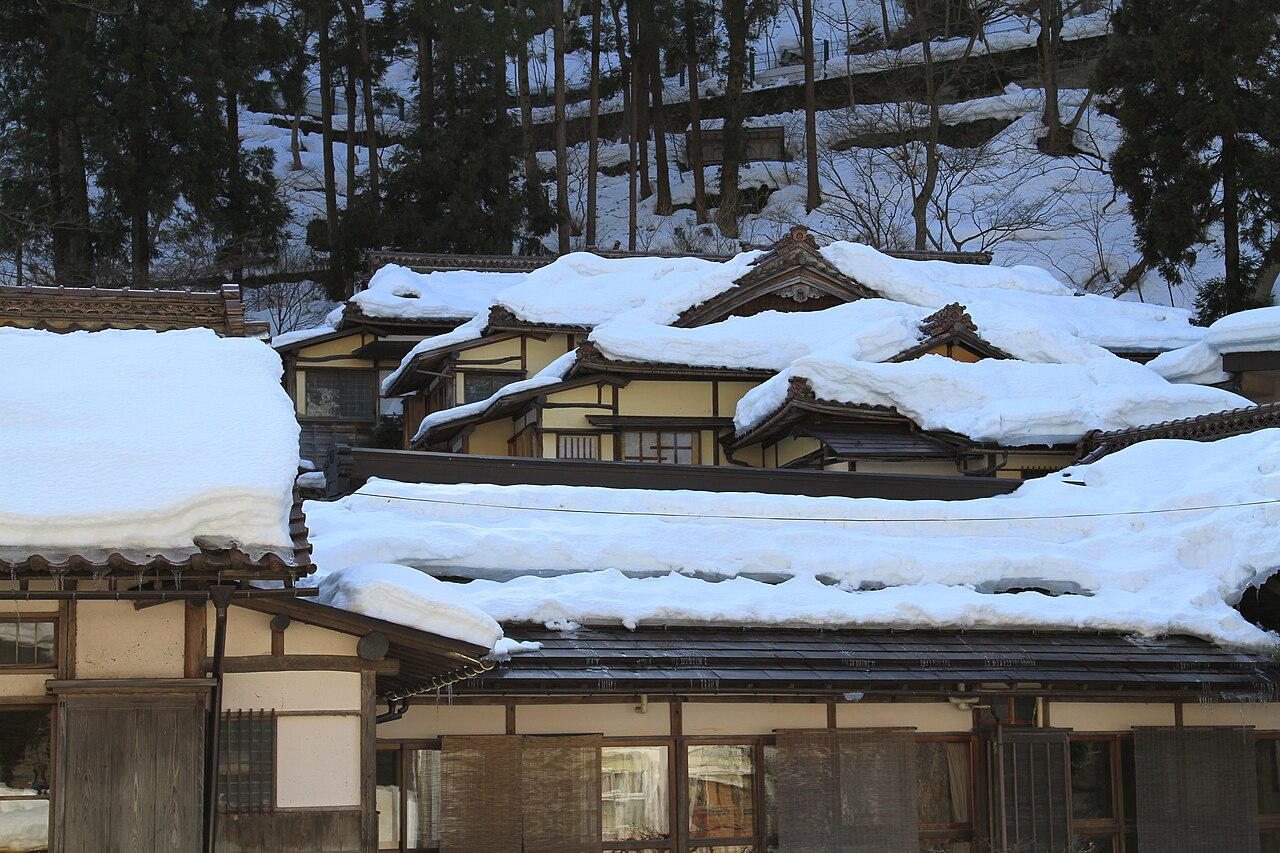
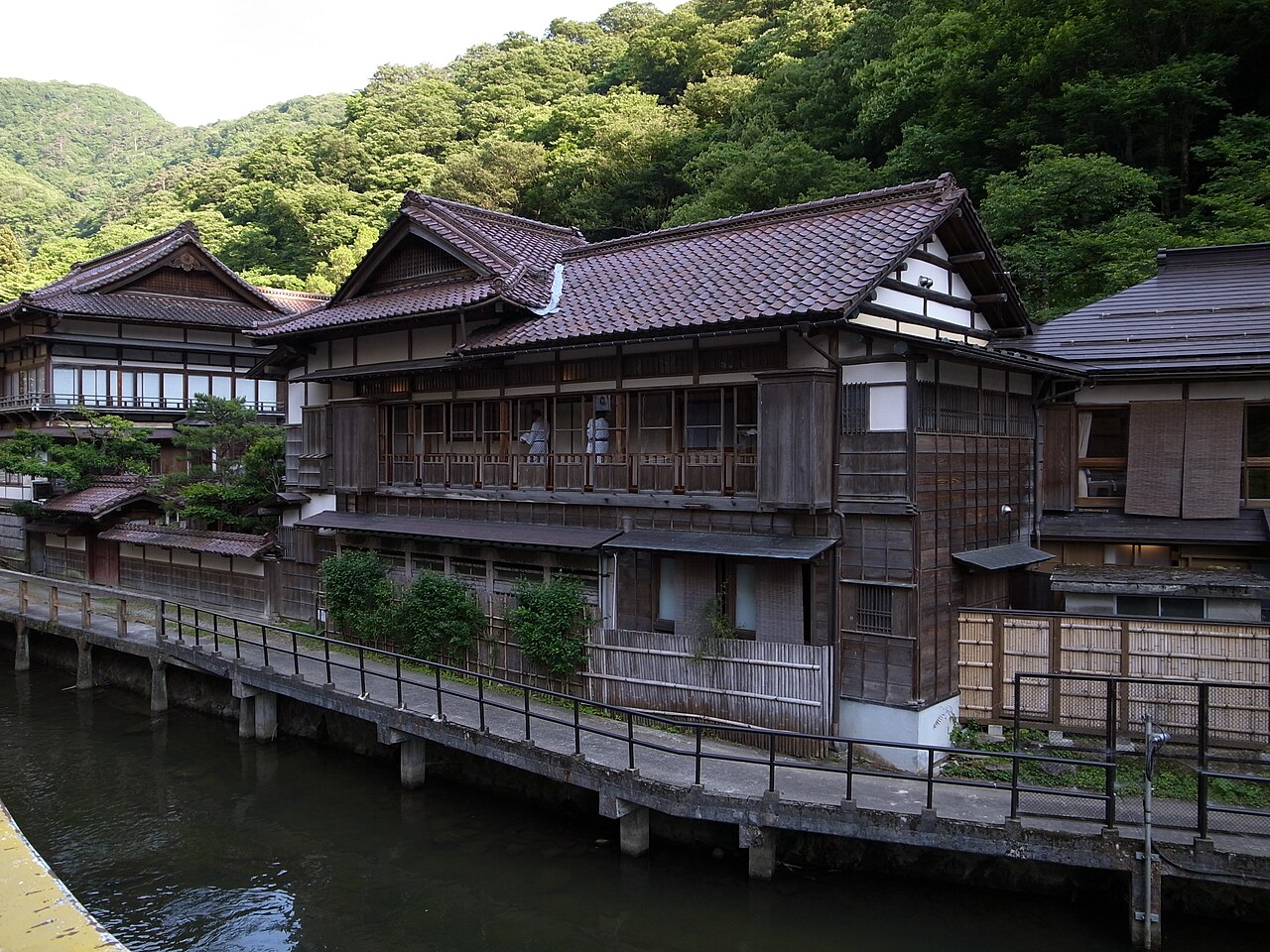
It was counted with Kaminoyama and Yunohama among the Ou Three Rakugo, the north's three great pleasure springs. More than twenty inns and hotels still line the gorge, several of them carrying 'taki' (waterfall) in their names — Mukaitaki, Shintaki, Fudotaki — after the falls of the Yukawa, and the town still supports working geigi, the 'Karari-ko' entertainers who are part of its evenings.
The water: a sulphate spring below the castle
Higashiyama's water is classified as a sulphate spring — a calcium–sodium sulphate–chloride water. Sulphate springs are the classic cure waters of the old domain resorts, clear and soft-feeling, traditionally reputed in folk use for rheumatic and skin complaints (the town pages record the traditional indications without promising effects).
Flow is generous — about 1,500 litres a minute across the town's sources at 45 to 58 °C — and the historic inns draw on named springs of their own: the Fudotaki inn's source is remembered as the one in which the Shinsengumi commander Hijikata Toshizo soaked a battle wound.
The gorge of waterfalls and famous inns
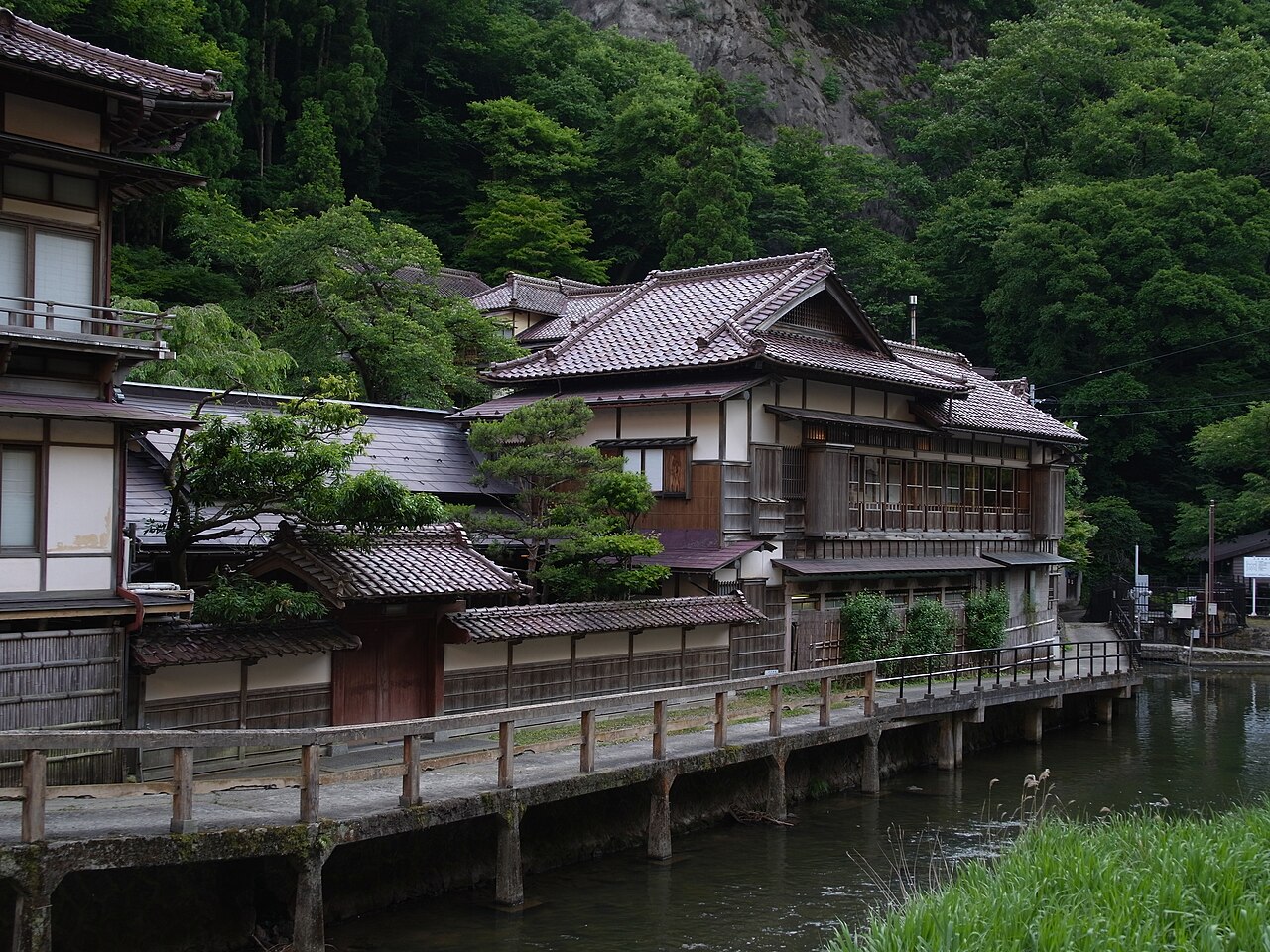
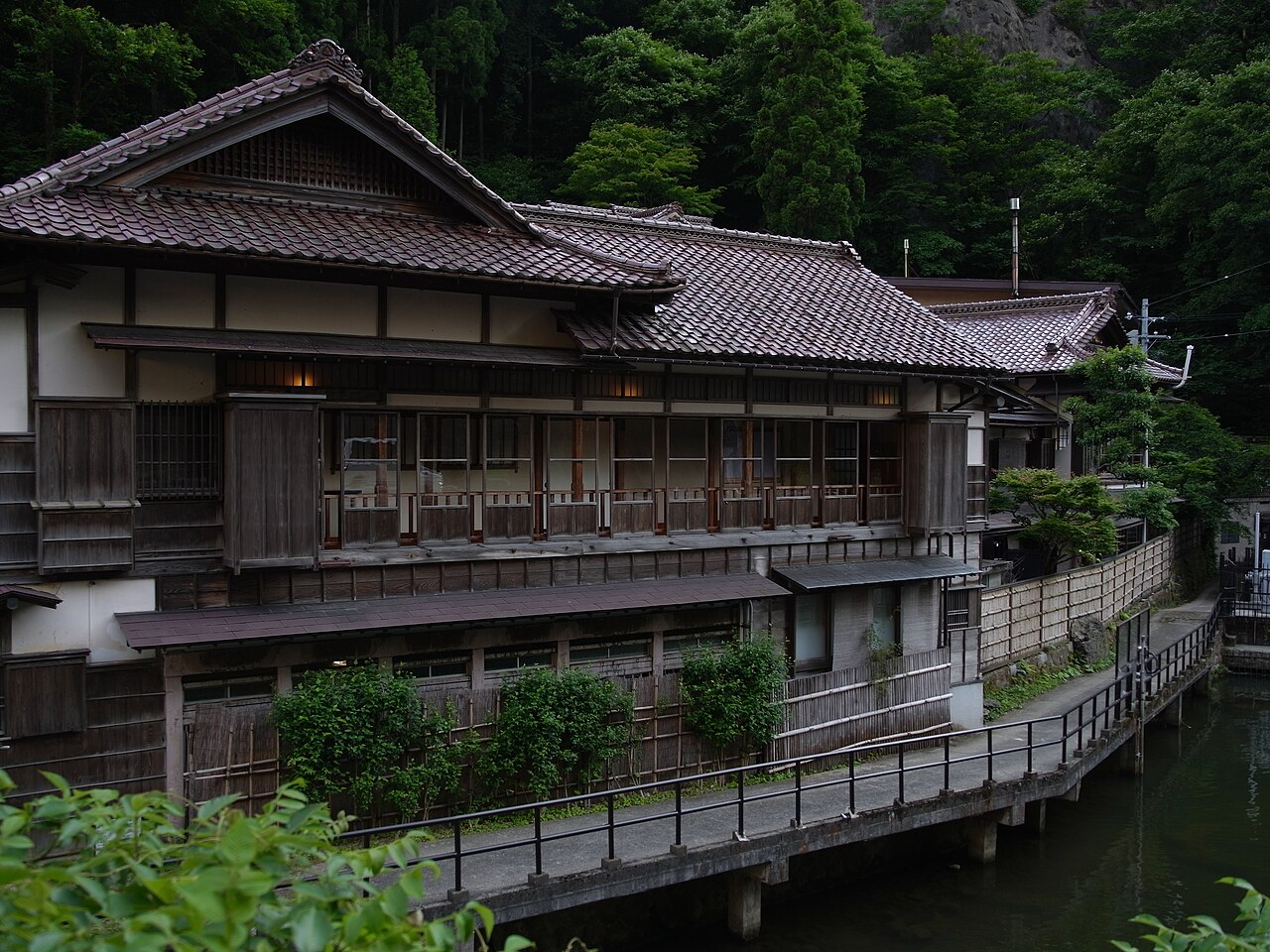
The Yukawa cuts a green gorge through the quarter, and four of its falls are named together as the Higashiyama Four Falls — Amefuri, Hara, Mukai and Fushimiga falls. The inns grew up around them: Mukaitaki, founded in 1873 as the Aizu domain's designated rest house, with its registered-tangible-cultural-property buildings and garden; Shintaki, grown from the Matsudaira villa; and the Chiyotaki sister house above the gorge.
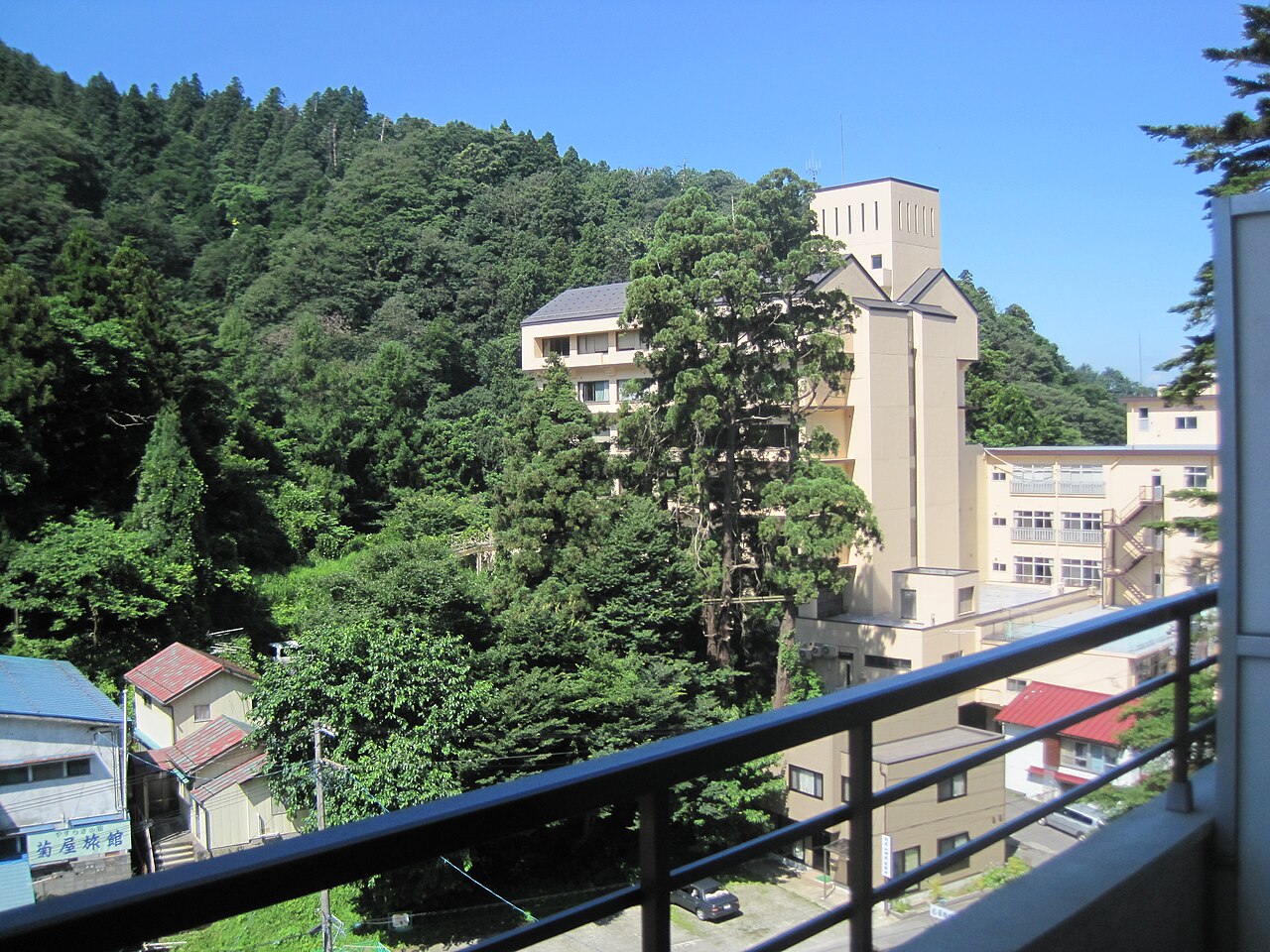
The townscape is compact enough to walk end to end, with Tsuruga Castle, the Aizu samurai residences and the sake breweries of the castle town a short bus ride away — Higashiyama works best as the bathing half of an Aizu history trip.
The Bon dance and the geigi
For about a week from mid-August, the Higashiyama Bon Dance fills the town street — a lantern-lit circle dance that pulls guests out of the inns in yukata to join residents, one of the signature summer nights of Aizu.
The geigi tradition is the other living custom: Aizu's entertainers, affectionately called Karari-ko, still perform at banquets in the gorge inns. Between the dance, the falls and the castle, Higashiyama's claim is continuity — a domain resort that never stopped being one.
Getting there
From Aizuwakamatsu Station, Aizu Bus runs to Higashiyama Onsen in about 15 minutes; the town's own loop buses (Haikara-san and Akabe) also connect the station and the sights. Tokyo travellers change at Koriyama from the Tohoku Shinkansen to the Banetsu West Line.
By car, the Aizuwakamatsu interchange of the Banetsu Expressway is about 20 minutes away via Route 49.
The sections above were written for this guide from the facts in the Wikipedia articles 「東山温泉」, available under CC BY-SA 4.0, and official tourism sources.
Gallery




The springs and baths named on this page are described from the Wikipedia articles credited above and official tourism sources. Before your first visit, read how to use an onsen.
More onsen towns
- Kaminoyama Onsen かみのやま温泉 — The fellow Ou Three Rakugo town in Yamagata
- Tsuchiyu Onsen 土湯温泉 — Fukushima's other historic quarter — the kokeshi town west of the capital
- Iizaka Onsen 飯坂温泉 — Fukushima's third classic — the Sabako-yu town north of the city
- Naruko Onsen 鳴子温泉 — Miyagi's kokeshi-and-springs town further north
Keep exploring
- All onsen towns in Tohoku — this town's region, town by town
- Browse by spring type — find towns by their water
- Browse by feature — day trips, snow-view baths, free communal baths and more