Home › Onsen towns › Naruko Onsen
Naruko Onsen 鳴子温泉
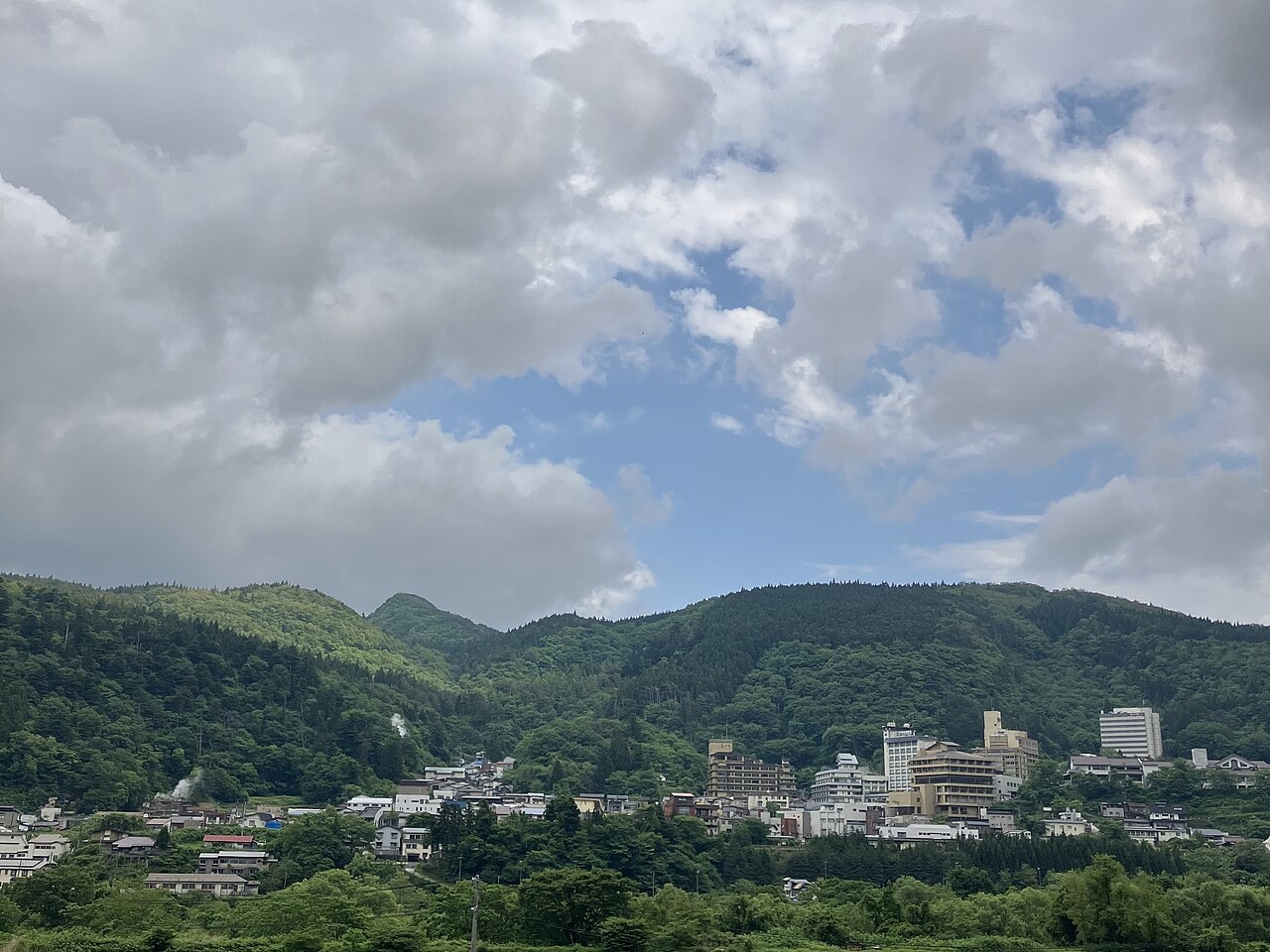
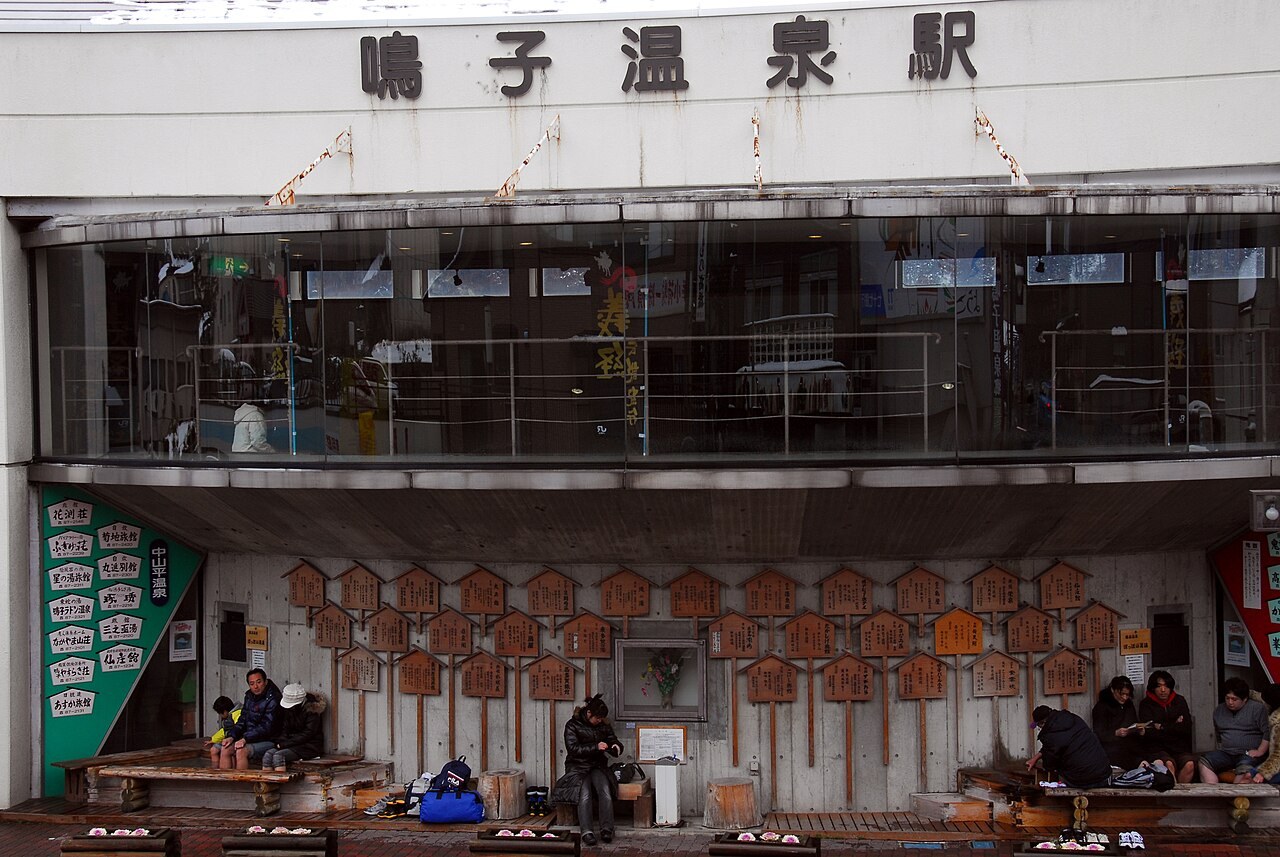
Naruko packs seven of Japan's ten legal spring types — chloride, bicarbonate, sulphate, iron, acidic, sulphur and simple — into one small mountain town in Osaki, Miyagi, where the station stands in the middle of the streets. Milky white, emerald and near-black waters rise side by side here, in a town equally famous for kokeshi dolls and for the autumn gorge west of the station.
| Prefecture | Miyagi |
|---|---|
| Region | Tohoku |
| Spring quality | Seven of Japan's ten legal spring types in one town — chloride, bicarbonate, sulphate, iron-containing, acidic, sulphur and simple springs |
| Source temperature | Varies widely by source and district (about 370 sources across the Naruko Onsenkyo village group) — no single range applies |
| Nearest station | Naruko-Onsen (JR Rikuu East Line) — the town starts at the station |
| From Tokyo | About 2 hours 30 minutes to 3 hours — Tohoku Shinkansen to Furukawa + Rikuu East Line (about 40–50 min) |
| From Osaka | About 5 hours to 5 hours 45 minutes via Tokyo (Tokaido + Tohoku Shinkansen + Rikuu East Line) |
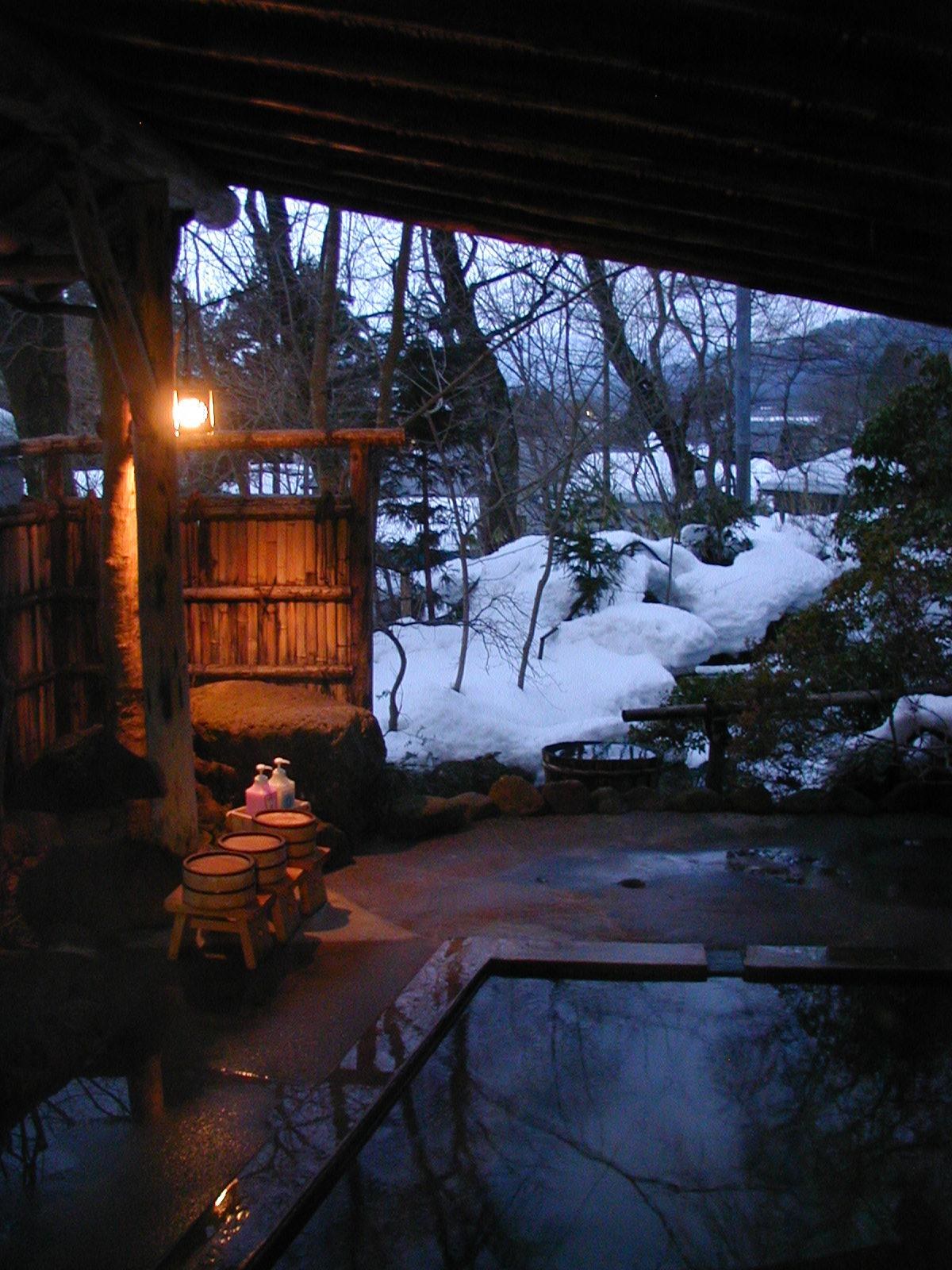
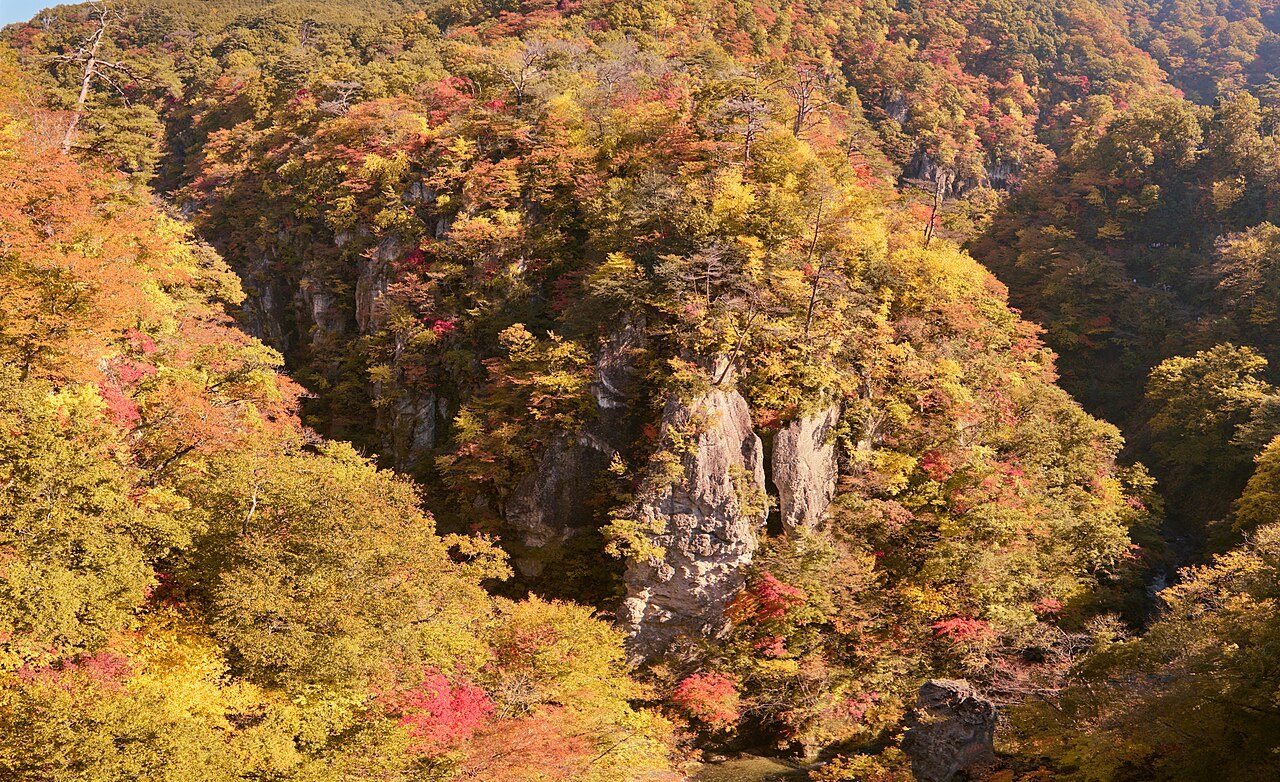
| Best season | Late October to early November for the Naruko Gorge autumn colour; September for the National Kokeshi Festival; winter for quiet cure stays |
Spring quality, source temperatures and access routes are drawn from the Japanese Wikipedia articles on each town (CC BY-SA 4.0) and the English articles credited below. Journey times are typical scheduled times for the routes named, rounded — always check current timetables before you travel.
About Naruko Onsen
Naruko Onsen (鳴子温泉) is a hot spring town in the mountains of north-western Miyagi, now part of Osaki City, inside Kurikoma Quasi-National Park. It is counted, with Iizaka Onsen in Fukushima and Akiu Onsen in Miyagi, among the Oshu Three Famous Springs, and springs have been recorded here since a volcanic eruption brought one forth in the year 837. The wider Naruko Onsenkyo group adds four neighbouring spring areas — Higashi-Naruko, Kawatabi, Nakayamadaira and Onikobe — each with its own water.
What makes Naruko unique in Japan is concentration. The Yumoto and Shinyashiki districts alone hold about 65 percent of the old town's sources, and acidic and alkaline springs emerge within metres of each other, which is why the tubs of neighbouring inns can be milky white, jade green or almost black. Matsuo Basho passed this way in 1689 on the journey that became Oku no Hosomichi.
The water: seven types in one town
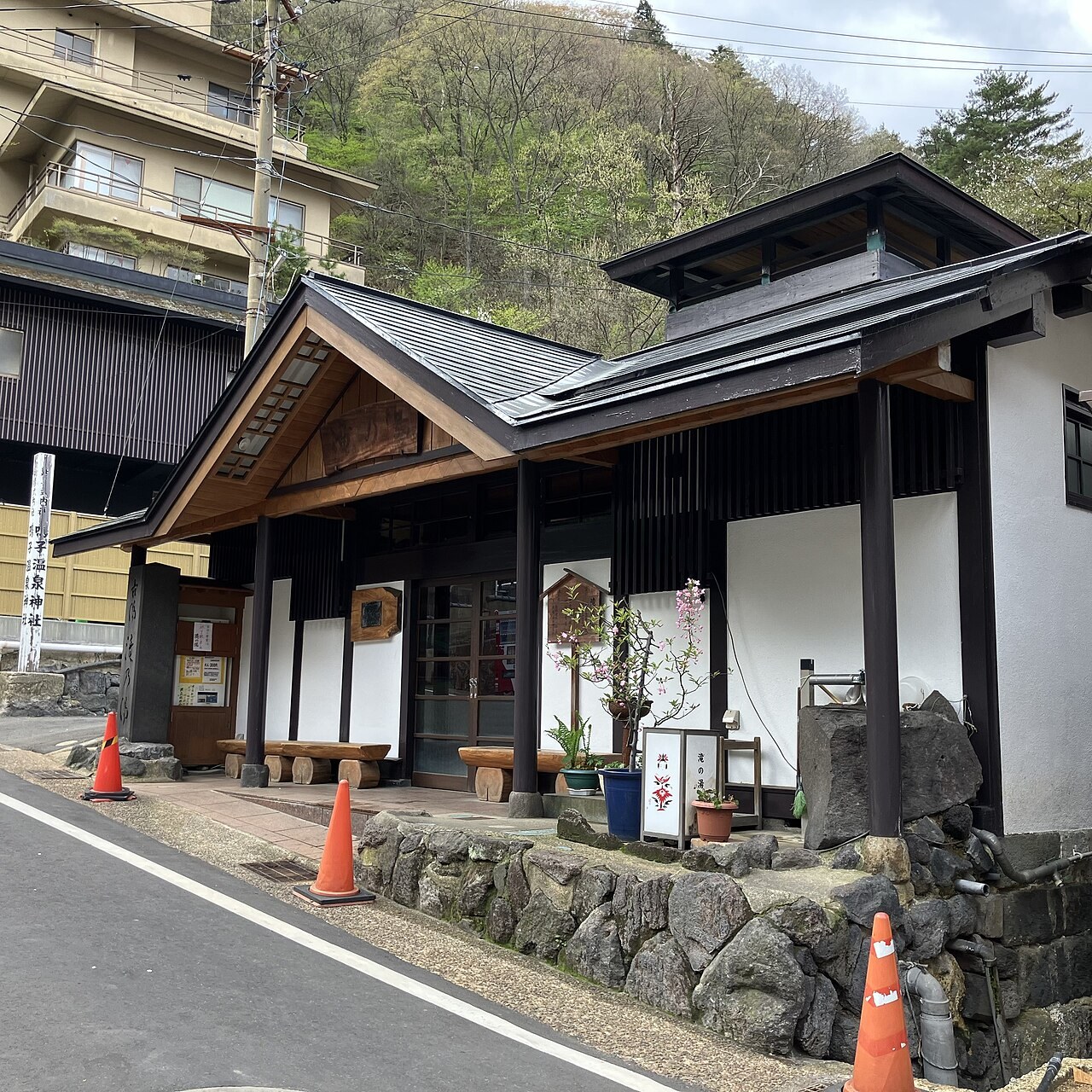
Of the ten spring types defined by Japan's Hot Springs Act, seven occur in Naruko Onsen itself: chloride, bicarbonate, sulphate, iron-containing, acidic, sulphur and simple springs. Across the five villages of Naruko Onsenkyo there are about 370 sources, so temperatures and characters vary too widely for any single figure — each inn's analysis sheet is the real guide, and comparing them is the local sport.
The signature contrast sits in the Yumoto district: the communal bath Taki no Yu runs on an acidic sulphur water, while the Yusaya inn's celebrated Unagi-yu, the eel bath, is a strongly alkaline spring a short walk away. Few towns in the world let you soak in acid and alkali on the same street.
Two communal baths to know
Taki no Yu is Naruko's emblem: the sacred spring of Onsen Shrine, with a bathing tradition said to reach back a thousand years. The building, first raised in 1636 and rebuilt in Taisho-period style in 1974, is made of Aomori hiba wood, tubs included; source water pours in like a waterfall from wooden flumes into separate hot and lukewarm tubs. There are no showers — this is bathing in its oldest public form.
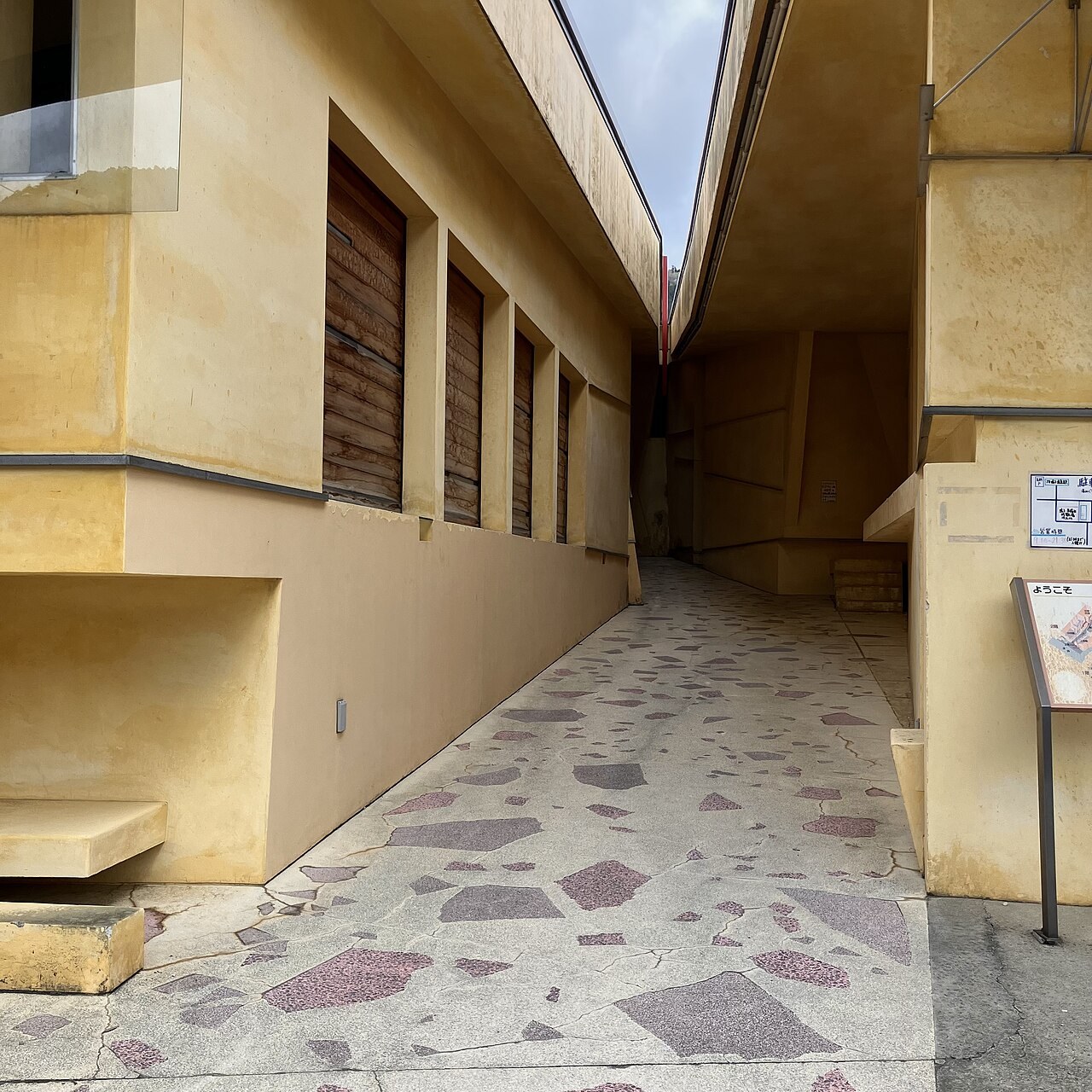
The other visitor bath, Waseda Sajiki-yu in Shinyashiki, has the strangest origin story in Japanese onsen: its source was struck in 1948 during a boring practicum by seven civil-engineering students from Waseda University. Rebuilt completely in 1998 to an avant-garde design by Waseda architecture professor Osamu Ishiyama, it runs on a sodium–sulphate–chloride spring.
Kokeshi, the gorge and the crater lake
Naruko is one of the three great birthplaces of the kokeshi doll, with Tsuchiyu and Togatta. Naruko-type dolls, painted with chrysanthemums on a body that narrows in the middle, squeak when you turn their heads. The Japan Kokeshi Museum stands in town, the National Kokeshi Festival fills the streets each September, and a six-metre giant kokeshi watches over the centre.
West of town, the Naruko Gorge runs for about two kilometres and up to 100 metres deep — Tohoku's most celebrated autumn-colour walk, at its best from late October into early November, viewed from the Ofukazawa Bridge and the rest-house terrace. Nearby Katanuma is a small acidic crater lake among the lava domes, and Lake Arao behind the Naruko Dam spreads out to the south.
Getting there
Naruko-Onsen Station, on the JR Rikuu East Line, stands in the centre of town — the Yumoto streets begin at the platform. From Tokyo, ride the Tohoku Shinkansen to Furukawa and change to the Rikuu East Line for about 40 to 50 minutes. One access note: the Rikuu East Line west of Naruko-Onsen, towards Shinjo, has been bus-substituted since the 2024 flood damage; the Furukawa route used from Tokyo and Osaka is unaffected.
The sections above were written for this guide from the facts in the Wikipedia articles Naruko Onsen and 「鳴子温泉」, available under CC BY-SA 4.0, and official tourism sources.
Gallery




The springs and baths named on this page are described from the Wikipedia articles credited above and official tourism sources. Before your first visit, read how to use an onsen.
More onsen towns
- Akiu Onsen 秋保温泉 — Miyagi's other famous spring — Sendai's gorge-side back parlour
- Zao Onsen 蔵王温泉 — Over the mountains in Yamagata — acid sulphur water and snow monsters
- Ginzan Onsen 銀山温泉 — The preserved Taisho streetscape of Yamagata's silver-mine spring
- Iizaka Onsen 飯坂温泉 — The third of the Oshu Three Famous Springs, in Fukushima
Keep exploring
- All onsen towns in Tohoku — this town's region, town by town
- Browse by spring type — find towns by their water
- Browse by feature — day trips, snow-view baths, free communal baths and more