Home › Onsen towns › Zao Onsen
Zao Onsen 蔵王温泉
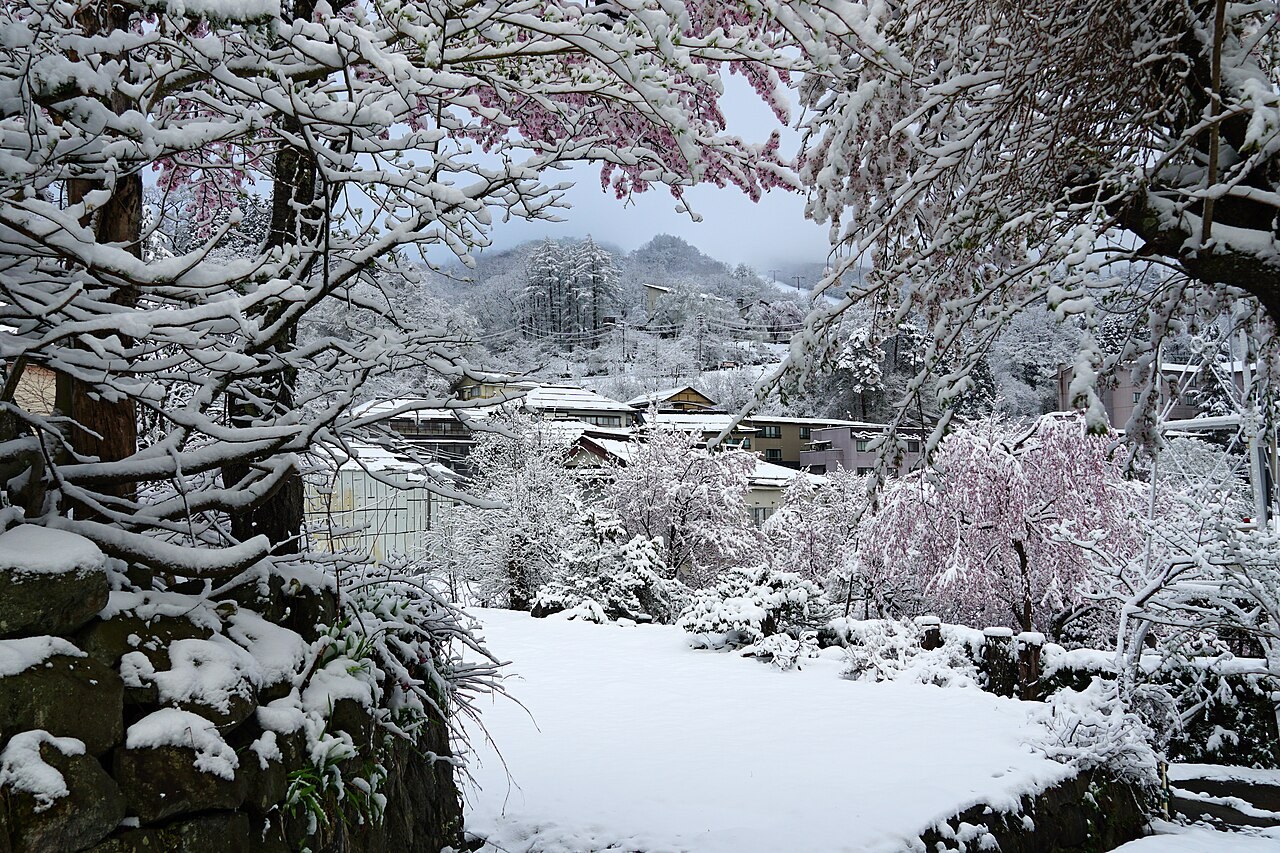
Zao's milky, strongly acidic sulphur water — pH around 1.6, among the most acidic in Japan — steams through a mountain town at about 880 metres in Yamagata, about 40 minutes by bus from Yamagata Station. Forty-seven sources feed three small communal baths in the old centre, a famous tiered open-air bath beside a mountain stream, and the ski slopes and snow monsters of the Zao range above.
| Prefecture | Yamagata |
|---|---|
| Region | Tohoku |
| Spring quality | Acidic sulphur spring (acidic, sulphur-containing aluminium–sulphate–chloride; pH around 1.6) |
| Source temperature | About 45–66 °C at source, varying by source (47 sources in five source groups) |
| Nearest station | Yamagata (JR Yamagata Shinkansen / Ou Main Line), then about 40 minutes by bus |
| From Tokyo | About 3 hours 30 minutes — Yamagata Shinkansen to Yamagata (about 2 h 30 min) + bus |
| From Osaka | About 6 hours via Tokyo (Tokaido Shinkansen + Yamagata Shinkansen + bus) |
| Best season | Winter for skiing and the juhyo snow monsters (peak January–February); late spring to autumn for the great open-air bath, trekking and the Okama crater lake |
Spring quality, source temperatures and access routes are drawn from the Japanese Wikipedia articles on each town (CC BY-SA 4.0) and the English articles credited below. Journey times are typical scheduled times for the routes named, rounded — always check current timetables before you travel.
About Zao Onsen
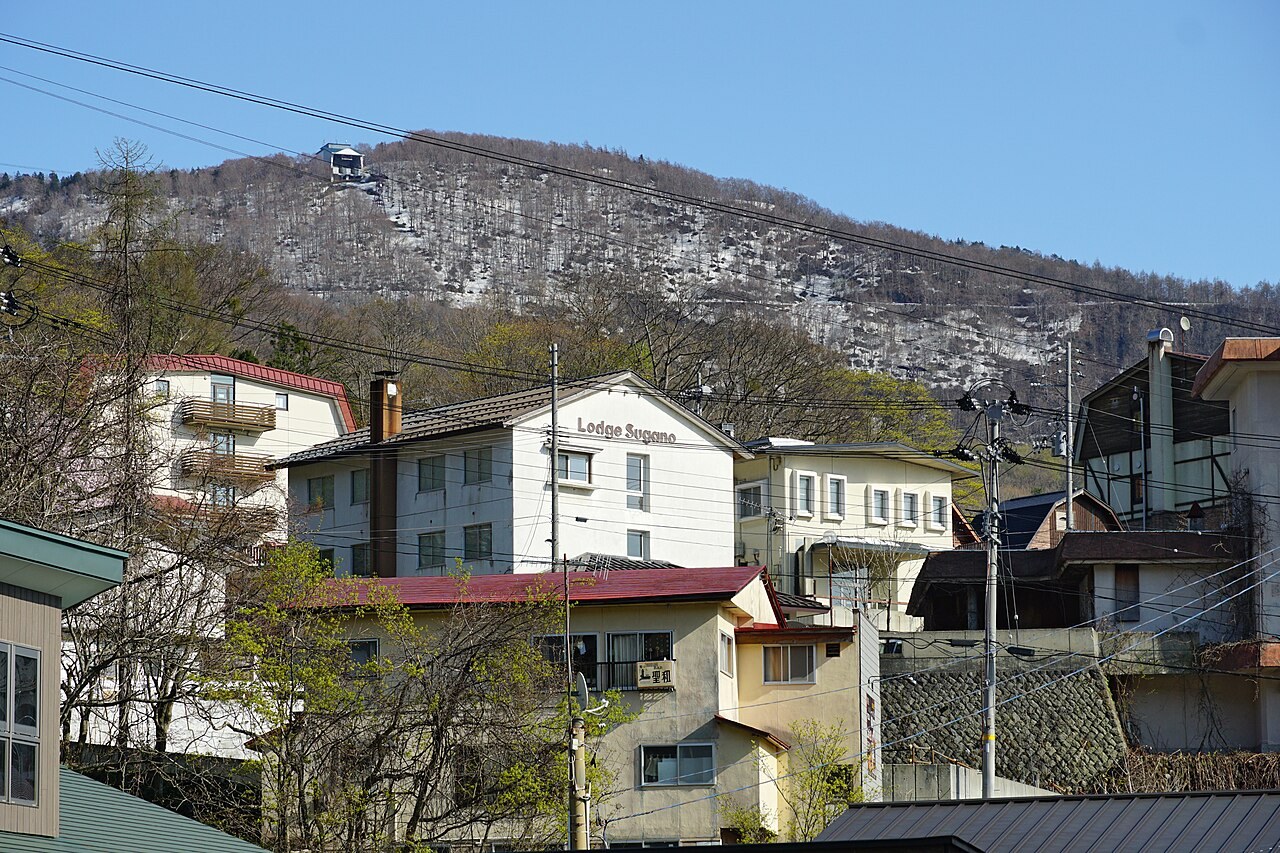
Zao Onsen (蔵王温泉) is a hot spring town in the south-east of Yamagata City, on the western foot of the Zao mountain range at about 880 metres. Tradition dates its opening to the year 110, when Kibi no Tagayu, travelling with Yamato Takeru's eastern expedition, is said to have found the spring; the town's old name, Takayu, is said to preserve his name. For centuries it was counted among the Ou Three Takayu, the three great high springs of the north, together with Shirabu Onsen in Yamagata and Takayu Onsen in Fukushima.
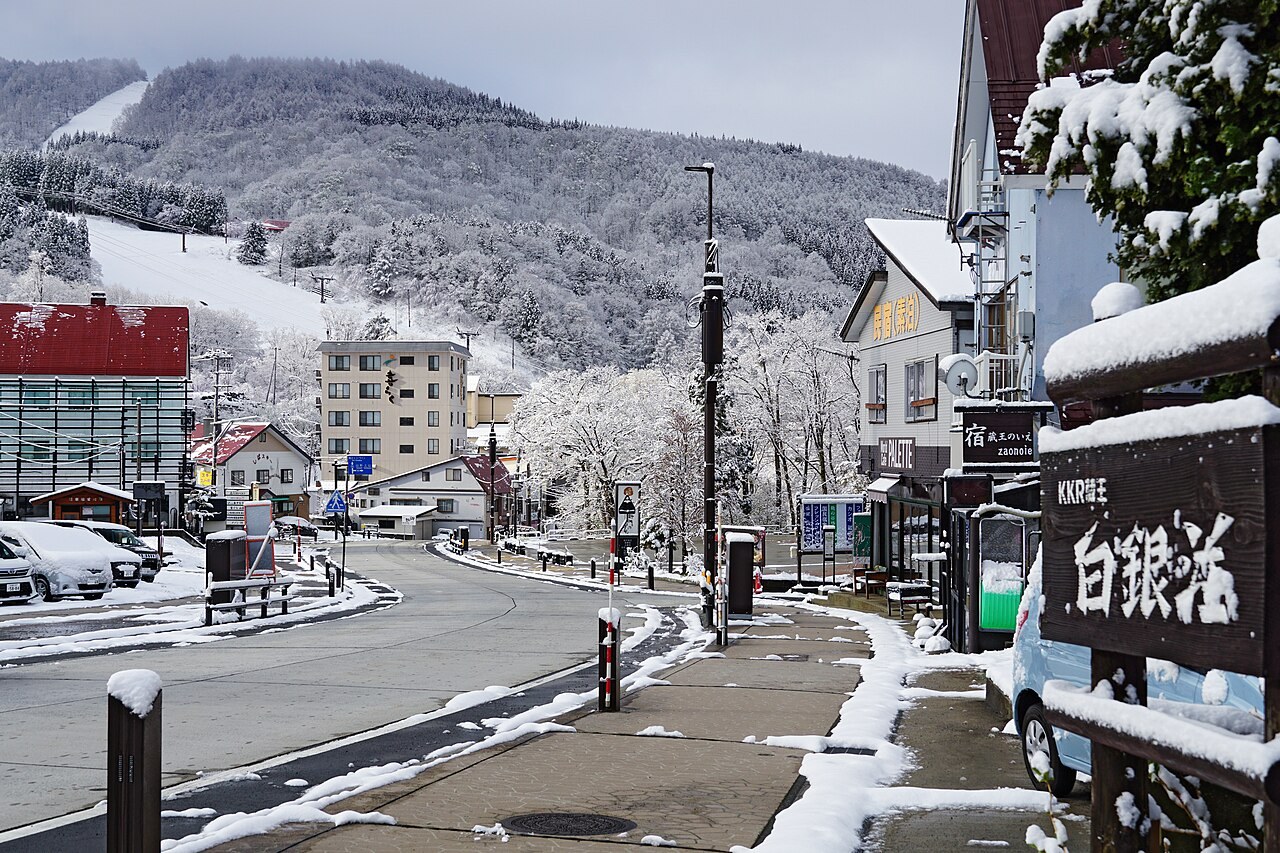
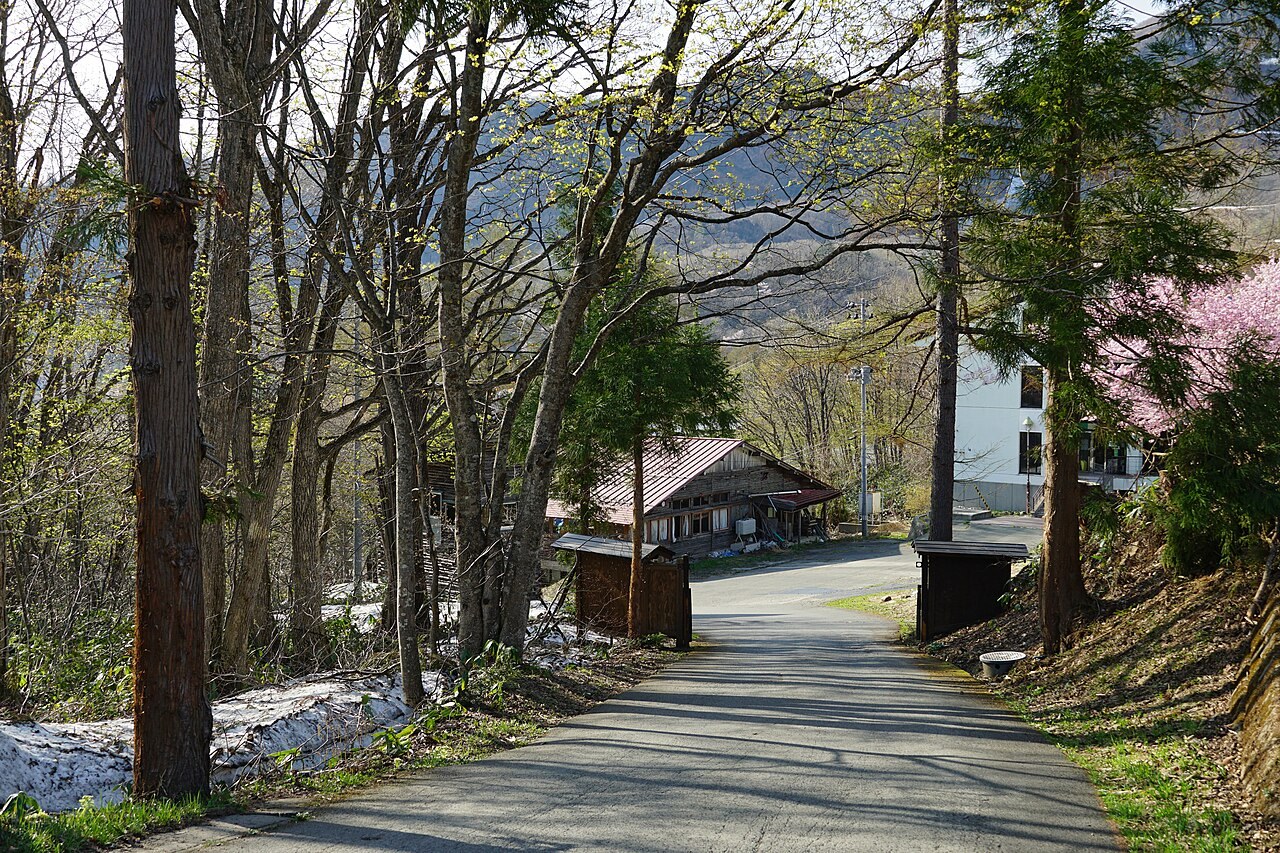
The town took its present name in 1950, after the Zao range topped a national vote for mountain scenery, and it was designated a National Hot Spring Resort in 1958. Today more than 120 inns and lodges line its streets, yet the centre still belongs to the water: the Sukawa River runs through town, small communal baths steam at street corners, and the smell of sulphur is everywhere.
The water: acid, sulphur and volume
Zao's water is an acidic, sulphur-containing aluminium–sulphate–chloride spring — the old classification called it a strongly acidic hydrogen-sulphide alum spring. Its pH sits mostly around 1.6, close to Kusatsu at the extreme end of Japanese spring acidity, and the water runs milky white to cloudy blue with a powerful sulphur smell. Locals nicknamed it Hime no Yu, the Princess's Bath, because the acid water was traditionally prized for the skin.
The supply is large and entirely natural in character: five source groups hold 47 individual sources giving about 5,700 litres a minute — roughly 8,700 tonnes a day — at source temperatures of about 45 to 66 °C depending on the spring. Because the water is this strong, bathers rinse carefully, and the great open-air bath famously allows no soap or shampoo at all.
The great open-air bath and the three communal baths
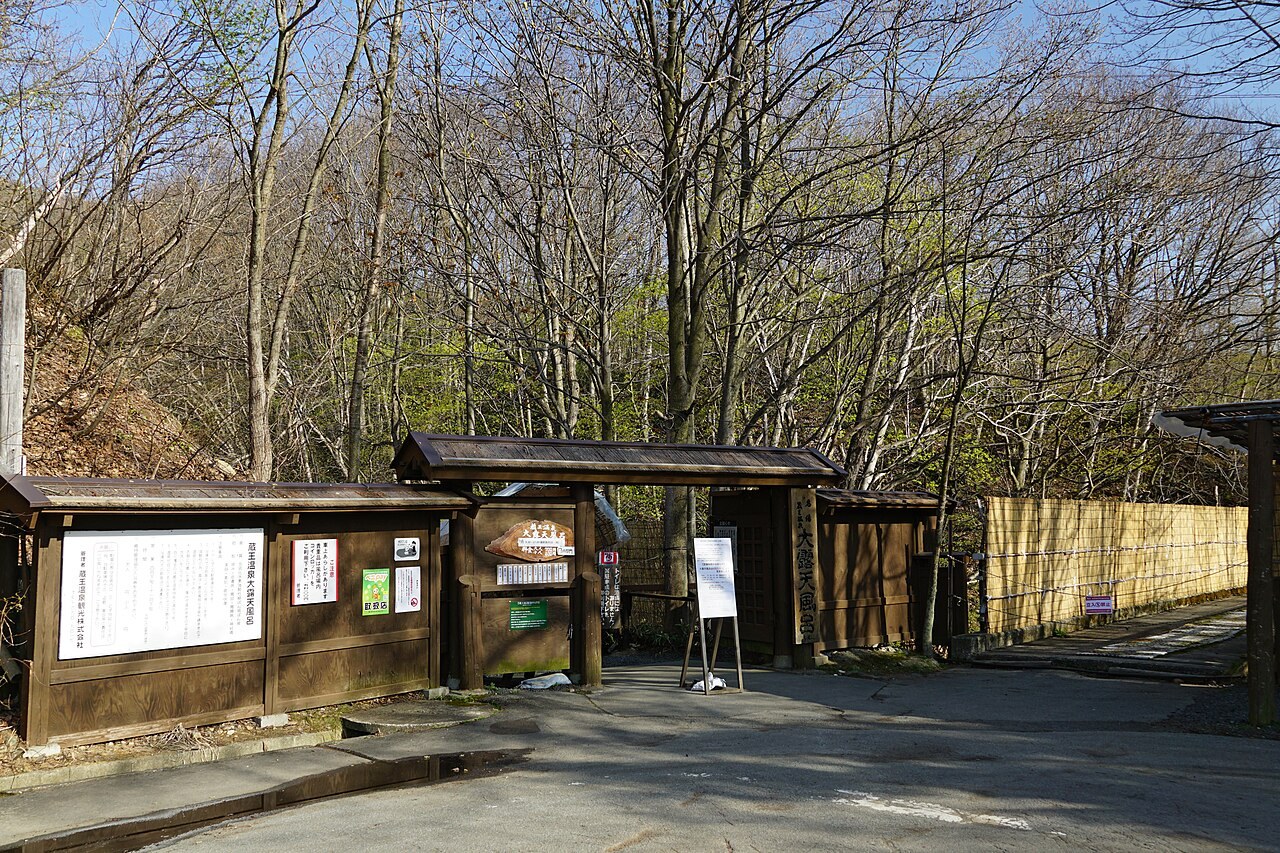
The town's signature bath is the Zao Onsen Dai-Rotenburo, a set of tiered open-air pools built beside a mountain stream at the far end of town, holding some 200 bathers among the beech trees. It opens only in the green season, roughly mid-April to mid-November, and closes through the snow months — plan a winter trip around the town baths and the ski slopes instead.
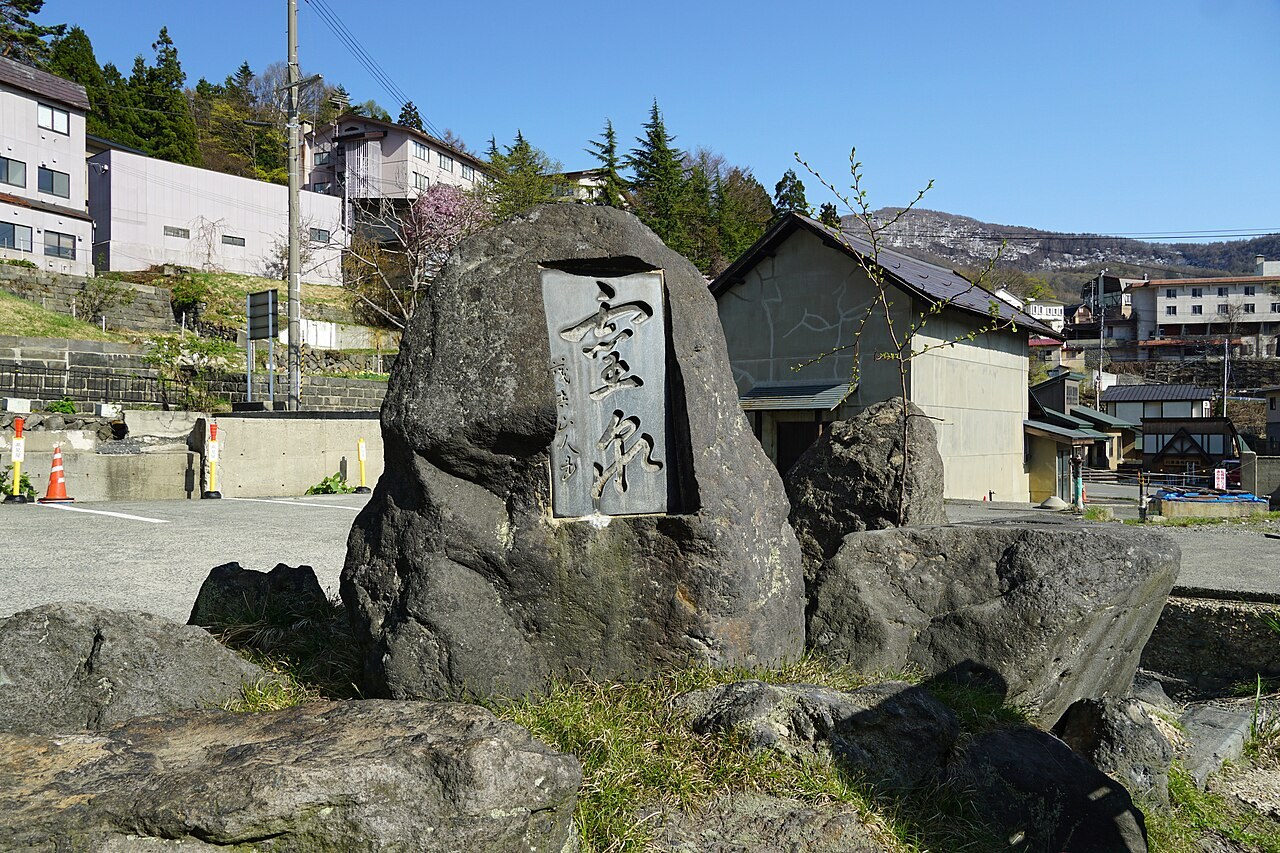
In the old Takayu-dori centre, three communal baths — Kamiyu, Shimoyu and Kawarayu — stand within a short walk of each other, alongside day-bathing houses and footbaths. Bathing in the small, intensely hot communal tubs, then walking the lane to the next one, is the classic Zao routine, much as at Kusatsu or Shibu.
Snow monsters, skiing and the crater lake
Above the town, the Zao range gives the resort its second life. Yamagata Zao Onsen Ski Resort, on the slopes of Mount Jizo, is described as the largest ski area in Tohoku, and from its ropeway in January and February you can see the juhyo — the famous snow monsters, fir trees built into towering shapes by hard rime from Siberian winds.
In the green season the same ropeway and the Zao Echo Line road lead towards Okama, the emerald crater lake of the range, and to trekking routes across the Zao Quasi-National Park (designated in 1963). Autumn colour is a quieter draw. The town's own crafts include the Takayu school of kokeshi dolls, one of Tohoku's traditional kokeshi lineages.
Getting there
Zao Onsen has no railway of its own. Ride the Yamagata Shinkansen to Yamagata Station, then take the Yamako (Yamagata Kotsu) bus to Zao Onsen bus terminal — about 40 minutes, roughly hourly. From Tokyo the whole journey is about three and a half hours; from Osaka, about six hours via Tokyo. Drivers cross from Yamagata City in about half an hour, but winter roads demand proper snow equipment — this is one of Japan's heavy-snow districts.
The sections above were written for this guide from the facts in the Wikipedia articles Zaō Onsen and 「蔵王温泉」, available under CC BY-SA 4.0, and official tourism sources.
Gallery




The springs and baths named on this page are described from the Wikipedia articles credited above and official tourism sources. Before your first visit, read how to use an onsen.
More onsen towns
- Naruko Onsen 鳴子温泉 — The other great Tohoku newcomer — seven spring types in one town
- Ginzan Onsen 銀山温泉 — Yamagata's other famous spring — the gas-lit preserved street
- Akiu Onsen 秋保温泉 — Down towards Sendai — the gorge-side back parlour of Miyagi's capital
- Sukayu Onsen 酸ヶ湯温泉 — The same region's extreme — fiercely acidic water under Hakkoda snow
Keep exploring
- All onsen towns in Tohoku — this town's region, town by town
- Browse by spring type — find towns by their water
- Browse by feature — day trips, snow-view baths, free communal baths and more