Home › Onsen towns › Sukayu Onsen
Sukayu Onsen 酸ヶ湯温泉
Sukayu's strongly acidic sulphur water — pH below 2.0, among the most acidic in Japan — fills a vast wooden mixed bath in the Hakkoda mountains, about 75 minutes by bus from Aomori Station. The single great bathhouse, with its Thousand-Person Bath of beech wood, has been a cure retreat in deep snow country for centuries. Below are the bathhouses, spring sources and onsen facilities recorded in OpenStreetMap within about 2.5 km of the town centre.
| Prefecture | Aomori |
|---|---|
| Region | Tohoku |
| Spring quality | Acidic sulphur spring (strongly acidic, pH below 2.0) |
| Source temperature | Varies by source; the great bath is fed by several acidic sources blended in the wooden tubs |
| Nearest station | Aomori (JR / Aoimori Railway), then about 75–100 minutes by JR bus toward Lake Towada |
| From Tokyo | About 5 hours — Tōhoku Shinkansen to Shin-Aomori (about 3 hours) + bus to Aomori + JR bus |
| From Osaka | Fly to Aomori Airport (about 1 h 20 min), then bus via Aomori city |
| Best season | Deep winter for the famous snow walls and the steaming wooden bath; autumn for Hakkoda's leaves |
| Places listed here | 2 |
| Public bathhouses | 2 |
| Hot spring sources | 0 |
Spring quality, source temperatures and access routes are drawn from the Japanese Wikipedia articles on each town (CC BY-SA 4.0) and the English articles credited below. Journey times are typical scheduled times for the routes named, rounded — always check current timetables before you travel.
About Sukayu Onsen
Sukayu Onsen (酸ヶ湯温泉) is a volcanic hot spring in the Hakkoda mountain range in the south of Aomori City, Aomori Prefecture, famous for water so acidic that the pH falls below 2.0. Its name fits the water: the spring was originally called Shikayu, and “Sukayu” is the shifted reading of that older name that stuck.
The resort is best known for its great wooden bath, the Thousand-Person Bath, filled from several acidic sources blended in the tubs. Set high in the Hakkoda mountains, it is a one-inn mountain resort rather than a town, reached by bus from Aomori — and in deep winter, snow walls rise along its approach roads.
The water: acidic sulphur at pH below 2.0
Sukayu is an acidic sulphur spring, and the acidity is the headline: at pH below 2.0 the water is strongly acidic, among the most extreme spring chemistries in Japan. The source temperature varies by source, and the great bath is not fed by one pipe but by several acidic sources blended together in the wooden tubs, which is how the bath keeps its character across a very large volume of water.
Bathers should treat the water with respect on a first visit: strongly acidic water feels different on the skin from the mild springs more common elsewhere, and short first soaks are the sensible way to get used to it. The spring’s fame rests on this uncompromising chemistry — nothing about Sukayu’s water is diluted or gentle by design.
The Thousand-Person Bath in the Hakkoda snow
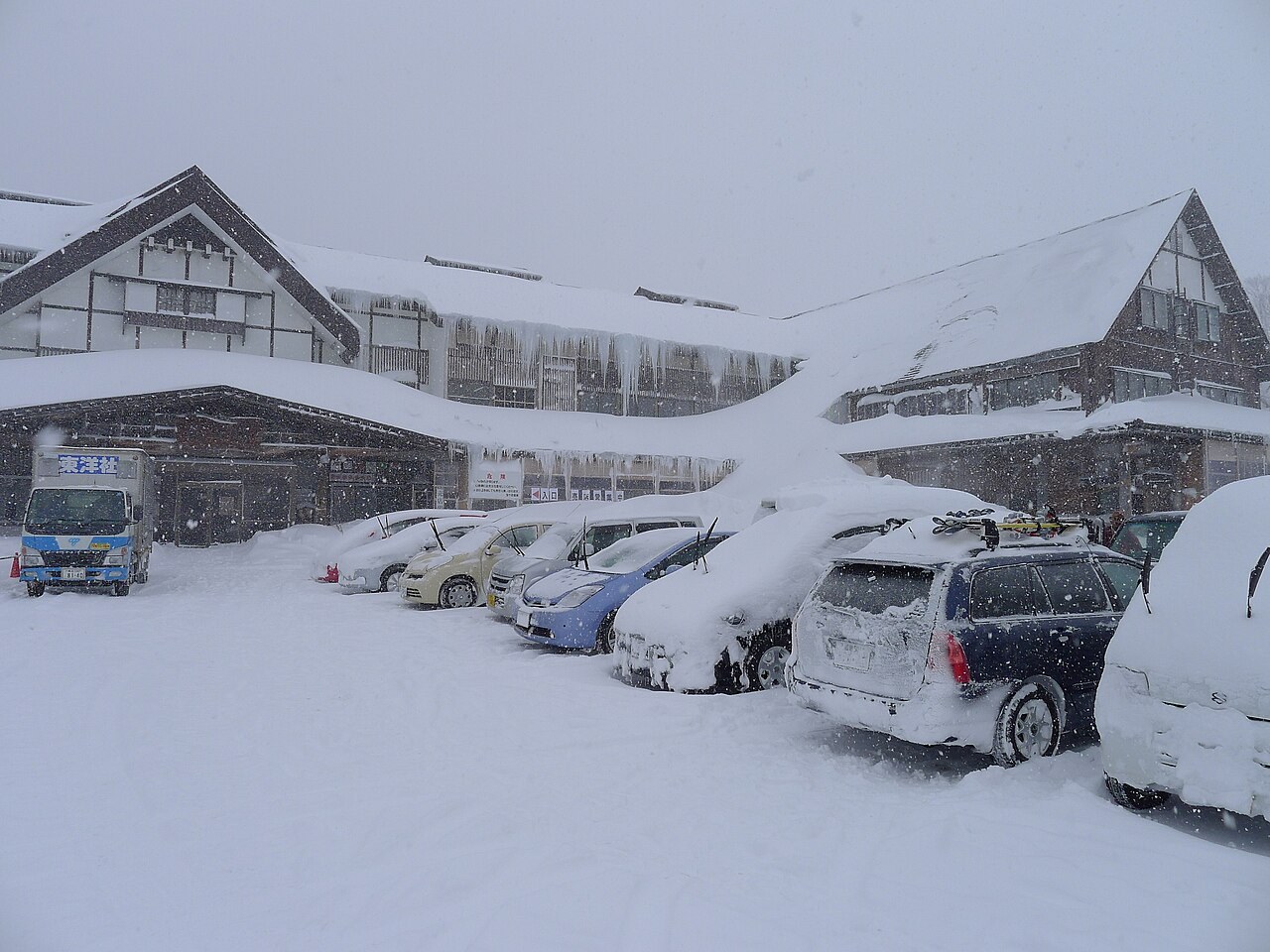
The centre of the resort is the great bath, a vast wooden hall of a bathhouse known as the Thousand-Person Bath, built to hold bathers on a scale that matches the mountain winters outside. In deep winter the Hakkoda snow closes in around the building, snow walls rise along the approach roads, and steam fills the wooden interior — the picture of Sukayu that most Japanese travellers know.
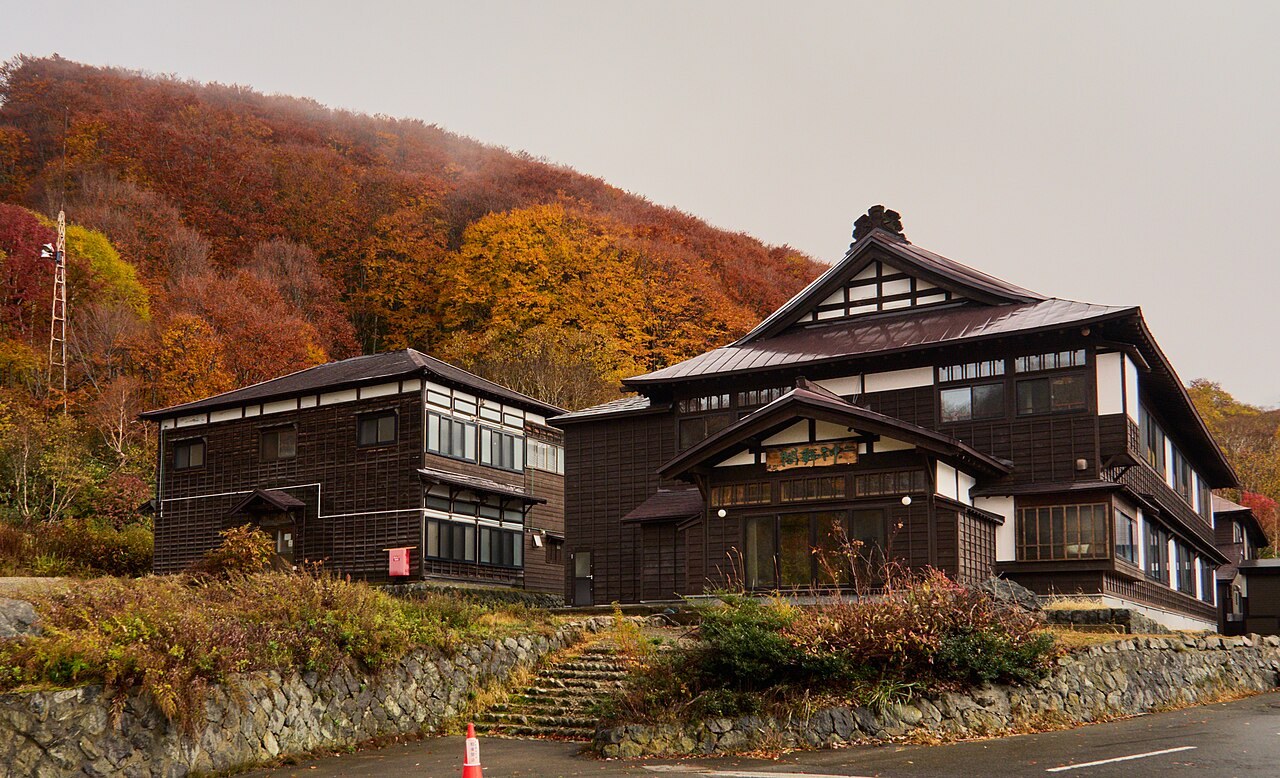
Winter is the famous season here, but it is not the only one: autumn brings the Hakkoda leaves to the slopes around the inn. The two seasons frame the resort’s character — a bath taken against deep snow, or against the colours of a northern mountain autumn.
A national recreation spring since 1954
Sukayu’s standing was recognised early. In 1954 it was designated, together with Shima Onsen in Gunma and Nikko Yumoto Onsen in Tochigi, as one of the very first National Recreational Onsen resorts — the opening entries on a list created for springs valued as places of rest and recuperation. The designation is still noted in the spring’s official record.
That history helps explain the resort’s form: a single substantial inn with a great communal bath, in the tradition of the mountain cure resort, rather than a street of competing bathhouses. This page lists two places at Sukayu, with the inn itself as the recorded public bathhouse.
Getting there: the JR bus up from Aomori
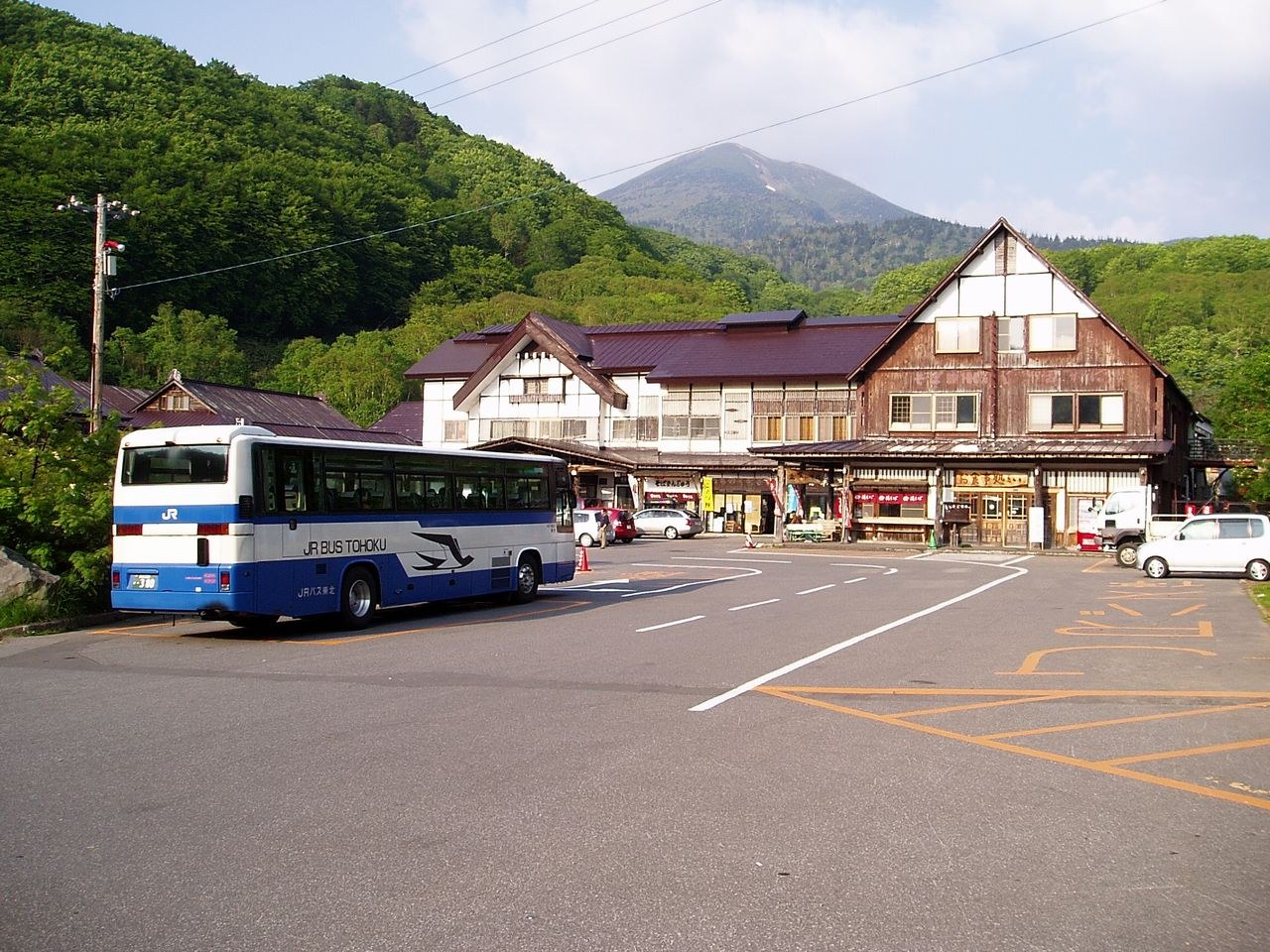
There is no railway to Sukayu. From JR Aomori Station, JR buses on the Towada north line take about 75 to 100 minutes, depending on the service, climbing into the Hakkoda mountains to the inn. From Tokyo the journey takes about five hours in total: roughly three hours by Tohoku Shinkansen to Shin-Aomori, then connections through Aomori city and the JR bus up the mountain.
From Osaka, flying is the realistic route — about an hour and twenty minutes to Aomori Airport, then bus via Aomori city. However you come, the last leg is the mountain bus, and in winter that climb through the snow is part of the arrival.
The sections above were written for this guide from the facts in the Japanese Wikipedia article 「酸ヶ湯」 and the spring and access data summarised on this page, under CC BY-SA 4.0.
Public bathhouse (recorded as onsen in OpenStreetMap) (1)
- Sukayu Onsen Hiba Sennin Buro 酸ヶ湯温泉 大浴場ヒバ千人風呂
OpenStreetMap
Public bathhouse (spring type not recorded in OpenStreetMap) (1)
- Sukayu Onsen Sukayu Onsen (酸ヶ湯)
Official website · OpenStreetMap
Gallery


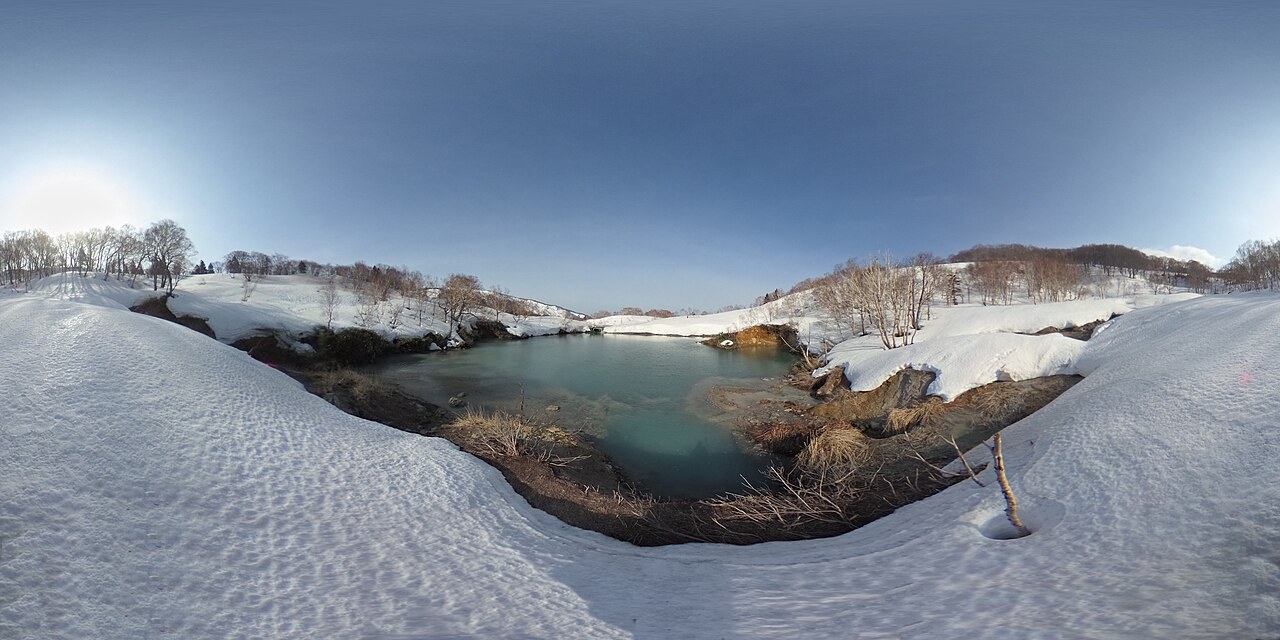

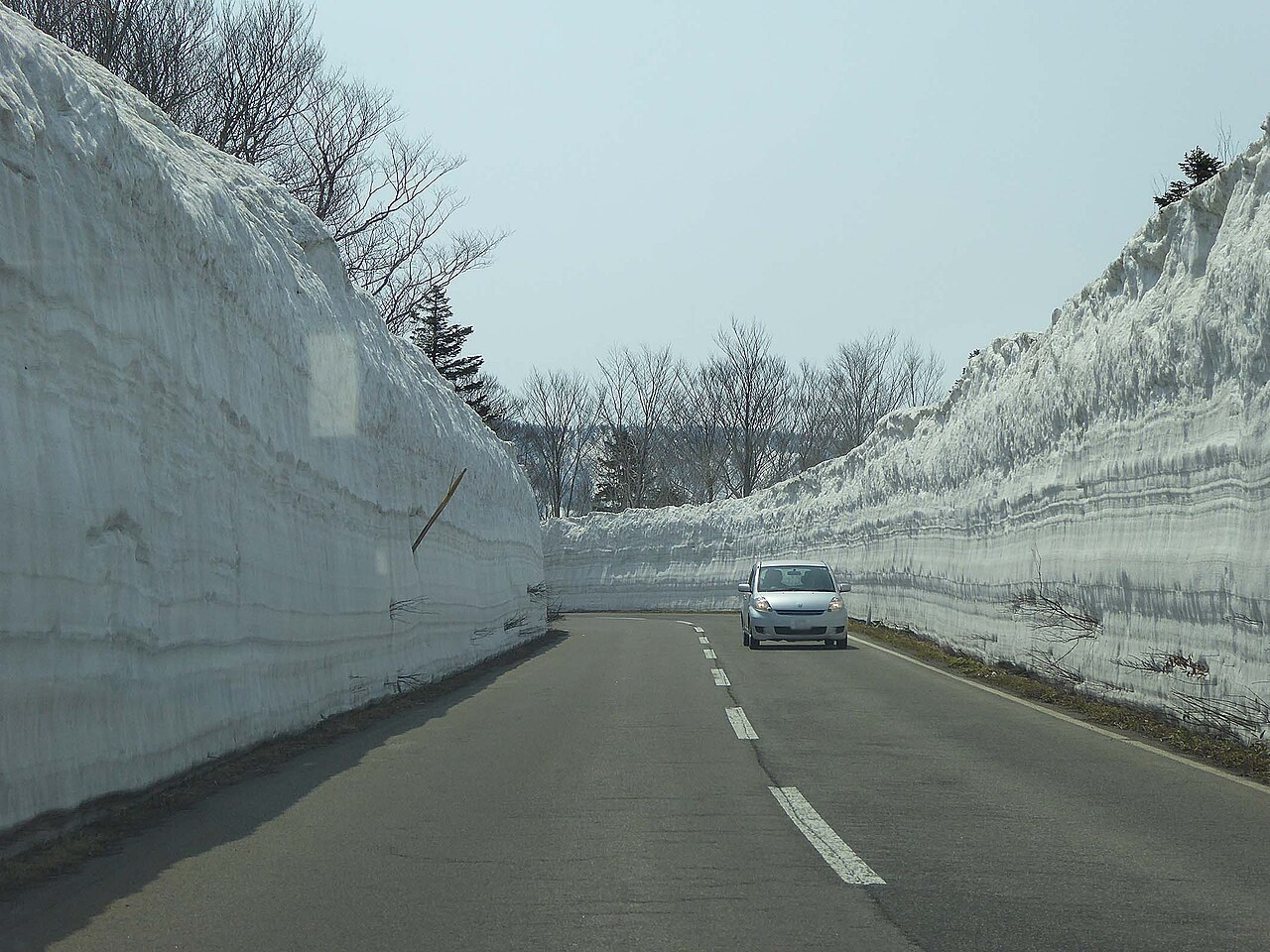

Names, types and websites are shown exactly as recorded in OpenStreetMap. A bathhouse whose spring type is not recorded is labelled as such — we do not guess. Before your first visit, read how to use an onsen.
More onsen towns
- Nyuto Onsen 乳頭温泉郷 — Another Tohoku mountain spring village of milky, rustic baths
- Ginzan Onsen 銀山温泉 — Another northern town at its best under deep snow
- Hanamaki Onsen 花巻温泉 — The same Tohoku region — a valley of inn springs tied to Kenji Miyazawa
- Kusatsu Onsen 草津温泉 — Japan's other famously acidic sulphur water, at the opposite end of Honshu's spine
Keep exploring
- All onsen towns in Tohoku — this town's region, town by town
- Browse by spring type — find towns by their water
- Browse by feature — day trips, snow-view baths, free communal baths and more