Home › Onsen towns › Nyuto Onsen
Nyuto Onsen 乳頭温泉郷
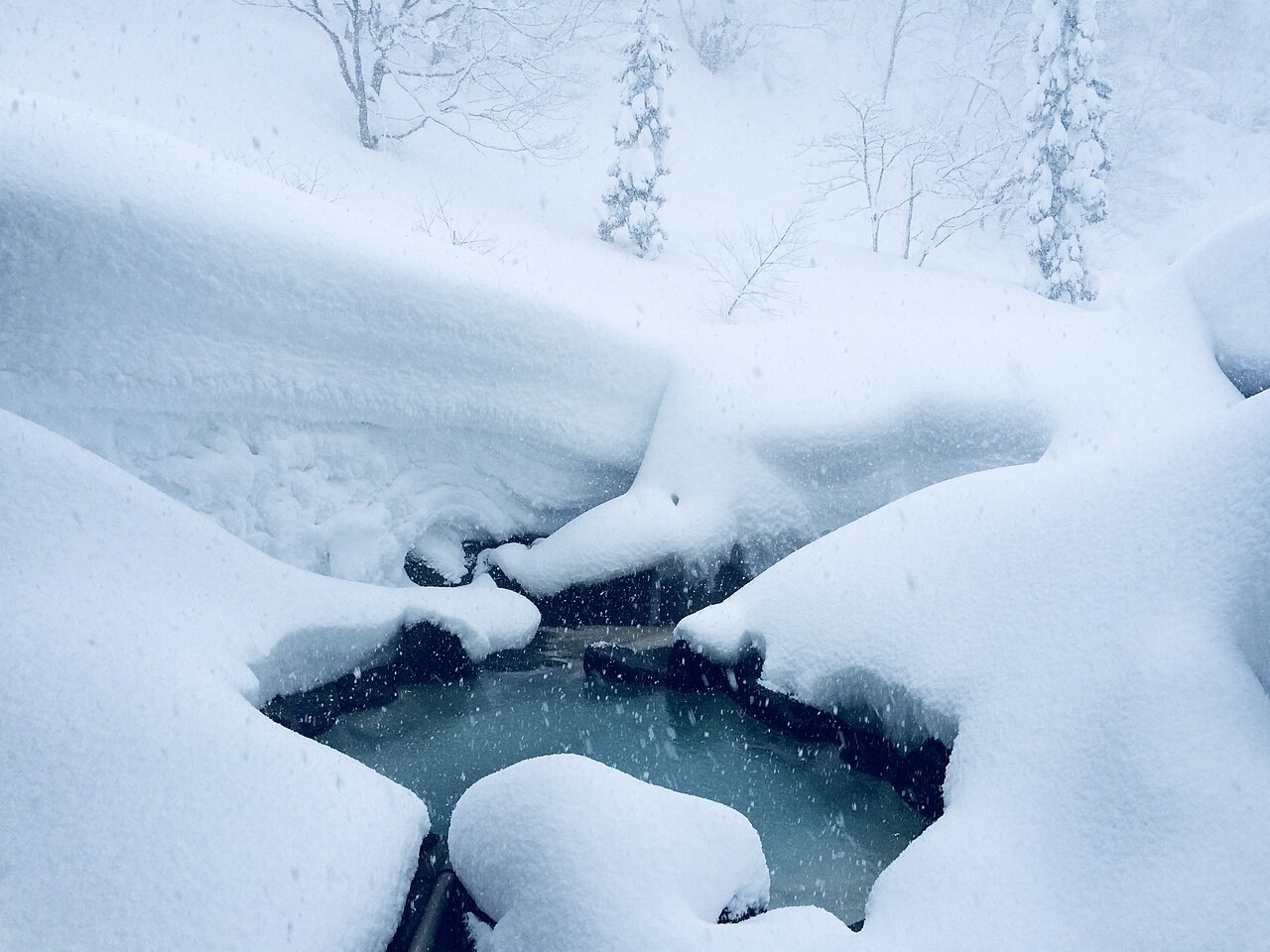
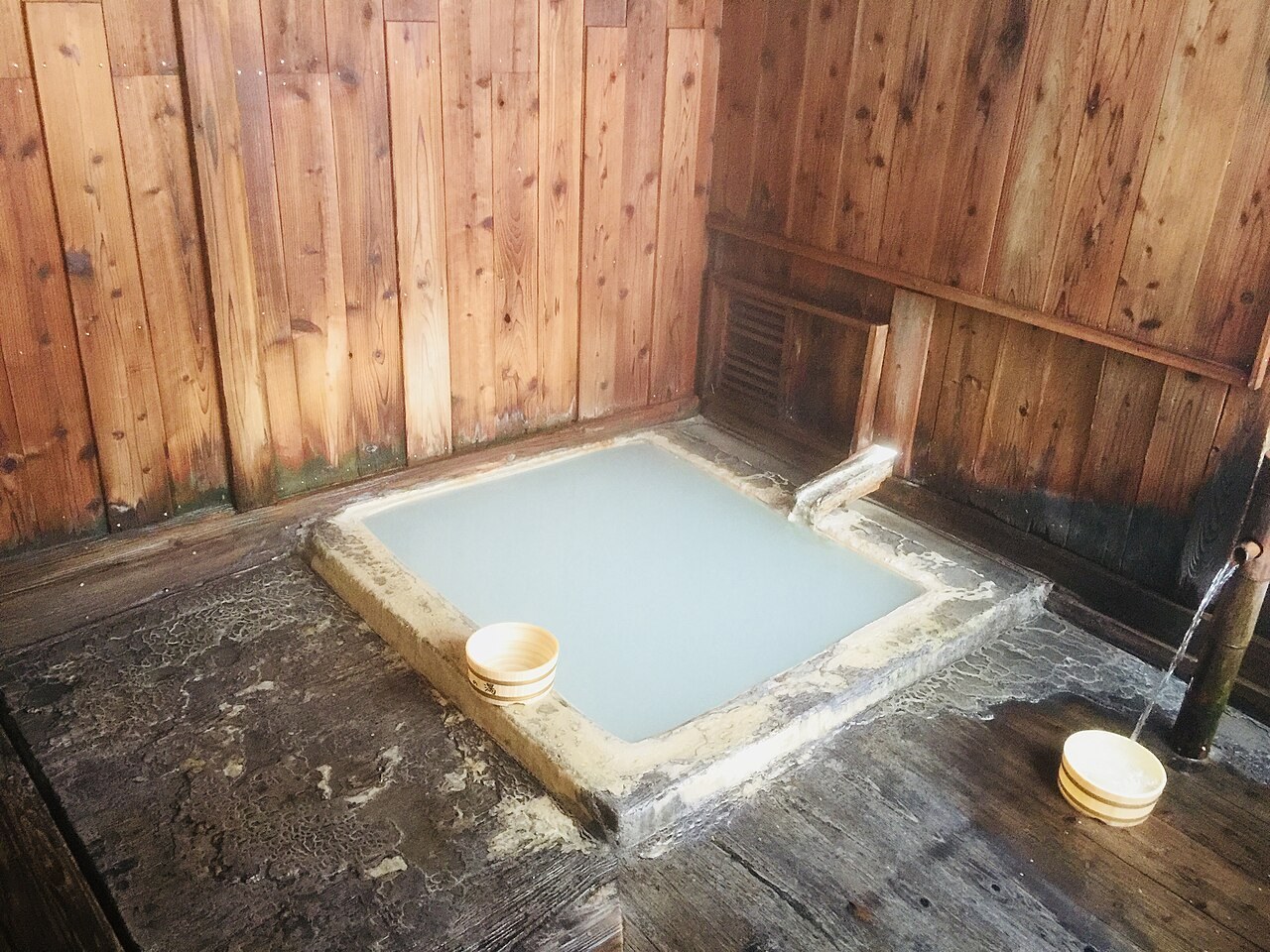
Nyuto is a scatter of seven rustic spring inns on the slopes of Mount Nyuto in Akita, about 50 minutes by bus from Tazawako Station. Most famous is Tsuru-no-yu, a thatched former cure inn whose milky-white open-air bath is the postcard of hidden Japan; each of the seven springs has a different water. Below are the bathhouses, spring sources and onsen facilities recorded in OpenStreetMap within about 5 km of the area centre.
| Prefecture | Akita |
|---|---|
| Region | Tohoku |
| Spring quality | Seven different waters — milky sulphur, chloride, bicarbonate, simple and other springs, varying by inn |
| Source temperature | Varies by spring — each of the seven inns draws on its own source |
| Nearest station | Tazawako (Akita Shinkansen), then about 50 minutes by bus (inn shuttle buses meet some trains) |
| From Tokyo | About 3 hours 30 minutes — Akita Shinkansen to Tazawako (about 3 hours) + bus |
| From Osaka | Fly to Akita Airport (about 1 h 15 min), then train or bus via Tazawako |
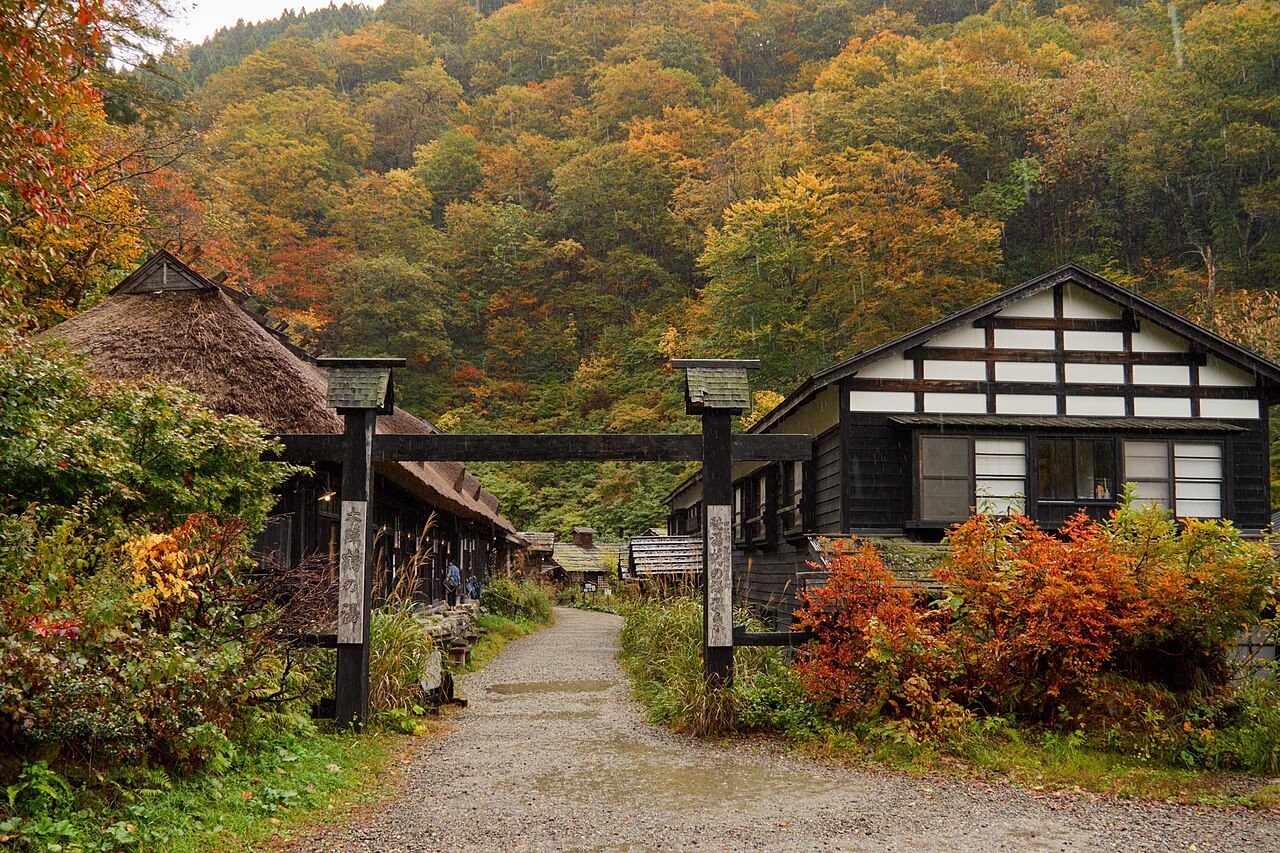
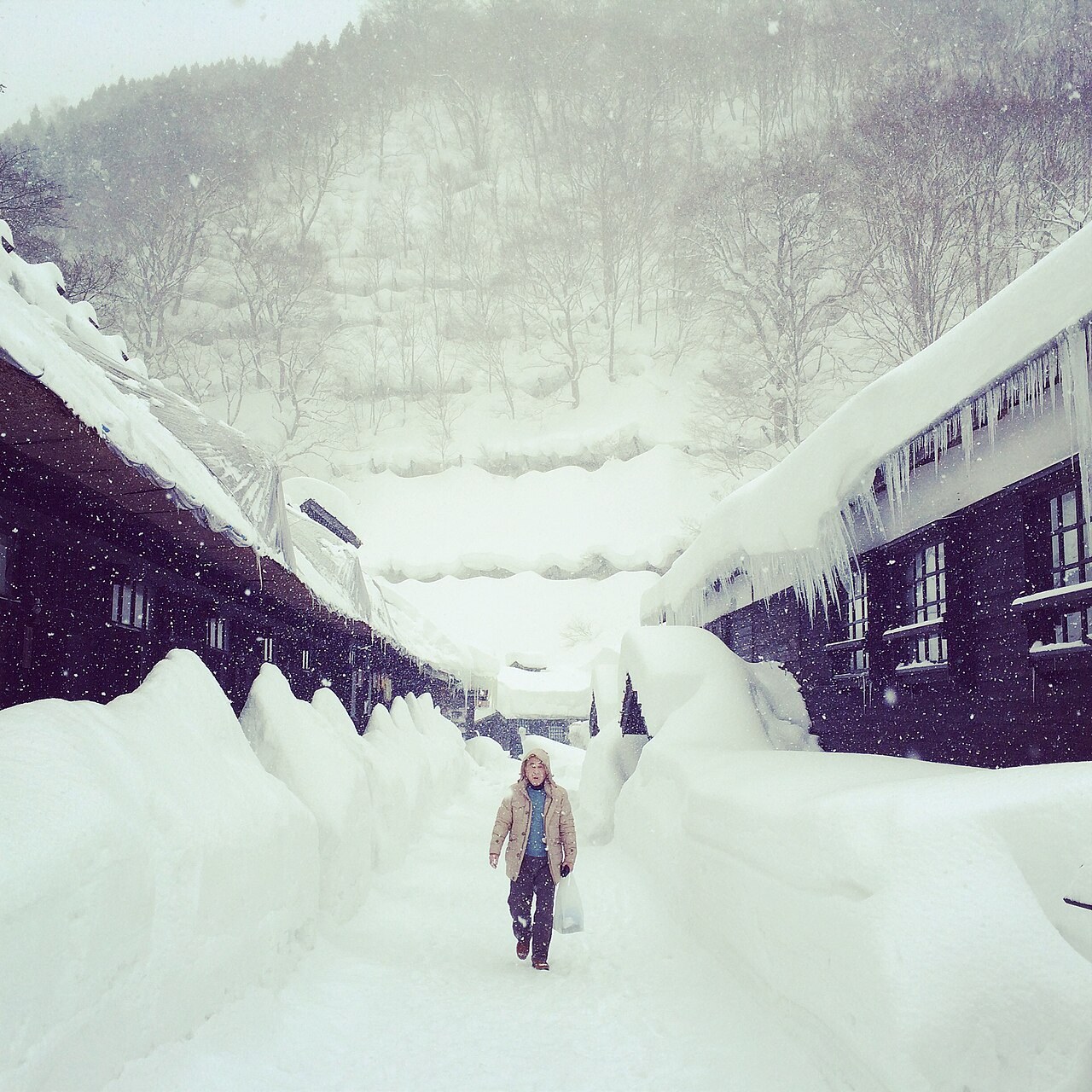
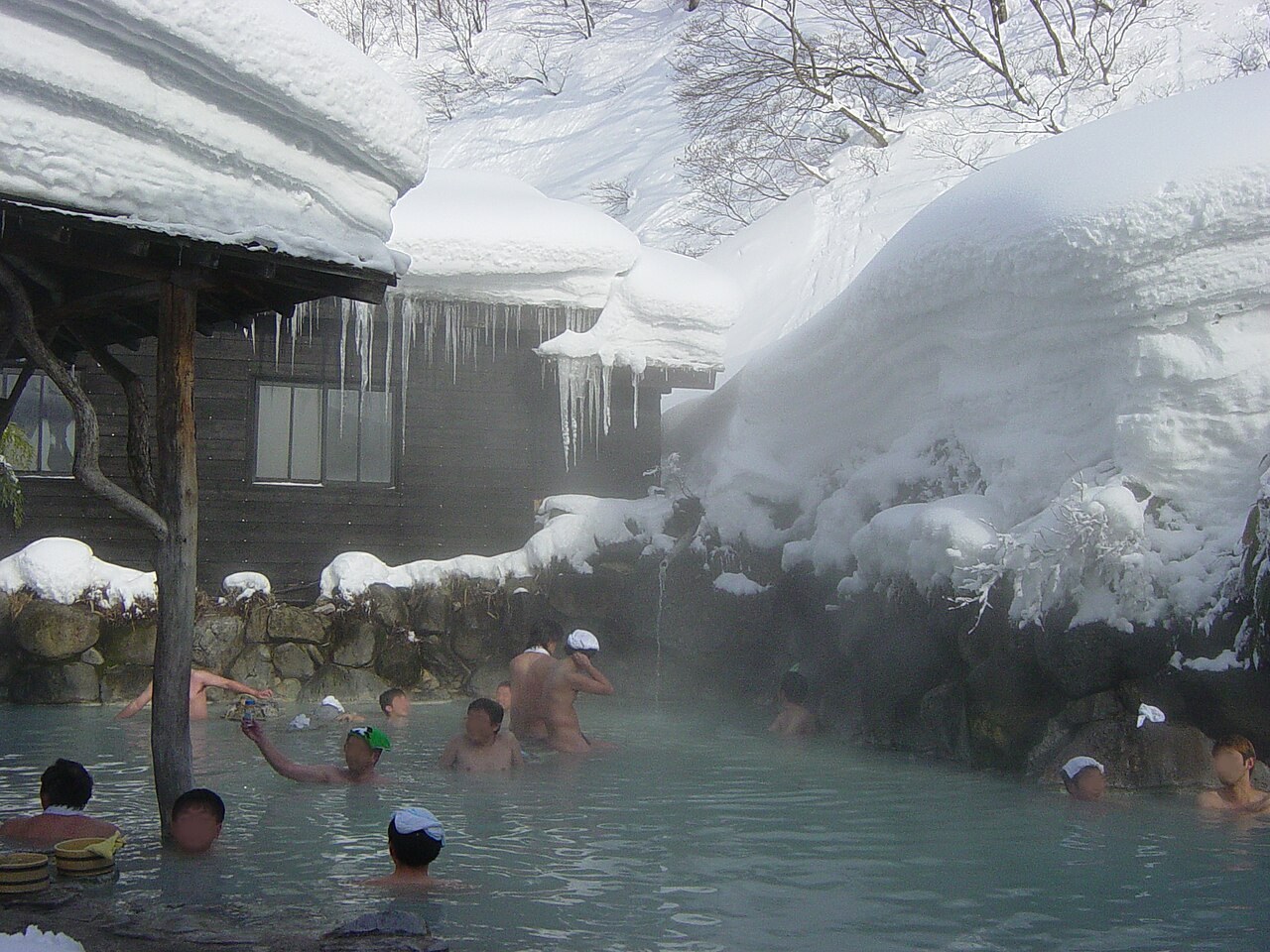
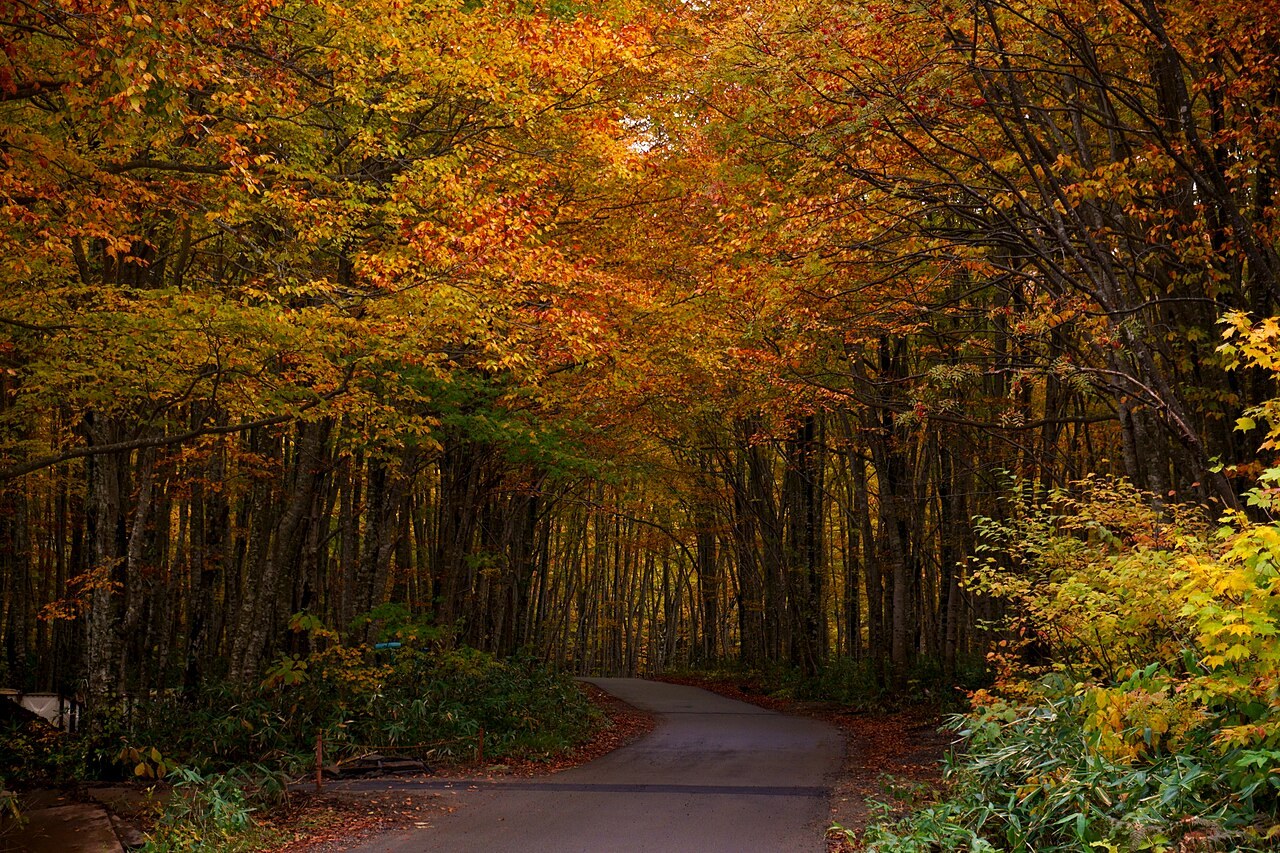
| Best season | Winter for snow-bound thatched inns; autumn for the Hachimantai leaves |
| Places listed here | 2 |
| Public bathhouses | 2 |
| Hot spring sources | 0 |
Spring quality, source temperatures and access routes are drawn from the Japanese Wikipedia articles on each town (CC BY-SA 4.0) and the English articles credited below. Journey times are typical scheduled times for the routes named, rounded — always check current timetables before you travel.
About Nyuto Onsen
Nyūtō Onsen (Kuto Onsen Townūtō-onsen-kyō) is a rural hot spring resort in Towada-Hachimantai National Park, Semboku City, Akita Prefecture, Japan and consists of Japanese-style hot spring spas scattered around the base of Mount Nyūtō.
Nyūtō Onsen is composed of seven separate accommodation facilities and a free outdoor natural hot spring (noya) known as Ippon-matsu Onsen is on the trail of Mount Nyūtō. The site formerly hosted accommodation facilities and changing rooms which are no longer present; the spring itself remains accessible to hikers.
Visitors can purchase a pass known as a yumeguri-chō which grants single-entry access to the baths of each of the inns in the Nyūtō Onsen locality. It can only be purchased by guests of an inn or the hotel. The pass is valid for one year.
Transportation
- Rail and bus: Nyūtō Onsen is serviced by buses on the Nyūtō Line departing from Tazawako Station on the Tazawako Line of the Akita Shinkansen. Buses are operated by Ugo Kotsu and the trip from Tazawako Station costs ¥800 and takes approximately 55 minutes. Ganiba Onsen is accessible from the last stop on the line, Nyūtō Ganiba Onsen. Tsuru-no-yu is accessible by changing to a courtesy shuttle bus at Arupa Komakusa (for staying guests only) or alternatively on foot (approx. 45 min) from Tsuru-no-yu Onsen Iriguchi bus stop. The Nyūtō Line runs via Lake Tazawa, another popular amenity in the area.
- By car: Accessible using National Highway Route 341, Akita Prefectural Road Route 127 Komagatake Line and Akita Prefectural Road Route 194 Obonai Line.
- By plane: Via Akita Airportliner departing from Akita Airport.
Local hot springs
- Tsuru-no-yu Onsen: Accessible on foot via Tsuru-no-yu Iriguchi bus stop. The inn is several kilometers from the bus stop and is distant from the other inns.
- Ōgama Onsen: On Akita Prefectural Road Route 194
- Tae-no-yu Onsen: On Akita Prefectural Road Route 194
- Ganiba Onsen: At the starting point of Akita Prefectural Road Route 194
- Magoroku Onsen: Off Akita Prefectural Road Route 194, approximately 1 km from Ōgama Onsen
- Kuroyu Onsen: Located off Akita Prefectural Road Route 194, approximately 1 km from Nyūtō Onsen-kyō Kyūka-mura Hotel. Closed in winter.
- Nyūtō Onsen-kyō Kyūka-mura Hotel: On Akita Prefectural Road Route 194
Related items
- Onsen
- Sentō
- Furo
- Ryokan
- Lake Tazawa
Article text adapted from the Wikipedia article Nyūtō Onsen, available under CC BY-SA 4.0.
The seven springs
Nyuto Onsenkyō counts seven springs scattered over the wooded slopes of Mount Nyuto (1,478 m) inside Towada-Hachimantai National Park: Tsuru-no-yu, Kuroyu, Taenoyu, Kaniba, Ōgama, Magoroku and the rest-house spring of Nyuto. No two waters match — milky sulphur at Tsuru-no-yu, black-hot Kuroyu named for its dark sediment, clear springs at others — and visitors tour them with the Yumeguri bus pass that loops the mountain road.
Tsuru-no-yu is the emblem: a former cure inn of thatched, dark-timbered buildings whose milky-white open-air bath, split by a low wooden fence between men and women, has become one of the defining images of rural Japan. The inns are small, book out far ahead in the autumn-leaf and snow seasons, and mostly keep traditional cure-inn hours — lights early, baths at dawn. Day bathing is offered at set hours at most of the seven; check each inn before you set out, as the mountain road is long.
Seven inns, one stamp book
The seven springs of Nyuto — Tsuru-no-Yu, Kuroyu, Magoroku, Ougama, Ganiba, Myo-no-Yu and the Kyukamura Nyuto Onsenkyo — are separate inns scattered through the beech forest, not one resort. The spring country is said to have opened in 1615 and was designated a National Recreation Onsen Area in 1967. Since the local inn association formed in the late 1970s, staying guests have been able to buy a yumeguri stamp book that admits them to all seven baths; unusually, it stays valid for a full year, so many visitors split the circuit across seasons.
Additional sections above were translated and summarised from the Japanese Wikipedia article 「乳頭温泉郷」, available under CC BY-SA 4.0.
Public bathhouse (spring type not recorded in OpenStreetMap) (2)
- アルパこまくさ
OpenStreetMap - 一本松温泉 一本松たっこの湯
OpenStreetMap
Gallery




Names, types and websites are shown exactly as recorded in OpenStreetMap. A bathhouse whose spring type is not recorded is labelled as such — we do not guess. Before your first visit, read how to use an onsen.
More onsen towns
- Sukayu Onsen 酸ヶ湯温泉 — Another Tohoku mountain cure spring, famous for one great wooden bath
- Hanamaki Onsen 花巻温泉 — The same region — a whole valley of inn springs in Iwate
- Akiu Onsen 秋保温泉 — Tohoku's easy-access counterpart in the gorge behind Sendai
- Ginzan Onsen 銀山温泉 — Another northern town preserved in wood and lamplight
Keep exploring
- All onsen towns in Tohoku — this town's region, town by town
- Browse by spring type — find towns by their water
- Browse by feature — day trips, snow-view baths, free communal baths and more