Home › Onsen towns › Toyako Onsen
Toyako Onsen 洞爺湖温泉
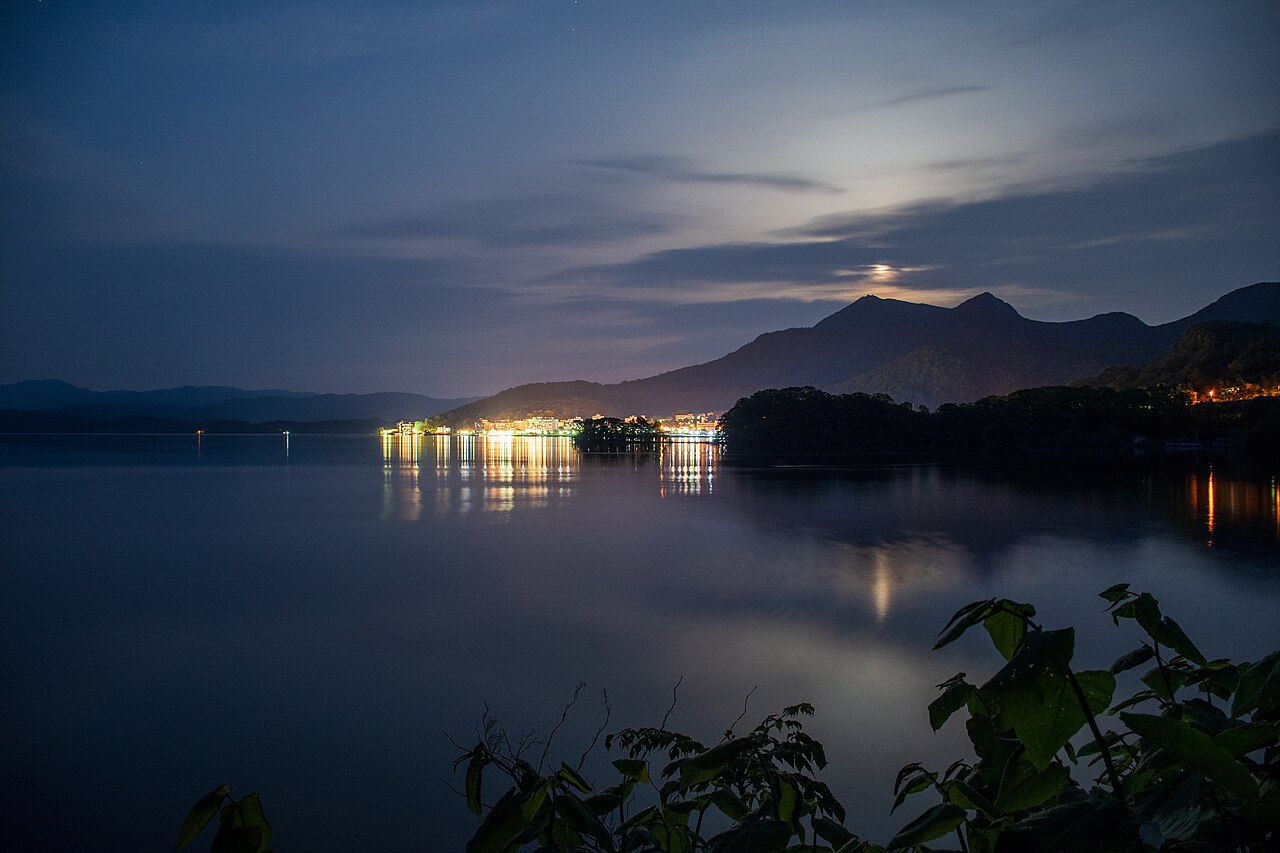
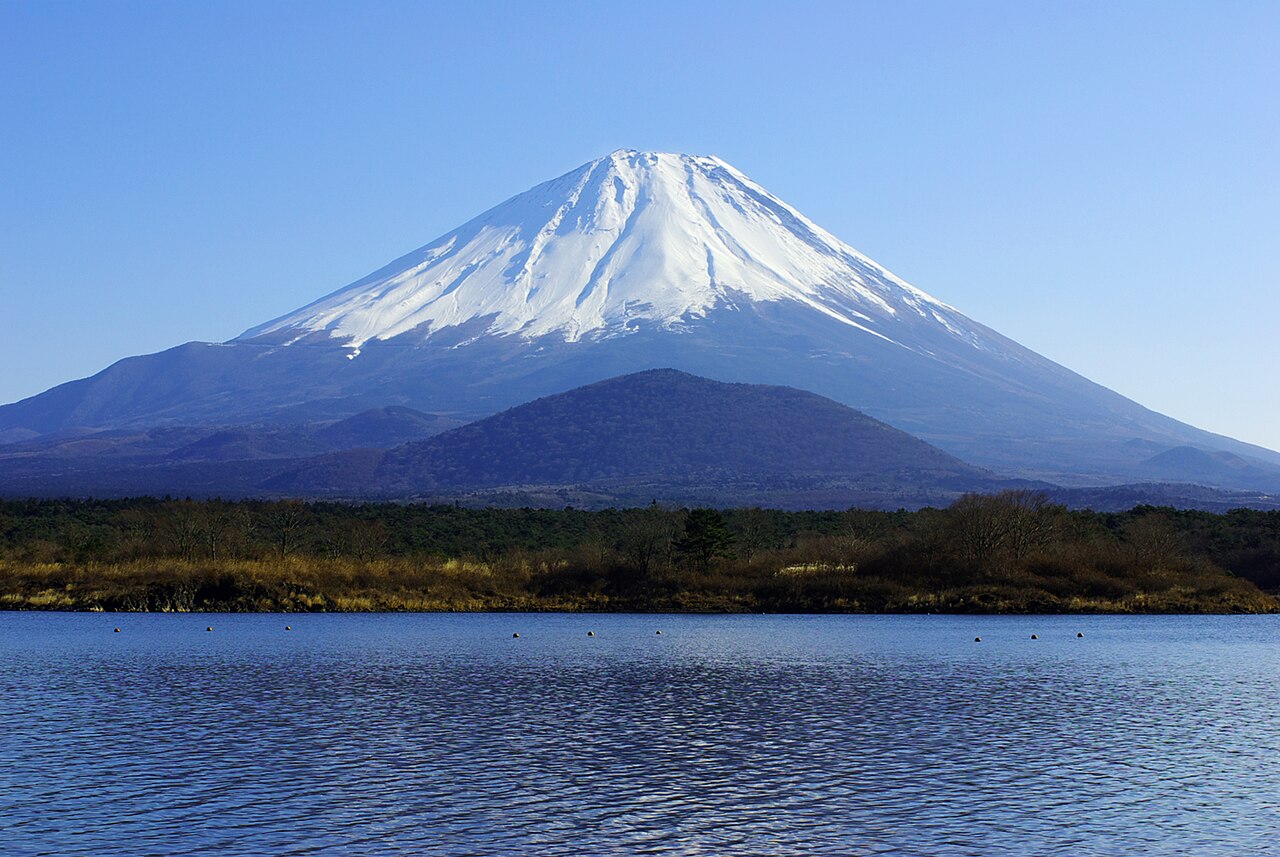
A lakeside resort row faces the still water of a volcanic caldera at Toyako Onsen, where neutral chloride water at 50.3 °C fills the big hotel baths along the south shore of Lake Toya. Boardwalk promenades, free footbaths, nightly summer fireworks and the steaming crater of Mount Usu — which created these springs by erupting in 1910 — are all within a short walk of your bath.
| Prefecture | Hokkaido (Toyako Town) |
|---|---|
| Region | Hokkaido |
| Spring quality | Sodium–calcium chloride spring (neutral, hypotonic; pH 6.7) |
| Source temperature | 50.3 °C at source (mixed communal supply) |
| Nearest station | Toya (JR Muroran Main Line), then a short bus ride to the lake shore |
| From Tokyo | Fly to New Chitose (about 1 h 40 min) + limited express to Toya + bus — about 4 hours in total |
| From Osaka | Fly to New Chitose (about 2 hours) + limited express to Toya + bus |
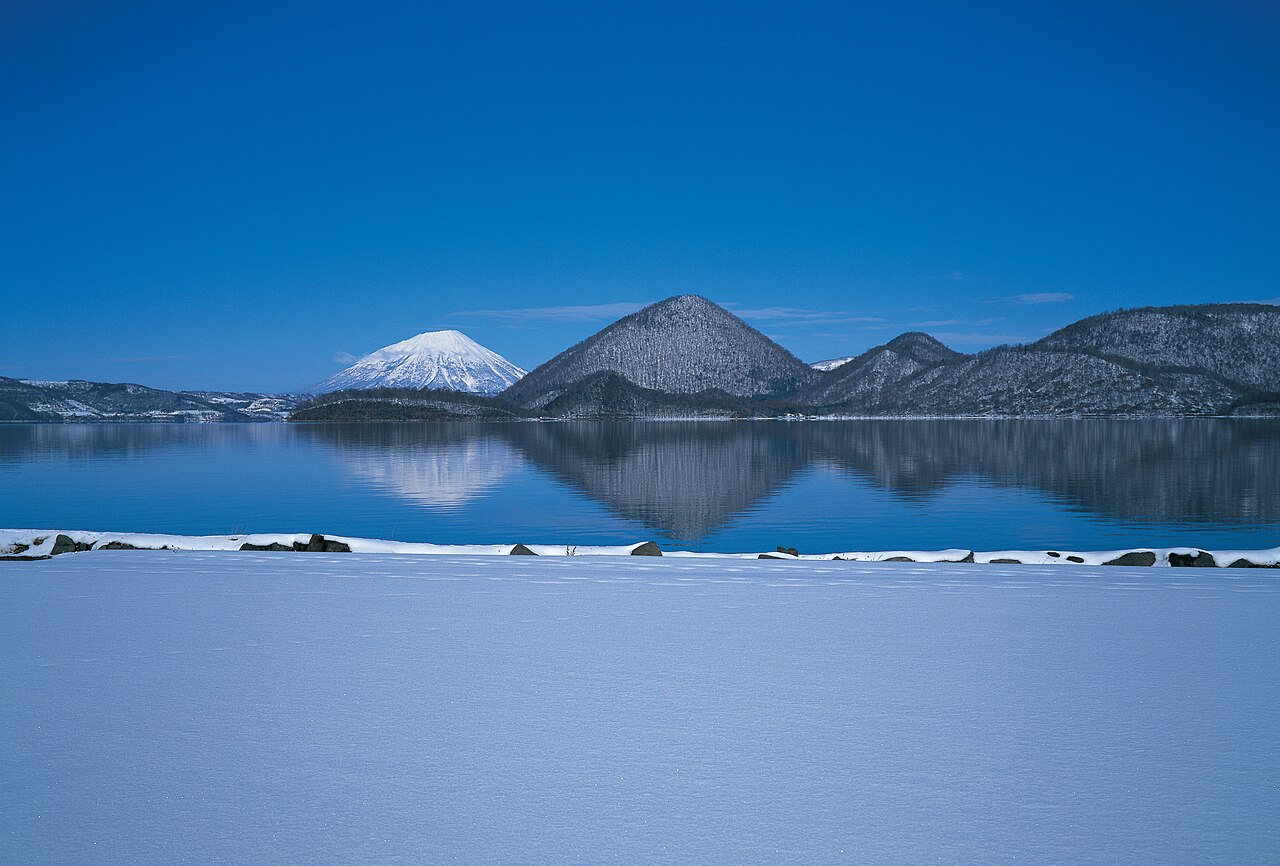
| Best season | Late April to October for the long-run fireworks over the lake; winter for clear caldera views and snow |
Spring quality, source temperatures and access routes are drawn from the Japanese Wikipedia articles on each town (CC BY-SA 4.0) and the English articles credited below. Journey times are typical scheduled times for the routes named, rounded — always check current timetables before you travel.
About Toyako Onsen
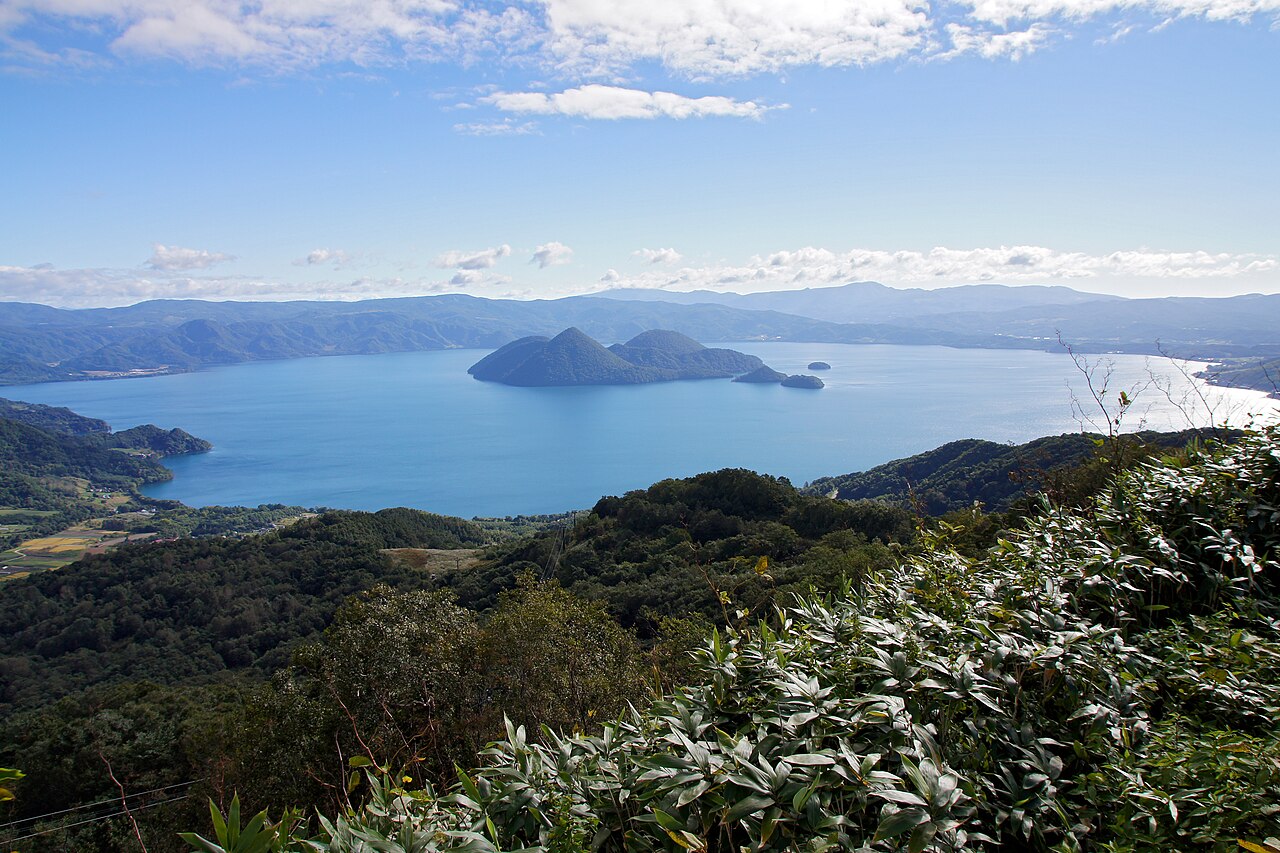
Toyako Onsen (洞爺湖温泉) is the hot spring town on the southern shore of Lake Toya in south-west Hokkaido, a near-circular caldera lake about 10 km across inside Shikotsu-Toya National Park. The springs are young by Japanese standards: in 1917 three men found a 43 °C source on the lakeshore, a gift of the 1910 eruption that raised the Meiji Shinzan dome on Mount Usu, and opened the first inn the same year.
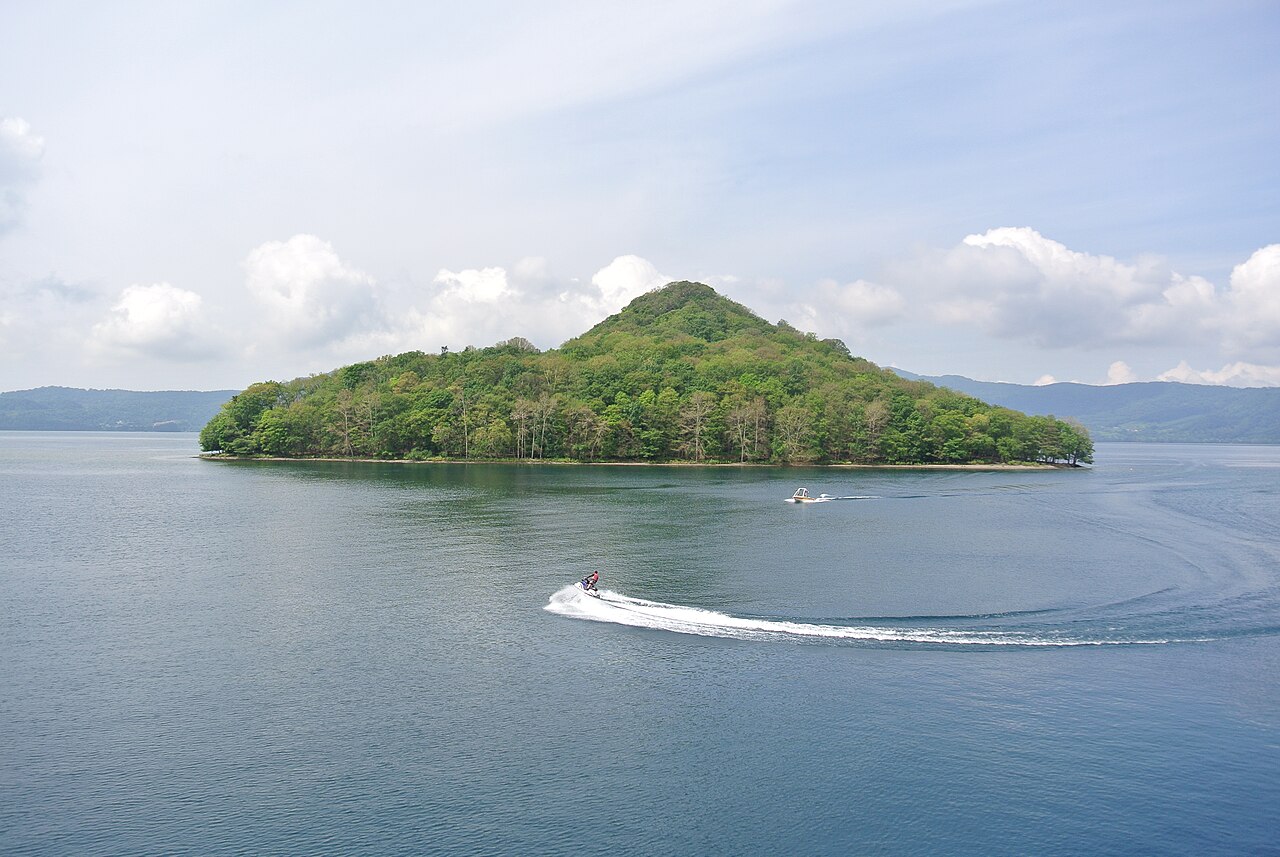
The resort that grew along the shore is now Hokkaido's classic lake-and-volcano stay: a promenade of hotels, souvenir streets and sculpture, sightseeing boats to the lake's central island, and — unusually — a working volcano as the backdrop, with the craters of the 2000 Usu eruption preserved as a walking route on the town's mountain side.
The water: one mixed source for the whole shore
Toyako's supply is managed communally by the Toyako Onsen Use Cooperative (founded 1960), which blends the output of named sources — the Toya 5, 6, 9, 12 and 13 wells and shared wells — into a single mixed spring distributed to the town's baths.
The water is a sodium–calcium chloride spring, neutral at pH 6.7 and 50.3 °C as supplied, faintly yellow-tinged with a slight carbonated taste at source. Chloride water clings to the skin and slows cooling, suiting a town where the evening plan is a promenade in a yukata along a cold northern lake. Since 2017 the same heat has also driven a small geothermal power plant, the Toyako Onsen KH-1 station.
The lake shore: promenade, footbaths and fireworks
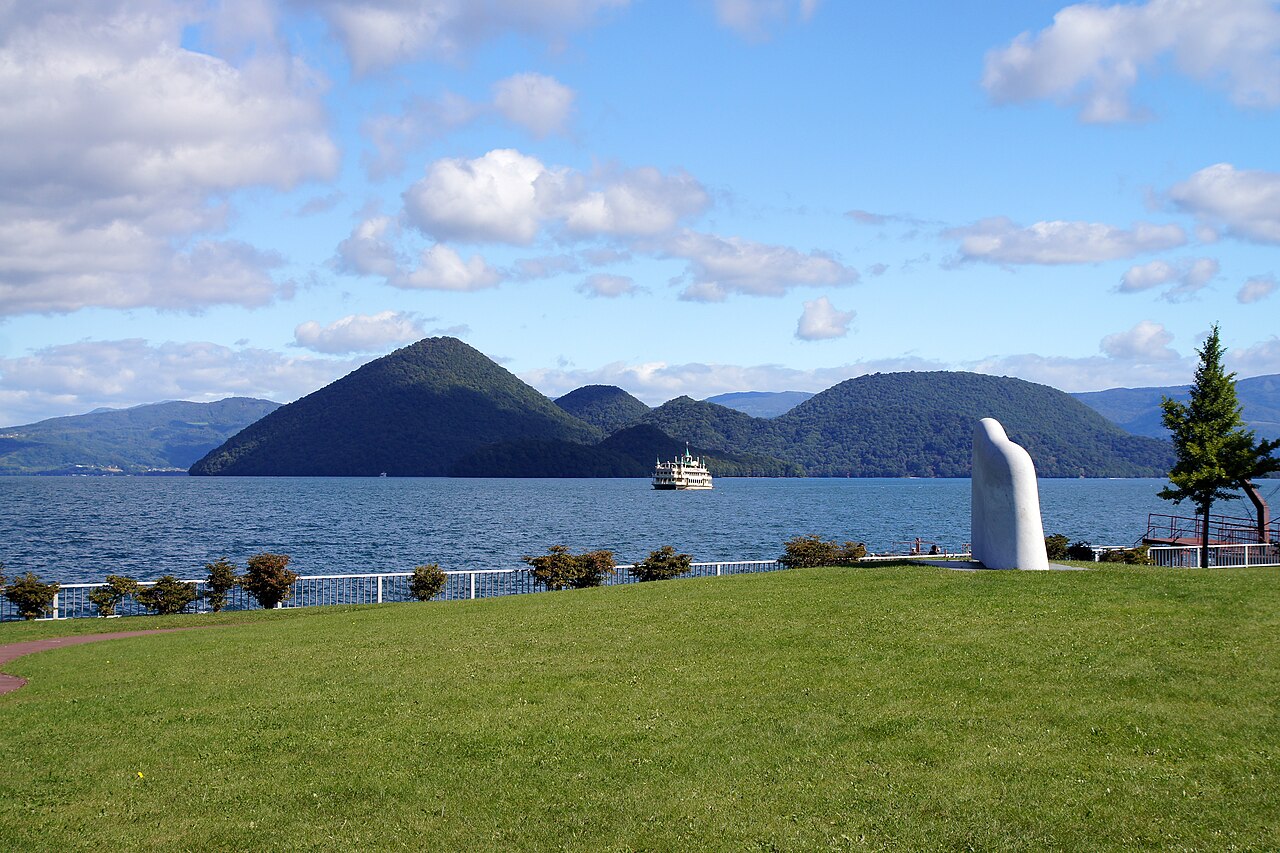
The shore in front of the hotels is a continuous public space: a lakeside promenade and the Toyako Gurutto Sculpture Park, an open-air circuit of sculptures around the lake, with free footbaths and hand baths set into the walkway — including the Toryu no Yu footbath opened in 2001.
From late April to October the Toyako Long-Run Fireworks Festival lights the lake almost every night, watched from the promenade or from evening boats — a rare case of a fireworks season measured in months. Sightseeing boats cross to Nakajima, the forested island in the middle of the caldera, through the season.
Mount Usu: the volcano that made the springs
Mount Usu, on the caldera's southern rim, has erupted roughly every few decades in living memory — 1910, 1944–45 (which built the Showa Shinzan dome), 1977 and 2000. The 2000 eruption's craters and damaged buildings on the town's western edge are preserved on walking routes, the sobering counterweight to the resort's pleasures.
The Toyako–Usu area is a UNESCO Global Geopark, and the town's visitor facilities explain the cycle plainly: the same volcanism that periodically empties the town also heats its baths and shapes its lake. Pair a crater walk with an evening bath and the whole system makes sense.
Getting there
Ride the JR Muroran Main Line to Toya Station, then take a Donan Bus to the Toyako Onsen bus terminal on the shore. Limited expresses from Sapporo reach Toya in under two hours; from New Chitose Airport the rail route runs via Minami-Chitose.
By car, the Abuta-Toyako interchange of the Hokkaido Expressway is the nearest exit, and Route 230 links the town with Jozankei and Sapporo (about 90 minutes from Jozankei).
The sections above were written for this guide from the facts in the Wikipedia articles Lake Tōya, 「洞爺湖温泉」, available under CC BY-SA 4.0, and official tourism sources.
Gallery




The springs and baths named on this page are described from the Wikipedia articles credited above and official tourism sources. Before your first visit, read how to use an onsen.
More onsen towns
- Noboribetsu Onsen 登別温泉 — The next volcano west — nine spring types in Hell Valley, under an hour away
- Jozankei Onsen 定山渓温泉 — Sapporo's gorge resort, about 90 minutes by road
- Unzen Onsen 雲仙温泉 — Kyushu's volcanic resort — the other great caldera-and-hells onsen story
- Shibu Onsen 渋温泉 — A mainland snow-country classic for comparison
Keep exploring
- All onsen towns in Hokkaido — this town's region, town by town
- Browse by spring type — find towns by their water
- Browse by feature — day trips, snow-view baths, free communal baths and more