Home › Onsen towns › Jozankei Onsen
Jozankei Onsen 定山渓温泉
Hot, salty water rises straight out of the bedrock of the Toyohira River at Jozankei — 56 sources giving about 8,600 litres a minute at 60 to 80 °C — in a gorge town inside Sapporo's city limits, about an hour by bus from Sapporo Station. Free footbaths, a red suspension bridge over the gorge and the kappa statues that guard the streets make this Hokkaido's easiest big-resort escape from a major city.
| Prefecture | Hokkaido (Sapporo City) |
|---|---|
| Region | Hokkaido |
| Spring quality | Sodium-chloride spring (neutral, hypotonic) |
| Source temperature | About 60–80 °C at source (56 sources) |
| Nearest station | No railway in town — bus from Sapporo (JR Hokkaido) |
| From Tokyo | Fly to New Chitose (about 1 h 40 min) + train to Sapporo + bus — about 4 hours in total |
| From Osaka | Fly to New Chitose (about 2 hours) + train to Sapporo + bus |
| Best season | Autumn colour in the gorge (mid-October); winter for snow-view bathing and the snow lantern festival; spring for fresh green |
Spring quality, source temperatures and access routes are drawn from the Japanese Wikipedia articles on each town (CC BY-SA 4.0) and the English articles credited below. Journey times are typical scheduled times for the routes named, rounded — always check current timetables before you travel.
About Jozankei Onsen
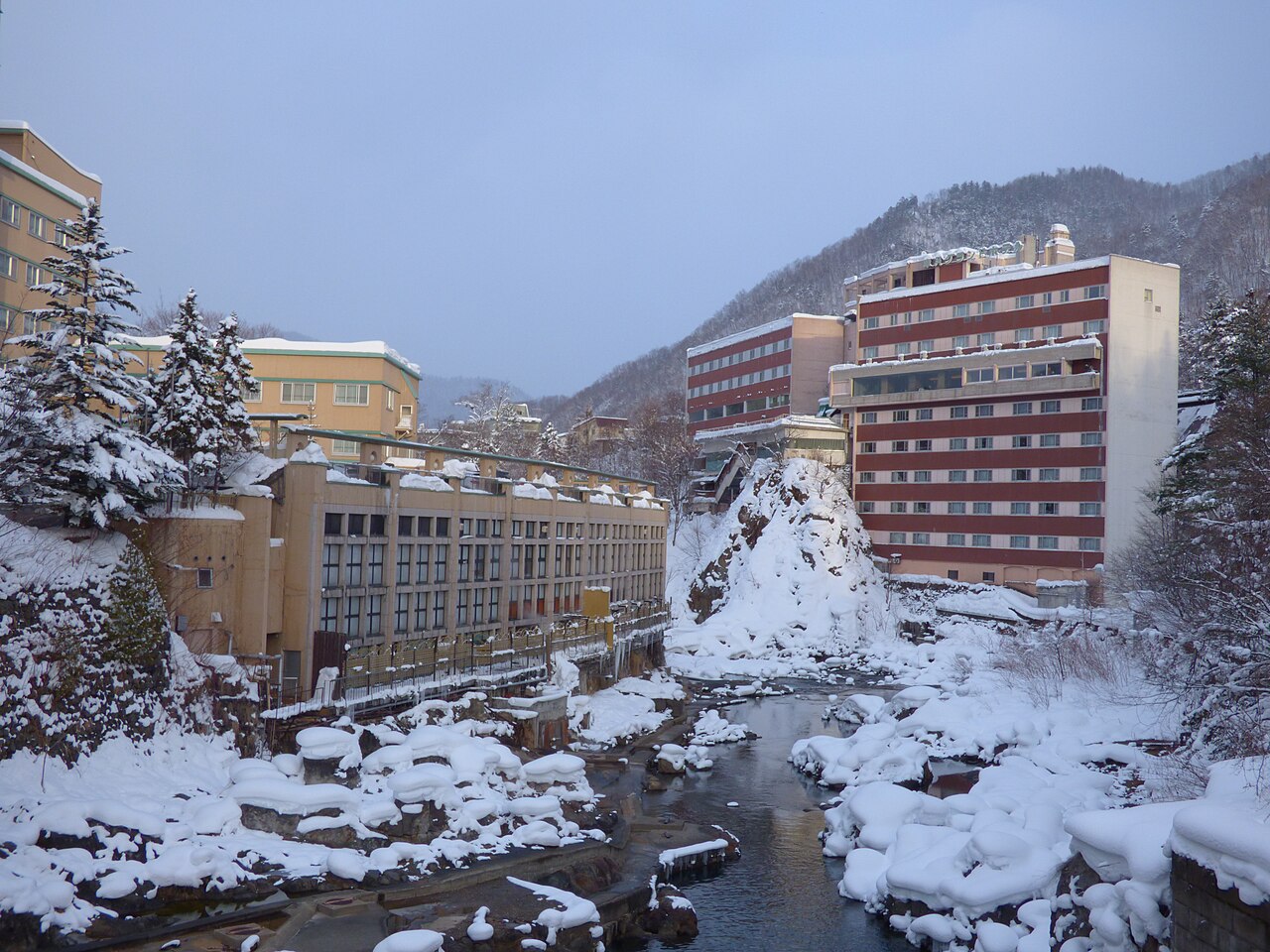
Jozankei Onsen (定山渓温泉) is a hot spring town in Minami Ward, Sapporo, set where the Toyohira and Shirai rivers have cut a narrow gorge through the hills south-west of the city. The springs were developed from 1866 by the monk-scholar Miizumi Jozan, who heard of a secret bath where deer healed their wounds and built the first cure house here; the valley was named Jozankei — 'Jozan's gorge' — after him, and his statue and the Jozan Gensen Park, with its footbath, hand bath and onsen-egg pool, mark the spot by Tsukimi Bridge where he found the water.
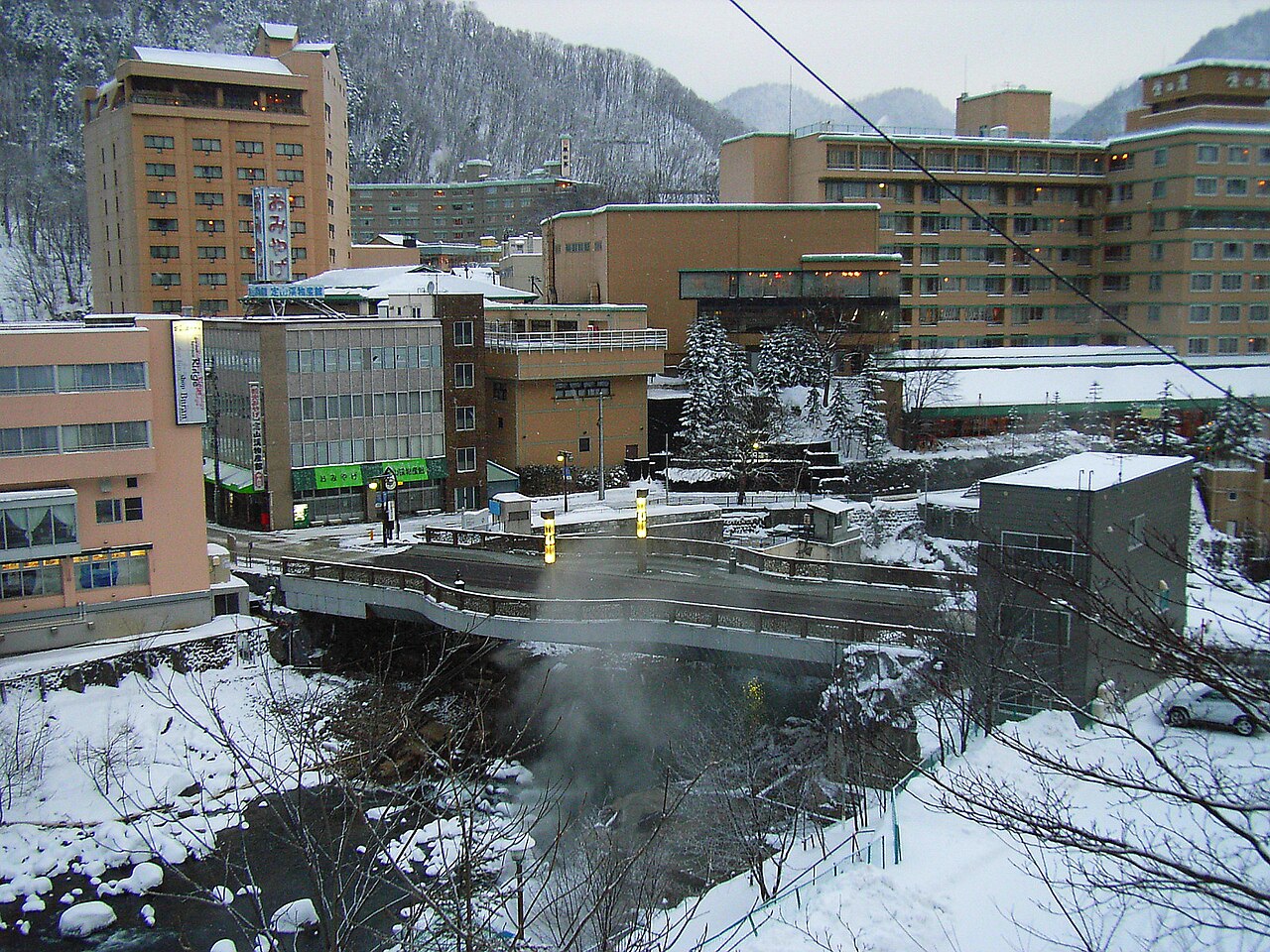
The town grew with a private railway (opened 1918, closed 1969 as cars took over) into 'Sapporo's back parlour', and it still works that way today: large resort hotels along the river, free footbaths scattered through the streets, and walkways along the gorge to the Futami suspension bridge and the Kappa Buchi pool, named for the water sprite that is now the town's mascot.
The water: hot salt springs from the riverbed
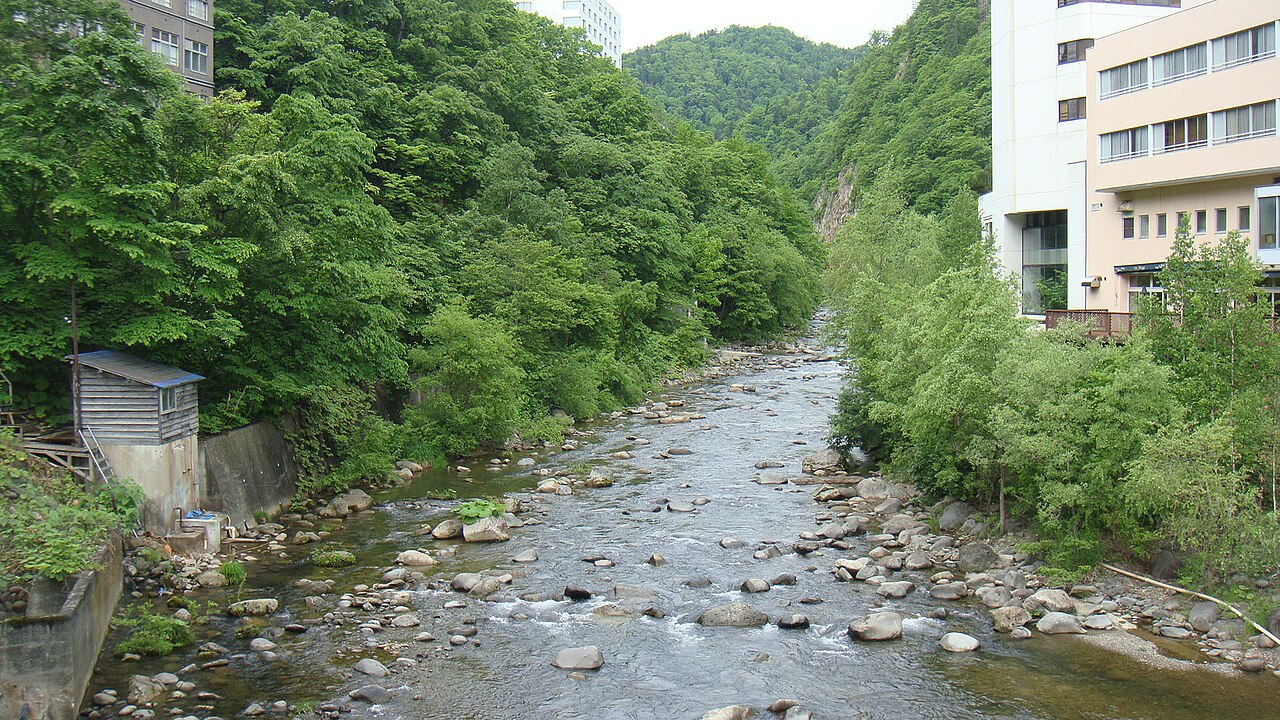
Jozankei's water is a sodium-chloride spring — clear, salty water that coats the skin and keeps bathers warm long after they leave the tub, which matters in a Hokkaido winter. The 56 sources cluster around Tsukimi Bridge and Takayama Bridge, many of them rising naturally from cracks in the bedrock of the riverbanks and the riverbed itself.
Output is about 8,600 litres a minute at 60 to 80 °C — hot enough at source that bathhouses blend or cool it for bathing. The Jozan Gensen Park at the discovery site lets visitors feel the source culture without a full bath: a free footbath and hand bath, and a small pool where you can cook your own onsen egg in the hot water.
Walking the gorge: bridges, kappa and the Iwato Kannon
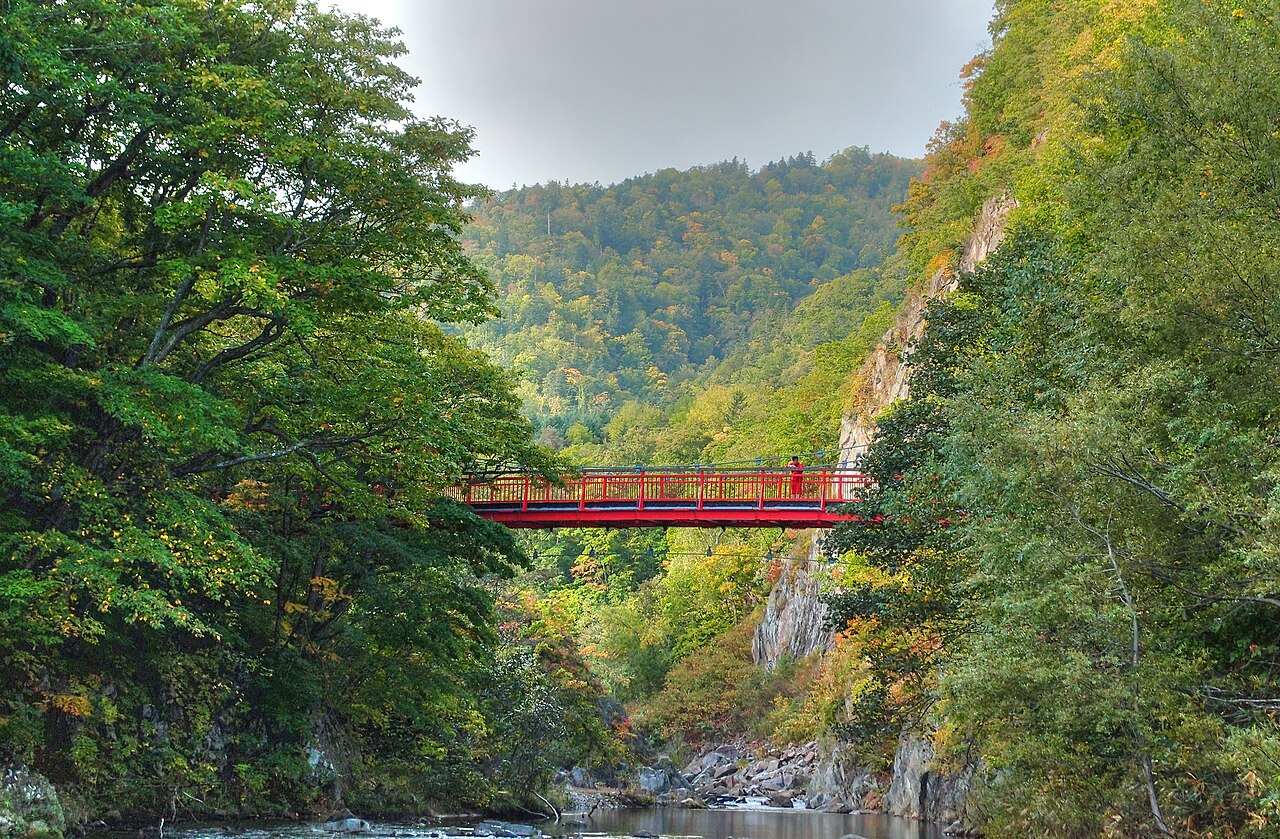
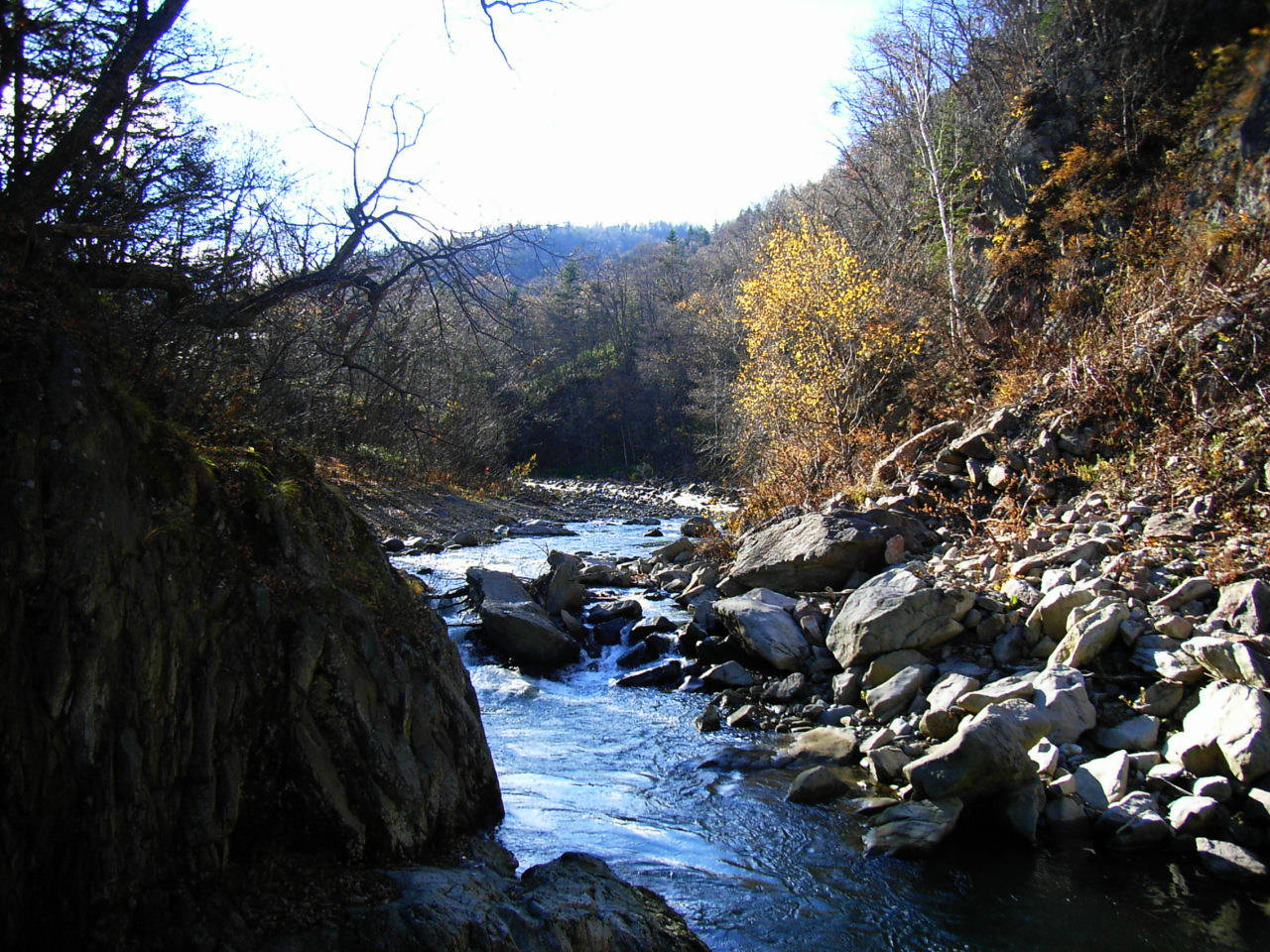
The Toyohira riverside walk is the town's second attraction. From Tsukimi Bridge — first built as Kaishun Bridge and renamed in 1905 — paths follow the gorge to Futami Park and its red Futami suspension bridge, a classic autumn-colour viewpoint, passing the Kappa Buchi, the deep pool of the kappa legend.
On the cliff above town, the Iwato Kannondo is stranger and more moving: a 120-metre cave temple holding 33 statues of Kannon, built in 1936 with private funds to pray for the workers who died building the road between Otaru and Jozankei. Whimsical 'fairy-tale kappa' statues stand all over town, and the local mascot Kappon even holds a special resident's card from the ward office.
Seasons: snow lanterns, koyo and the back-parlour rhythm
Jozankei sits inside Shikotsu-Toya National Park (designated here in 1949), and its calendar follows the gorge. Autumn brings the famous maple colour around Futami Bridge; winter brings deep snow, the Yukitoro snow-lantern event and the short drive to Sapporo Kokusai ski area (about 30 minutes).
Because the town is a city resort, it also works as a base: Toyohirakyo Onsen is about five minutes by car, Koganeyu Onsen about ten, and the centre of Sapporo about an hour — bathers can sleep in the gorge and still eat dinner in the city, or the other way round.
Getting there
Jozankei has no station of its own. From Sapporo Station, Jotetsu Bus runs direct services (including the Kappa Liner) to the town in about 60 minutes; the town is about 26 km from central Sapporo. New Chitose Airport buses to Sapporo connect with the same town buses.
Drivers follow Route 230 south from Sapporo. In winter the road is ploughed but this is heavy-snow country — allow extra time, and note the town streets use road heating in the centre.
The sections above were written for this guide from the facts in the Wikipedia articles 「定山渓温泉」, available under CC BY-SA 4.0, and official tourism sources.
Gallery




The springs and baths named on this page are described from the Wikipedia articles credited above and official tourism sources. Before your first visit, read how to use an onsen.
More onsen towns
- Noboribetsu Onsen 登別温泉 — Hokkaido's other great resort — the volcanic multi-spring valley
- Toyako Onsen 洞爺湖温泉 — The new lakeside neighbour in this guide — caldera-lake bathing about 90 minutes away
- Sukayu Onsen 酸ヶ湯温泉 — The far-north comparison — fiercely acidic water under Hakkoda snow
- Kusatsu Onsen 草津温泉 — Japan's benchmark high-volume natural-flow resort
Keep exploring
- All onsen towns in Hokkaido — this town's region, town by town
- Browse by spring type — find towns by their water
- Browse by feature — day trips, snow-view baths, free communal baths and more