Home › Onsen towns › Takeo Onsen
Takeo Onsen 武雄温泉
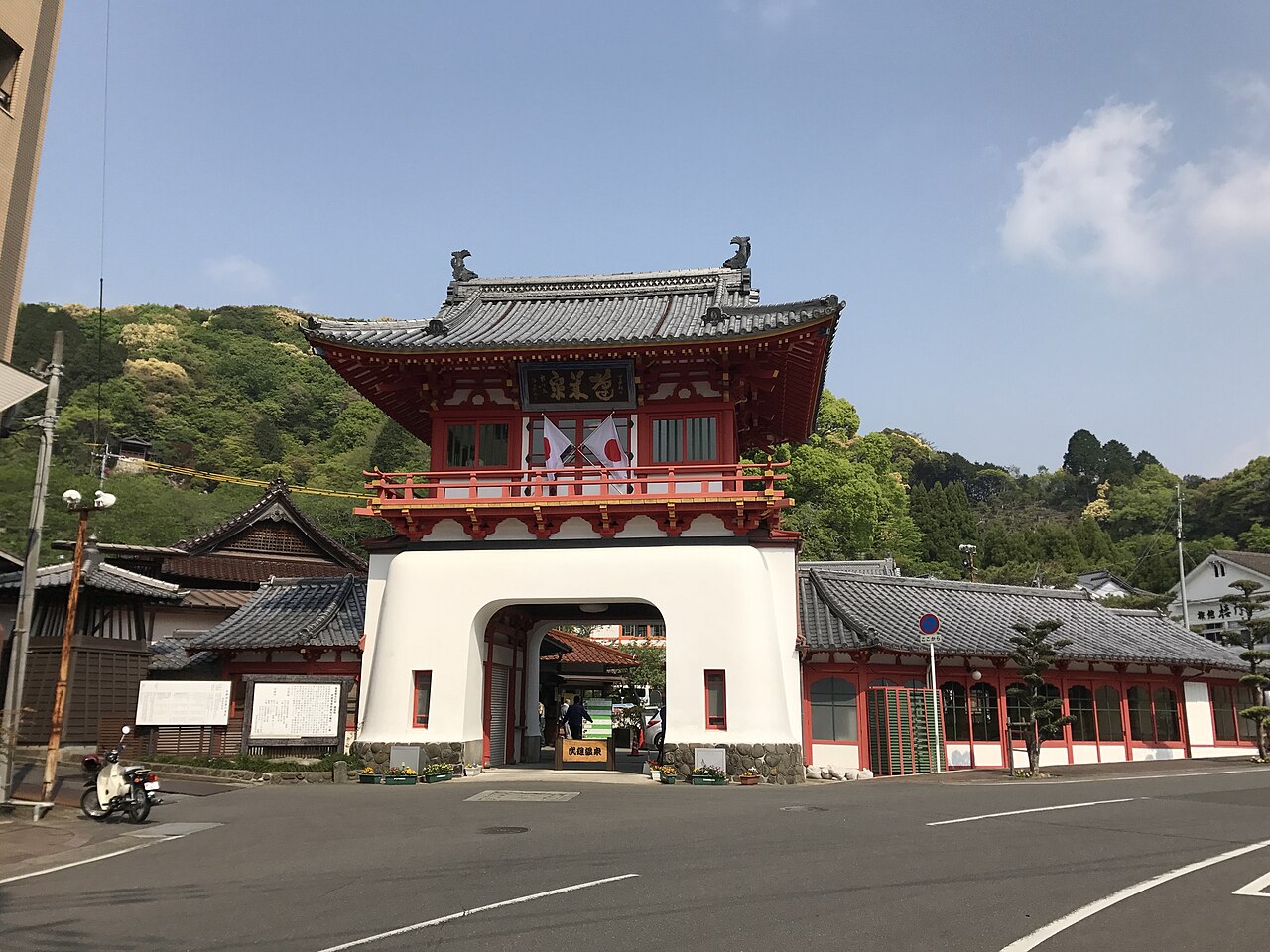
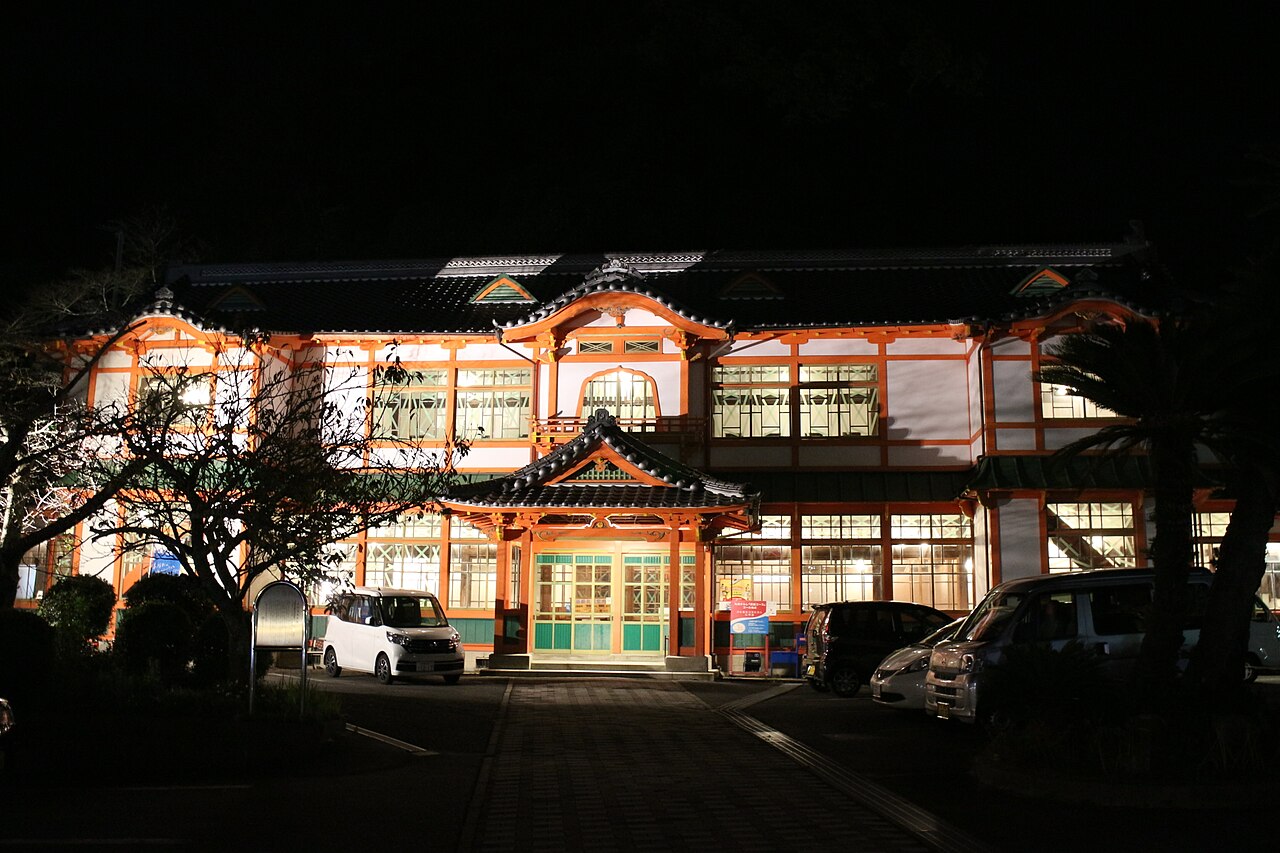
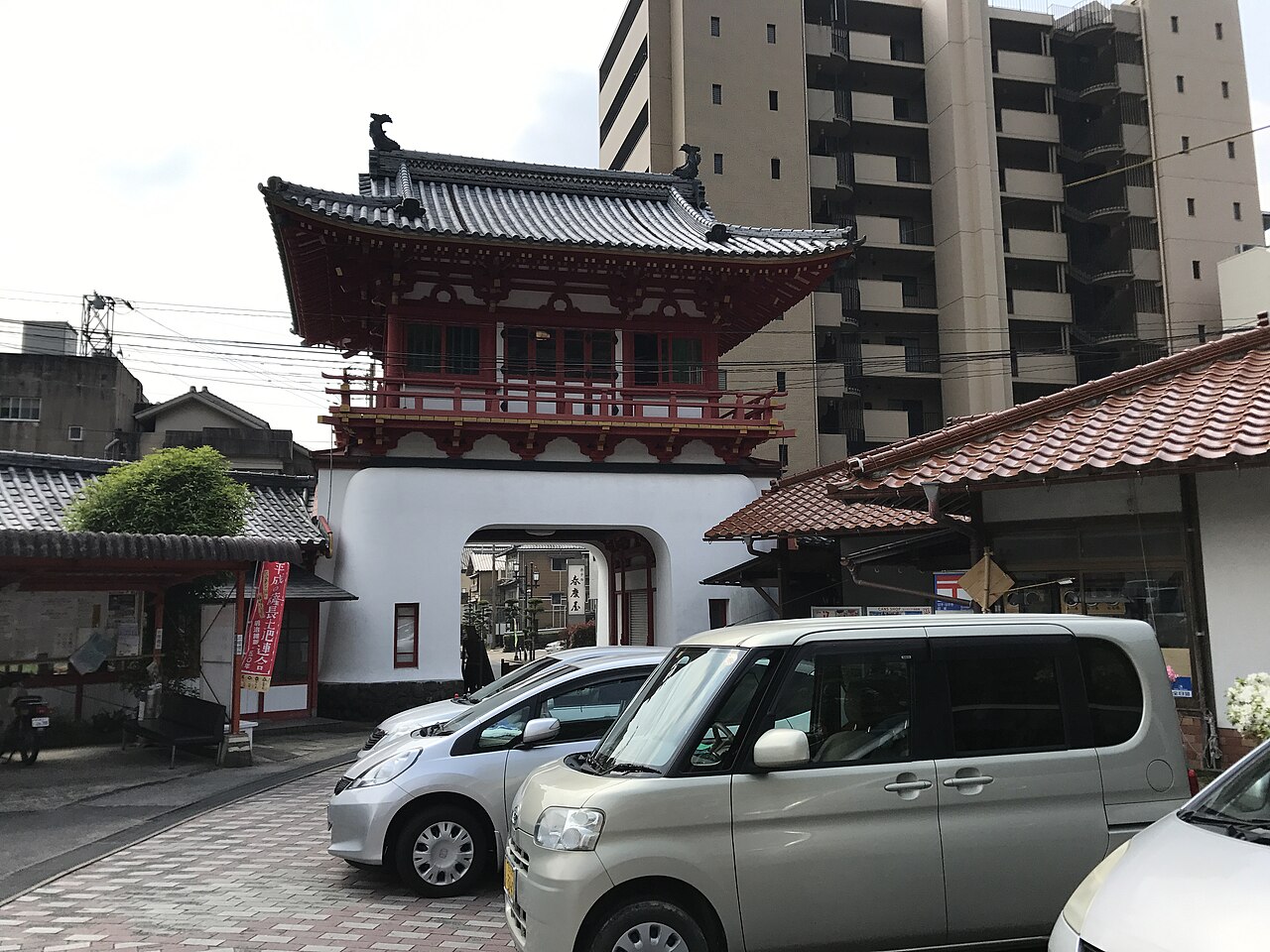
Through a vermilion gate fit for a palace: Takeo's springs — simple and bicarbonate waters at 45 to 51 °C, silky enough that a lotion is made from them — were already old when the 8th-century Hizen Fudoki mentioned them. The gate and hall behind it, designed by Tokyo Station's architect Tatsuno Kingo in 1914 and now an Important Cultural Property, make this Kyushu's most architecturally famous bathhouse town.
| Prefecture | Saga |
|---|---|
| Region | Kyushu & Okinawa |
| Spring quality | Simple spring and bicarbonate spring |
| Source temperature | 45–51 °C at source |
| Nearest station | Takeo-Onsen (JR Sasebo Line / Nishi-Kyushu Shinkansen), about 10 minutes on foot |
| From Tokyo | Fly to Fukuoka or Saga + train — about 5 hours in total; or Shinkansen via Shin-Tosu |
| From Osaka | About 3 hours 30 minutes — Sanyo Shinkansen to Hakata + limited express / Nishi-Kyushu Shinkansen |
| Best season | Year-round; spring and summer bring the town festivals, and the pottery markets run monthly |
Spring quality, source temperatures and access routes are drawn from the Japanese Wikipedia articles on each town (CC BY-SA 4.0) and the English articles credited below. Journey times are typical scheduled times for the routes named, rounded — always check current timetables before you travel.
About Takeo Onsen
Takeo Onsen (武雄温泉) is a hot spring town in Takeo City, western Saga, on the old Nagasaki Kaido road where it served as the post station of Tsukazaki. Its springs are among Japan's oldest on paper: the Hizen no Kuni Fudoki, compiled in the Nara period, records a spring bursting from a rock in a steep gorge west of the district — little visited then because the cliffs were hard to reach.
Legend filled the gap with an empress: Jingu, it is said, split the rock with the pommel (tsuka) of her sword and the water flowed — hence the old name Tsukasaki. Toyotomi Hideyoshi is said to have used the town as a cure camp during the Korean campaigns, and the Nabeshima lords of Saga kept their own bath here; Date Masamune, Miyamoto Musashi, Siebold and Yoshida Shoin are all on the town's list of famous bathers.
The water: silk in two families
Takeo's waters come in two gentle families — simple springs and bicarbonate springs — at 45 to 51 °C. Bicarbonate water is the classic 'beauty bath', washing the skin smooth, and Takeo's is famously silky: the spring water is even made into a cosmetic lotion sold in town.
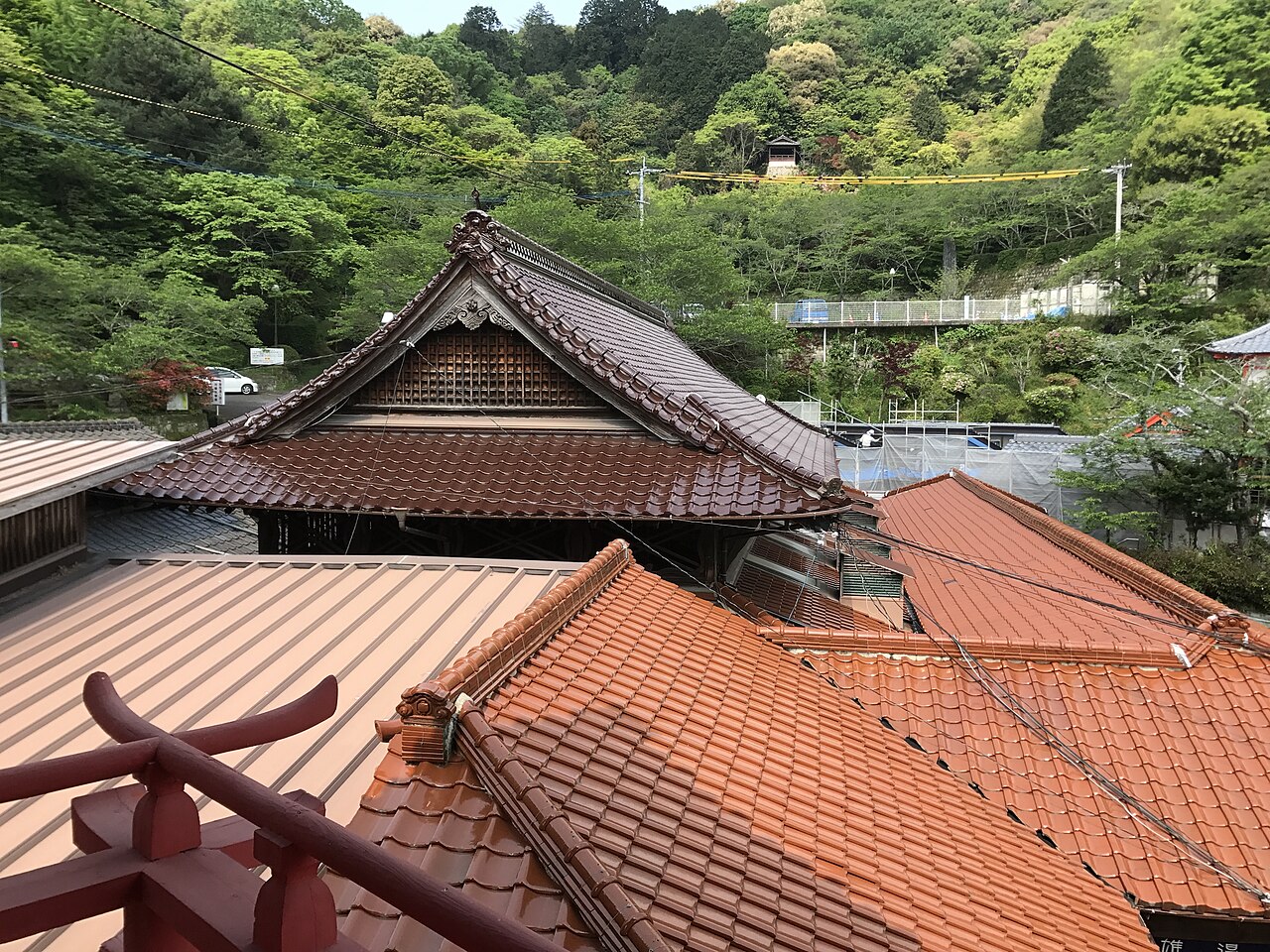
Three communal bathhouses stand behind the gate — Motoyu, Horaiyu and Sagino-yu — and the former lords' baths survive as private rental baths, the Tonosama-yu and Karo-yu, alongside the Eirakutei house. Seventeen inns complete a compact town where everything is a short walk.
The Romon gate and Tatsuno Kingo
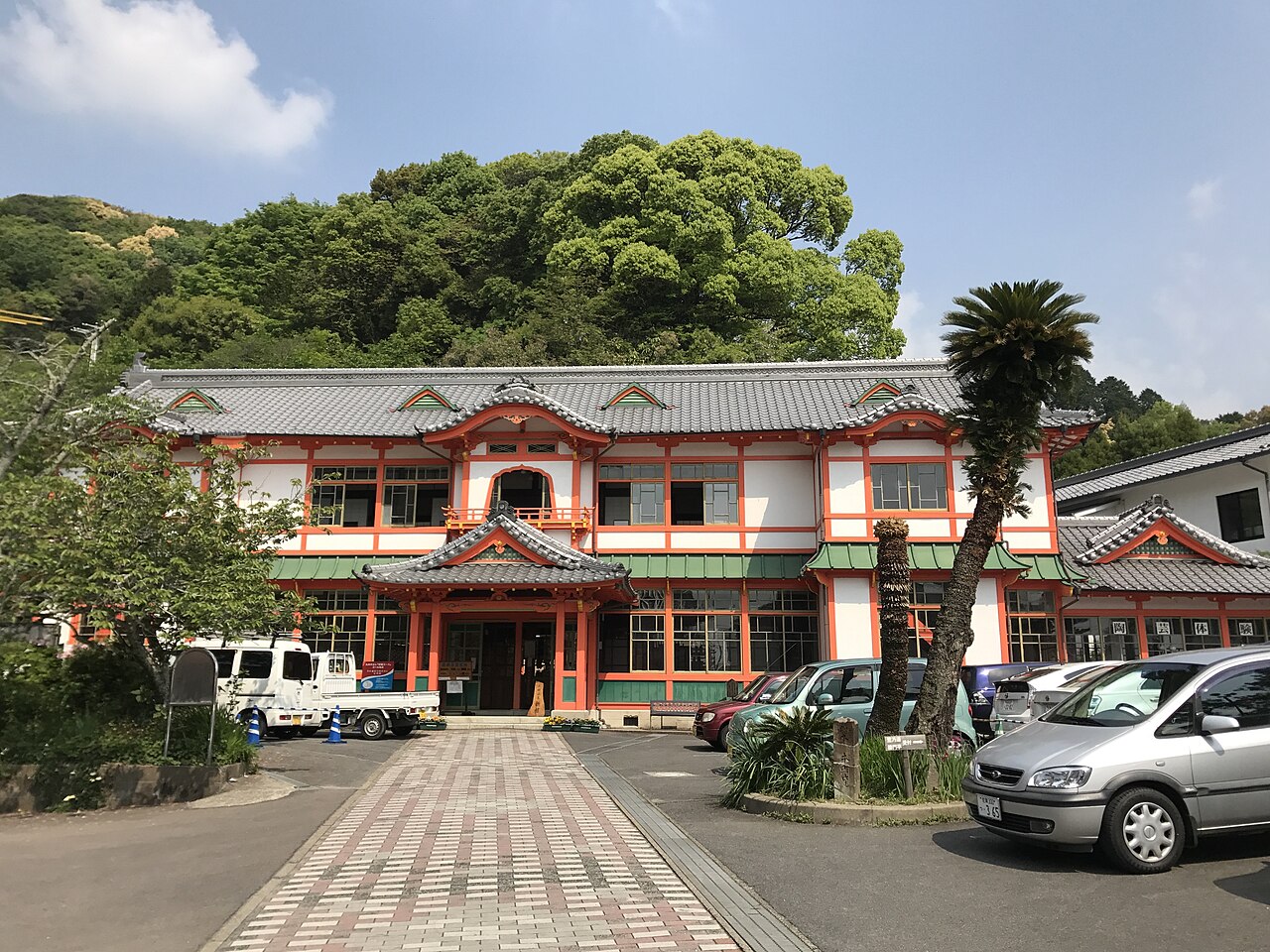
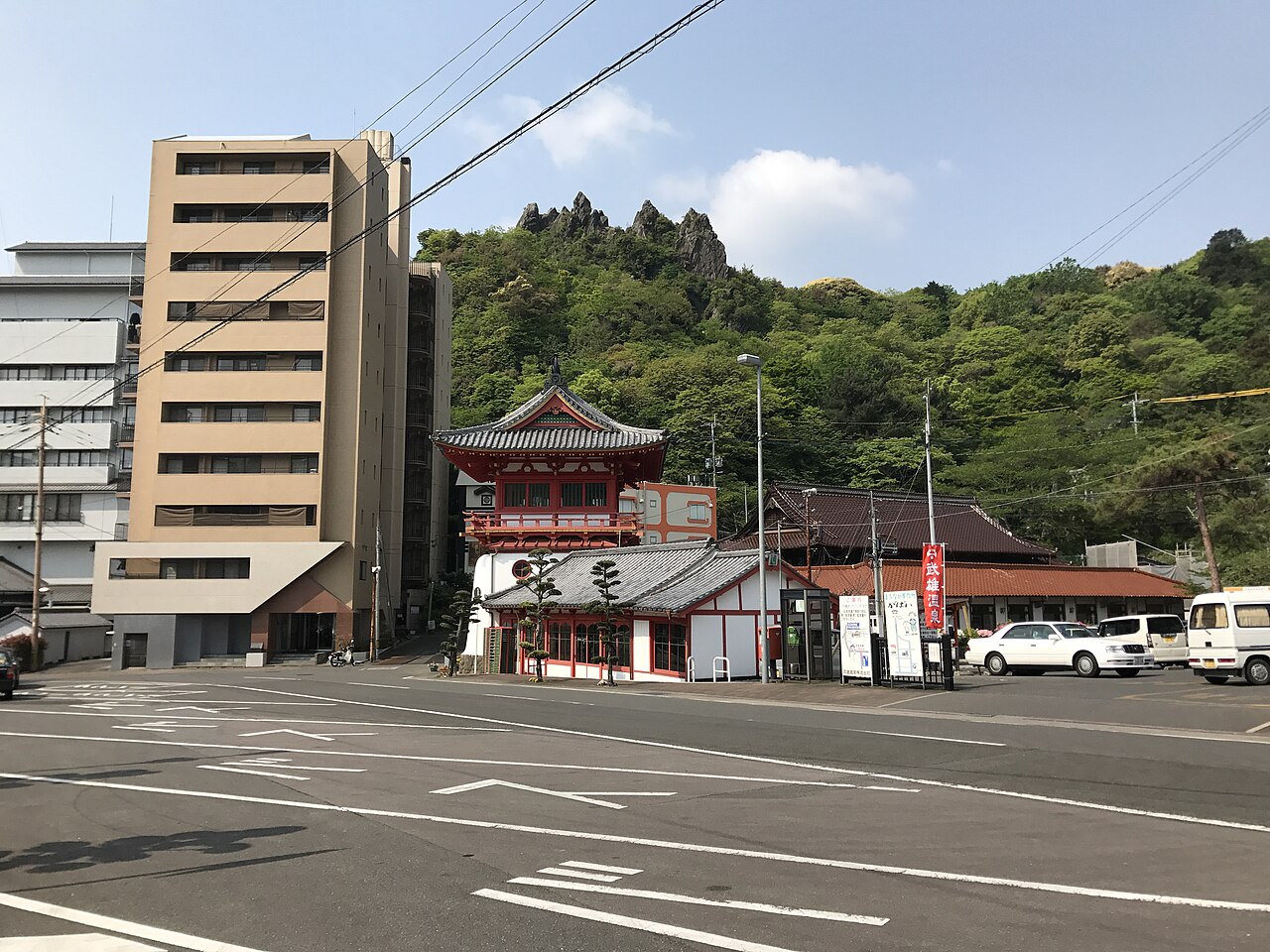
The town's symbol is the Romon, the two-storey vermilion gate of 1914 designed by Tatsuno Kingo, the architect of Tokyo Station and a son of neighbouring Karatsu. Behind it stands his Shinkan hall — the communal bathhouse until 1973, restored in 2003 and now the town's museum. Gate and hall were designated national Important Cultural Properties in 2005.
Tatsuno left a puzzle: the gate's ceiling corners carry carvings of the four zodiac animals missing from Tokyo Station's dome — mouse, rabbit, horse and bird here, the other eight in Tokyo — so the two buildings together complete the twelve. Look up before you bathe.
A pottery town that bathes
Takeo is also a kiln town: the hills around hold many potteries in the Karatsu-ware orbit, and a pottery market runs monthly, with spring and summer festivals in the streets. The modern pairing is unusual and happy — morning at the kilns and markets, evening in the Motoyu.
The next post town down the old road was Ureshino, Saga's other great spring — the two towns have been paired since Edo days, one for the road's rest, one for its tea. Takeo's modern station, a Nishi-Kyushu Shinkansen stop since 2022, has made the pair easier than ever to combine.
Getting there
Takeo-Onsen Station (Sasebo Line and Nishi-Kyushu Shinkansen) is about 10 minutes on foot from the Romon gate. From Hakata, limited express and Shinkansen connections take about an hour; Saga Airport and Fukuoka Airport both feed the same rail route.
The sections above were written for this guide from the facts in the Wikipedia articles 「武雄温泉」, available under CC BY-SA 4.0, and official tourism sources.
Gallery




The springs and baths named on this page are described from the Wikipedia articles credited above and official tourism sources. Before your first visit, read how to use an onsen.
More onsen towns
- Ureshino Onsen 嬉野温泉 — Saga's tea-and-baths town — the historic pairing down the old road
- Beppu Onsen 別府温泉 — Kyushu's giant — the full-scale version across the island
- Kirishima Onsen 霧島温泉郷 — Kagoshima's volcanic spring country, the southern pairing
- Unzen Onsen 雲仙温泉 — Nagasaki's mountain resort, the Shimabara neighbour
Keep exploring
- All onsen towns in Kyushu & Okinawa — this town's region, town by town
- Browse by spring type — find towns by their water
- Browse by feature — day trips, snow-view baths, free communal baths and more