Home › Onsen towns › Kirishima Onsen
Kirishima Onsen 霧島温泉郷
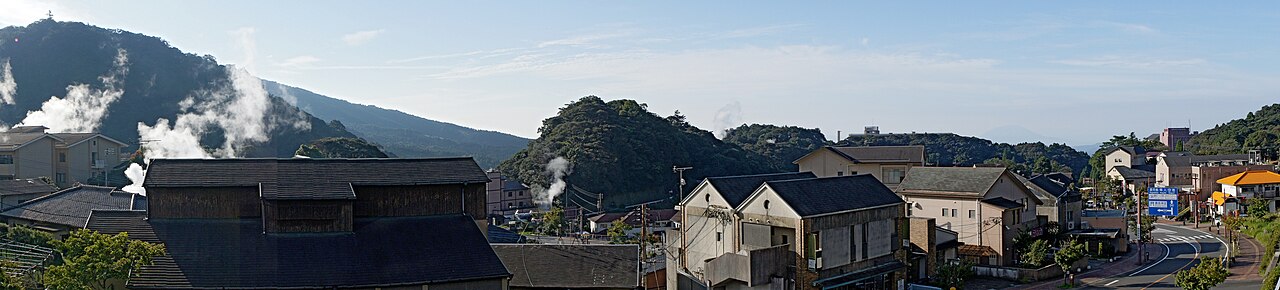
Not one spring but a mountain range of them: the Kirishima springs scatter across the mid-slopes of the Kirishima volcanoes in Kagoshima — the sulphur valley of Iouden, the alum springs, and the forest resort of Maruo at the centre. Sakamoto Ryoma brought his wife Oryo here in 1866 on what is remembered as Japan's first honeymoon; the range is still Kyushu's grandest bathing landscape.
| Prefecture | Kagoshima |
|---|---|
| Region | Kyushu & Okinawa |
| Spring quality | Many types across the range — sulphur and hydrogen-sulphide springs, alum springs and milder waters, varying by spring |
| Source temperature | Varies by spring across the range |
| Nearest station | Kirishima-Onsen or Kirishima-Jingu (JR Hisatsu / Nippo Main Line), then bus or taxi to each spring |
| From Tokyo | Fly to Kagoshima Airport (about 1 h 50 min) + bus — about 3 hours in total |
| From Osaka | Fly to Kagoshima Airport (about 1 h 10 min) + bus, or Shinkansen to Kagoshima-Chuo + local train |
| Best season | Spring for Kirishima azalea on the peaks; autumn colour; the high springs (about 800 m) are a cool summer escape |
Spring quality, source temperatures and access routes are drawn from the Japanese Wikipedia articles on each town (CC BY-SA 4.0) and the English articles credited below. Journey times are typical scheduled times for the routes named, rounded — always check current timetables before you travel.
About Kirishima Onsen
Kirishima Onsen (霧島温泉郷) is the collective name for the hot springs scattered over the mid-slopes of the Kirishima mountain range in Kirishima City and Yusui Town, Kagoshima. In the narrow sense it means the old springs of the Nakatsugawa valley south-west of the great crater lake Onamiike — Iouden, Myoban, Einoo, Hayashida and Maruo among them; in the wide sense, dozens more around the range's skirts. 'Kirishima Onsen' and the Kirishima Jingu springs together were designated a National Hot Spring Resort in 1959.
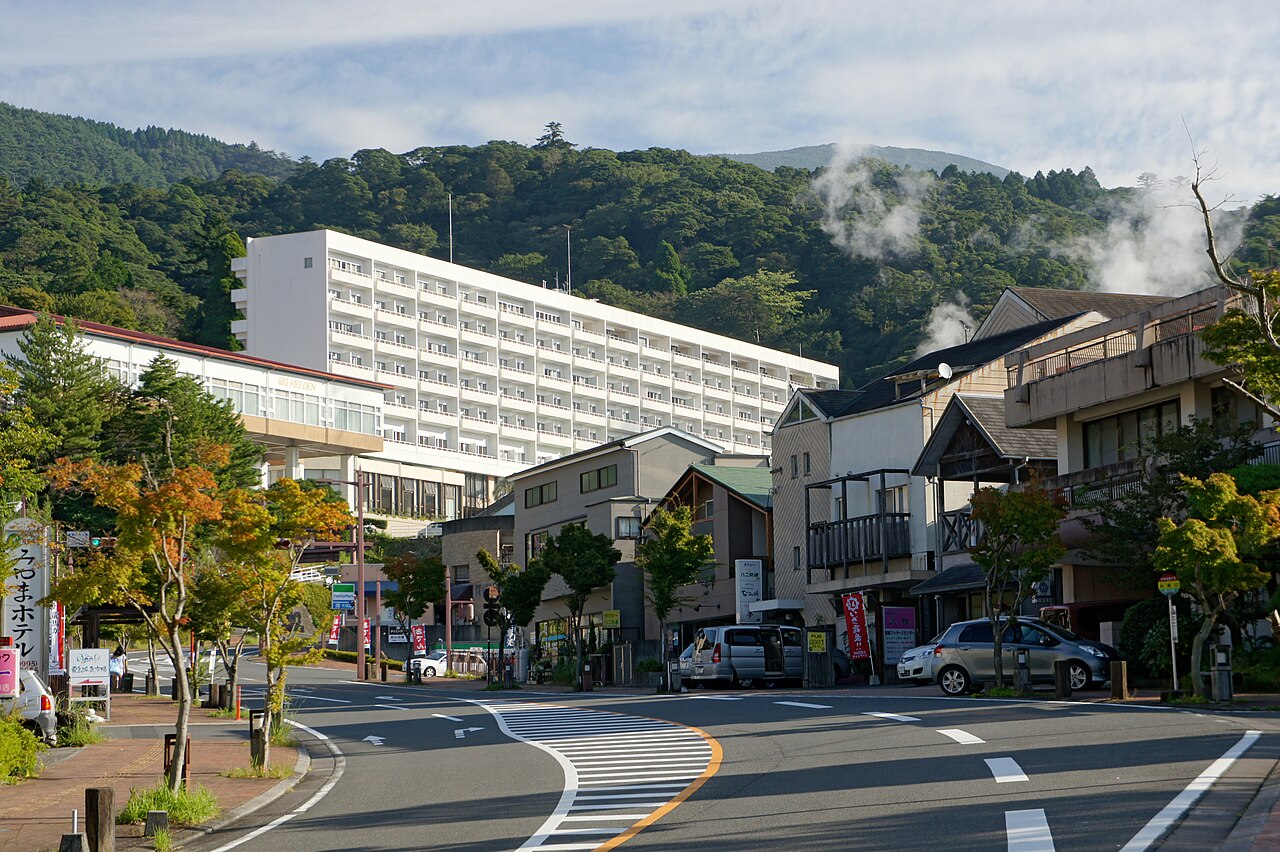
Maruo Onsen, found in 1819, is the working centre — the cluster of inns most visitors sleep in — while the older springs keep their own hamlets in the forest. The whole range is Kirishima-Kinkowan National Park country, under the shrine of Kirishima Jingu and the Takachiho peak of the descent-of-the-gods myth.
The water: a volcano's full range
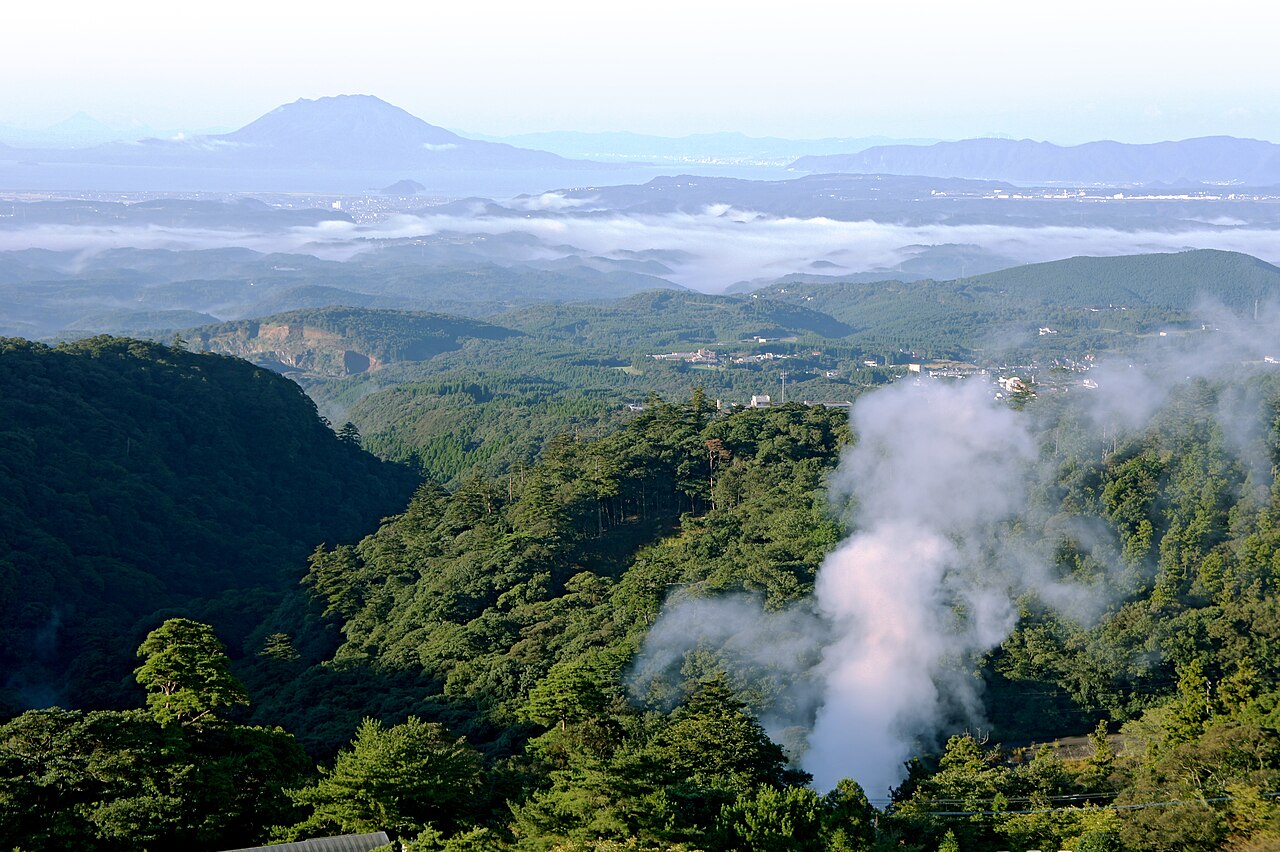
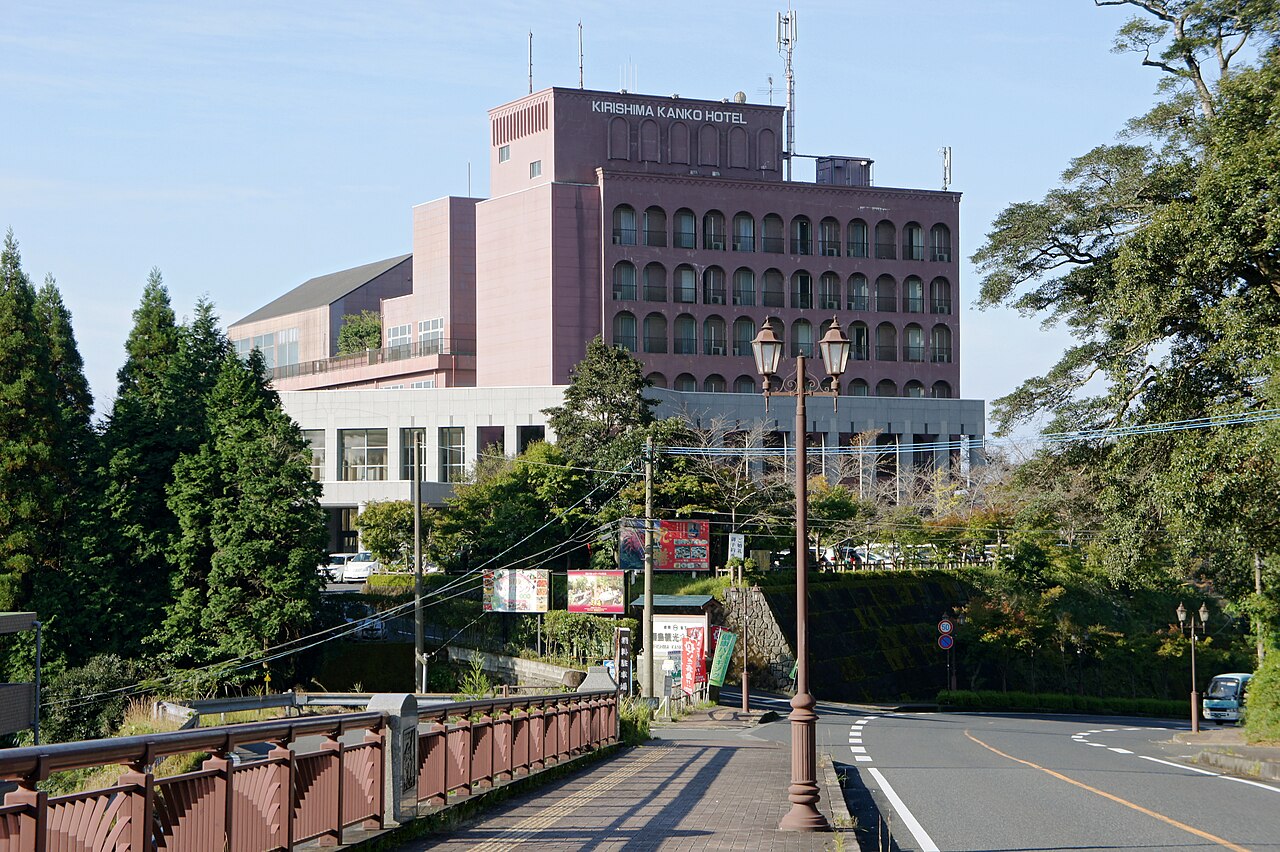
A range this size pours every kind of water. Iouden ('sulphur valley'), found in 1714 and listed in Edo-period spring rankings as 'Satsuma sulphur water', was famous for cascade bathing — water poured over the skin — and its source now feeds the Kirishima Hotel nearby. Myoban takes its name from the alum of its mountain. Shinyu, found in 1875, is a known hydrogen-sulphide spring; Einoo's water was the gentler alternative the old guidebooks recommended choosing by symptom.
Because sources and hamlets are spread over kilometres of mountain road, Kirishima is a driving resort: pick a base (Maruo for choice, the high Hayashida/Einoo side at about 800 m for cool air) and tour the springs as a circuit.
Ryoma's honeymoon
In 1866 Sakamoto Ryoma, recovering from the Teradaya attack in Kyoto, came to the Satsuma mountains with his wife Oryo — staying at Einoo and Iouden among other springs. The trip is remembered in Japan as the country's first honeymoon, and the Kirishima hills trade gently on the romance: the couple's statues and the 'Ryoma road' walks link the springs they used.
The Edo-period guidebooks had already made the range famous — the Sangoku Meisho Zue illustrated Iouden's cascade baths and its lords-only Tonosama-yu. The 1911 and 1949 typhoon landslides destroyed and moved whole hamlets, a reminder that these are working volcano slopes, not a park set.
Shrine, peaks and the gateway market
Below the springs stands Kirishima Jingu, the great vermilion shrine of the range, and above them the Ebino plateau and the crater lakes — the classic Kirishima day is shrine, a peak walk (Karakunidake or the Takachiho ridge), then a sulphur bath at Maruo.
At the range's gate, the Kirishima Onsen Market (Kirishima Marche) gathers the valley's farm shops and footbaths by the road junction — the practical first stop for drivers, and the place to check which springs are open before climbing further. Kagoshima Airport is under an hour away, which makes Kirishima the easiest 'great range' resort in Japan to reach by air.
Getting there
The springs are spread across the range: JR Kirishima-Onsen Station (Hisatsu Line) and Kirishima-Jingu Station (Nippo Main Line) are the rail gateways, with buses and taxis to Maruo and the upper springs. Kagoshima Airport buses run toward the Kirishima area, and drivers use the Yokogawa interchange of the Kyushu Expressway via Route 223. A car is strongly recommended beyond Maruo.
The sections above were written for this guide from the facts in the Wikipedia articles 「霧島温泉郷」, available under CC BY-SA 4.0, and official tourism sources.
Gallery


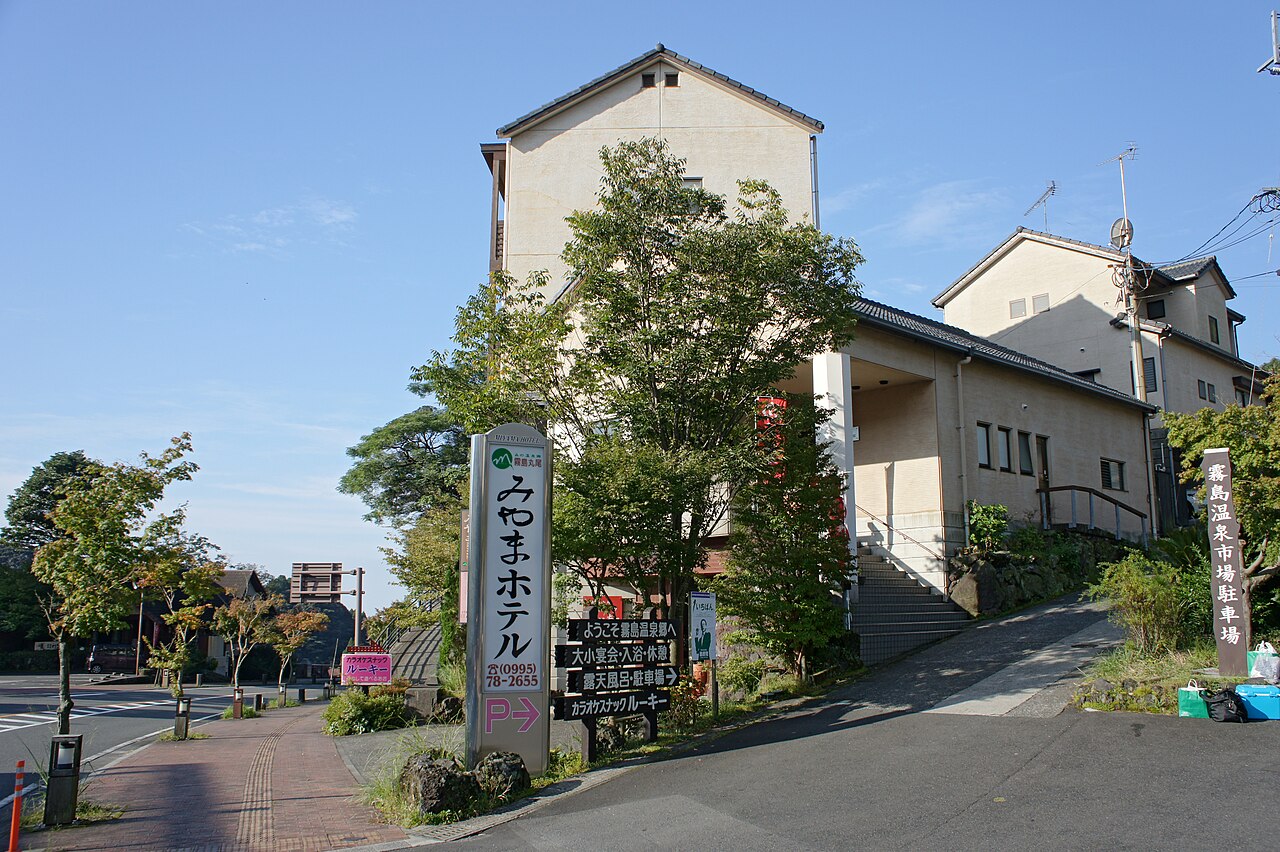

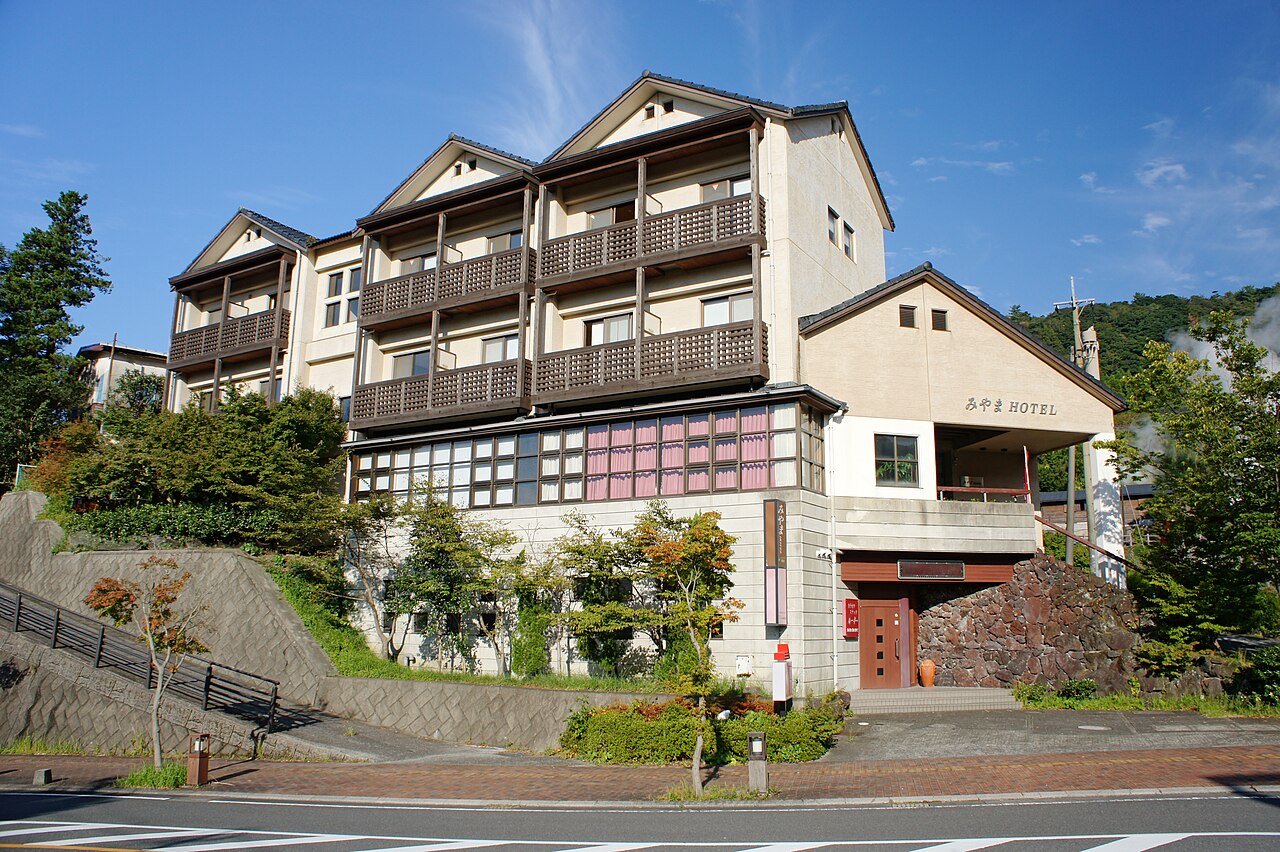

The springs and baths named on this page are described from the Wikipedia articles credited above and official tourism sources. Before your first visit, read how to use an onsen.
More onsen towns
- Ibusuki Onsen 指宿温泉 — Kagoshima's sand-bath shore — the same prefecture's other extreme
- Unzen Onsen 雲仙温泉 — Kyushu's other volcanic resort range, in Nagasaki
- Beppu Onsen 別府温泉 — The island's giant — every spring type at city scale
- Takeo Onsen 武雄温泉 — Saga's gate-front baths on the road north
Keep exploring
- All onsen towns in Kyushu & Okinawa — this town's region, town by town
- Browse by spring type — find towns by their water
- Browse by feature — day trips, snow-view baths, free communal baths and more